Internal Medicine
2 questionsA 12-year-old boy presents with weak pulses in the upper limbs, a blood pressure of 90/60 mmHg , and retinal hemorrhages. What is the most likely diagnosis?
A 26-year-old male presents with backache, morning stiffness, reduced chest expansion, and reddening of the eyes. The X-ray provided is shown below. What is the most likely diagnosis?

NEET-PG 2021 - Internal Medicine NEET-PG Practice Questions and MCQs
Question 121: A 12-year-old boy presents with weak pulses in the upper limbs, a blood pressure of 90/60 mmHg , and retinal hemorrhages. What is the most likely diagnosis?
- A. Henoch-Schönlein purpura (HSP)
- B. Polyarteritis nodosa (PAN)
- C. Takayasu arteritis (Correct Answer)
- D. Microscopic polyangiitis
Explanation: ***Takayasu arteritis*** - **Weak pulses** in the upper limbs, **lower blood pressure** (90/60 mmHg), and **retinal hemorrhages** are classic signs of Takayasu arteritis, which primarily affects the aortic arch and its major branches. [1] - This condition is also known as "pulseless disease" due to the significant narrowing of peripheral arteries, leading to diminished or absent pulses. [1] *Henoch-Schönlein purpura (HSP)* - HSP is characterized by a **palpable purpuric rash**, **arthralgia**, **abdominal pain**, and **renal involvement** (hematuria/proteinuria), none of which are explicitly mentioned here. - It typically affects **small vessels** and does not cause weak pulses in the upper limbs or systemic hypotension in this manner. *Polyarteritis nodosa (PAN)* - PAN is a **necrotizing vasculitis** of medium-sized arteries, often presenting with **fever**, **weight loss**, **myalgia**, and visceral infarcts. - While it can affect various organs, it does not typically cause the specific pattern of weak upper limb pulses and retinal hemorrhages observed here, which points to large vessel involvement. *Microscopic polyangiitis* - This is a **small-vessel vasculitis** characterized by **glomerulonephritis** and **pulmonary capillaritis**, often presenting with hemoptysis and rapidly progressive renal failure. - It does not cause the large vessel symptoms like weak upper limb pulses or significant systemic hypotension seen in the patient.
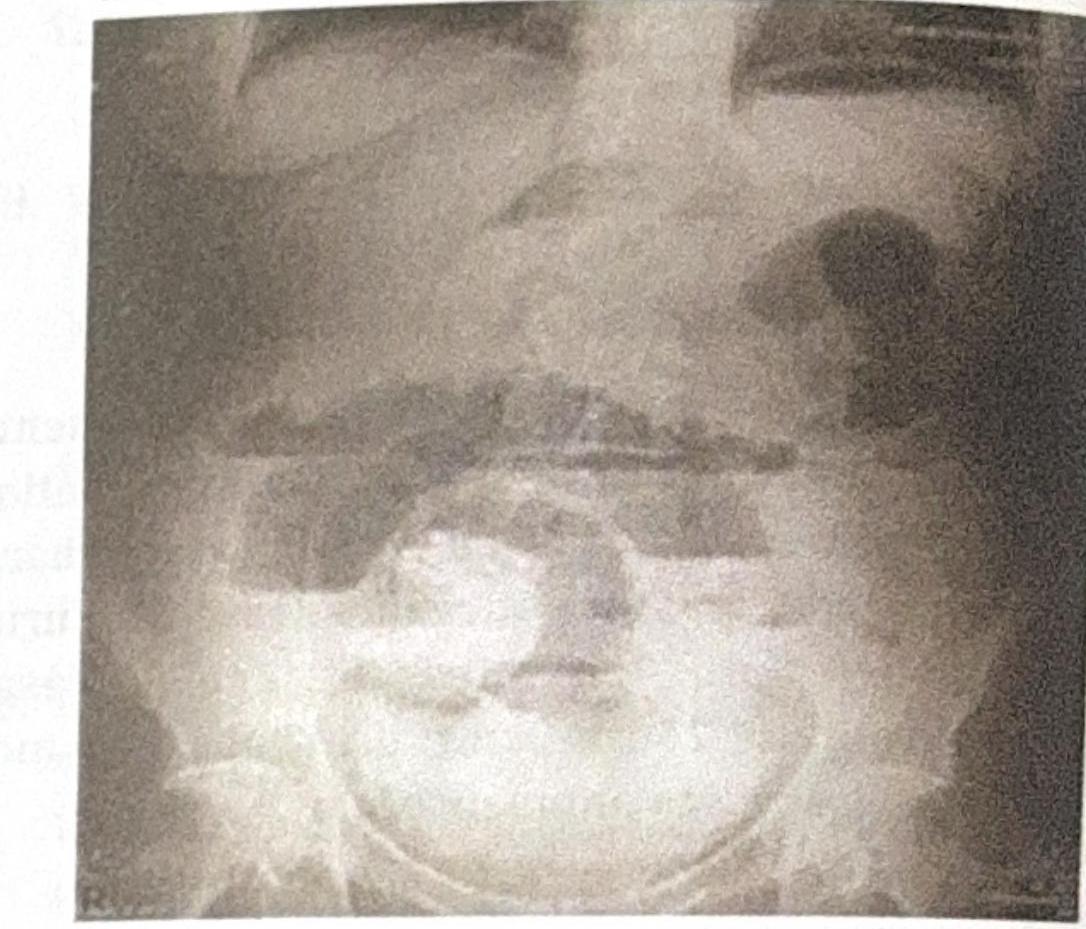
Question 122: A 26-year-old male presents with backache, morning stiffness, reduced chest expansion, and reddening of the eyes. The X-ray provided is shown below. What is the most likely diagnosis?
- A. Osteopetrosis
- B. Ankylosing spondylitis (Correct Answer)
- C. Paget's disease
- D. Rheumatoid arthritis
Explanation: ***Ankylosing spondylitis*** - The patient's symptoms of **backache, morning stiffness, reduced chest expansion**, and **reddening of the eyes** (uveitis) are classic manifestations of ankylosing spondylitis. The X-ray image (though somewhat obscured) shows signs consistent with **sacroiliitis** and possibly early **syndesmophyte formation**, leading to a "bamboo spine" appearance which is pathognomonic. - This condition is a **chronic inflammatory disease** primarily affecting the spine and sacroiliac joints, more common in young men. *Osteopetrosis* - This is a rare genetic disorder characterized by **increased bone density** due to defective osteoclast function, leading to bone fragility. - Clinical features usually include **fractures**, cranial nerve palsies due to narrowed foramina, and **hematologic abnormalities** due to marrow obliteration, not inflammatory back pain or uveitis. *Paget's disease* - **Paget's disease of bone** involves localized areas of excessive bone turnover, leading to disorganized bone structure. - It typically affects older individuals and presents with **bone pain**, skull enlargement, and hearing loss, rather than inflammatory back pain and uveitis in a young male. *Rheumatoid arthritis* - Rheumatoid arthritis is a **chronic autoimmune disease** primarily affecting the **synovial joints**, mostly small joints, symmetrically. - While it can cause systemic inflammation, it typically spares the axial skeleton, and symptoms like severe morning stiffness and reduced chest expansion with specific X-ray findings described are not characteristic.
Orthopaedics
1 questionsA 60-year-old elderly female with a previous history of a Colles fracture is now complaining of backache. Which of the following statements regarding the treatment of this patient is incorrect?
NEET-PG 2021 - Orthopaedics NEET-PG Practice Questions and MCQs
Question 121: A 60-year-old elderly female with a previous history of a Colles fracture is now complaining of backache. Which of the following statements regarding the treatment of this patient is incorrect?
- A. Oral vitamin D3 is given along with oral calcium
- B. Teriparatide should be started before supplementing bisphosphonates (Correct Answer)
- C. Calcium requirement is 1200 mg per day
- D. Bisphosphonates can be given for 3-5 years depending on patient response and risk factors
Explanation: ***Teriparatide should be started before supplementing bisphosphonates*** - This statement is incorrect because **bisphosphonates are typically the first-line treatment** for osteoporosis, especially in patients with a history of fragility fractures like a Colles fracture. - **Teriparatide**, an anabolic agent, is usually reserved for patients with very severe osteoporosis, those who have failed bisphosphonate therapy, or those with highly accelerated bone loss. *Oral vitamin D3 is given along with oral calcium* - This is a routine and **correct practice in osteoporosis management** as calcium and vitamin D are essential for bone health. - **Vitamin D** aids in calcium absorption from the gut, and both are crucial for bone mineralization and density. *Calcium requirement is 1200 mg per day* - The recommended daily **calcium intake for postmenopausal women** and elderly individuals with osteoporosis is typically around 1200 mg. - This amount helps to maintain skeletal health and reduce the risk of fractures. *Bisphosphonates can be given for 3-5 years depending on patient response and risk factors* - This statement is correct, as **bisphosphonates are commonly prescribed for 3-5 years** to reduce fracture risk in osteoporosis. - A **"drug holiday"** may be considered after this period, depending on the patient's fracture risk and bone mineral density.
Pediatrics
7 questionsWhat is the characteristic metabolic finding in a baby with Congenital Hypertrophic Pyloric Stenosis (CHPS)?
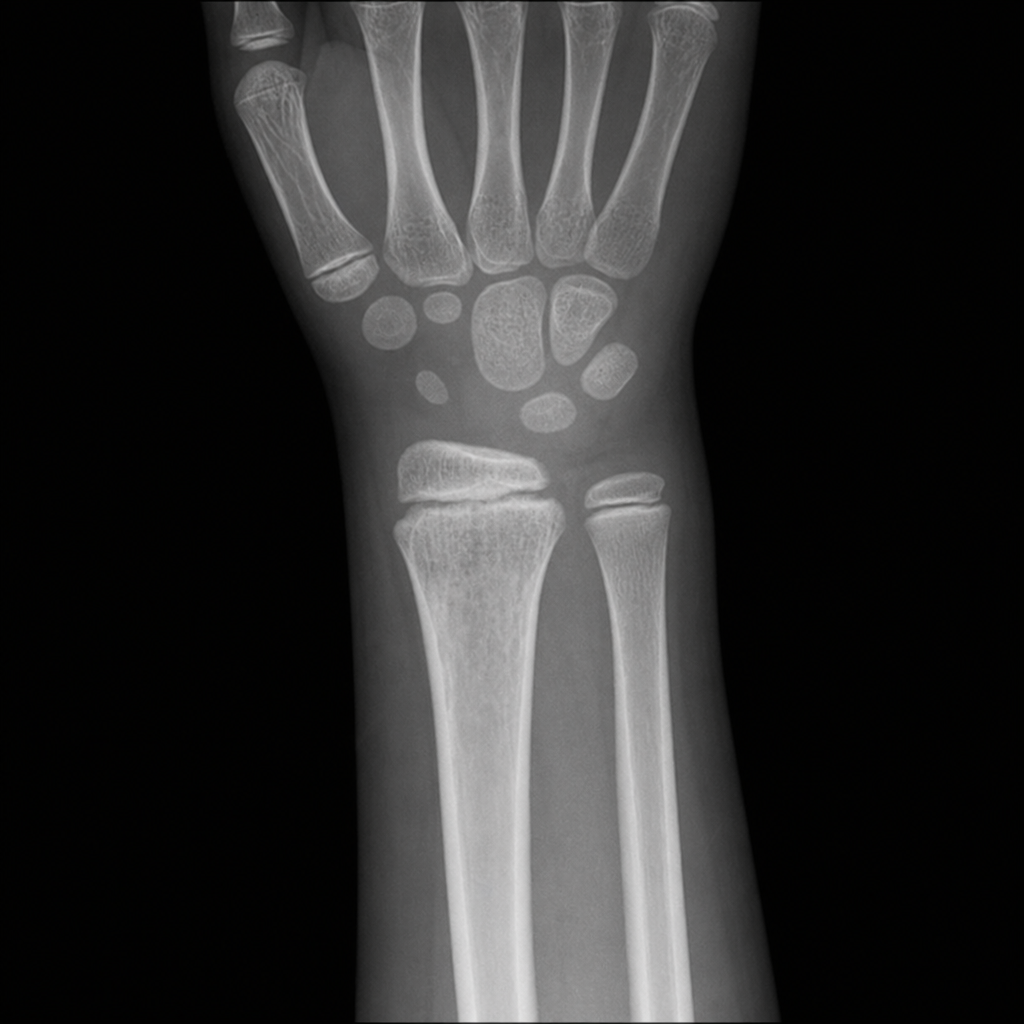
A child presents with rachitic changes in the limbs that are not responding to Vitamin D supplementation. Investigations reveal the following results: - Calcium: $9.5 \mathrm{mg} / \mathrm{dl}$ - Phosphorus: $1.6 \mathrm{mg} / \mathrm{dl}$ - Alkaline phosphatase (ALP): 814 IU - Serum PTH: $24.2 \mathrm{pg} / \mathrm{ml}$ - Serum electrolytes, creatinine, and blood gases: Normal. What is the most likely diagnosis?
Which vaccine is contraindicated in a 3-monthold infant with recurrent respiratory illness?
In a child with a height-for-age Z-score of less than -2 standard deviations (SD), what is the most likely cause?
A child presents with myoclonic jerks and decreasing school performance. The child had a history of fever and rash at the age of 1 year. What is the most likely diagnosis?
A child presents with a webbed neck, short stature, and a low posterior hairline. What is the most likely diagnosis?
A 10-year-old male presents with generalized edema. His cholesterol level is $238 \mathrm{mg} / \mathrm{dl}$, urine protein is $3+$, and stool microscopy shows fat in the stool. What is the most likely diagnosis?
NEET-PG 2021 - Pediatrics NEET-PG Practice Questions and MCQs
Question 121: What is the characteristic metabolic finding in a baby with Congenital Hypertrophic Pyloric Stenosis (CHPS)?
- A. Mixed acid-base disorder with hyperkalemia
- B. Hypochloremic metabolic alkalosis (Correct Answer)
- C. Metabolic acidosis with hyperchloremia
- D. Respiratory alkalosis with hyponatremia
- E. Hyperchloremic metabolic acidosis with hypokalemia
Explanation: ***Hypochloremic metabolic alkalosis*** - The persistent **vomiting** in CHPS leads to a significant loss of gastric acid (HCl), causing profound **hypochloremia** and an increase in serum bicarbonate. - This loss of stomach acid results in a shift towards alkalinity, manifesting as a **metabolic alkalosis**. - **Hypokalemia** also develops due to renal compensation mechanisms and urinary potassium losses. *Mixed acid-base disorder with hyperkalemia* - While electrolyte imbalances can be complex, **hyperkalemia** is not a characteristic finding; rather, **hypokalemia** is common due to renal compensation for metabolic alkalosis. - A **mixed acid-base disorder** is less specific than the classic hypochloremic metabolic alkalosis seen in CHPS. *Metabolic acidosis with hyperchloremia* - **Metabolic acidosis** would imply a gain of acid or loss of alkali, which is contrary to the loss of acid from vomiting in CHPS. - **Hyperchloremia** is also incorrect; the characteristic finding is **hypochloremia** due to the loss of gastric HCl. *Respiratory alkalosis with hyponatremia* - **Respiratory alkalosis** is caused by hyperventilation and is not directly related to the pathophysiology of CHPS. - While **hyponatremia** can occur in severe dehydration, it is not the primary or most characteristic electrolyte derangement in CHPS, which is marked by hypochloremia and hypokalemia. *Hyperchloremic metabolic acidosis with hypokalemia* - This combines incorrect elements: **hyperchloremia** and **metabolic acidosis** are opposite to what occurs in CHPS. - While **hypokalemia** is correct, the acid-base and chloride abnormalities are wrong. - CHPS causes **hypochloremia** and **metabolic alkalosis**, not hyperchloremia and acidosis.
Question 122: A child presents with rachitic changes in the limbs that are not responding to Vitamin D supplementation. Investigations reveal the following results: - Calcium: $9.5 \mathrm{mg} / \mathrm{dl}$ - Phosphorus: $1.6 \mathrm{mg} / \mathrm{dl}$ - Alkaline phosphatase (ALP): 814 IU - Serum PTH: $24.2 \mathrm{pg} / \mathrm{ml}$ - Serum electrolytes, creatinine, and blood gases: Normal. What is the most likely diagnosis?
- A. Hypophosphatemic rickets (Correct Answer)
- B. Vitamin D-dependent rickets type 2
- C. Vitamin D-dependent rickets type 1
- D. Chronic renal failure
- E. Vitamin D deficiency rickets
Explanation: ***Hypophosphatemic rickets*** - The combination of **rachitic changes** not responding to Vitamin D, **low serum phosphorus (1.6 mg/dl)**, and **normal calcium and PTH levels** strongly points to hypophosphatemic rickets, a condition characterized by impaired renal phosphate reabsorption. - The **elevated alkaline phosphatase** indicates increased bone turnover as the body tries to mineralize bone despite phosphate deficiency. *Vitamin D-dependent rickets type 2* - This condition involves resistance to **1,25-dihydroxyvitamin D**, leading to **hypocalcemia** and elevated PTH, none of which are present here. - It would also typically show an inadequate response to Vitamin D, but the primary biochemical derangement is different. *Vitamin D-dependent rickets type 1* - This type is caused by a defect in **1-alpha-hydroxylase**, leading to an inability to convert 25-hydroxyvitamin D to its active form, resulting in **hypocalcemia** and elevated PTH, which are not observed. - It would also show a poor response to standard Vitamin D supplementation. *Vitamin D deficiency rickets* - This is the most common form of rickets caused by inadequate Vitamin D intake or synthesis, presenting with **hypocalcemia**, **elevated PTH**, and **low phosphorus**. - However, it typically responds well to Vitamin D supplementation, unlike the presentation here, and would show elevated PTH levels. *Chronic renal failure* - Chronic renal failure would present with **elevated creatinine**, and typically leads to **secondary hyperparathyroidism** (elevated PTH), **hyperphosphatemia**, and metabolic acidosis, none of which are suggested by the provided lab results. - The serum electrolytes, creatinine, and blood gases are explicitly stated as normal.
Question 123: Which vaccine is contraindicated in a 3-monthold infant with recurrent respiratory illness?
- A. DT (Diphtheria and Tetanus)
- B. Measles vaccine
- C. DPT (Diphtheria, Pertussis, Tetanus) (Correct Answer)
- D. Inactivated polio vaccine (IPV)
- E. Hepatitis B vaccine
Explanation: ***DPT (Diphtheria, Pertussis, Tetanus)*** - While DPT is routinely given in infancy, the **pertussis component** (particularly the whole-cell vaccine formulation) can exacerbate existing **respiratory conditions** or be problematic in infants with a history of **unstable neurological disorders**. - Recurrent respiratory illness in a 3-month-old may indicate underlying pulmonary compromise, for which the pertussis component's side effects (e.g., fever, fussiness) could be poorly tolerated or confound diagnosis. *Measles vaccine* - The measles vaccine (MMR) is typically administered at **12-15 months of age**, not at 3 months. - Measles vaccine is a **live attenuated vaccine**, but its contraindications are primarily related to severe immunosuppression or recent immunoglobulin receipt, not recurrent respiratory illness in this age group. *DT (Diphtheria and Tetanus)* - The DT vaccine (without the pertussis component) is generally considered **safe** for infants and often used if the pertussis component is *contraindicated*. - This option does not address the specific concern regarding the pertussis component in the context of recurrent respiratory illness. *Inactivated polio vaccine (IPV)* - IPV is an **inactivated vaccine**, meaning it contains killed virus, and thus carries a very low risk of vaccine-related adverse events. - Recurrent respiratory illness is **not a contraindication** for IPV, which is part of routine infant immunization schedules. *Hepatitis B vaccine* - Hepatitis B vaccine is an **inactivated vaccine** routinely given at birth and as part of the infant immunization schedule. - Recurrent respiratory illness is **not a contraindication** for Hepatitis B vaccine, which is safe and well-tolerated in infants.
Question 124: In a child with a height-for-age Z-score of less than -2 standard deviations (SD), what is the most likely cause?
- A. Chronic malnutrition (Correct Answer)
- B. No malnutrition
- C. Acute malnutrition
- D. Recent infection
- E. Genetic short stature
Explanation: ***Chronic malnutrition*** - A **height-for-age Z-score of less than -2 SD** is a key indicator for **stunting**, which is primarily caused by prolonged periods of **inadequate nutrition** and/or recurrent infections. - This reflects **long-term nutritional deprivation** impacting linear growth, rather than recent or acute issues. *No malnutrition* - A Z-score below -2 SD for height-for-age is a critical threshold indicating **significant growth faltering**, making the absence of malnutrition highly unlikely. - This measurement directly reflects that the child's height is significantly below the expected range for their age, signifying a nutritional problem. *Acute malnutrition* - **Acute malnutrition** is typically assessed by **weight-for-height Z-score** (wasting) or Mid-Upper Arm Circumference (MUAC). - While acute malnutrition impairs growth, a low height-for-age Z-score specifically points to a problem of **longer duration (chronic)** rather than immediate weight loss. *Recent infection* - While **recent infections** can lead to temporary weight loss and affect appetite, they typically do not cause a **pronounced and sustained reduction in height-for-age** (stunting) unless they are recurrent or chronic, contributing to overall chronic malnutrition. - A single, recent infection is more likely to impact **weight-for-height** acutely. *Genetic short stature* - While **genetic factors** can influence height, a height-for-age Z-score of less than -2 SD in the context of population-based assessment typically indicates **pathological growth failure** due to chronic malnutrition. - Genetic short stature typically maintains **proportional growth** with consistent growth velocity, whereas stunting shows **growth faltering** over time.
Question 125: A child presents with myoclonic jerks and decreasing school performance. The child had a history of fever and rash at the age of 1 year. What is the most likely diagnosis?
- A. Measles
- B. Subacute sclerosing panencephalitis (SSPE) (Correct Answer)
- C. Mesial temporal sclerosis
- D. Polio
Explanation: ***Subacute sclerosing panencephalitis (SSPE)*** - SSPE is a **rare, progressive, and fatal neurodegenerative disease** caused by persistent measles virus infection of the central nervous system. - The presentation of **myoclonic jerks** (stage 2 SSPE) and **decreasing school performance** (stage 1 - cognitive decline) in a child with a history of measles (fever and rash) at 1 year of age is **pathognomonic** for SSPE. - SSPE typically manifests **7-10 years after measles infection**, with male predominance (M:F = 2-4:1). - EEG shows characteristic **Radermecker complexes** (periodic high-amplitude slow wave complexes). - CSG findings include elevated measles antibodies with high CSF:serum antibody ratio. *Measles* - While the child had measles in infancy, the current neurological symptoms are **not acute measles** but rather a late complication (SSPE). - Acute measles is a self-limiting illness; these progressive neurological symptoms occurring years later indicate SSPE, not active measles. *Mesial temporal sclerosis* - This is the most common cause of **drug-resistant temporal lobe epilepsy** characterized by hippocampal atrophy. - Presents with **focal seizures with impaired awareness**, not generalized myoclonic jerks. - **No link to prior measles infection** and typically associated with history of febrile seizures or status epilepticus in childhood. - Progressive cognitive decline is not a primary feature. *Polio* - Polio is caused by **poliovirus** affecting anterior horn cells of the spinal cord, causing **acute flaccid paralysis**. - Presents with **asymmetric lower motor neuron weakness**, not myoclonic jerks or cognitive decline. - **No association with measles** or rash in history. - Would not cause the progressive encephalopathy seen in this case.
Question 126: A child presents with a webbed neck, short stature, and a low posterior hairline. What is the most likely diagnosis?
- A. Edwards syndrome
- B. Turner syndrome (Correct Answer)
- C. Patau syndrome
- D. Down syndrome
- E. Noonan syndrome
Explanation: ***Turner syndrome*** - **Turner syndrome** is characterized by the presence of a **single X chromosome (45,XO)** and is associated with a **webbed neck**, **short stature**, and a **low posterior hairline**. - Other classic features include **gonadal dysgenesis**, **cardiac anomalies** (e.g., coarctation of the aorta), and **renal anomalies**. - **Occurs only in females** due to the chromosomal abnormality. *Edwards syndrome* - **Edwards syndrome** (Trisomy 18) is characterized by severe developmental delays, a **rocker-bottom feet deformity**, **micrognathia**, and **clenched hands with overlapping fingers**. - **Webbed neck** and **short stature** are not primary distinguishing features of Edwards syndrome. *Patau syndrome* - **Patau syndrome** (Trisomy 13) is associated with severe midline defects, including **cleft lip and palate**, **polydactyly**, **microphthalmia**, and **holoprosencephaly**. - It does not typically present with a **webbed neck** or a **low posterior hairline**. *Down syndrome* - **Down syndrome** (Trisomy 21) is typically characterized by **upslanting palpebral fissures**, a **single palmar crease**, **intellectual disability**, and **cardiac defects**. - While **short stature** can be present, the classic combination of a **webbed neck** and **low posterior hairline** is not characteristic of Down syndrome. *Noonan syndrome* - **Noonan syndrome** shares phenotypic similarities with Turner syndrome, including **webbed neck**, **short stature**, and **cardiac defects** (especially pulmonary stenosis). - However, it occurs in **both males and females** with a **normal karyotype** and is caused by mutations in genes of the RAS-MAPK pathway. - Key differentiating features include **pectus excavatum**, **cryptorchidism in males**, and the absence of gonadal dysgenesis.
Question 127: A 10-year-old male presents with generalized edema. His cholesterol level is $238 \mathrm{mg} / \mathrm{dl}$, urine protein is $3+$, and stool microscopy shows fat in the stool. What is the most likely diagnosis?
- A. Nephritic syndrome
- B. Goodpasture syndrome
- C. Nephrotic syndrome (Correct Answer)
- D. Urine infection
- E. Minimal change disease
Explanation: ***Nephrotic syndrome*** - **Nephrotic syndrome** is characterized by **generalized edema**, **massive proteinuria** (3+ in urine protein), and **hyperlipidemia** (elevated cholesterol). - **Fat in the stool** (steatorrhea) can be an associated finding due to malabsorption or metabolic derangements, though not a primary diagnostic criterion for nephrotic syndrome. - This is the **syndrome** that encompasses the entire clinical presentation. *Minimal change disease* - **Minimal change disease** is the **most common etiology** of nephrotic syndrome in children (accounting for ~80% of cases in this age group). - While this child likely has minimal change disease as the underlying cause, the question asks for the **syndrome/diagnosis** based on the clinical presentation, which is **nephrotic syndrome**. - Minimal change disease is the pathologic diagnosis that would be confirmed on **renal biopsy**. *Nephritic syndrome* - **Nephritic syndrome** typically presents with **hematuria**, **hypertension**, **azotemia**, and mild to moderate proteinuria, rather than massive proteinuria and generalized edema. - It is characterized by inflammation of the glomeruli, often leading to a decrease in **glomerular filtration rate (GFR)**. *Goodpasture syndrome* - **Goodpasture syndrome** is an autoimmune disease characterized by **rapidly progressive glomerulonephritis** and **pulmonary hemorrhage**. - While it causes renal involvement, its distinct feature is the presence of **anti-glomerular basement membrane (GBM) antibodies**, and the clinical picture does not align with the given symptoms. *Urine infection* - A **urine infection** (urinary tract infection) typically presents with dysuria, frequency, urgency, and sometimes fever, with positive urine cultures and pyuria. - It does not explain the presence of **generalized edema**, **hyperlipidemia**, or **massive proteinuria**.