Question 11: A male patient presents with white discharge from the urethra, as shown in the image. What is the most probable causative organism?
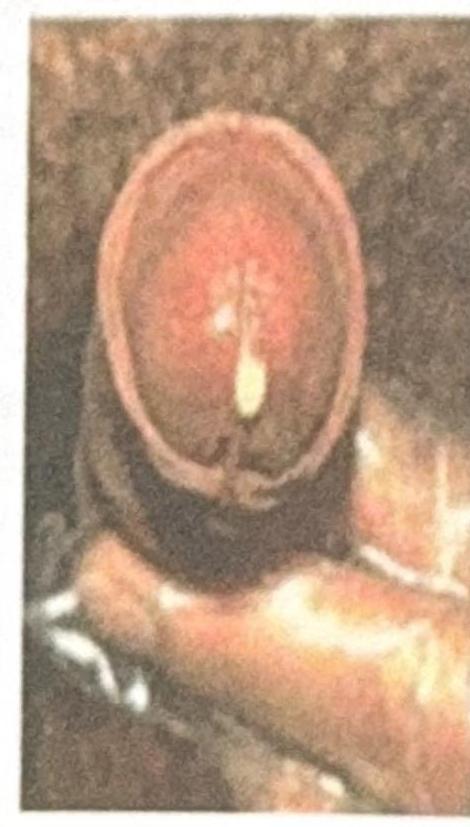
- A. Haemophilus ducreyi
- B. Klebsiella granulomatis
- C. Neisseria gonorrhoeae (Correct Answer)
- D. Treponema pallidum
Explanation: ***Neisseria gonorrhoeae***
- Among the given options, *Neisseria gonorrhoeae* is the **most probable causative organism** for **urethral discharge** in males.
- Gonorrhea is a common sexually transmitted infection (STI) presenting with **purulent urethritis**, typically with thick, yellow-green discharge, though appearance can vary.
- **Clinical note:** While classic gonococcal discharge is purulent and yellow-green, the clinical presentation can vary. None of the other organisms listed cause urethritis with discharge.
*Haemophilus ducreyi*
- This bacterium causes **chancroid**, a sexually transmitted infection characterized by **painful genital ulcers (chancres)** and **inguinal lymphadenopathy**, not urethral discharge.
- Presents with ulcerative lesions, not discharge.
*Klebsiella granulomatis*
- This organism is responsible for **donovanosis** (granuloma inguinale), which manifests as **painless, progressive ulcerative lesions** on the genitals.
- It does not cause urethral discharge; presents with beefy red granulomatous lesions.
*Treponema pallidum*
- This spirochete causes **syphilis**, which presents with **painless chancres** in the primary stage, **maculopapular rash** in the secondary stage, and gummas or neurological symptoms in later stages.
- Urethral discharge is not a typical symptom of syphilis; primary lesions are ulcerative.
Question 12: A hair perforation test was performed on a yeast isolate, and the result was positive. Which of the following organisms is associated with a positive hair perforation test?
- A. Candida tropicalis
- B. Candida glabrata
- C. Candida parapsilosis
- D. Candida albicans (Correct Answer)
Explanation: ***Candida albicans***
- The **hair perforation test** is a classic diagnostic test specifically used to identify *Candida albicans*, which characteristically produces **conical projections** when incubated with sterilized blonde hair in water at room temperature.
- This test has historically been used as a simple, rapid method for **presumptive identification** of *C. albicans* from other Candida species, indicating the organism's ability to produce **keratinolytic enzymes**.
*Candida tropicalis*
- *Candida tropicalis* gives a **negative hair perforation test** and does not produce the characteristic hair perforations seen with *C. albicans*.
- While it can form **pseudohyphae** and true hyphae, it can be differentiated from *C. albicans* using this test among others.
*Candida glabrata*
- *Candida glabrata* does **NOT** produce a positive hair perforation test and typically remains in **yeast form**.
- It is distinguished from other Candida species by its **smaller cell size** and inability to form germ tubes or hair perforations.
*Candida parapsilosis*
- *Candida parapsilosis* also gives a **negative hair perforation test** and does not produce hair perforations.
- This species can form **pseudohyphae** but the hair perforation test helps distinguish it from *C. albicans*.