The CT thorax image shows:

A 6 month infant was brought with complaints of a failure to gain weight and a large head. On examination, increased head circumference, bounding pulses and features of heart failure were noted. On cranial auscultation loud cranial bruit was heard. MRI head shows? (Recent NEET Pattern 2018-19)

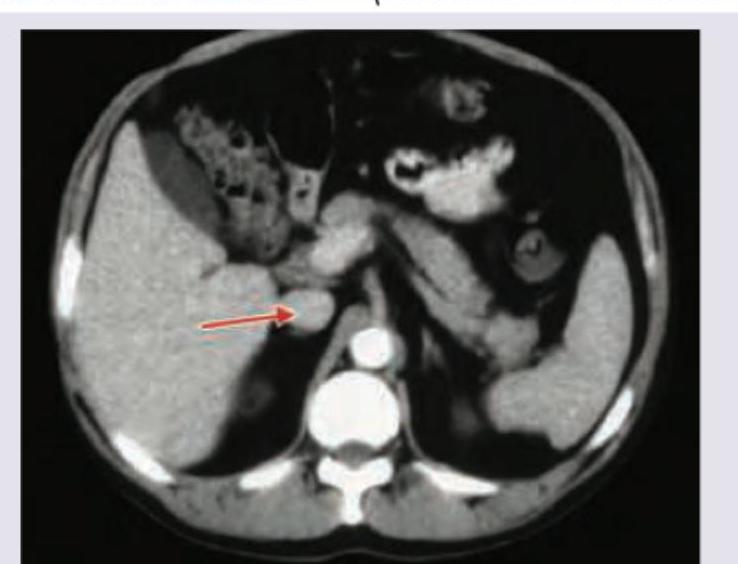
Identify the marked structure in the CT abdomen section shown below? (Recent NEET Pattern 2018-19)
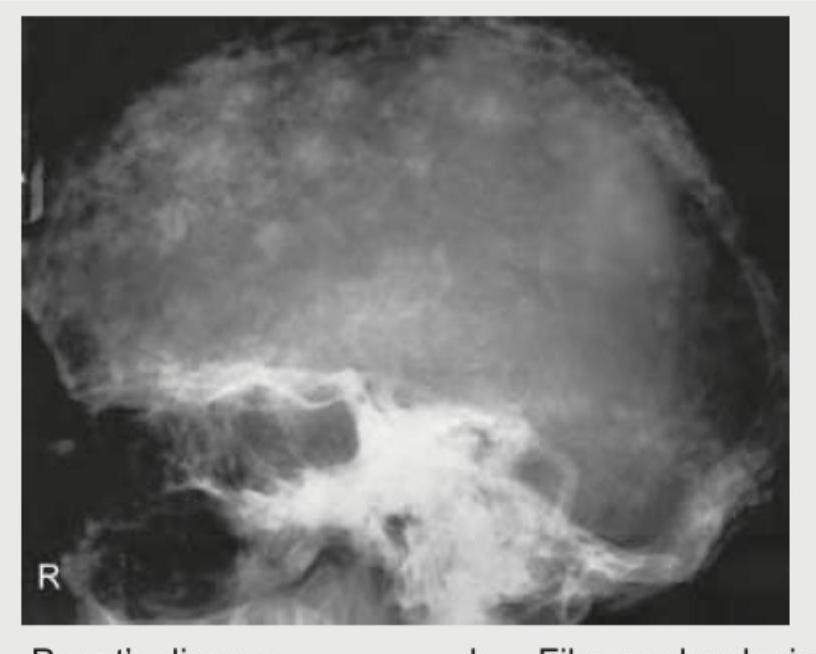
A 65-year-old man presents with bone pains. X-ray Skull shows? (Recent NEET Pattem 2018-19)
A 35-year-old male with history of 4 weeks of immobilization for fracture of femur develops sudden onset breathlessness and blood in sputum. CT angiography shows? (Recent NEET Pattem 2018-19)

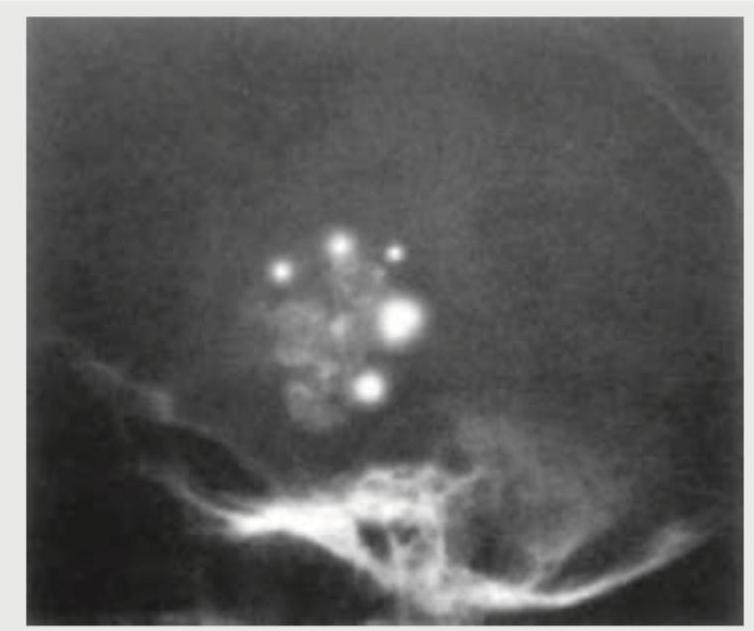
A 9-year-old female child presents with history of headache and visual disturbances. X-Ray skull is shown below. What is the possible diagnosis? (Recent NEET Pattern 2018-19)
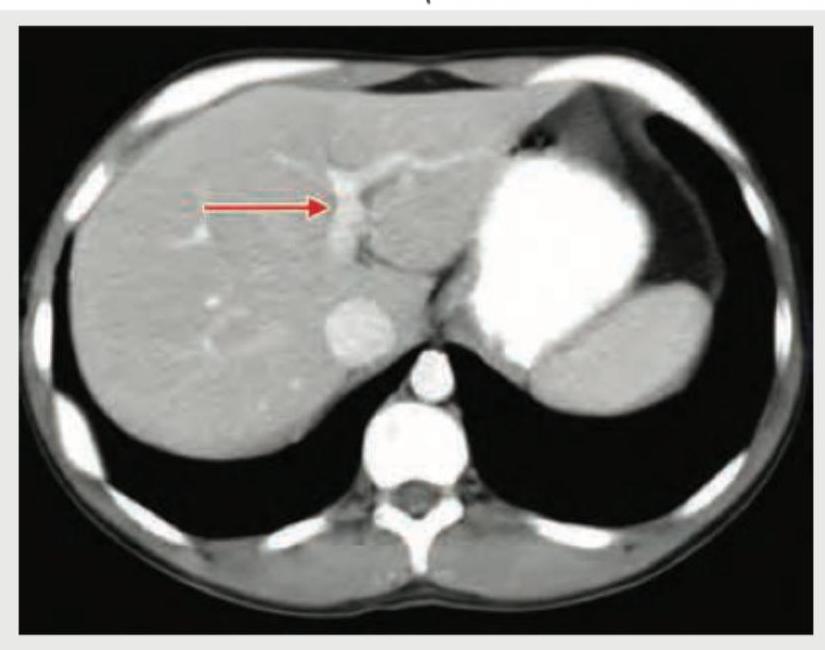
Identify the structure shown in CT abdomen section. (Recent NEET Pattern 2018-19)
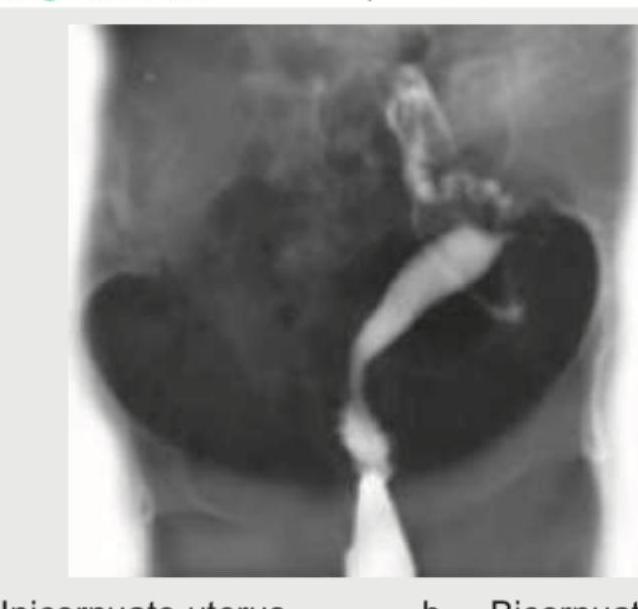
A 32-year-old lady presents with history of first trimester miscarriage and underwent HSG. The diagnosis is: (Recent NEET Pattern 2018-19)
The Gut blood vessel marked (Red arrow) in the angiogram is: (Recent NEET Pattern 2018-19)

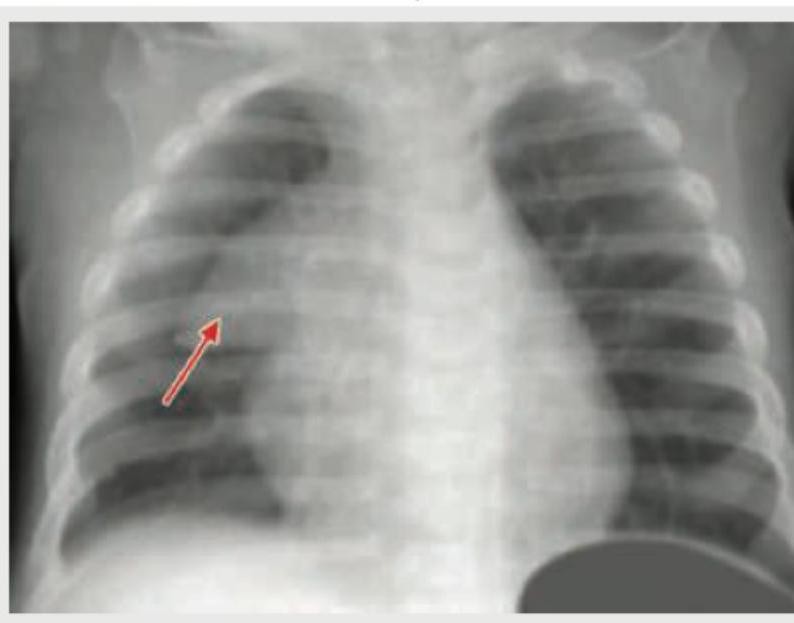
Comment on the arrow marked structure in CXR of an infant: (Recent NEET Pattern 2018-19)
NEET-PG 2018 - Radiology NEET-PG Practice Questions and MCQs
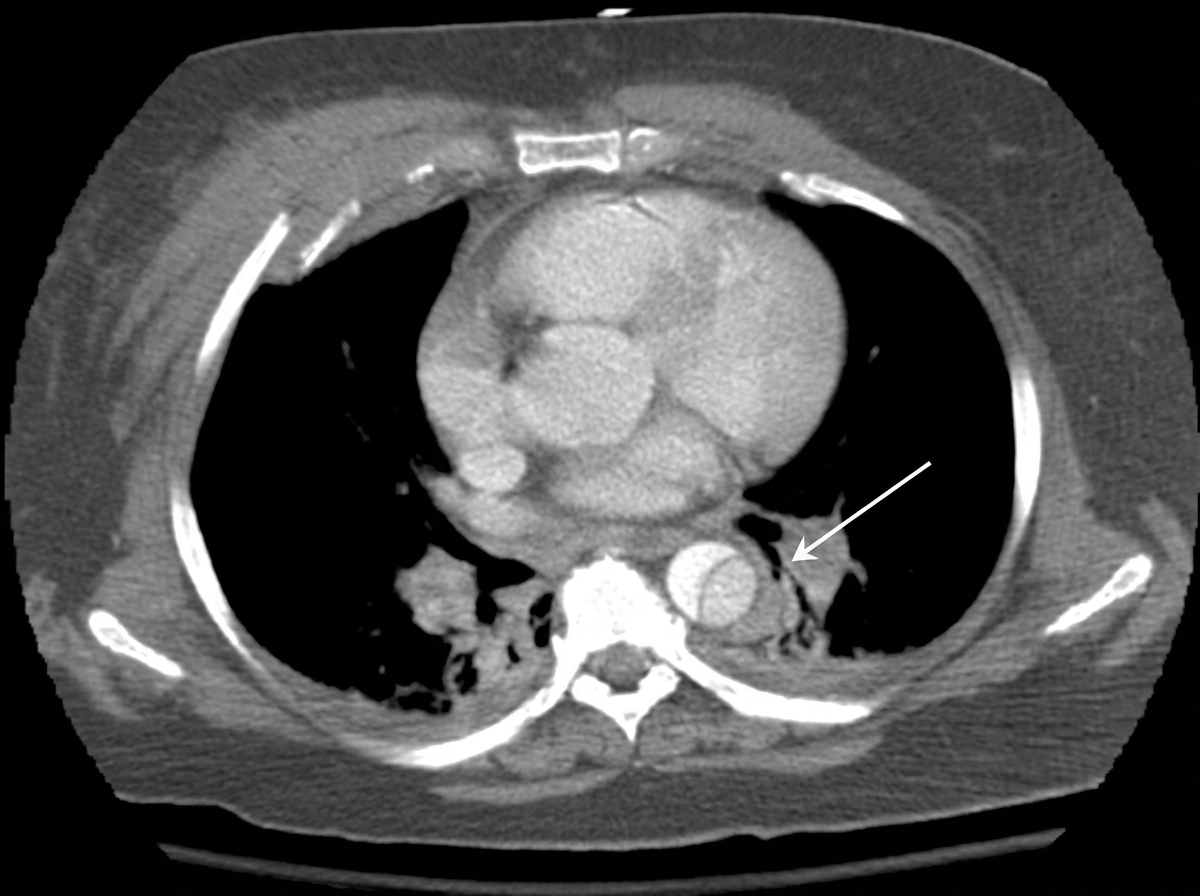
Question 11: The CT thorax image shows:
- A. Descending aortic dissection
- B. Aortic aneurysm
- C. Ascending aortic dissection (Correct Answer)
- D. Aortic coarctation
Explanation: ***Ascending aortic dissection*** - The CT image shows a **classic intimal flap** separating the true and false lumens in the ascending aorta, which is the hallmark feature of an aortic dissection. - This represents a **Stanford Type A dissection** involving the ascending aorta, which is a life-threatening emergency requiring **immediate surgical intervention** due to high risk of complications including rupture, cardiac tamponade, and acute aortic regurgitation. - The presence of the intimal flap creating two distinct channels (true and false lumens) is pathognomonic for dissection. *Descending aortic dissection* - While the intimal flap is characteristic of dissection, the image specifically shows involvement of the **ascending aorta** (proximal to the left subclavian artery), not the descending thoracic aorta. - Descending aortic dissections (Stanford Type B) are typically managed **medically** with blood pressure control, unlike ascending dissections which require surgery. *Aortic aneurysm* - An **aortic aneurysm** represents focal dilatation of the aortic wall (>50% increase in diameter) without separation of the intimal layers. - While aneurysms can be a risk factor for dissection, the key finding here is the **intimal flap dividing the lumen**, which defines dissection rather than simple aneurysmal dilatation. - The image does not show the uniform circumferential enlargement typical of aneurysms. *Aortic coarctation* - **Aortic coarctation** is a congenital narrowing of the aorta, typically located at the aortic isthmus (near the ligamentum arteriosum), distal to the left subclavian artery. - CT would show focal narrowing with pre-stenotic dilatation and collateral vessel formation, not an intimal flap. - This is a completely different pathology without the characteristic dissection flap seen in this image.
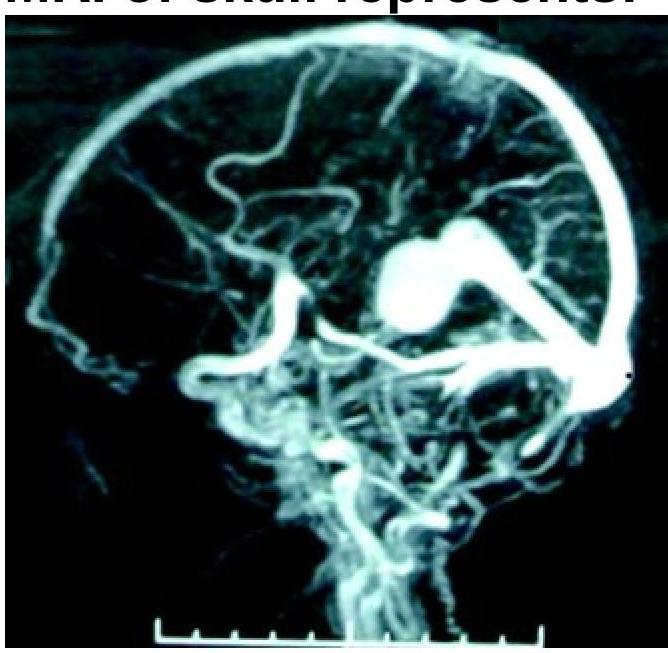
Question 12: A 6 month infant was brought with complaints of a failure to gain weight and a large head. On examination, increased head circumference, bounding pulses and features of heart failure were noted. On cranial auscultation loud cranial bruit was heard. MRI head shows? (Recent NEET Pattern 2018-19)
- A. Vein of Galen malformation (Correct Answer)
- B. Arachnoid cyst
- C. Arnold-Chiari malformation
- D. Dandy-Walker syndrome
Explanation: ***Vein of Galen formation*** - The clinical presentation of **failure to thrive**, **macrocephaly**, **bounding pulses**, **heart failure**, and a **loud cranial bruit** in an infant is highly characteristic of a **Vein of Galen malformation (VOGM)**. The image would show a dilated vein of Galen. - VOGMs are high-flow arteriovenous malformations that can lead to significant hemodynamic stress on the heart and hydrocephalus due to obstruction of CSF pathways. *Arachnoid cyst* - While arachnoid cysts can cause **macrocephaly** and, less commonly, obstructive hydrocephalus, they generally do not present with **heart failure**, **bounding pulses**, or a **cranial bruit**. - MRI would show a CSF-filled cyst that follows CSF signal on all sequences and typically does not enhance. *Arnold-Chiari malformation* - Arnold-Chiari malformations involve downward displacement of cerebellar tonsils or vermis through the foramen magnum and are associated with hydrocephalus, but they do not typically cause **heart failure**, **bounding pulses**, or a **cranial bruit**. - Clinical features usually relate to brain stem compression or hydrocephalus, such as apnea, stridor, or feeding difficulties. *Dandy-Walker syndrome* - Dandy-Walker syndrome is characterized by hypoplasia of the cerebellar vermis and cystic dilation of the fourth ventricle, often leading to **hydrocephalus** and **macrocephaly**. - However, it does not explain the **bounding pulses**, **heart failure**, or **cranial bruit** seen in this patient, which point to a vascular anomaly.
Question 13: Identify the marked structure in the CT abdomen section shown below? (Recent NEET Pattern 2018-19)
- A. Aorta
- B. Superior mesenteric artery (Correct Answer)
- C. Inferior vena cava
- D. Superior mesenteric vein
Explanation: **Superior mesenteric artery** - The arrow points to a circular, **contrast-filled vessel** anterior to the aorta and posterior to the pancreatic head, characteristic of the **superior mesenteric artery (SMA)** - The SMA originates from the **anterior aspect of the aorta at L1 level** and supplies the midgut structures - In arterial phase CT, the SMA shows **bright contrast enhancement** and appears as a round structure between the aorta and pancreatic uncinate process *Incorrect: Aorta* - The **aorta** is the larger, more posterior vessel with a crescent or oval shape in axial sections - While the SMA branches from the aorta, the marked structure is clearly anterior to the main aortic lumen *Incorrect: Inferior vena cava* - The **IVC** is located to the **right of the aorta** in axial CT sections - The marked structure is **anterior and to the left**, not in the expected IVC position - The IVC would show less enhancement in arterial phase imaging *Incorrect: Superior mesenteric vein* - The **SMV** typically runs to the **right and slightly anterior** to the SMA - In arterial phase CT, the SMV shows **less intense opacification** compared to the arterial structures - The marked structure shows arterial-phase enhancement, indicating it is an artery, not a vein
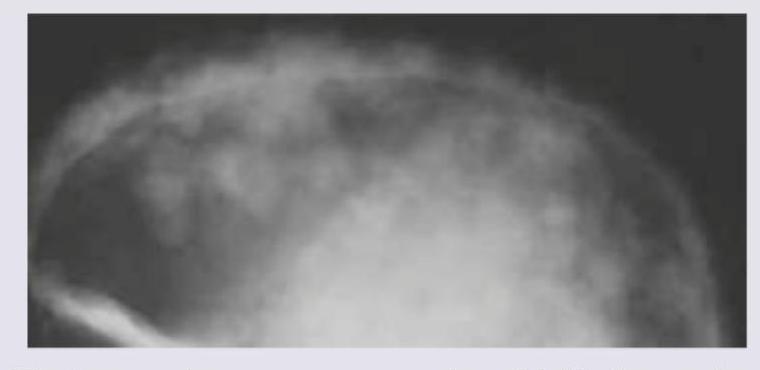
Question 14: A 65-year-old man presents with bone pains. X-ray Skull shows? (Recent NEET Pattem 2018-19)
- A. Paget's disease
- B. Fibrous dysplasia
- C. Histiocytosis-X
- D. Multiple myeloma (Correct Answer)
Explanation: ***Multiple myeloma*** - The X-ray shows multiple, well-defined, lytic lesions (''**punched-out lesions**'') scattered throughout the skull, which is highly characteristic of multiple myeloma. - This condition is a **plasma cell malignancy** that commonly affects older adults and often presents with **bone pain** due to osteolytic activity. *Paget's disease* - Characterized by abnormal bone remodeling, leading to bone enlargement, thickening, and a **"cotton wool" appearance** on X-ray, which is not seen here. - While it can cause bone pain and skull involvement, the lytic pattern in the X-ray is not typical for Paget's disease. *Fibrous dysplasia* - This condition involves **normal bone marrow** being replaced by **fibrous tissue** and immature bone, often presenting as a **ground-glass appearance** or expansile lesions, usually in younger individuals. - The distinct "punched-out" lesions seen in the image are not characteristic of fibrous dysplasia. *Histiocytosis-X* - Also known as Langerhans cell histiocytosis, it can cause **lytic bone lesions**, particularly in the skull, described as a **"map-like" or "geographic" pattern**. - Although it causes lytic lesions, the pattern in the image, with its numerous small, widespread lytic lesions, is more indicative of multiple myeloma in an older adult.
Question 15: A 35-year-old male with history of 4 weeks of immobilization for fracture of femur develops sudden onset breathlessness and blood in sputum. CT angiography shows? (Recent NEET Pattem 2018-19)
- A. Acute cor-pulmonale (Correct Answer)
- B. Pulmonary oedema
- C. Aortic dissection
- D. Fat embolism
Explanation: ***Acute cor-pulmonale*** - **4 weeks of immobilization** is a major risk factor for **deep vein thrombosis (DVT)** leading to **pulmonary embolism (PE)** - **CT pulmonary angiography** is the gold standard investigation for PE, showing filling defects in pulmonary arteries - Massive or submassive PE causes acute **right ventricular strain** = **acute cor-pulmonale** - Clinical presentation of **sudden breathlessness** and **hemoptysis** is classic for pulmonary thromboembolism - The timing (4 weeks post-immobilization) fits thromboembolism, not fat embolism *Fat embolism* - Occurs **acutely within 24-72 hours** after long bone fracture (especially femur/tibia) - The **4-week delay** makes fat embolism extremely unlikely - Presents with **respiratory distress, petechial rash, and neurological symptoms** (Gurd's criteria) - CT findings show diffuse ground-glass opacities, not typical filling defects seen on CT angiography *Pulmonary oedema* - Caused by **left heart failure** or **ARDS**, showing bilateral interstitial and alveolar fluid - Would show diffuse bilateral infiltrates on imaging, not filling defects in pulmonary vessels - **Hemoptysis** is uncommon in cardiogenic pulmonary edema - No clear cardiac history or precipitant in this patient *Aortic dissection* - Involves a tear in the aortic intima with blood dissecting through the aortic wall - Presents with **sudden severe chest/back pain**, not primarily with hemoptysis - CT angiography would show **aortic flap and false lumen**, not pulmonary vascular abnormalities - Unrelated to femur fracture or prolonged immobilization
Question 16: A 9-year-old female child presents with history of headache and visual disturbances. X-Ray skull is shown below. What is the possible diagnosis? (Recent NEET Pattern 2018-19)
- A. Hypothalamic hamartoma
- B. Craniopharyngioma (Correct Answer)
- C. Histiocytosis- X
- D. Letterer-Siwe disease
Explanation: ***Craniopharyngioma*** - The X-ray skull image shows significant **intracranial calcifications**, which are a hallmark feature of **craniopharyngiomas**, especially in children (seen in 80-90% of cases). - Clinical symptoms like **headache** and **visual disturbances** are consistent with the mass effect of a suprasellar tumor like craniopharyngioma, which can compress the optic chiasm and cause hydrocephalus. - Craniopharyngioma is the **most common suprasellar tumor in children** and typically presents in this age group. *Hypothalamic hamartoma* - These are **non-neoplastic** lesions that typically do not present with diffuse calcifications on X-ray skull. - While they can cause endocrine abnormalities (precocious puberty) and gelastic seizures, headache and visual disturbances with calcifications point more toward craniopharyngioma. *Histiocytosis-X* - Histiocytosis-X (Langerhans cell histiocytosis) typically presents with **lytic bone lesions** (punched-out "geographic skull" lesions) on skull X-ray, not diffuse intracranial calcifications. - While it can affect the hypothalamic-pituitary axis causing diabetes insipidus, the dominant radiological finding would be bone destruction, not calcification. *Letterer-Siwe disease* - This is a severe, disseminated form of **Langerhans cell histiocytosis** (acute disseminated LCH) primarily affecting infants and young children under 2 years. - It usually presents with skin rash, hepatosplenomegaly, lymphadenopathy, and lytic bone lesions, but **intracranial calcifications are not a characteristic feature** on plain skull X-rays. - The age of presentation (9 years) and imaging findings make this diagnosis unlikely.
Question 17: Identify the structure shown in CT abdomen section. (Recent NEET Pattern 2018-19)
- A. Inferior vena cava
- B. Portal vein (Correct Answer)
- C. Splenic vein
- D. Superior mesenteric vein
Explanation: ***Portal vein*** - The arrow points to a vessel receiving blood from the splenic and superior mesenteric veins, which is characteristic of the **portal vein** entering the **liver parenchyma**. - The portal vein is typically seen anterior to the **inferior vena cava** and posterior to the **common hepatic artery** at this level. *Inferior vena cava* - The **inferior vena cava (IVC)** is a large, retroperitoneal vessel located posterior to the liver and to the right of the aorta. - The structure indicated by the arrow is clearly within the liver substance, not in the typical position of the IVC. *Splenic vein* - The **splenic vein** runs horizontally behind the body of the pancreas and joins with the superior mesenteric vein to form the portal vein. - The vessel shown is within the liver, distal to the formation of the portal vein. *Superior mesenteric vein* - The **superior mesenteric vein (SMV)** typically runs vertically in the mesentery and joins the splenic vein to form the portal vein. - The indicated structure is within the liver hilum, not in the anatomical location of the SMV.
Question 18: A 32-year-old lady presents with history of first trimester miscarriage and underwent HSG. The diagnosis is: (Recent NEET Pattern 2018-19)
- A. Unicornuate uterus (Correct Answer)
- B. Uterus didelphys
- C. Arcuate uterus
- D. Bicornuate uterus
Explanation: ***Unicornuate uterus*** - A **unicornuate uterus** develops from one **Müllerian duct**, resulting in a single functional uterine horn with a characteristic **banana-shaped** or crescent-shaped cavity. - On **HSG**, it appears as a single, elongated cavity that **deviates to one side** and is typically smaller than normal, associated with increased risk of **first trimester miscarriage**. *Bicornuate uterus* - Would show **two distinct uterine horns** separated by a deep fundal cleft, with the uterus appearing **heart-shaped** externally. - HSG would demonstrate **bifurcation** of the uterine cavity into two separate horns at the fundal level with an **intercornual angle >105 degrees**. *Uterus didelphys* - Complete duplication with **two separate uterine bodies**, cervices, and often vaginas resulting from total failure of **Müllerian duct fusion**. - HSG would show **two completely separate uterine cavities** with no communication, not consistent with the single cavity shown. *Arcuate uterus* - Mildest form of **Müllerian anomaly** with only a slight **fundal indentation** and essentially normal uterine cavity size. - HSG shows a **broad, smooth, mild concave contour** of the fundus, not consistent with the elongated, deviated cavity shown.
Question 19: The Gut blood vessel marked (Red arrow) in the angiogram is: (Recent NEET Pattern 2018-19)
- A. Superior mesenteric artery (Correct Answer)
- B. Inferior mesenteric artery
- C. Splenic artery
- D. Gastroepiploic artery
Explanation: ***Superior mesenteric artery*** - The image shows an **abdominal angiogram** with a vessel arising from the anterior aspect of the aorta and branching extensively, consistent with the **superior mesenteric artery (SMA)**. - The SMA typically supplies the **midgut structures**, which include the duodenum (distal to the major duodenal papilla), jejunum, ileum, cecum, ascending colon, and the proximal two-thirds of the transverse colon. *Inferior mesenteric artery* - The **inferior mesenteric artery (IMA)** originates lower down the aorta, usually at the level of L3, and supplies the hindgut (distal one-third of the transverse colon, descending colon, sigmoid colon, and rectum). - The branching pattern and location in the angiogram do not match the expected origin and distribution of the IMA. *Splenic artery* - The **splenic artery** is a branch of the celiac trunk, which arises higher than the vessel shown and typically courses towards the left to supply the spleen, stomach, and pancreas. - Its branching pattern and location are distinctly different from the vessel highlighted in the image, which is clearly supplying mesenteric structures. *Gastroepiploic artery* - The **gastroepiploic arteries** (right and left) are branches primarily supplying the greater curvature of the stomach and the greater omentum. - These arteries are much smaller and are situated along the stomach, not originating directly from the aorta in this manner or having such a widespread mesenteric distribution.
Question 20: Comment on the arrow marked structure in CXR of an infant: (Recent NEET Pattern 2018-19)
- A. Lingular lobe pneumonia
- B. Sail sign (Correct Answer)
- C. Pneumothorax
- D. Dextrocardia
Explanation: ***Sail sign*** - The arrow points to an elevated, well-defined triangular shadow in the right upper mediastinum, characteristic of the **thymus gland** in an infant. - This appearance is known as the **"sail sign"** due to its resemblance to a boat's sail, caused by the normal shape of the thymus in young children. *Lingular lobe pneumonia* - Lingular lobe pneumonia would appear as an **area of consolidation** or opacification, usually in the left mid-to-lower lung field, which is not depicted here. - This pathology typically results in a loss of the normal markings of the lung parenchyma, unlike the clear outline seen in the image. *Pneumothorax* - A pneumothorax would present as a **collection of air** in the pleural space, characterized by the absence of lung markings in the affected area and a visible visceral pleural line. - There is no evidence of displaced lung tissue, collapsed lung, or an abnormal air collection in the image. *Dextrocardia* - Dextrocardia refers to a condition where the **heart is located on the right side** of the chest. - In this image, the cardiac silhouette is clearly on the left side, indicating a normally positioned heart.