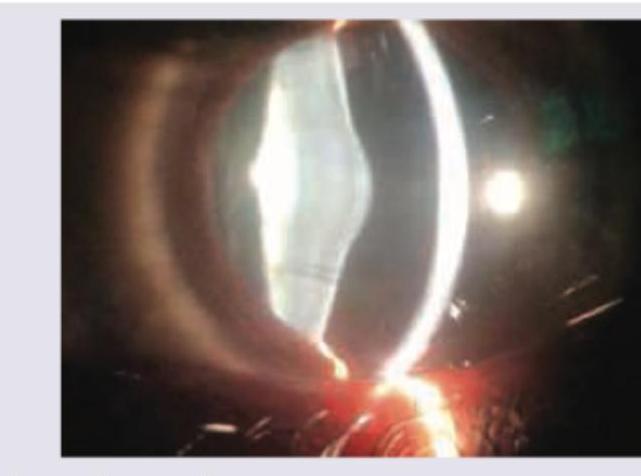
Which is true about an infant with failure to thrive and the following findings?
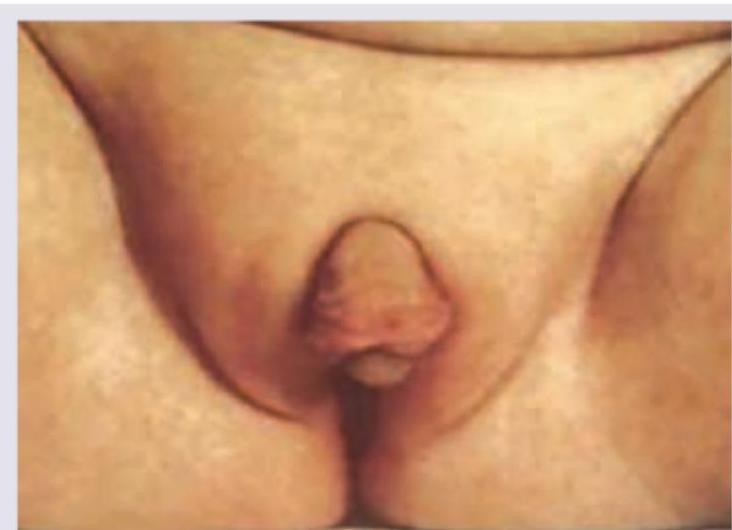
This new-born baby presented with respiratory distress soon after birth. Which of the following is not a correct association about this condition?

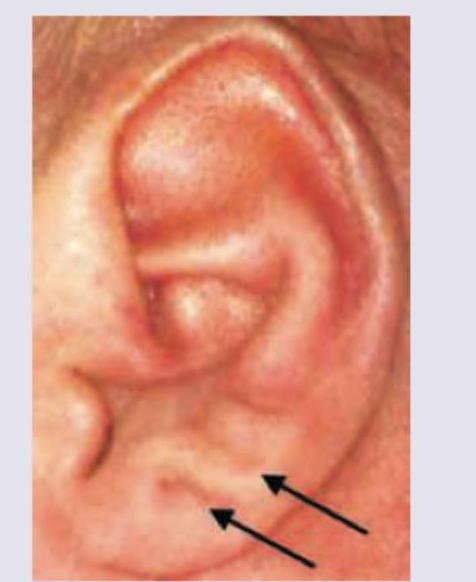
This baby has obesity along with organomegaly. Comment on the diagnosis from the hint given in the image?
A 5-year-old girl is referred for vaginal bleeding. Physical examination shows breast development, multiple cystic changes in bone radiologically and following skin finding. What is the most likely pubertal disorder?
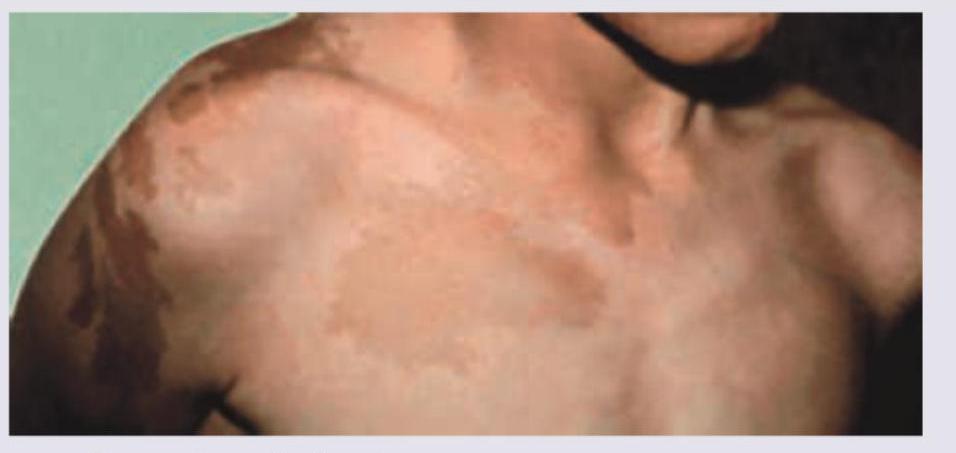
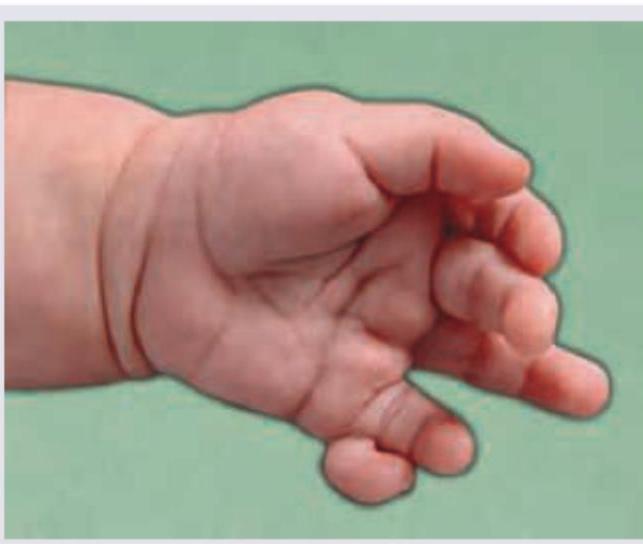
During evaluation of a child with obesity, following finding is observed. What is the association?
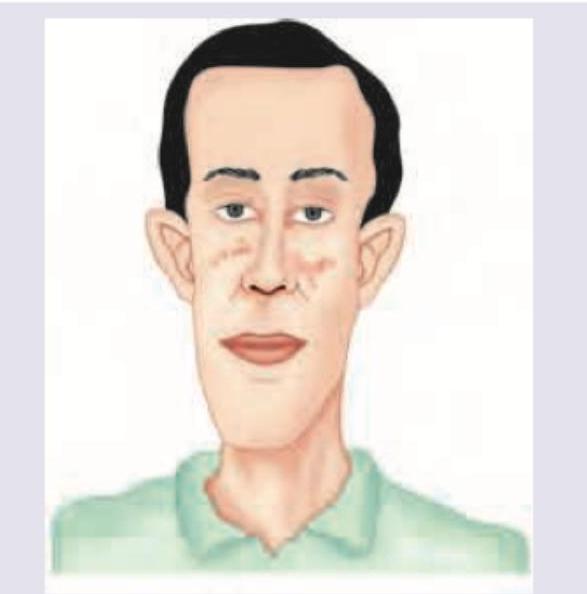
During evaluation of intellectual disability, characteristic facies of the child as below is noted. There is a family history of intellectual disability also. What is the probable diagnosis?
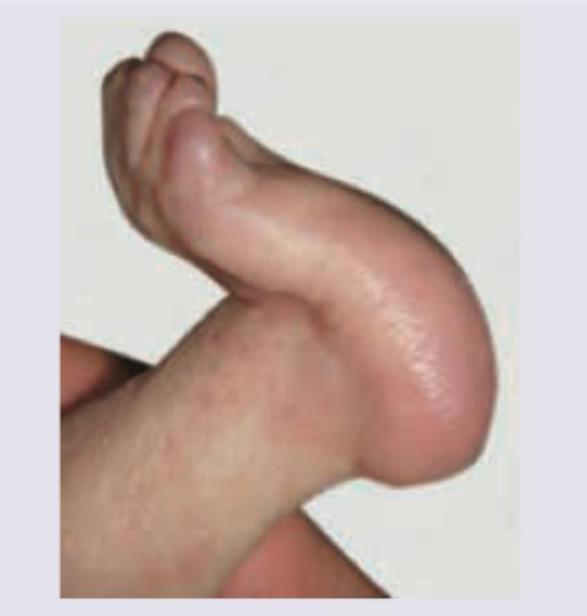
Which of the following is associated with this condition?
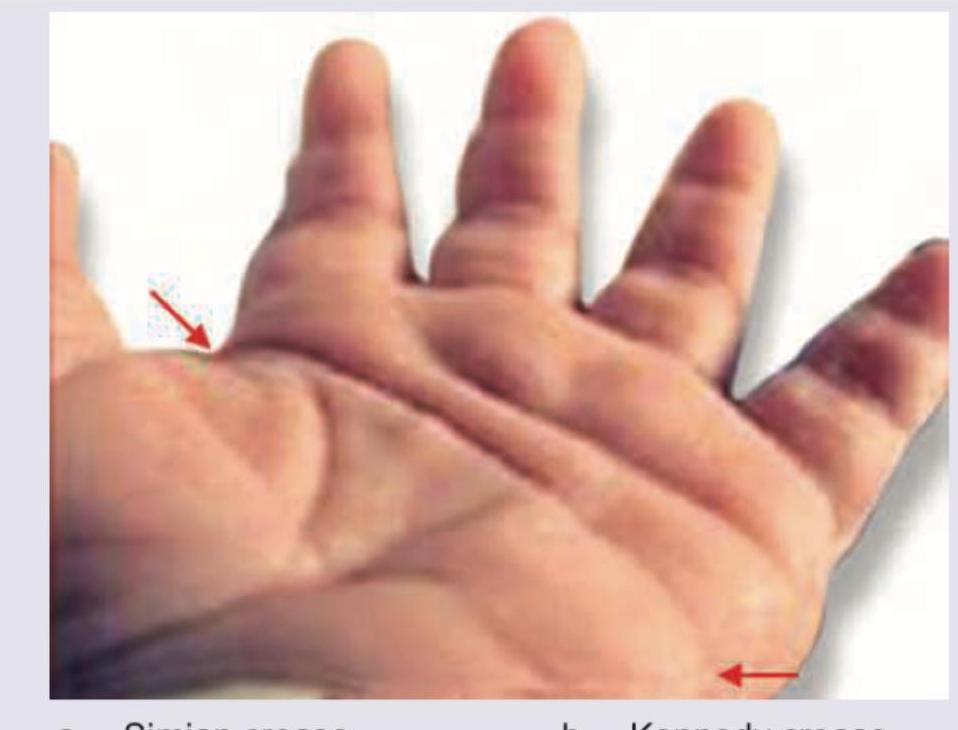
During evaluation of a child with Down syndrome, the following finding is noted. Identify?
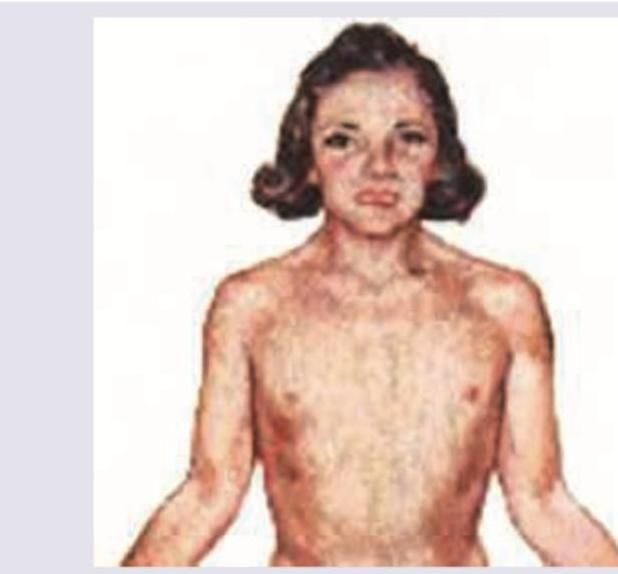
What is the expected karyotype in this child with the following findings and having pulmonic stenosis on Echocardiography?
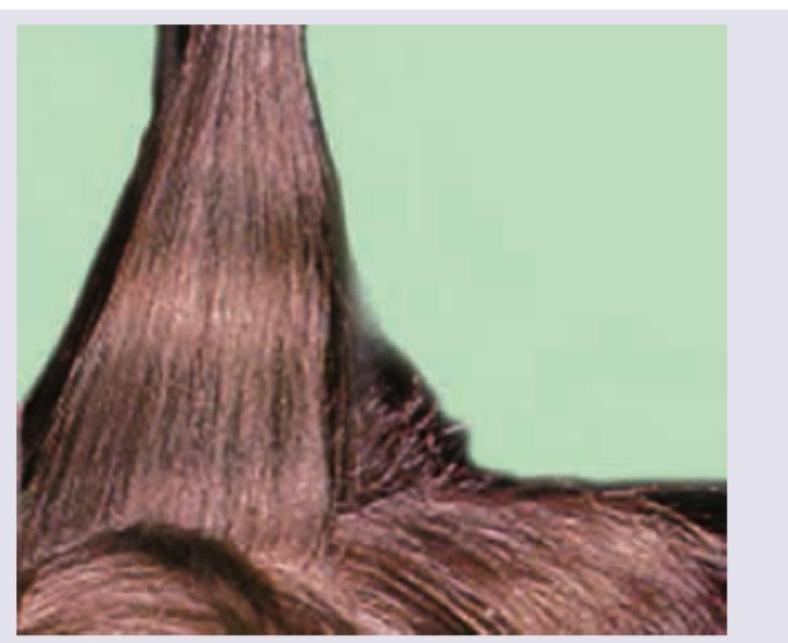
Which condition is characterized by the sign shown in the image?
NEET-PG 2018 - Pediatrics NEET-PG Practice Questions and MCQs
Question 11: Which is true about an infant with failure to thrive and the following findings?
- A. Hypokalemia
- B. Metabolic alkalosis
- C. Increased urinary sodium (Correct Answer)
- D. Increased cortisol
Explanation: ***Increased urinary sodium*** - This image displays an infant with **ambiguous genitalia**, specifically severe clitoromegaly. This is a classic presentation of **congenital adrenal hyperplasia (CAH)** due to **21-hydroxylase deficiency**. - In salt-wasting CAH, deficient **aldosterone** production leads to **renal sodium loss**, resulting in increased urinary sodium, **hyponatremia**, and **hypotension**, contributing to failure to thrive. *Hypokalemia* - **Hypokalemia** is not typically seen in salt-wasting CAH; rather, **hyperkalemia** is more common due to the lack of aldosterone's mineralocorticoid effect, which normally promotes potassium excretion. - The absence of aldosterone causes sodium to be excreted and potassium to be retained. *Metabolic alkalosis* - **Metabolic alkalosis** is not characteristic of salt-wasting CAH; instead, these infants often develop **metabolic acidosis** due to the loss of sodium bicarbonate and impaired acid excretion. - The primary electrolyte disturbance points towards acidosis, not alkalosis. *Increased cortisol* - In 21-hydroxylase deficiency, the enzyme responsible for converting precursors to **cortisol** and aldosterone is deficient, leading to **decreased cortisol** production. - The adrenal glands instead shunt precursors towards androgen synthesis, causing **adrenal hyperplasia** and the virilization seen in the image.
Question 12: This new-born baby presented with respiratory distress soon after birth. Which of the following is not a correct association about this condition?
- A. Maternal polyhydramnios
- B. Can be associated with anorectal malformations
- C. Always associated with absence of gas shadows in abdomen (Correct Answer)
- D. Surgery is definitive treatment
Explanation: ***Always associated with absence of gas shadows in abdomen*** ✗ **This is the INCORRECT statement** - The image depicts a newborn with **esophageal atresia** and a **tracheoesophageal fistula (TEF)**, characterized by thick, frothy secretions and respiratory distress. - While esophageal atresia without TEF can cause an absence of gas shadows, **over 85% of cases involve a distal TEF**, allowing air from the trachea to enter the stomach and intestines, resulting in **present gas shadows** on X-ray. - Therefore, this condition is **NOT always** associated with absence of gas shadows - in fact, gas is usually present. *Maternal polyhydramnios* ✓ **Correct association** - **Polyhydramnios** is a common association with esophageal atresia, as the fetus is unable to swallow amniotic fluid. - This leads to an excessive accumulation of amniotic fluid in the uterus, often detected antenatally. *Can be associated with anorectal malformations* ✓ **Correct association** - Esophageal atresia is frequently part of the **VACTERL association** (Vertebral defects, Anorectal malformations, Cardiac defects, Tracheoesophageal fistula, Esophageal atresia, Renal anomalies, and Limb defects). - Therefore, **anorectal malformations** can indeed be found in conjunction with this condition. *Surgery is definitive treatment* ✓ **Correct association** - **Surgical correction** of the esophageal atresia and repair of any associated tracheoesophageal fistula is the definitive treatment. - This procedure aims to restore continuity of the esophagus and prevent aspiration, allowing for normal feeding and respiratory function.
Question 13: This baby has obesity along with organomegaly. Comment on the diagnosis from the hint given in the image?
- A. Prader-Willi syndrome
- B. Beckwith-Wiedemann syndrome (Correct Answer)
- C. Bell syndrome
- D. Laurence-Moon-Bardet-Biedl syndrome
Explanation: ***Beckwith-Wiedemann syndrome*** - The image shows **earlobe creases and posterior helical pits**, which, combined with the presence of **obesity and organomegaly** (as suggested by "obesity and organomegaly"), are classic features of Beckwith-Wiedemann syndrome. - Other common features include **macroglossia**, **omphalocele**, and an increased risk of specific childhood tumors like Wilms tumor and hepatoblastoma. *Prader-Willi syndrome* - Characterized by **obesity** due to hyperphagia, but typically presents with **almond-shaped eyes**, small hands and feet, and **hypotonia** in infancy, not earlobe creases or organomegaly in the same context. - It is caused by the loss of function of specific genes on **chromosome 15** typically inherited from the father. *Bell syndrome* - **Bell syndrome** is not a recognized medical syndrome presenting with obesity, organomegaly, and ear anomalies. This option appears to be a distractor. - The term "Bell's palsy" refers to **idiopathic facial paralysis**, which is unrelated to the described symptoms. *Laurence-Moon-Bardet-Biedl syndrome* - This syndrome is characterized by **obesity** but also includes features such as **rod-cone dystrophy**, **polydactyly**, kidney abnormalities, and cognitive impairment. - It does not typically present with the specific ear anomalies (creases, pits) or neonatal organomegaly seen in Beckwith-Wiedemann syndrome.
Question 14: A 5-year-old girl is referred for vaginal bleeding. Physical examination shows breast development, multiple cystic changes in bone radiologically and following skin finding. What is the most likely pubertal disorder?
- A. Premature thelarche
- B. Central precocious puberty
- C. Peripheral precocious puberty (Correct Answer)
- D. Normal, no pubertal disorder
Explanation: ***Peripheral precocious puberty*** - The combination of **vaginal bleeding**, **breast development**, **multiple cystic changes in bone** (fibrous dysplasia), and the characteristic **café-au-lait spots with irregular borders** (as seen in the image) is highly suggestive of **McCune-Albright syndrome**. - McCune-Albright syndrome is a classic cause of **peripheral precocious puberty**, not due to premature activation of the hypothalamic-pituitary-gonadal (HPG) axis, but rather autonomous production of sex hormones (e.g., estrogen) from an ovarian cyst or other endocrine tissues. *Premature thelarche* - This condition involves isolated **breast development** without other signs of puberty or bone age advancement. - It does not typically present with vaginal bleeding, bone lesions, or café-au-lait spots. *Central precocious puberty* - This involves true activation of the **hypothalamic-pituitary-gonadal (HPG) axis**, leading to pulsatile GnRH secretion and elevated FSH/LH levels. - While it causes breast development and vaginal bleeding, it does not explain the multiple cystic bone changes or the characteristic café-au-lait spots. *Normal, no pubertal disorder* - Vaginal bleeding and breast development at 5 years of age are **abnormal** and indicate a pubertal disorder. - The presence of associated bone lesions and specific skin findings further rules out a normal developmental process.
Question 15: During evaluation of a child with obesity, following finding is observed. What is the association?
- A. Prader-Willi syndrome
- B. Beckwith-Wiedemann syndrome
- C. Pseudo-pseudo-hypoparathyroidism
- D. Laurence-Moon-Bardet-Biedl syndrome (Correct Answer)
Explanation: ***Laurence-Moon-Bardet-Biedl syndrome*** - The image exhibits **polydactyly**, characterized by the presence of **extra digits** on the hand, which is a common feature of Laurence-Moon-Bardet-Biedl syndrome. - This syndrome is a pleiotropic, autosomal recessive genetic disorder also characterized by **obesity**, **retinal degeneration**, **gonadal dysfunction**, **kidney abnormalities**, and **learning disorders**. *Prader-Willi syndrome* - Characterized by **severe hypotonia** and feeding difficulties in infancy, followed by **hyperphagia** and obesity in childhood. - While it causes obesity, it is not typically associated with **polydactyly**. *Beckwith-Wiedemann syndrome* - This syndrome is associated with **macrosomia**, **macroglossia**, **omphalocele**, **hemihyperplasia**, and an increased risk of childhood tumors. - It does not typically present with **polydactyly** or the constellation of symptoms seen in the given context. *Pseudo-pseudo-hypoparathyroidism* - This condition is a variant of **Albright's hereditary osteodystrophy** but without the biochemical abnormalities of hypoparathyroidism. - It is characterized by **short stature**, **brachydactyly**, **obesity**, and intellectual disability, but **polydactyly** is not a feature.
Question 16: During evaluation of intellectual disability, characteristic facies of the child as below is noted. There is a family history of intellectual disability also. What is the probable diagnosis?
- A. Down syndrome
- B. Klinefelter syndrome
- C. Fragile X syndrome (Correct Answer)
- D. Turner syndrome
Explanation: ***Fragile X syndrome*** - The image depicts a male with an **elongated face**, **prominent jaw**, and **large, protuberant ears**, which are classic facial features of Fragile X syndrome. - The presence of **intellectual disability** and a **family history** reinforces this diagnosis, as Fragile X is the most common inherited cause of intellectual disability. *Down syndrome* - Characterized by a **round face**, **upward-slanted palpebral fissures**, **epicanthal folds**, and a **flat nasal bridge**, none of which are evident in the image. - Typically results from **trisomy 21** and is not primarily linked to a family history of intellectual disability in an X-linked pattern. *Klinefelter syndrome* - While individuals with Klinefelter syndrome (XXY genotype) may have **intellectual disability** (usually mild), their characteristic features include **tall stature**, **small testes**, **gynecomastia**, and often a **less distinctive facial phenotype** compared to the one shown. - The facial features in the image (prominent jaw, large ears, elongated face) are not typical for Klinefelter syndrome. *Turner syndrome* - Affects females (XO genotype) and is associated with features such as **webbed neck**, **short stature**, **low posterior hairline**, and **gonadal dysgenesis**. - It does not present with the facial features shown in the image, nor does it typically manifest with a family history of intellectual disability in males.
Question 17: Which of the following is associated with this condition?
- A. Turner syndrome
- B. Patau syndrome
- C. Down syndrome
- D. Edward syndrome (Correct Answer)
Explanation: ***Edward syndrome*** - The image shows **rocker-bottom feet**, which is a characteristic skeletal deformity seen in Edward syndrome (**Trisomy 18**). - Rocker-bottom feet present as a **convex sole** with prominent heel and a **vertical talus**, creating a "rocker" appearance, and is one of the classic **dysmorphic features** of Trisomy 18. - Other features of Edward syndrome include **overlapping fingers** (clenched fist with index finger over third finger), **low-set malformed ears**, **micrognathia**, and **congenital heart defects**. *Turner syndrome* - Turner syndrome affects females with **absent or partial X chromosome** (45,X0), characterized by **short stature**, **webbed neck**, **lymphedema**, and **cardiac anomalies** (coarctation of aorta, bicuspid aortic valve). - Not associated with the specific **rocker-bottom feet** deformity shown in the image. *Patau syndrome* - Patau syndrome (**Trisomy 13**) may rarely have rocker-bottom feet but is more characteristically associated with **polydactyly**, **midline defects** (cleft lip/palate, holoprosencephaly), **microphthalmia**, and **scalp defects**. - The isolated **rocker-bottom feet** shown is more specific to Edward syndrome. *Down syndrome* - Down syndrome (**Trisomy 21**) is associated with **sandal gap deformity** (wide space between first and second toe) due to **hypotonia** and **ligamentous laxity**. - While Down syndrome has foot abnormalities, **rocker-bottom feet** are characteristic of **Trisomy 18** (Edward syndrome), not Trisomy 21.
Question 18: During evaluation of a child with Down syndrome, the following finding is noted. Identify?
- A. Simian crease (Correct Answer)
- B. Kennedy crease
- C. Sydney line
- D. Sandal gap
Explanation: ***Simian crease*** - The image displays a **single palmar crease** (also known as a simian crease or transverse palmar crease), which is a common physical finding in individuals with **Down syndrome (Trisomy 21)**. - This crease runs straight across the palm, often replacing the usual two major palmar creases. *Kennedy crease* - This is **not a recognized medical term** for a palmar crease or any specific dermatological finding. - The feature shown in the image is a clearly defined, single transverse palmar crease. *Sydney line* - A **Sydney line** is another type of palmar crease abnormality where the proximal transverse crease extends across the entire palm, reaching the ulnar edge. - While it is a variation of palmar creases, the crease in the image appears as a single, bold transverse crease, more consistent with a **simian crease**. *Sandal gap* - A **sandal gap** refers to a wide space between the first and second toes, sometimes seen in newborns, including those with Down syndrome. - This finding relates to the **foot**, not the hand, and is not depicted in the provided image.
Question 19: What is the expected karyotype in this child with the following findings and having pulmonic stenosis on Echocardiography?
- A. 46,XX
- B. 45,X
- C. 46,XY (Correct Answer)
- D. 47,XXY
Explanation: ***46,XY*** - The image depicts a child with features suggestive of **Noonan Syndrome**, characterized by widely spaced eyes, low-set ears, a short webbed neck, and **pulmonic stenosis**. - Noonan Syndrome is a **cardiofacial cutaneous syndrome** that is genetically heterogeneous; however, it typically presents with a **normal karyotype of 46,XY** for males or 46,XX for females, as it arises from mutations in genes like *PTPN11*, *SOS1*, *RAF1*, or *KRAS*, rather than chromosomal aneuploidies. *46,XX* - This karyotype represents a **normal female**. While females can have Noonan Syndrome, the general characteristic features pointing towards a male child in the provided image makes this option less likely in this specific context. - The question asks for the expected karyotype in "this child," implying a specific gender based on the drawing; however, if the child were female with Noonan Syndrome, 46,XX would be expected. *45,X* - This karyotype corresponds to **Turner Syndrome**, which typically affects females and is characterized by features such as **short stature**, a webbed neck, and **coarctation of the aorta** (not pulmonic stenosis). - While there is some phenotypic overlap (e.g., webbed neck), the presence of pulmonic stenosis and other facial features are more consistent with Noonan syndrome, which is not associated with a monosomy of the X chromosome. *47,XXY* - This karyotype represents **Klinefelter Syndrome**, which affects males and is characterized by **tall stature**, **hypogonadism**, and **gynecomastia**. - The features in the image, including the **facial dysmorphism** and **pulmonic stenosis**, are inconsistent with the typical presentation of Klinefelter Syndrome.
Question 20: Which condition is characterized by the sign shown in the image?
- A. Kwashiorkor (Correct Answer)
- B. Marasmus
- C. Pellagra
- D. None of above
Explanation: ***Kwashiorkor*** - The image shows sparse, dry, and discolored hair, sometimes described as having a **"flag sign"** due to alternating bands of light and dark hair, which is characteristic of **protein-energy malnutrition (PEM)**, specifically kwashiorkor. - Kwashiorkor results from a severe protein deficiency with relatively adequate calorie intake, leading to hair changes, **edema**, and a distended abdomen. *Marasmus* - Marasmus is characterized by severe muscle wasting and loss of subcutaneous fat due to a deficiency in both protein and overall calorie intake, but **hair changes are less prominent** than in kwashiorkor. - Individuals with marasmus appear incredibly emaciated and "skeletal" but typically do not exhibit the same degree of hair discoloration or edema. *Pellagra* - Pellagra is caused by a deficiency of **niacin (vitamin B3)** and is characterized by the "3 Ds": **dermatitis**, **diarrhea**, and **dementia**. - While it can affect hair quality, it does not typically present with the specific hair changes, such as the "flag sign," seen in the image. *None of above* - The distinct hair abnormalities depicted in the image are highly suggestive of a specific nutritional deficiency, making "None of the above" incorrect.