Community Medicine
1 questionsSample size of samples A, B and C are 500, 800 and 1000 respectively. Which sample has the highest margin of error? (NEET Jan 2018)
NEET-PG 2018 - Community Medicine NEET-PG Practice Questions and MCQs
Question 331: Sample size of samples A, B and C are 500, 800 and 1000 respectively. Which sample has the highest margin of error? (NEET Jan 2018)
- A. Sample A (Correct Answer)
- B. Sample B
- C. Sample C
- D. None of above
Explanation: ***Sample A*** - The **margin of error** is inversely proportional to the square root of the sample size. Therefore, a smaller sample size leads to a larger margin of error. - Sample A has the smallest sample size (N=500) among the given options, thus having the **highest margin of error**. *Sample B* - With a sample size of 800, Sample B has a **smaller margin of error** than Sample A but a larger margin of error than Sample C. - As the sample size increases, the precision of the estimate improves, and the margin of error decreases. *Sample C* - Sample C has the largest sample size (N=1000), which results in the **smallest margin of error** among all samples. - A larger sample size generally provides a more accurate representation of the population. *None of above* - This option is incorrect because the sample size directly influences the margin of error, and Sample A clearly has the smallest size. - Based on statistical principles, one of the samples must inherently have the highest margin of error.
Internal Medicine
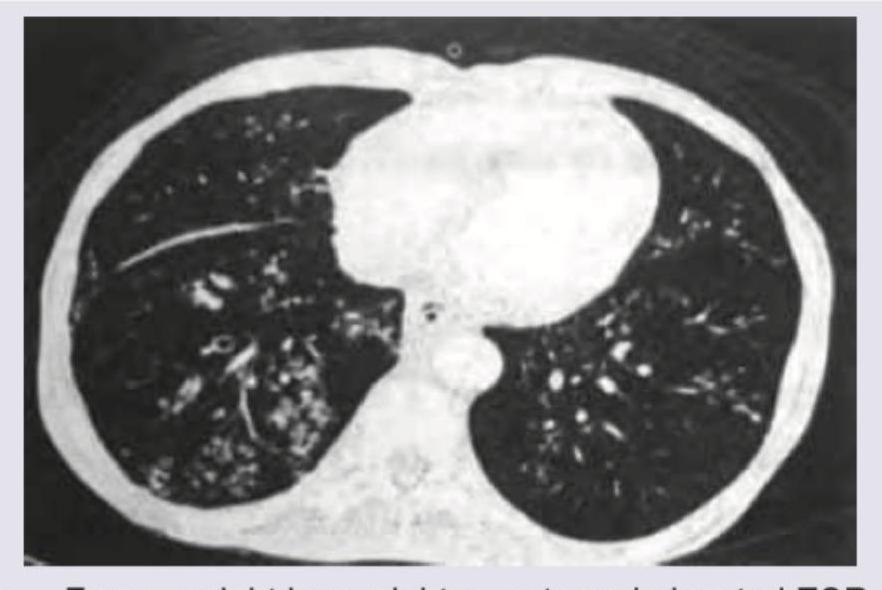
1 questionsWhich of the following is incorrect about the condition shown below?

NEET-PG 2018 - Internal Medicine NEET-PG Practice Questions and MCQs
Question 331: Which of the following is incorrect about the condition shown below?
- A. Most common CT finding is intraventricular calcification (Correct Answer)
- B. Most common presentation is partial seizures
- C. Albendazole is given for 8 days
- D. Steroids help in alleviating vasogenic oedema of ring enhancing lesion
Explanation: ***Most common CT finding is intraventricular calcification*** - This statement is **incorrect**. In neurocysticercosis, the most common CT finding is **parenchymal calcifications**, which represent the remnants of dead cysts, rather than intraventricular calcifications. - **Intraventricular calcifications** are possible but less frequent than parenchymal lesions and often arise from degenerating intraventricular cysts leading to obstructive hydrocephalus. *Most common presentation is partial seizures* - This statement is **correct**. **Partial seizures** (also known as focal seizures) are indeed the most common clinical presentation of neurocysticercosis, especially when **parenchymal cysts** are involved. - This is due to the cysts acting as a **focal irritant** within the cerebral cortex, leading to abnormal electrical activity. *Albendazole is given for 8 days* - This statement is **correct**. For neurocysticercosis, **Albendazole** is typically administered for a duration ranging from **8 days to 30 days**, depending on the number, location, and stage of the cysts. - The precise duration can vary based on clinical response and cyst resolution observed on follow-up imaging. *Steroids help in alleviating vasogenic oedema of ring enhancing lesion* - This statement is **correct**. **Corticosteroids**, such as dexamethasone, are frequently co-administered with anti-parasitic drugs like albendazole to manage the **inflammatory response** (vasogenic edema) caused by the dying parasites. - This edema often surrounds the **ring-enhancing lesions** seen on imaging and can exacerbate symptoms like seizures and headaches.
Microbiology
6 questionsWhich of the following parasite is shown below?

Which is correct of the parasite shown below?

Which of the following life cycles is shown below?

Which of the following CNS lesions is shown below?

The life cycle shown in the image below is characteristic of which organism?

Which of the following Schistosoma egg is shown below?

NEET-PG 2018 - Microbiology NEET-PG Practice Questions and MCQs
Question 331: Which of the following parasite is shown below?
- A. Cysticercosis cellulosae
- B. Echinococcus granulosus (Correct Answer)
- C. E. Histolytica
- D. Fasciola hepatica
Explanation: ***Echinococcus granulosus*** - The image displays a **hydatid cyst**, characterized by its thick, laminated outer wall (ectocyst) and an inner germinal layer (endocyst) from which **brood capsules** and **protoscolices** (seen as invaginations) bud off. - This morphology is pathognomonic for **Echinococcus granulosus**, the causative agent of **cystic echinococcosis** (hydatid disease). *Cysticercosis cellulosae* - Cysts of *Cysticercus cellulosae* (larval stage of *Taenia solium*) typically appear as a fluid-filled bladder with a single **invaginated scolex** lacking the complex brood capsule arrangement seen in the image. - They also generally have a thinner cyst wall compared to *Echinococcus* cysts. *E. Histolytica* - *Entamoeba histolytica* is a **protozoan parasite** that causes amoebiasis, presenting as trophozoites or cysts; it does not form macroscopic cysts with complex internal structures like the one shown. - Amoebic abscesses are typically necrotic lesions, not true cysts with parasitic structures within. *Fasciola hepatica* - *Fasciola hepatica* is a **trematode (fluke)**, and its larval stages or adult worms do not form cysts with this characteristic morphology. - Liver flukes would appear as tissue sections of the flatworm itself in infected organs, not as a large, spherical cyst with internal budding structures.
Question 332: Which is correct of the parasite shown below?
- A. A = Taenia saginata, B = Taenia solium
- B. $A=$ Hymenolepis nana, $B=$ Dipylidium caninum
- C. $A=$ Dipylidium caninum, $B=$ Hymenolepis nana (Correct Answer)
- D. A = Taenia solium, B = Taenia saginata
Explanation: ***A = Dipylidium caninum, B = Hymenolepis nana*** - Image A displays a **scolex with four prominent suckers and a rostellum armed with hooks**, which is characteristic of *Dipylidium caninum*. - Image B shows a **scolex with four suckers and a distinct retractable rostellum armed with a single circlet of hooks**, a key morphological feature of *Hymenolepis nana*. *A = Taenia solium, B = Taenia saginata* - *Taenia solium* scolex (pork tapeworm) typically has **four suckers and a rostellum with a double crown of hooks**, not the single retractile coronet seen in B. - *Taenia saginata* scolex (beef tapeworm) is **unarmed (lacks hooks)** and only possesses four suckers, which contradicts both images. *A = Taenia saginata, B = Taenia solium* - This option is incorrect because *Taenia saginata* is an **unarmed tapeworm**, meaning it lacks hooks, which are clearly visible in Image A. - *Taenia solium* has a **scolex with hooks**, but Image B's scolex with a single circlet of hooks is more consistent with *Hymenolepis nana*. *A = Hymenolepis nana, B = Dipylidium caninum* - The scolex in Image A possesses a **double-crown rostellum with hooks clustered in rows**, which is characteristic of *Dipylidium caninum*, not *Hymenolepis nana*. - The scolex in Image B with four suckers and a retractile rostellum with a single circlet of hooks is indicative of *Hymenolepis nana*, not *Dipylidium caninum*.
Question 333: Which of the following life cycles is shown below?
- A. Hymenolepis nana (Correct Answer)
- B. Echinococcus granulosus
- C. Ascaris lumbricoides
- D. Toxocara canis
Explanation: ***Hymenolepis nana*** - The image clearly depicts the life cycle of *Hymenolepis nana*, showing direct human infection from ingesting **fertile eggs**, leading to the development of an **oncosphere** and then a **cercocyst** within the human host before maturing into an adult tapeworm in the intestine. - The presence of an "alternative rodent host (rat, mouse) of minor importance" is a characteristic feature of *Hymenolepis nana*, which can infect both humans and rodents. *Echinococcus granulosus* - This parasite's life cycle involves **dogs (definitive host)** and **sheep/humans (intermediate hosts)**, where humans develop **hydatid cysts**, which is not shown here. - The depiction of an adult tapeworm developing directly in humans after ingestion of eggs, with a rodent as an alternative host, is inconsistent with *Echinococcus granulosus*. *Ascaris lumbricoides* - This is a **roundworm (nematode)**, not a tapeworm, and its life cycle involves **lung migration** of larvae before returning to the intestines to mature, which is not illustrated. - The image shows development from an oncosphere to a cercocyst and then to an adult tapeworm, which is specific to certain **cestodes**. *Toxocara canis* - This is another **roundworm** primarily affecting **dogs**, and humans become **incidental hosts** by ingesting embryonated eggs, leading to visceral larva migrans, where larvae migrate through tissues but do not develop into adult worms in the human intestine. - The illustrated life cycle details, particularly the formation of an oncosphere and cercocyst within the human leading to an adult tapeworm, are not indicative of *Toxocara canis*.
Question 334: Which of the following CNS lesions is shown below?
- A. Cerebral toxoplasmosis
- B. Neurocysticercosis (Correct Answer)
- C. Cryptococcal meningitis
- D. Hydatid cyst
Explanation: ***Neurocysticercosis*** - The top image displays multiple **cystic lesions** within the brain parenchyma, consistent with various stages of **neurocysticercosis**. - The bottom image shows an **egg of *Taenia solium***, the causative agent of cysticercosis, confirming the parasitic origin. *Cerebral toxoplasmosis* - This typically presents as **multiple ring-enhancing lesions**, often with a predilection for the **basal ganglia** in immunocompromised patients. - The pathological image shown here does not primarily depict ring-enhancing lesions but rather macroscopic cysts. *Cryptococcal meningitis* - While Cryptococcus can cause CNS lesions, they are usually **gelatinous pseudocysts** or **meningitis**, not the distinct cystic structures seen in the image. - The causative organism is a **fungus**, not a parasitic worm, so the associated egg image would be incorrect. *Hydatid cyst* - Hydatid cysts (caused by *Echinococcus granulosus*) are typically **solitary, large, well-defined cysts** with a characteristic laminated membrane. - The image shows **multiple, smaller cysts** and the egg is characteristic of *T. solium*, not *Echinococcus*.
Question 335: The life cycle shown in the image below is characteristic of which organism?
- A. Schistosomiasis (Correct Answer)
- B. Paragonimus
- C. Fasciolopsis buski
- D. Fasciola hepatica
Explanation: ***Schistosomiasis*** - The image clearly depicts the characteristic **cercariae** penetrating human skin, with subsequent migration to the portal blood and maturation into adult worms in specific venous plexuses (e.g., rectum, liver, bladder). - The presence of **miracidia** hatching from eggs and infecting snails, followed by the release of cercariae from snails, is the hallmark life cycle of *Schistosoma* species. The eggs are shown in feces and urine, indicating different species of Schistosoma. *Paragonimus* - The life cycle of *Paragonimus* (lung flukes) involves ingestion of **undercooked crustaceans** (crabs or crayfish) containing metacercariae, not skin penetration by cercariae. - Adult worms typically reside in the **lungs**, and eggs are coughed up and swallowed or passed in feces, which is different from the venous system involvement shown. *Fasciolopsis buski* - *Fasciolopsis buski* (intestinal fluke) infection occurs through ingestion of **aquatic plants** contaminated with metacercariae. - The adult worms reside in the **small intestine**, and while eggs are passed in feces, the characteristic skin penetration by cercariae is absent in its life cycle. *Fasciola hepatica* - *Fasciola hepatica* (liver fluke) is acquired by ingesting **metacercariae** on aquatic vegetation, similar to *Fasciolopsis buski*. - Adult worms inhabit the **bile ducts** of the liver, and the life cycle does not involve skin penetration by cercariae as the mode of human infection.
Question 336: Which of the following Schistosoma egg is shown below?
- A. Schistosoma mansoni
- B. Schistosoma hematobium (Correct Answer)
- C. Schistosoma japonicum
- D. Cannot be differentiated on wet mount
Explanation: ***Schistosoma hematobium*** - The image clearly displays an **elongated, oval-shaped egg** with a characteristic **terminal spine**. - This morphology is pathognomonic for **Schistosoma hematobium**, distinguishing it from other Schistosoma species. *Schistosoma mansoni* - Eggs of *Schistosoma mansoni* are typically **oval-shaped** with a distinct **lateral spine**. - The spine is located on the side of the egg, not at one of its poles as seen in the image. *Schistosoma japonicum* - *Schistosoma japonicum* eggs are more **rounded or oval** and possess a very small, **rudimentary spine** that is often difficult to visualize or absent. - The clearly visible, prominent terminal spine in the image rules out *S. japonicum*. *Cannot be differentiated on wet mount* - The distinct morphological features (shape and spine location) of Schistosoma eggs allow for reliable differentiation on a **wet mount** microscopic examination. - These features are crucial for accurate species identification in laboratory diagnostics.
Pharmacology
2 questionsChoice of drug for management of the parasitic infection shown below is:

Best drug for the condition shown below is: (NEET Jan 2018)

NEET-PG 2018 - Pharmacology NEET-PG Practice Questions and MCQs
Question 331: Choice of drug for management of the parasitic infection shown below is:
- A. Albendazole
- B. Praziquantel
- C. Niclosamide
- D. Triclabendazole (Correct Answer)
Explanation: ***Triclabendazole*** - The image displays an adult **Fasciola hepatica** (liver fluke), characterized by its **leaf-like shape** and the prominent **anterior cone** terminating in an oral sucker. - **Triclabendazole** is the drug of choice for treating **fascioliasis**, as it effectively kills both immature and mature forms of Fasciola hepatica. *Albendazole* - **Albendazole** is primarily used to treat a wide range of **intestinal nematode infections** (e.g., Ascaris, hookworm, whipworm) and some **cestode infections** (e.g., neurocysticercosis, echinococcosis). - It has **limited efficacy** against trematodes like Fasciola hepatica. *Praziquantel* - **Praziquantel** is a broad-spectrum antihelminthic drug effective against most **trematodes (flukes)**, including schistosomes and other liver flukes (e.g., Clonorchis, Opisthorchis), and **cestodes (tapeworms)**. - However, it is **ineffective against Fasciola hepatica**, making it unsuitable for this specific infection. *Niclosamide* - **Niclosamide** is an oral anthelmintic primarily used to treat **tapeworm infections (cestodiasis)**, including Taenia species and Hymenolepis nana. - It is **not effective against trematodes** like Fasciola hepatica.
Question 332: Best drug for the condition shown below is: (NEET Jan 2018)
- A. Ivermectin
- B. Doxycycline (Correct Answer)
- C. Sulphonamides
- D. Penicillin
Explanation: ***Correct: Doxycycline*** - The image shows a **tick embedded in the skin** with surrounding erythema, indicative of a **tick bite** and potential **Lyme disease** or other tick-borne infections. - **Doxycycline** is the **drug of choice** for early Lyme disease (caused by *Borrelia burgdorferi*) and many other common tick-borne illnesses like Rickettsial infections (e.g., Rocky Mountain Spotted Fever) and Anaplasmosis. *Incorrect: Ivermectin* - **Ivermectin** is primarily used to treat **parasitic worm infections** like onchocerciasis, strongyloidiasis, and scabies. - It is **not effective** against bacterial infections transmitted by ticks. *Incorrect: Sulphonamides* - **Sulphonamides** are a class of **antibiotics** effective against various bacterial infections, but they are generally **not the first-line treatment** for tick-borne diseases. - For tick-borne illnesses, **doxycycline** typically has broader and more effective coverage. *Incorrect: Penicillin* - **Penicillin** is an **antibiotic** primarily effective against a range of gram-positive and some gram-negative bacteria, and spirochetes like *Treponema pallidum*. - While it has some activity against *Borrelia burgdorferi* (Lyme disease), **doxycycline is preferred** for early-stage Lyme disease and is specifically active against other common tick-borne pathogens where penicillin is not.