General Medicine
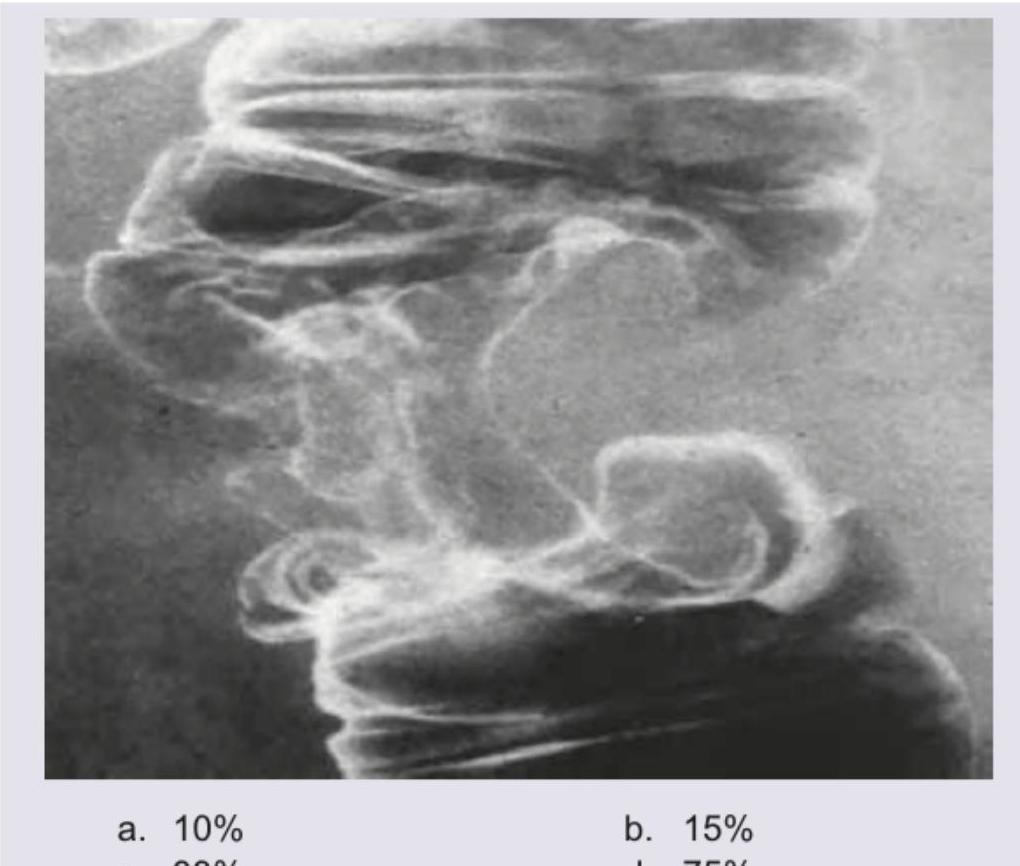
1 questionsThe following appearance of esophagus is seen in:

NEET-PG 2018 - General Medicine NEET-PG Practice Questions and MCQs
Question 301: The following appearance of esophagus is seen in:
- A. GERD
- B. Stricture
- C. Eosinophilic esophagitis (Correct Answer)
- D. Radiation esophagitis
Explanation: ***Eosinophilic esophagitis*** - The image clearly shows **trachealization** of the esophagus, characterized by **concentric rings** and **linear furrows**, which are hallmark endoscopic findings of eosinophilic esophagitis. - This condition is an **allergic inflammatory disorder** involving the esophagus, often leading to dysphagia and food impaction. *GERD* - While GERD can cause inflammation (esophagitis), it typically presents with **erosions**, **strictures**, or **Barrett's esophagus**, but not the characteristic ringed appearance seen here. - The presence of **longitudinal furrows** and a pale, corrugated appearance rather than the distinct circular rings would be less typical for classic GERD. *Stricture* - A stricture would appear as a **localized narrowing** of the esophageal lumen, which is not the predominant feature in this image. - While strictures can occur in chronic eosinophilic esophagitis, the primary morphological feature visualized is the **ringed esophagus**. *Radiation esophagitis* - This condition results from **radiation exposure** to the chest and typically presents with **mucosal edema**, **erythema**, **ulcerations**, or **fibrosis** in acute and chronic phases, respectively. - It does not commonly cause the distinctive **trachealization** or ringed appearance seen in the image.
Radiology
1 questionsThe following test was performed on the patient. Which is correct about the patient?

NEET-PG 2018 - Radiology NEET-PG Practice Questions and MCQs
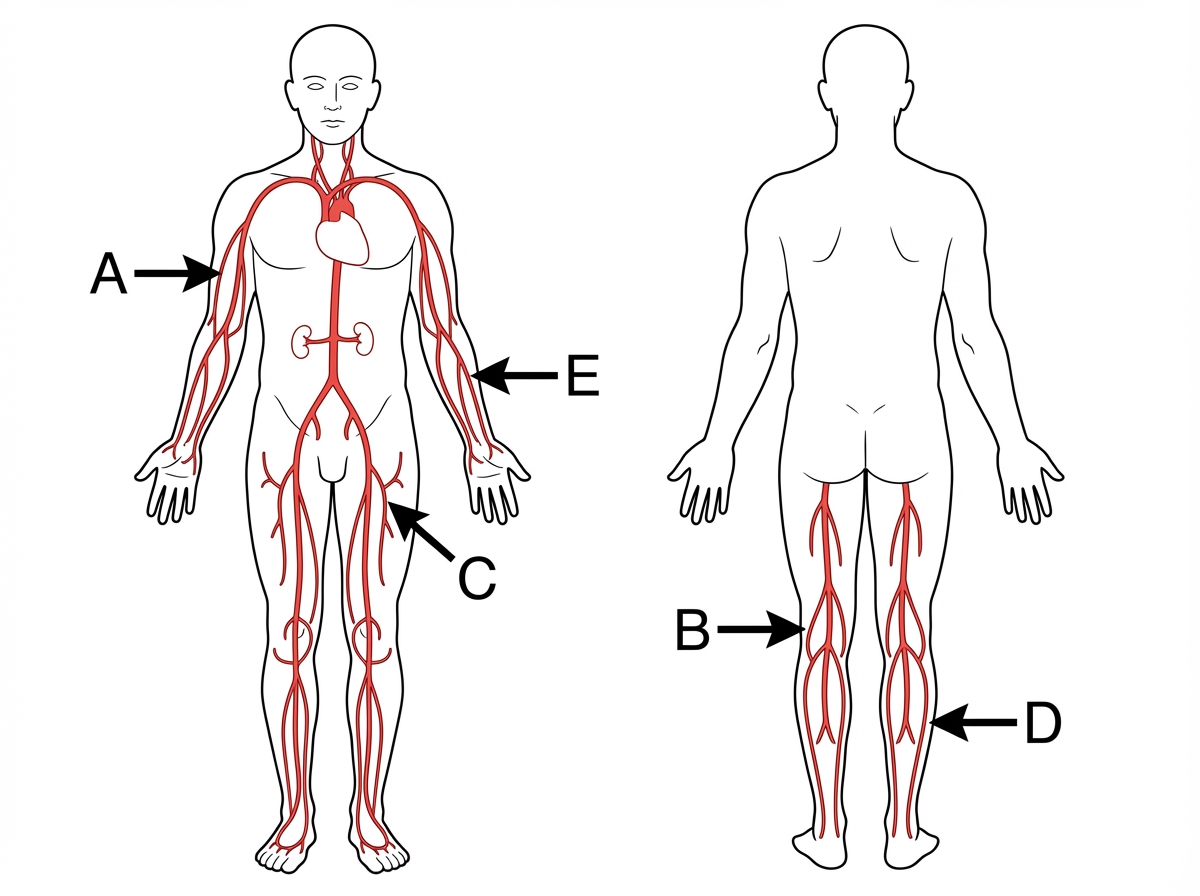
Question 301: The following test was performed on the patient. Which is correct about the patient?
- A. Pain is present at rest
- B. Pain decreases on standing still (Correct Answer)
- C. Pain is present on first step of walking
- D. Pain increases on limb dependency
Explanation: ***Pain decreases on standing still*** - The image depicts the measurement of **Ankle-Brachial Index (ABI)**, a diagnostic test for **Peripheral Artery Disease (PAD)**. - **Intermittent claudication** is the hallmark symptom of PAD, characterized by cramping pain in the legs that develops **after walking a certain distance** and is **relieved by rest** (standing still). - This occurs because the narrowed arteries cannot supply adequate blood flow during exercise, causing muscle ischemia and pain that resolves when activity ceases. *Pain is present on first step of walking* - This is **incorrect** for claudication, which requires time to develop as muscles become ischemic during sustained activity. - Pain on the **first step** would suggest **musculoskeletal pathology** (arthritis, plantar fasciitis) or **neurological issues** (nerve compression), not vascular claudication. - Claudication distance is a key diagnostic feature - patients can walk a reproducible distance before pain begins. *Pain is present at rest* - **Rest pain** indicates **critical limb ischemia**, a severe form of PAD where blood flow is inadequate even at rest. - This represents advanced arterial disease beyond simple claudication and requires urgent evaluation for revascularization. - Rest pain typically affects the forefoot and is worse at night when lying flat. *Pain increases on limb dependency* - Actually, **limb dependency (hanging the leg down)** typically **relieves pain** in severe PAD by using gravity to improve distal perfusion. - Patients with critical limb ischemia often sleep with legs dependent or dangle feet off the bed for relief. - This is opposite to **venous insufficiency**, where elevation improves symptoms.
Surgery
8 questionsWhich is the best method to secure airway and administer oxygen in case of burns shown below?

A 60-year-old male smoker presents with discoloration of urine and has brought a sample to your clinic. He denies any pain or discomfort while passing urine. No history of fever is present. IVU of the patient is shown. Which is the next best investigation to be done?

A 70-year-old man underwent the procedure shown below. 3rd day he develops seizures. What is the diagnosis?

Which of the following is not an indication for surgery in the condition shown below?

Which of the following uroflowmetry recording indicates BPH?

Which is correct about tumor found in the triangle location shown below?

A surgical suture material is shown in the image below. Which of the following statements is TRUE about this suture?

The radiographic image shows a stent in the urinary tract. This type of stenting is most commonly performed following which procedure?

NEET-PG 2018 - Surgery NEET-PG Practice Questions and MCQs
Question 301: Which is the best method to secure airway and administer oxygen in case of burns shown below?
- A. Elective intubation (Correct Answer)
- B. Mask
- C. Nasal prongs
- D. Tracheostomy
Explanation: ***Elective intubation*** - The image shows **severe facial burns** consistent with potential **inhalation injury**, which can lead to rapid **airway edema and obstruction**. Elective intubation is critical to secure the airway *before* it becomes impossible to intubate due to swelling. - Signs of inhalation injury, such as **sooty sputum**, **facial burns**, and **singed nasal hairs**, warrant aggressive airway management. *Mask* - Using a mask for oxygen delivery provides only a **low flow of oxygen** and does not secure the airway, which is crucial in cases of severe facial burns and suspected inhalation injury. - A mask will not prevent **airway swelling and obstruction**, which can rapidly worsen in burn patients. *Nasal prongs* - Nasal prongs are a **low-flow oxygen delivery system** and are entirely inadequate for patients with severe burns, especially when airway compromise is a significant risk. - They also would not address the impending **airway edema** associated with facial and inhalation burns. *Tracheostomy* - A tracheostomy is a **surgical airway** procedure that is more invasive and typically reserved for situations where endotracheal intubation is either impossible or long-term airway support is required. - While it provides a secure airway, **elective intubation** is the preferred initial approach because it is less invasive and can be performed more rapidly in an emergency setting.
Question 302: A 60-year-old male smoker presents with discoloration of urine and has brought a sample to your clinic. He denies any pain or discomfort while passing urine. No history of fever is present. IVU of the patient is shown. Which is the next best investigation to be done?
- A. Cystoscopy (Correct Answer)
- B. Urine cytology
- C. USG abdomen
- D. DMSA scan
Explanation: ***Cystoscopy*** - The patient presents with **painless hematuria** and a history of smoking, which are classic indicators of **bladder cancer**. The IVU may also suggest filling defects or abnormalities in the bladder. - Cystoscopy offers **direct visualization of the bladder and urethra**, allowing for biopsy of any suspicious lesions, which is crucial for diagnosis and staging of bladder cancer. *Urine cytology* - While urine cytology can detect malignant cells, its **sensitivity for low-grade tumors is limited**, and it cannot pinpoint the exact location or extent of the lesion. - A definitive diagnosis of bladder cancer requires **histopathological confirmation**, which cytology alone cannot provide. *USG abdomen* - USG can detect some renal and bladder abnormalities, but it is **not as sensitive or specific as cystoscopy** for detecting small or flat bladder lesions. - It's a good initial screening tool but **lacks the diagnostic precision** needed to investigate painless hematuria suspected to be from the bladder. *DMSA scan* - A DMSA scan is primarily used to assess **renal cortical function** and identify cortical scarring or anomalies, not for investigating hematuria or bladder pathologies. - It provides no information about the **urethra or bladder lumen**, which are critical for evaluating the cause of painless hematuria in this patient.
Question 303: A 70-year-old man underwent the procedure shown below. 3rd day he develops seizures. What is the diagnosis?
- A. Water intoxication (Correct Answer)
- B. Anesthetic over-dosage
- C. Mismatched blood transfusion
- D. Malignant hyperthermia
Explanation: ***Water intoxication*** - The image depicts a **transurethral resection of the prostate (TURP)** using a resectoscope. During TURP, large volumes of **hypotonic irrigation fluid** are used. - If excess fluid is absorbed into the systemic circulation, it can lead to **dilutional hyponatremia** and subsequent **cerebral edema**, causing neurological symptoms like **seizures** post-operatively. *Anesthetic over-dosage* - Anesthetic overdose would typically manifest during or immediately after the procedure with respiratory and cardiovascular depression, not delayed seizures on the third day. - The patient's presentation of seizures several days post-operatively does not align with acute anesthetic toxicity. *Mismatched blood transfusion* - A mismatched blood transfusion would present with acute symptoms like fever, chills, hemoglobinuria, and hypotension, usually *during* or immediately after the transfusion, not delayed neurological symptoms. - Blood transfusions are not routinely part of a TURP procedure unless significant bleeding occurs. *Malignant hyperthermia* - Malignant hyperthermia is a rare, life-threatening **hypermetabolic state** triggered by certain general anesthetics, characterized by rapid onset of high fever, muscle rigidity, and tachycardia. - It occurs *during* or very soon after anesthesia and would not typically present as seizures on the third post-operative day.
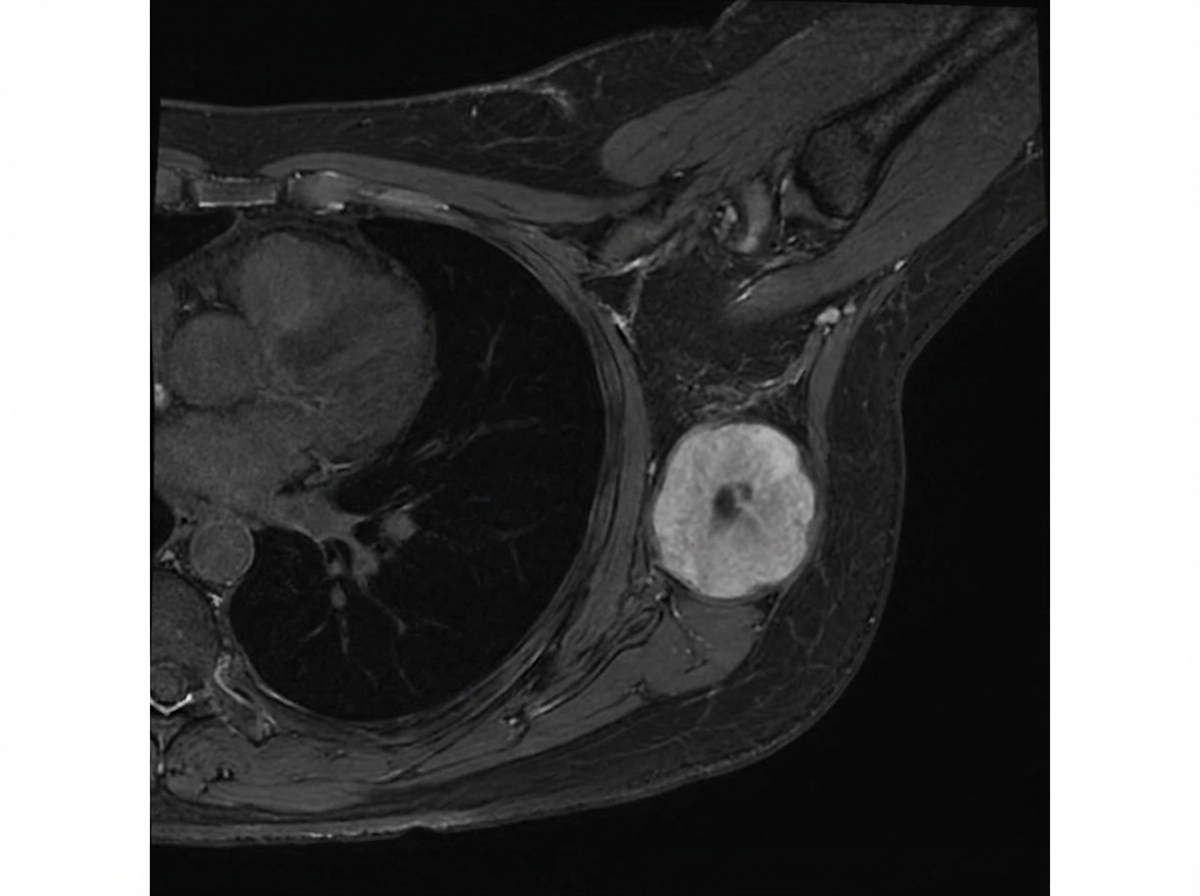
Question 304: Which of the following is not an indication for surgery in the condition shown below?
- A. Patient's decision (Correct Answer)
- B. Size more than 5 cm
- C. Complex type
- D. Recurrence
- E. Rapid increase in size
Explanation: ***Patient's decision*** - While patient preferences are crucial in medical decision-making, simply the **patient's decision alone is not a primary medical indication for surgery** in the absence of other objective criteria for a fibroadenoma. - Surgery for **fibroadenoma** is typically guided by clinical and radiological findings, not solely by patient request. *Size more than 5 cm* - A **fibroadenoma** with a size of **more than 5 cm** is generally considered a strong indication for surgical excision. - Large fibroadenomas can cause **cosmetic distortion**, discomfort, and may be harder to distinguish from malignant lesions, especially if they show rapid growth. *Complex type* - **Complex fibroadenomas** have features such as **cysts larger than 3 mm**, sclerosing adenosis, epithelial calcifications, or papillary apocrine metaplasia. - These features are associated with a slightly **increased risk of future breast cancer** and are often considered an indication for excision to rule out malignancy and for risk reduction. *Recurrence* - If a **fibroadenoma recurs** after previous excision, particularly if it grows rapidly or shows atypical features, surgical removal is indicated. - **Recurrence** suggests a persistent or potentially more aggressive benign process that warrants further investigation and management. *Rapid increase in size* - A **rapid increase in size** of a fibroadenoma is a clear indication for surgical excision. - Rapid growth raises concern for **phyllodes tumor** or other potentially aggressive lesions and warrants histopathological examination. - Serial measurements showing significant growth over a short period (typically doubling in size over 3-6 months) indicate the need for surgical intervention.
Question 305: Which of the following uroflowmetry recording indicates BPH?
- A. Curve 1
- B. Curve 2
- C. Curve 4
- D. Curve 3 (Correct Answer)
Explanation: ***Curve 3*** - Curve 3 shows a **low, flattened peak flow rate** (around 5 mL/sec) and a **prolonged voiding time**, which is characteristic of significant bladder outlet obstruction due to BPH. - The **sustained low flow** indicates constant effort to overcome resistance, a common finding in BPH. *Curve 1* - Curve 1 depicts a **high peak flow rate** (around 30 mL/sec) and a **short voiding time**, representing a normal and efficient urinary flow pattern. - This pattern is inconsistent with BPH, which is characterized by obstructed flow. *Curve 2* - Curve 2 indicates a **moderately reduced peak flow rate** (around 15 mL/sec) and a somewhat prolonged voiding time compared to normal. - While reflecting some degree of obstruction or weaker detrusor function, it is less severe than curve 3 and may represent early BPH or other conditions. *Curve 4* - Curve 4 shows an **intermittent or staccato flow pattern**, which typically indicates detrusor-sphincter dyssynergia or abdominal straining during voiding. - This pattern is not characteristic of BPH, which typically shows a continuous low flow rather than intermittent flow.
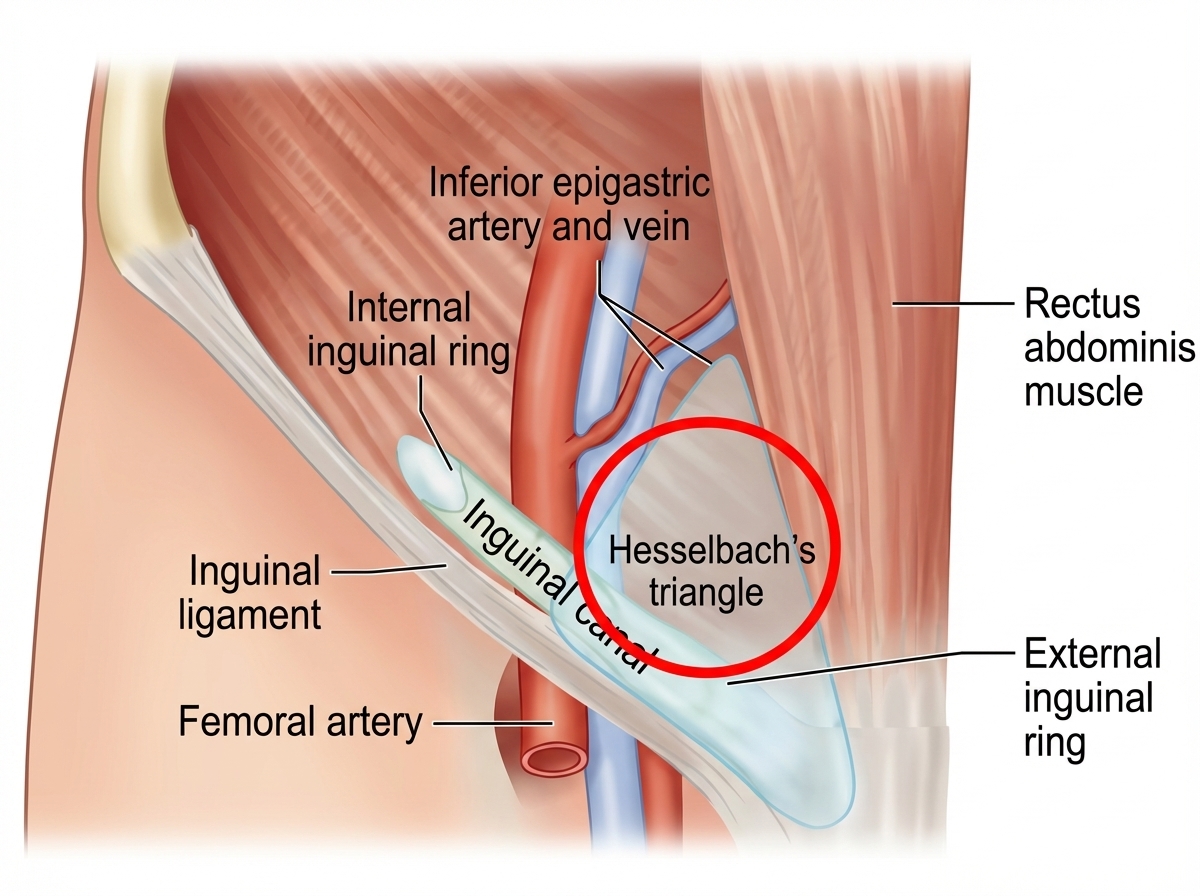
Question 306: Which is correct about tumor found in the triangle location shown below?
- A. Associated with MEN1 (Correct Answer)
- B. Most common site is stomach
- C. Best test for diagnosis is pentagastrin test
- D. Metastasis to adjacent gut
- E. Primary treatment is medical with proton pump inhibitors
Explanation: ***Associated with MEN1*** - The triangle shown in the image represents the **Gastrinoma Triangle**, a common location for gastrin-producing tumors (gastrinomas) to occur. - Approximately 20-30% of gastrinomas are associated with **Multiple Endocrine Neoplasia type 1 (MEN1)** syndrome, which involves tumors of the parathyroid glands, pituitary gland, and pancreas. *Most common site is stomach* - The most common primary site for gastrinomas is the **duodenum** (50-70%), followed by the pancreas (20-40%). - Gastrinomas found in the stomach are rare and usually associated with MEN1, but the duodenum is the predominant site overall. *Best test for diagnosis is pentagastrin test* - The **pentagastrin stimulation test** is used to assess maximal acid output but it is not specific for diagnosing gastrinomas. - The **secretin stimulation test** is the most sensitive and specific provocative test for gastrinoma, as secretin normally inhibits gastrin release from G cells but paradoxically stimulates it in gastrinomas. *Metastasis to adjacent gut* - Gastrinomas are malignant neuroendocrine tumors that commonly **metastasize to regional lymph nodes** and the **liver**. - While they can invade locally, metastasis typically involves distant sites rather than just the adjacent gut wall. *Primary treatment is medical with proton pump inhibitors* - While **proton pump inhibitors (PPIs)** are essential for managing acid hypersecretion symptoms, they are not the primary definitive treatment. - **Surgical resection** is the primary treatment for localized, sporadic gastrinomas when feasible, offering potential cure. - PPIs serve as adjunctive medical therapy to control symptoms but do not address the underlying tumor.
Question 307: A surgical suture material is shown in the image below. Which of the following statements is TRUE about this suture?
- A. Derived from catgut
- B. Absorbed by phagocytosis and enzymatic degradation (Correct Answer)
- C. Non-absorbable
- D. Absorbed over 3 months
Explanation: ***Absorbed by phagocytosis and enzymatic degradation*** - The image shows a **braided absorbable suture**, which undergoes absorption through **tissue reaction** involving enzymatic breakdown and phagocytosis - This is the characteristic mechanism of absorption for most **absorbable sutures** (both natural like catgut and synthetic like Vicryl, Monocryl, PDS) - The body's macrophages phagocytose suture particles while proteolytic enzymes break down the material components, allowing complete removal from tissues *Derived from catgut* - While **catgut sutures** (derived from sheep/bovine intestinal submucosa) are absorbable, modern synthetic absorbable sutures like **polyglactin (Vicryl)** or **polyglycolic acid (Dexon)** are more commonly used - The image appearance and braided structure suggest a synthetic absorbable suture rather than catgut - Catgut is less commonly used today due to higher tissue reactivity and unpredictable absorption *Non-absorbable* - **Non-absorbable sutures** (silk, nylon, polypropylene) remain permanently in tissues or require removal - The mechanism of absorption by phagocytosis and enzymatic degradation specifically defines **absorbable sutures**, making this option incorrect - Non-absorbable sutures maintain tensile strength indefinitely *Absorbed over 3 months* - Absorption time varies significantly by suture type: **rapidly absorbing gut (5-7 days)**, **Vicryl (56-70 days)**, **PDS (180-210 days)** - While some sutures absorb around 90 days, this is not a universal characteristic - The statement is too specific and not applicable to all absorbable sutures shown
Question 308: The radiographic image shows a stent in the urinary tract. This type of stenting is most commonly performed following which procedure?
- A. Stent for bile duct obstruction by malignancy
- B. Stenting for ESWL
- C. Stenting done for PCNL (Correct Answer)
- D. BPH stenting
Explanation: ***Stenting done for PCNL*** - The image clearly shows a **double J stent** properly placed within the urinary tract, extending from the kidney to the bladder. The presence of a nephrostomy tube (not explicitly shown but implied by PCNL context) or a stent like this is common after invasive renal procedures. - After **Percutaneous Nephrolithotomy (PCNL)**, a stent is commonly placed to ensure proper **urine drainage**, prevent obstruction from stone fragments, and promote healing of the access tract. *Stent for bile duct obstruction by malignancy* - A stent for bile duct obstruction would be located in the **upper abdomen**, specifically within the biliary system, not in the renal system extending to the bladder as seen in this image. - The morphology of the stent (double J) is characteristic of a **ureteral stent**, used in the urinary tract, not the biliary tract. *Stenting for ESWL* - **Extracorporeal Shock Wave Lithotripsy (ESWL)** typically does not require routine stenting unless there is a large stone burden or pre-existing obstruction that could lead to steinstrasse (a collection of stone fragments obstructing the ureter). - While a stent may be placed in some high-risk ESWL cases, the image itself does not provide clues specific to ESWL over other renal procedures requiring stenting. *BPH stenting* - **Benign Prostatic Hyperplasia (BPH) stenting** involves placing a stent in the **urethra** to relieve prostatic obstruction, not a double J stent extending from the kidney to the bladder. - The location and type of stent in the image are inconsistent with a stent used for BPH.