Dermatology
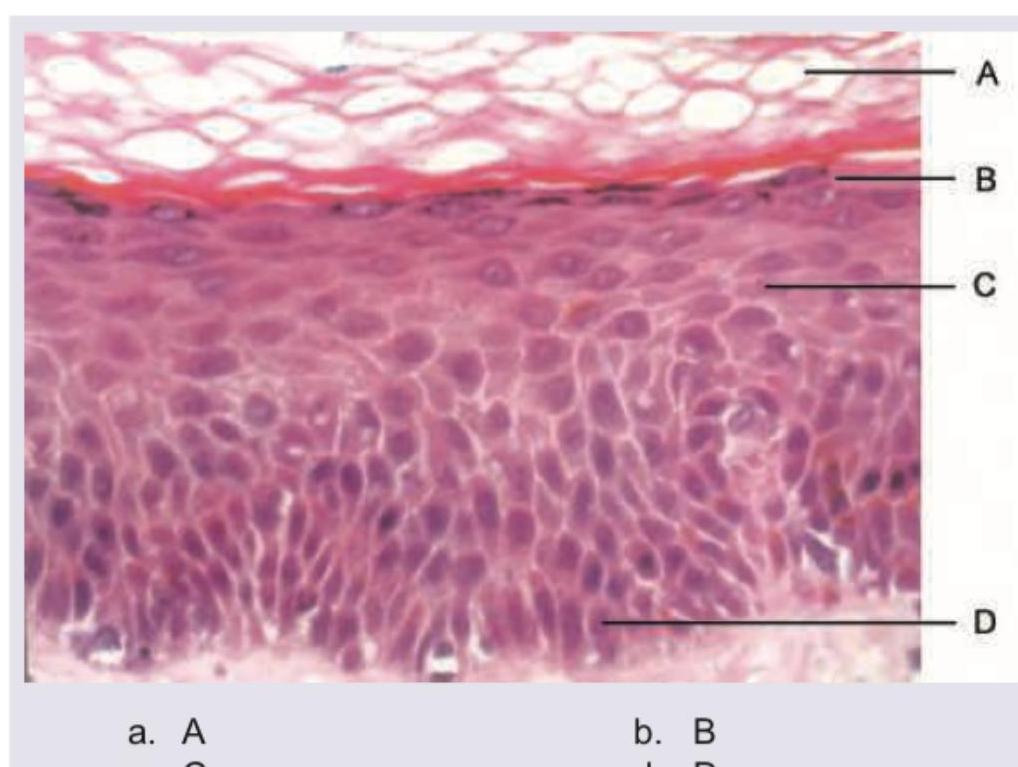
1 questionsWhich of the following layers contains Odland bodies?

NEET-PG 2018 - Dermatology NEET-PG Practice Questions and MCQs
Question 291: Which of the following layers contains Odland bodies?
- A. A
- B. B (Correct Answer)
- C. C
- D. D
Explanation: ***B*** - The layer indicated by **B** is the **stratum granulosum**, which is characterized by the presence of **keratohyalin granules** and **Odland bodies** (lamellar bodies). - **Odland bodies** are crucial for forming the **epidermal water barrier** as they release lipids and enzymes into the intercellular space. *A* - The layer indicated by **A** is the **stratum corneum**, which consists of dead, flattened keratinocytes. - This layer is primarily involved in protection and does not contain Odland bodies, which are found in deeper layers. *C* - The layer indicated by **C** is the **stratum spinosum**, characterized by many **desmosomes** giving a "spiny" appearance. - While cells in this layer are metabolically active and produce keratin, Odland bodies primarily form and are extruded in the stratum granulosum. *D* - The layer indicated by **D** is the **stratum basale** (or stratum germinativum), the deepest layer of the epidermis. - This layer contains **stem cells** that are constantly dividing to replenish the epidermal layers and is also where melanocytes are located; it does not contain Odland bodies.
General Medicine
1 questionsThis condition shown below is dependent on development of pH of urine. Which of the following subtype development is insensitive to pH of urine?

NEET-PG 2018 - General Medicine NEET-PG Practice Questions and MCQs
Question 291: This condition shown below is dependent on development of pH of urine. Which of the following subtype development is insensitive to pH of urine?
- A. Calcium oxalate (Correct Answer)
- B. Triple phosphate
- C. Uric acid
- D. Cystine
Explanation: ***Calcium oxalate*** - **Calcium oxalate stones** are the most common type and form **independently of urine pH**, although they can form in a wide range of pH conditions. - Precipitation of calcium oxalate is primarily influenced by concentrations of **calcium and oxalate** in urine, not pH. *Triple phosphate* - **Triple phosphate (struvite) stones** are highly sensitive to **alkaline urine** (pH > 7.0), as they typically form in the presence of urea-splitting bacteria. - These stones are often large, grow rapidly, and are associated with **urinary tract infections**. *Uric acid* - **Uric acid stones** are highly dependent on urine pH, typically forming in **acidic urine** (pH < 5.5). - Alkalinizing the urine (e.g., with potassium citrate) can help **dissolve existing uric acid stones** and prevent new formation. *Cystine* - **Cystine stones** are also pH-sensitive, forming primarily in **acidic urine**, due to the reduced solubility of cystine at lower pH levels. - Urine alkalinization is a key therapeutic strategy for managing cystine stone formation.
Pathology
2 questionsAll are correct about the condition shown in the image except: (NEET Pattern 2018)

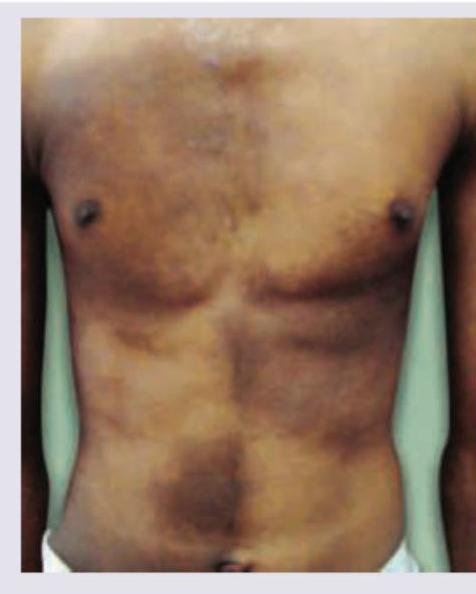
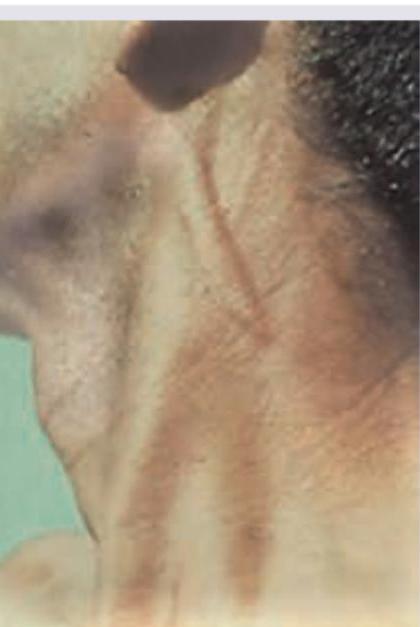
A 60-year-old man with tobacco chewing history presents with trismus and ankyloglossia. The lesion is shown below. Diagnosis is? (NEET Pattern 2018)

NEET-PG 2018 - Pathology NEET-PG Practice Questions and MCQs
Question 291: All are correct about the condition shown in the image except: (NEET Pattern 2018)
- A. Most common site is middle esophagus (Correct Answer)
- B. Most common gross presentation is fungating subtype
- C. Stage 3 cancer oesophagus has 25 % survival rate
- D. Vomiting of previous day food items
- E. Loss of ganglion cells in myenteric plexus
Explanation: ***Most common site is middle esophagus*** - The question asks for the incorrect statement, and this statement is actually **correct** for esophageal squamous cell carcinoma (SCC), which is the most common type of esophageal cancer globally. - **Squamous cell carcinoma** of the esophagus most frequently occurs in the **middle third** of the esophagus [1]. *Most common gross presentation is fungating subtype* - This statement is incorrect. The most common gross presentation of esophageal carcinoma is the **ulcerative type**, followed by fungating and infiltrative types [1]. - **Fungating tumors** are exophytic and protrude into the lumen, but they are not the most common gross morphology. *Stage 3 cancer oesophagus has 25 % survival rate* - This statement is incorrect. The 5-year survival rate for **Stage III esophageal cancer** is significantly lower, typically ranging from **10-15%**, not 25% [2][3]. - Survival rates for esophageal cancer are generally poor, especially in advanced stages due to early metastasis and late presentation. *Vomiting of previous day food items* - This statement is incorrect. Vomiting of previous day's food items is characteristic of **pyloric stenosis** or **gastric outlet obstruction**, not typically esophageal cancer. - Esophageal cancer usually presents with **dysphagia** (difficulty swallowing) and **regurgitation** of recently ingested food, not undigested food from the previous day [3]. **References:** [1] Kumar V, Abbas AK, et al.. Robbins and Cotran Pathologic Basis of Disease. 9th ed. The Gastrointestinal Tract, pp. 766-767. [2] Cross SS. Underwood's Pathology: A Clinical Approach. 6th ed. Common Clinical Problems From Alimentary System Disease, pp. 349-350. [3] Kumar V, Abbas AK, et al.. Robbins and Cotran Pathologic Basis of Disease. 9th ed. The Gastrointestinal Tract, pp. 765-766.
Question 292: A 60-year-old man with tobacco chewing history presents with trismus and ankyloglossia. The lesion is shown below. Diagnosis is? (NEET Pattern 2018)
- A. Erythroplakia
- B. Chronic hyperplastic candidiasis
- C. Submucosal fibrosis (Correct Answer)
- D. Jaffe's tumor
Explanation: ***Submucosal fibrosis*** - **Oral submucous fibrosis (OSMF)** is a chronic, progressive, precancerous condition of the oral cavity characterized by juxta-epithelial fibrosis. It is strongly associated with **areca nut (betel nut) chewing**, often found in tobacco products [1]. - Clinical features include **trismus** (difficulty opening the mouth due to fibrosis of the oral tissues), burning sensation, and **ankyloglossia** (restricted tongue movement) due to fibrosis of the lingual frenum. *Erythroplakia* - **Erythroplakia** is a red patch or lesion in the oral cavity that cannot be characterized clinically or pathologically as any other definable disease. - It is considered a highly dysplastic or **premalignant lesion**, but its primary presentation is a red, velvety patch, not primarily trismus or ankyloglossia. *Chronic hyperplastic candidiasis* - **Chronic hyperplastic candidiasis** (Candidal leukoplakia) is a persistent white lesion that cannot be removed by scraping, caused by chronic *Candida albicans* infection [2]. - While it is a precancerous condition, its main clinical feature is a **white patch** or plaque, and it does not typically cause severe trismus or ankyloglossia as primary symptoms. *Jaffe's tumor* - **Jaffe's tumor** is an outdated term for **fibrous dysplasia**, a bone disorder where normal bone is replaced by fibrous tissue and immature woven bone. - It primarily affects bones, and while it can occur in the jaw, it does not present with the classic oral mucosal symptoms of trismus and ankyloglossia associated with tobacco chewing. **References:** [1] Cross SS. Underwood's Pathology: A Clinical Approach. 6th ed. Common Clinical Problems From Alimentary System Disease, pp. 344-345. [2] Kumar V, Abbas AK, et al.. Robbins and Cotran Pathologic Basis of Disease. 9th ed. The Lung, pp. 736-737.
Surgery
6 questionsThe patient has developed a hernia at the site highlighted by red circle. What is this hernia called as per NYHUS classification? (NEET Pattern 2018)

A person could not pass urine after a fall shown below. On examination vitals are stable but bladder is palpable. What is the probable diagnosis? (NEET Pattern 2018)

Which is the most common site of peripheral aneurysm?

In the MRI breast shown below, 4 cm mass is present with no nodal metastasis. Which is the stage of breast cancer?

A 35-year-old patient with history of significant weight loss and medically refractory constipation underwent a barium enema shown below. In how many % of cases Metastatic liver disease is found?

A 9-month-old child presents with excessive cry and presentation shown below. On examination right iliac fossa sausage shaped lump is felt. What is the best treatment?

NEET-PG 2018 - Surgery NEET-PG Practice Questions and MCQs
Question 291: The patient has developed a hernia at the site highlighted by red circle. What is this hernia called as per NYHUS classification? (NEET Pattern 2018)
- A. Nyhus Type I
- B. Nyhus Type II
- C. Nyhus Type IIIA
- D. Nyhus Type IIIB (Correct Answer)
Explanation: ***Nyhus Type IIIB*** - The image shows a hernia occurring within **Hesselbach's triangle**, which is the anatomical site for a **direct inguinal hernia**. A direct inguinal hernia is classified as **Nyhus Type III**, as it involves a defect in the posterior wall of the inguinal canal, medial to the inferior epigastric vessels. - The "B" in Nyhus Type IIIB specifically denotes a **direct inguinal (III) hernia with a weakness in the posterior inguinal wall**. While the question asks for the specific Nyhus classification, options like Nyhus Type I, Type II, and Type IIIA, as well as a femoral hernia (Nyhus Type IV), are inconsistent with the highlighted location. *Nyhus Type I* - This classification refers to an **indirect inguinal hernia** where the internal ring is normal, typically seen in children. - It would originate lateral to the inferior epigastric artery, unlike the highlighted region. *Nyhus Type II* - This type describes an **indirect inguinal hernia** with an enlarged internal ring but an intact posterior inguinal wall. - This type of hernia would still originate lateral to the inferior epigastric vessels, not within Hesselbach's triangle. *Nyhus Type IIIA* - Nyhus Type IIIA specifically classifies an **indirect inguinal hernia** with an enlarged internal ring and a completely destructed transversalis fascia. - While it's also a Type III (indirect), Type IIIA refers to an indirect hernia, which emerges lateral to the inferior epigastric vessels, whereas a direct hernia (within Hesselbach's triangle) emerges medial to these vessels. *Nyhus Type IV* - This classification is for a **femoral hernia**, which occurs inferior to the inguinal ligament and through the femoral canal. - The highlighted area is clearly superior to the inguinal ligament and within the inguinal region, not the femoral region.
Question 292: A person could not pass urine after a fall shown below. On examination vitals are stable but bladder is palpable. What is the probable diagnosis? (NEET Pattern 2018)
- A. Anterior urethra rupture
- B. Posterior urethra rupture (Correct Answer)
- C. Penile avulsion
- D. Recto-urethral injury
Explanation: ***Posterior urethra rupture*** - The mechanism of injury, a **fall causing blunt perineal trauma** (as depicted by the man falling into a manhole), is a classic cause of posterior urethral injury, often associated with **pelvic fractures**. - The inability to pass urine with a **palpable distended bladder** indicates urinary retention due to complete urethral disruption, preventing urine flow from the bladder. - Classical triad: inability to void, blood at urethral meatus, and palpable bladder. *Anterior urethra rupture* - This typically results from a "straddle injury" (e.g., falling astride a beam or bike bar), which is different from the fall shown. - Anterior urethral injuries often manifest with **perineal extravasation of urine and blood (butterfly hematoma)**, and the bladder might still be palpable if retention occurs. *Penile avulsion* - This is a severe injury involving the **tearing away of penile skin or the entire penis**, which is not immediately suggested by the described symptoms of inability to urinate. - It would present with **obvious external hemorrhage** and tissue loss, not just urinary retention. *Recto-urethral injury* - This involves damage to both the **rectum and urethra**, usually from penetrating trauma or severe crush injuries. - While it could cause dysuria or inability to urinate, it would also likely present with **rectal bleeding or a palpable rectal injury**, which is not mentioned in the clinical scenario.
Question 293: Which is the most common site of peripheral aneurysm?
- A. A
- B. B (Correct Answer)
- C. C
- D. D
- E. E
Explanation: ***Option B*** - This image points to the **popliteal artery**, which is the most common site for **peripheral aneurysms**. - **Popliteal artery aneurysms** account for approximately 70% of all peripheral aneurysms and are more common in men. *Option A* - This image points to the **brachial artery** in the upper arm, which is a less common site for aneurysms. - While aneurysms can occur here, they are not as frequent as in the popliteal artery. *Option C* - This image points to the **femoral artery** in the groin region. - Although the femoral artery can be affected by aneurysms, they are less common than popliteal artery aneurysms. *Option D* - This image points to the **tibial arteries** in the lower leg. - Aneurysms in the tibial arteries are rare and typically much less common than those in the popliteal artery. *Option E* - This image points to the **radial artery** in the forearm. - Radial artery aneurysms are very rare and usually occur secondary to trauma or iatrogenic injury, not spontaneously like popliteal aneurysms.
Question 294: In the MRI breast shown below, 4 cm mass is present with no nodal metastasis. Which is the stage of breast cancer?
- A. Stage I
- B. Stage II (Correct Answer)
- C. Stage III
- D. Stage IV
- E. Stage 0
Explanation: ***Stage II*** - A tumor of **4 cm** with no nodal metastasis is classified as pT2, N0, M0. This falls under **Stage IIA** breast cancer according to the TNM staging system. - Stage II breast cancer typically includes tumors that are larger than 2 cm but not larger than 5 cm (T2N0), or smaller tumors with lymph node involvement. - The **4 cm size with N0 status** specifically defines Stage IIA. *Stage 0* - Stage 0 represents **ductal carcinoma in situ (DCIS)** or **lobular carcinoma in situ (LCIS)**, which are non-invasive breast cancers. - This case describes a **4 cm mass**, indicating an invasive tumor, not in-situ disease, ruling out Stage 0. *Stage I* - Stage I breast cancer includes tumors that are **2 cm or smaller** (T1) and have no lymph node involvement (N0). - Since the mass is **4 cm**, it exceeds the size criteria for Stage I. *Stage III* - Stage III breast cancer involves **larger tumors** (greater than 5 cm) or any tumor size with extensive lymph node involvement, or tumors invading the chest wall/skin. - While this mass is 4 cm, there is **no nodal metastasis**, which rules out Stage III. *Stage IV* - Stage IV breast cancer indicates the presence of **distant metastases** (M1), meaning the cancer has spread to other parts of the body. - The information provided clearly states **no nodal metastasis**, and no information about distant spread, therefore Stage IV is incorrect.
Question 295: A 35-year-old patient with history of significant weight loss and medically refractory constipation underwent a barium enema shown below. In how many % of cases Metastatic liver disease is found?
- A. 10 %
- B. 33 % (Correct Answer)
- C. 15 %
- D. 75 %
Explanation: ***33 %*** - Approximately **20-25% of colorectal cancer patients present with synchronous liver metastases** at initial diagnosis, and another **15-25% develop metachronous metastases** during follow-up. - The figure of **33% represents a reasonable approximation** of the overall incidence, considering both presentation and subsequent development of liver metastases. - The liver is the **most common site of distant metastasis** in colorectal cancer due to portal venous drainage from the colon directly to the liver. - This makes **33% the most accurate answer** among the given options for the cumulative incidence of metastatic liver disease. *75 %* - This is a **significant overestimation** of the true incidence of liver metastases in colorectal cancer patients. - While the liver is the most common metastatic site, **only 20-25% have liver metastases at presentation**, and the cumulative lifetime incidence reaches approximately 40-50%, not 75%. - This exaggerated figure does not align with current epidemiological data. *10 %* - This is **too low** and underestimates the true burden of liver metastatic disease in colorectal cancer. - Given that approximately one-quarter of patients present with liver metastases at diagnosis alone, 10% significantly underrepresents the actual incidence. *15 %* - This also **underestimates** the true incidence of liver metastases in colorectal cancer patients. - While 15% might represent a specific subset or early-stage disease, it does not reflect the overall cumulative incidence of metastatic liver disease.
Question 296: A 9-month-old child presents with excessive cry and presentation shown below. On examination right iliac fossa sausage shaped lump is felt. What is the best treatment?
- A. IVF- Antibiotic- NG tube
- B. IVF- Antibiotic-Air enema (Correct Answer)
- C. IVF-Antibiotics- Barium enema
- D. IVF- Antibiotics-Warm saline enema
- E. IVF- Antibiotics- Laparotomy
Explanation: ***IVF- Antibiotic-Air enema*** - The clinical picture (9-month-old with excessive cry, **"currant jelly" stool** (image), and a **right iliac fossa sausage-shaped lump**) is classic for **intussusception**. - Initial management involves **resuscitation** (IV fluids), **antibiotics** to prevent sepsis from bowel ischemia, and then an **air enema** for both diagnosis and non-surgical reduction. - Air enema has a **success rate of 70-90%** for uncomplicated cases and is the **first-line treatment**. *IVF- Antibiotic- NG tube* - While IVF and antibiotics are appropriate initial steps for an ill child with presumed intussusception, an **NG tube** alone is insufficient for treating the intussusception itself. - An NG tube is primarily used for **gastric decompression** in cases of bowel obstruction, which may be a complication of intussusception, but it does not resolve the invagination. *IVF-Antibiotics- Barium enema* - A **barium enema** can also be used for reduction, but an **air enema** is generally preferred due to a **lower risk of peritoneal contamination** if perforation occurs and better visualization under fluoroscopy. - While it has diagnostic and therapeutic potential, air enema is often considered safer and equally effective. *IVF- Antibiotics-Warm saline enema* - This option lacks the specific pressure-based mechanism required to reduce an intussusception effectively. - A **warm saline enema** is a general type of enema, but it does not provide the controlled pressure needed for hydrostatic or pneumatic reduction of intussusception. *IVF- Antibiotics- Laparotomy* - **Laparotomy** (surgical reduction) is reserved for cases where **pneumatic reduction fails**, **signs of peritonitis** are present, or there is **suspected bowel perforation**. - Initial management should always attempt non-surgical reduction first unless contraindications exist (free air, hemodynamic instability, peritonitis).