Investigation of choice for multiple sclerosis
The most appropriate first-line imaging modality to detect adrenal metastasis due to bronchogenic carcinoma is:
Which of the following conditions characteristically causes bilateral hypertranslucency of lung fields on chest X-ray?
Investigation of choice for intramedullary SOL is -
Popcorn calcification is seen in:
"Sunray appearance" on X-rays is suggestive of:
Which of the following conditions can cause periosteal reactions?
Which of the following is a nonionic dye used in medical imaging?
Rat tail appearance in contrast radiography is seen in?
Investigation of choice for screening of proximal internal carotid artery stenosis is :
NEET-PG 2012 - Radiology NEET-PG Practice Questions and MCQs
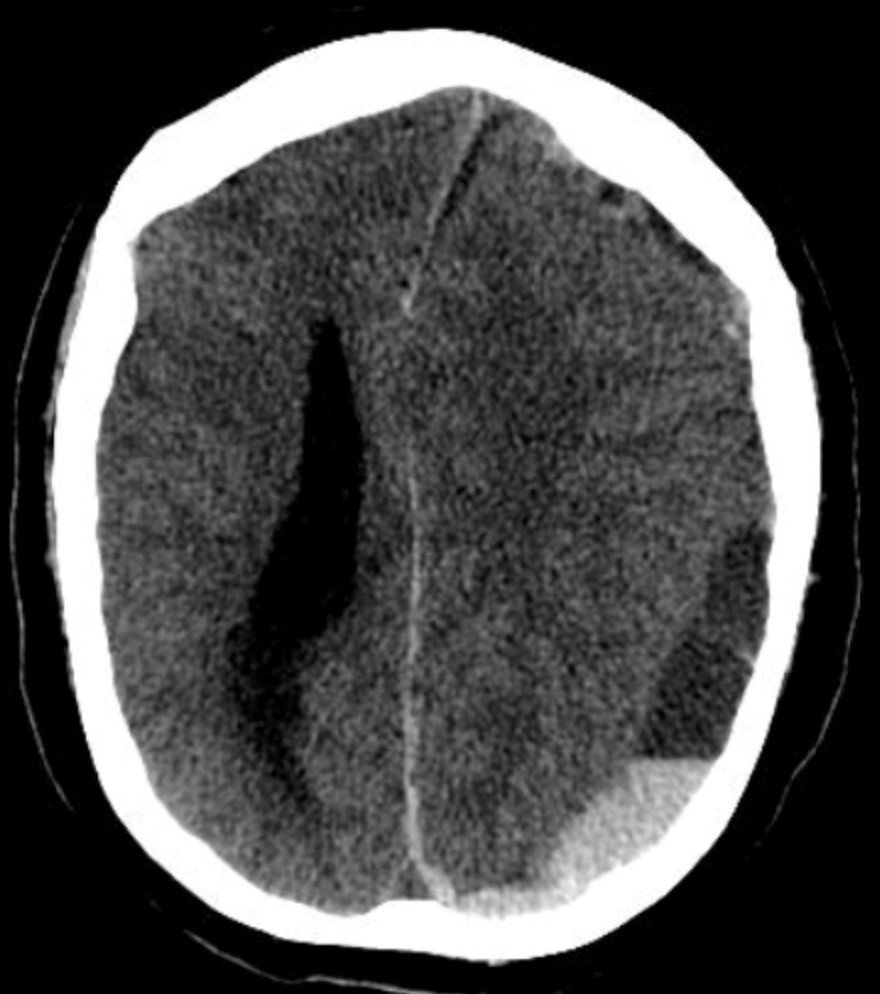
Question 11: Investigation of choice for multiple sclerosis
- A. CT
- B. MRI (Correct Answer)
- C. USG
- D. PET
Explanation: ***MRI*** - **Magnetic Resonance Imaging (MRI)** is the investigation of choice for **multiple sclerosis** due to its superior ability to visualize **demyelinating plaques** in the brain and spinal cord. - It can detect both **new and old lesions**, crucial for diagnosis and monitoring disease progression, according to the **McDonald criteria**. *CT* - **Computed Tomography (CT) scans** are generally less sensitive than MRI in detecting the subtle **demyelinating lesions** characteristic of multiple sclerosis. - While it can sometimes show larger lesions, it often misses smaller or early-stage plaques, making it less suitable for initial diagnosis. *USG* - **Ultrasound (USG)** is primarily used for visualizing soft tissues and vascular structures, not for detailed imaging of the brain or spinal cord parenchyma. - It has no role in the diagnosis or monitoring of **multiple sclerosis**. *PET* - **Positron Emission Tomography (PET) scans** are used to assess metabolic activity and perfusion, often in oncology or certain neurological disorders like Alzheimer's or Parkinson's disease. - It is not routinely used for the diagnosis of **multiple sclerosis**, as it does not clearly visualize the **demyelinating lesions**.
Question 12: The most appropriate first-line imaging modality to detect adrenal metastasis due to bronchogenic carcinoma is:
- A. PET scan
- B. MRI of the abdomen
- C. Adrenal radionuclide scan
- D. Contrast Enhanced CT abdomen (Correct Answer)
Explanation: **Contrast Enhanced CT abdomen** - **Contrast-enhanced CT abdomen** is generally considered the most sensitive and cost-effective imaging modality for detecting **adrenal metastases**. - It allows for detailed visualization of adrenal gland morphology, including size, shape, and enhancement patterns, which can help differentiate benign from malignant lesions. *PET scan* - While **PET (Positron Emission Tomography) scans** are highly sensitive for detecting metabolically active metastatic disease, they are often used as a secondary imaging modality to characterize indeterminate lesions found on CT or MRI. - **PET scans** can have false positives in benign adrenal tumors (e.g., adenomas rich in fat) and are less readily available or higher in cost for initial screening compared to CT. *MRI of the abdomen* - **MRI of the abdomen** can be very useful for further characterization of adrenal masses, especially for distinguishing between lipid-rich adenomas and metastases. - However, for initial detection, especially in the context of screening for distant metastases from bronchogenic carcinoma, **CT is generally preferred due to its wider availability, speed, and lower cost**. *Adrenal radionuclide scan* - **Adrenal radionuclide scans** (e.g., using MIBG or iodocholesterol) are primarily used for functional imaging of adrenal glands, typically to detect specific types of tumors like pheochromocytomas or aldosteronomas. - These scans are **not sensitive for detecting adrenal metastases** from bronchogenic carcinoma, as the metastatic lesions do not typically exhibit the specific uptake patterns targeted by these radiotracers.
Question 13: Which of the following conditions characteristically causes bilateral hypertranslucency of lung fields on chest X-ray?
- A. Mcleod syndrome
- B. Poland syndrome
- C. Emphysema (Correct Answer)
- D. Pneumothorax
Explanation: ***Correct: Emphysema*** - **Emphysema** causes destruction of alveolar walls, leading to enlarged air spaces and **air trapping**, making both lungs appear hypertranslucent on X-ray - This **bilateral hypertranslucency** is due to reduced lung tissue density, decreased vascular markings, and increased air volume - Classic radiographic features include flattened diaphragms, increased retrosternal space, and hyperlucent lung fields *Incorrect: Mcleod syndrome* - Also known as **Swyer–James–MacLeod syndrome**, this condition causes **unilateral** lung or lobe hyperlucency due to post-infectious obliterative bronchiolitis - The key differentiating feature is that it's **unilateral**, whereas the question asks for bilateral hypertranslucency - Affected lung shows air trapping on expiratory films *Incorrect: Pneumothorax* - A **pneumothorax** presents as a **unilateral** or focal hypertranslucent area due to air in the pleural space - Characterized by **absence of lung markings** beyond the visceral pleural line and associated lung collapse - This is a pleural space abnormality, not a bilateral parenchymal lung disease *Incorrect: Poland syndrome* - **Poland syndrome** is a congenital condition with absence or underdevelopment of the pectoralis major muscle - Can lead to **unilateral** apparent hyperlucency on the affected side due to missing chest wall muscle - This is a **chest wall anomaly**, not a parenchymal lung disease causing bilateral hypertranslucency
Question 14: Investigation of choice for intramedullary SOL is -
- A. MRI (Correct Answer)
- B. USG
- C. CT
- D. X-ray
Explanation: ***MRI*** - **Magnetic Resonance Imaging (MRI)** is the investigation of choice for intramedullary lesions due to its superior **soft tissue contrast** and ability to visualize the **spinal cord** parenchyma. - It provides detailed information on lesion size, location, and internal characteristics, which is crucial for diagnosis and surgical planning. *USG* - **Ultrasound (USG)** has limited utility for intramedullary lesions as a primary diagnostic tool because **bone impedes sound waves**, making it difficult to visualize structures within the spinal canal. - It might be used for neonatal spinal screening or intraoperative guidance, but not for definitive diagnosis of intramedullary lesions in adults. *CT* - **Computed Tomography (CT)** excels at visualizing **bone structures** and calcifications, but it provides less detailed information about soft tissue elements like the spinal cord compared to MRI. - While it can identify bony changes associated with intramedullary lesions, it is not the preferred initial imaging modality for characterizing the lesion itself. *X-ray* - **X-rays** provide basic imaging of bone but offer essentially **no visualization of soft tissues** such as the spinal cord or intramedullary lesions. - They are primarily used to identify gross bony abnormalities like fractures or severe degenerative changes, not for subtle intraspinal pathologies.
Question 15: Popcorn calcification is seen in:
- A. Pulmonary hamartoma (Correct Answer)
- B. Bronchogenic carcinoma
- C. Tuberculosis
- D. Pulmonary metastases
Explanation: ***Pulmonary hamartoma*** - **Popcorn calcification** is a pathognomonic radiographic finding highly suggestive of **pulmonary hamartoma**, a **benign tumor** composed of cartilage, fat, and connective tissue - This characteristic calcification pattern is due to the presence of **chondroid (cartilaginous) tissue** within the lesion - Appears as coarse, irregular calcifications resembling popcorn on chest X-ray or CT scan *Bronchogenic carcinoma* - Malignant lung lesions typically show **irregular, spiculated, or ill-defined margins** and tend to grow rapidly - While calcification can occur in some lung malignancies, it usually appears as **eccentric, stippled, or amorphous** rather than the distinctive popcorn pattern - Popcorn calcification is not a feature of primary lung cancers *Tuberculosis* - **Granulomatous infections** such as tuberculosis often lead to calcification, but it usually presents as **laminated, clustered, or target-like patterns** in lymph nodes or within granulomas (Ghon lesion, Ranke complex) - **Popcorn calcification** is not a typical feature of active or healed tuberculous lesions *Pulmonary metastases* - **Metastatic lesions** are generally not calcified, although a few primary tumors (e.g., mucinous adenocarcinoma, osteosarcoma, chondrosarcoma) can metastasize as calcified nodules - When calcification is present in metastases, it is rarely in the specific **popcorn pattern** and is usually diffuse, punctate, or amorphous
Question 16: "Sunray appearance" on X-rays is suggestive of:
- A. A metastatic tumour in the bone
- B. An Osteogenic sarcoma (Correct Answer)
- C. An Ewing's sarcoma
- D. A type of bone cancer that can show various radiographic appearances
Explanation: ***An Osteogenic sarcoma*** - The **"sunray appearance" (or sunburst)** on X-rays is a classic radiographic finding pathognomonic for **osteosarcoma**, especially in adults and adolescents. - This appearance is due to the **periosteal new bone formation** that grows perpendicular to the bone surface, creating a radiating spicule pattern. *A type of bone cancer that can show various radiographic appearances* - While true that bone cancers can show various appearances, the "sunray appearance" is specific enough to strongly point to a particular type, rather than just a general category. - This option is too broad and does not provide the most precise diagnosis indicated by the specific radiographic sign. *A metastatic tumour in the bone* - Metastatic bone lesions typically present with **lytic (bone destruction)** or **blastic (bone formation)** patterns, or a mixed pattern, but rarely produce the periosteal "sunray" appearance. - The characteristic radiographic finding for metastasis would often involve multiple lesions and different periosteal reactions, such as an **onion skin appearance** in some aggressive cases, but not typically sunray. *An Ewing's sarcoma* - Ewing's sarcoma commonly presents with an **"onion skin" periosteal reaction** due to multiple layers of new bone formation. - While both are primary bone tumors, the radiographic findings are distinctly different, allowing for differentiation.
Question 17: Which of the following conditions can cause periosteal reactions?
- A. All of the options (Correct Answer)
- B. Osteomyelitis
- C. Syphilis
- D. Tumor
Explanation: ***All of the options*** - **Periosteal reactions** are non-specific findings that indicate periosteal irritation or inflammation, which can be caused by a wide range of pathologies including infection, neoplasia, and trauma. - This option correctly encompasses the various causes listed in the other choices, making it the most accurate answer. *Osteomyelitis* - **Osteomyelitis**, an infection of the bone, can cause inflammation of the surrounding periosteum, leading to periosteal new bone formation. - The type of periosteal reaction can vary, from **lamellated** to **solid**, depending on the chronicity and aggressiveness of the infection. *Syphilis* - **Congenital syphilis** and tertiary acquired syphilis can lead to significant bone involvement, including **periostitis**, which manifests as periosteal reactions. - The classic appearance in children with congenital syphilis is a **wavy** or **irregular cortical thickening** due to widespread periostitis. *Tumor* - Both **primary bone tumors** (e.g., osteosarcoma, Ewing's sarcoma) and **metastatic lesions** can elicit a periosteal response as they invade or irritate the periosteum. - The periosteal reaction in tumors can present as aggressive patterns like a **sunburst** or **Codman's triangle**, indicating rapid bone destruction and new bone formation.
Question 18: Which of the following is a nonionic dye used in medical imaging?
- A. Iothalamate
- B. Iohexol (Correct Answer)
- C. Ioxaglate
- D. None of the options
Explanation: ***Iohexol*** - **Iohexol** is a widely used **nonionic, low-osmolality contrast medium** in various medical imaging procedures. - Nonionic contrast agents generally have a **lower incidence of adverse reactions** compared to ionic agents due to their reduced osmolality. *Iothalamate* - **Iothalamate** is an **ionic, high-osmolality contrast medium**. - High-osmolality ionic agents are associated with a **higher risk of adverse events**, such as anaphylactoid reactions and nephrotoxicity. *Ioxaglate* - **Ioxaglate** is an **ionic dimer**, often described as a "monoacidic dimer," which gives it **lower osmolality** than traditional ionic monomers, but it is still fundamentally ionic. - While it has a better safety profile than older ionic monomers, it still differs structurally and functionally from true nonionic agents like iohexol. *None of the options* - This option is incorrect because **Iohexol** is indeed a nonionic dye used in medical imaging, fitting the description.
Question 19: Rat tail appearance in contrast radiography is seen in?
- A. Carcinoma esophagus
- B. Plummer-Vinson syndrome
- C. Diffuse esophageal spasms
- D. Achalasia cardia (Correct Answer)
Explanation: ***Correct: Achalasia cardia*** - The **"rat tail" or "bird's beak" sign** is the classic radiological appearance of **achalasia cardia** on barium swallow study - Shows **smooth, symmetrical, tapered narrowing** of the distal esophagus with proximal esophageal dilatation - Due to **failure of the lower esophageal sphincter (LES) to relax**, causing functional obstruction - The smooth tapering distinguishes it from irregular narrowing seen in malignancy *Incorrect: Carcinoma esophagus* - Esophageal carcinoma shows **"shouldered lesion"** or **"apple core" appearance** - Characterized by **irregular, shelf-like margins** with abrupt transition - Narrowing is **asymmetric and irregular**, not the smooth tapering of rat tail sign - May show mucosal destruction and filling defects *Incorrect: Plummer-Vinson syndrome* - Shows **postcricoid web** in the upper esophagus on barium swallow - Associated with iron deficiency anemia, glossitis, and increased risk of esophageal cancer - Presents as a thin, web-like membrane rather than distal narrowing *Incorrect: Diffuse esophageal spasms* - Shows **"corkscrew esophagus"** or **"rosary bead" appearance** on barium swallow - Multiple, **simultaneous, non-peristaltic contractions** create segmented appearance - Dynamic finding with normal segments between contractions - Represents uncoordinated muscular activity, not fixed narrowing
Question 20: Investigation of choice for screening of proximal internal carotid artery stenosis is :
- A. Doppler ultrasound (USG) (Correct Answer)
- B. CT angiography
- C. Magnetic resonance imaging (MRI)
- D. Digital subtraction angiography (DSA)
Explanation: ***Doppler ultrasound (USG)*** - **Doppler ultrasound** is the investigation of choice for screening carotid artery stenosis due to its **non-invasive nature**, widespread availability, and cost-effectiveness. It provides excellent anatomical information and hemodynamics, including **blood flow velocity** and presence of **plaque**. - It can effectively estimate the degree of **stenosis** based on flow characteristics and is safe for serial monitoring. *CT angiography* - **CT angiography** provides detailed anatomical imaging of the carotid arteries but involves **ionizing radiation** and **iodinated contrast agents**, making it less suitable for routine screening, especially in patients with renal impairment or contrast allergies. - While it offers higher resolution for certain plaque characteristics, it’s typically reserved for cases where ultrasound findings are inconclusive or for surgical planning. *Magnetic resonance imaging (MRI)* - **MRI** and **MR angiography (MRA)** can visualize carotid stenosis without ionizing radiation but are more expensive and time-consuming than ultrasound, and can be limited by artifacts from patient movement. - Patients with **claustrophobia** or **metallic implants** may not be suitable for MRI, making it less ideal for general screening. *Digital subtraction angiography (DSA)* - **Digital subtraction angiography (DSA)** is the **gold standard** for diagnosing carotid stenosis as it provides the most detailed and accurate images of the arterial lumen. However, it is an **invasive procedure** associated with risks such as stroke, arterial dissection, contrast nephropathy, and radiation exposure. - Due to its invasiveness and potential complications, DSA is typically reserved for cases with **discordant non-invasive findings** or prior to intervention rather than as a primary screening tool.