Anatomy
4 questionsWhich of the following structures passes through the foramen marked by the arrow? 
Identify the nerve indicated by the arrow in the image.
Which nerve can be injured when a fracture is sustained in the area marked with the red arrow in the image? 
The condition seen in the image results from failure of fusion of:
FMGE 2023 - Anatomy FMGE Practice Questions and MCQs
Question 231: Which of the following structures passes through the foramen marked by the arrow? 
- A. Oesophagus
- B. Sympathetic trunk
- C. Inferior vena cava
- D. Thoracic duct (Correct Answer)
Explanation: ***Thoracic duct*** - The arrow in the image points to the **aortic hiatus**, which is the most posterior of the three major openings in the diaphragm, located at the vertebral level of **T12**. - This hiatus provides passage for the **aorta**, the **thoracic duct**, and the **azygos vein** from the thorax into the abdomen. *Oesophagus* - The oesophagus passes through its own opening, the **oesophageal hiatus**, which is located more anteriorly and superiorly at the **T10** vertebral level within the muscular part of the diaphragm. - This opening is formed by the fibers of the **right crus** of the diaphragm and also transmits the **vagal trunks**. *Inferior vena cava* - The inferior vena cava traverses the diaphragm through the **caval opening**, the most anterior and superior opening, situated at the **T8** vertebral level. - This foramen is located within the **central tendon** of the diaphragm and also allows passage for branches of the **right phrenic nerve**. *Sympathetic trunk* - The sympathetic trunk does not pass through any of the major apertures but rather descends posterior to the diaphragm. - It typically passes behind the **medial arcuate ligament** or pierces the **crus of the diaphragm** to enter the abdomen.
Question 232: Identify the nerve indicated by the arrow in the image.
- A. Radial nerve
- B. Musculocutaneous nerve
- C. Median nerve
- D. Ulnar nerve (Correct Answer)
Explanation: ***Ulnar nerve*** - The arrow points to the area posterior to the **medial epicondyle** of the humerus, which is the location of the **cubital tunnel**. - The **ulnar nerve** passes superficially through this tunnel, making it susceptible to compression or injury, and is commonly known as the "funny bone". *Radial nerve* - The **radial nerve** travels down the posterior aspect of the humerus in the **radial groove** and then crosses the elbow joint anterior to the **lateral epicondyle**. - It is primarily responsible for innervating the **extensor muscles** of the forearm and hand. *Median nerve* - The **median nerve** descends through the **anterior compartment** of the arm and passes through the **cubital fossa**, which is anterior to the elbow joint. - It innervates most of the **flexor muscles** of the forearm and the **thenar muscles** of the hand. *Musculocutaneous nerve* - The **musculocutaneous nerve** is found in the **anterior compartment** of the arm, where it pierces the coracobrachialis muscle and runs between the biceps brachii and brachialis muscles. - It supplies the **flexor muscles** of the arm and provides sensory innervation to the **lateral forearm**.
Question 233: Which nerve can be injured when a fracture is sustained in the area marked with the red arrow in the image? 
- A. Ulnar nerve (Correct Answer)
- B. Radial nerve
- C. Musculocutaneous nerve
- D. Median nerve
Explanation: ***Ulnar nerve*** - The arrow points to the **medial epicondyle** of the humerus. The ulnar nerve runs in a groove on the posterior surface of the medial epicondyle, making it vulnerable to injury in this location. - A fracture of the medial epicondyle can cause direct trauma or entrapment of the ulnar nerve, leading to numbness and tingling in the fourth and fifth digits and weakness of the intrinsic hand muscles. *Radial nerve* - The radial nerve is most commonly injured in fractures of the **mid-shaft of the humerus**, where it travels in the **radial groove**. - Injury to the radial nerve typically results in **wrist drop**, characterized by the inability to extend the wrist and fingers. *Median nerve* - The median nerve is most at risk with **supracondylar fractures** of the humerus, as it passes anterior to the elbow joint. - This nerve is also famously associated with **carpal tunnel syndrome** when compressed at the wrist. *Musculocutaneous nerve* - The musculocutaneous nerve is located in the **anterior compartment** of the arm and is not in close proximity to the medial epicondyle. - Injury to this nerve, which is rare from fractures, results in weakness of elbow flexion (**biceps brachii** and **brachialis**) and sensory loss over the lateral forearm.
Question 234: The condition seen in the image results from failure of fusion of:
- A. Lateral nasal prominence and mandibular prominence
- B. Lateral nasal prominence and maxillary prominence
- C. Medial nasal prominence and maxillary prominence (Correct Answer)
- D. Medial nasal prominence and mandibular prominence
Explanation: ***Medial nasal prominence and maxillary prominence*** - The upper lip is formed embryologically by the fusion of the two **medial nasal prominences** (which form the central philtrum) and the two **maxillary prominences** (which form the lateral parts of the upper lip). - Failure of these prominences to fuse results in a **cleft lip** (cheiloschisis), as depicted in the image, which can be unilateral or bilateral. *Lateral nasal prominence and maxillary prominence* - The fusion of the **lateral nasal prominence** and the **maxillary prominence** forms the side of the face and the nasolacrimal duct. - Failure of these structures to fuse results in an **oblique facial cleft**, a rare condition extending from the upper lip to the eye. *Lateral nasal prominence and mandibular prominence* - These two prominences do not fuse during facial development. The **lateral nasal prominence** forms the alae (wings) of the nose. - The **mandibular prominence** forms the lower jaw and the lower lip, which is anatomically separate from the nasal structures. *Medial nasal prominence and mandibular prominence* - The **medial nasal prominence** contributes to the upper lip and nose, while the **mandibular prominence** forms the lower lip and jaw. - These structures are located superior and inferior to the developing mouth, respectively, and do not fuse with each other.
Forensic Medicine
1 questionsFollowing the recovery of a skull by the police, the relatives of a missing person want to confirm his identity. Which of the following techniques can be used to figure out a person's identity using the skull and photograph of the person?
FMGE 2023 - Forensic Medicine FMGE Practice Questions and MCQs
Question 231: Following the recovery of a skull by the police, the relatives of a missing person want to confirm his identity. Which of the following techniques can be used to figure out a person's identity using the skull and photograph of the person?
- A. Anthropometry
- B. Superimposition (Correct Answer)
- C. DNA fingerprinting
- D. Cheiloscopy
Explanation: ***Superimposition*** - **Superimposition technique** involves electronically or manually overlaying the antemortem photograph onto the recovered skull image to align key craniometric points (e.g., orbits, nasal aperture, chin). - This method is specifically designed to visually compare the distinctive features and contours of the facial structure recorded in the photograph with the underlying skeletal structure of the **skull**, confirming identity. *Anthropometry* - **Anthropometry** is the scientific study of the measurements and proportions of the human body, specifically used in forensic science to estimate age, sex, and stature from skeletal remains. - While useful for broad identification parameters, it relies on quantitative measurements of the skull (like cranial indices) and does not involve the direct visual comparison required when matching a photograph. *DNA fingerprinting* - **DNA fingerprinting** requires comparison of the recovered genetic profile from the bone tissue with a known reference sample (e.g., from suspected relatives or personal items). - Although highly accurate, this technique does not utilize the *photograph* as the primary comparative material; it compares genetic information, not morphological features. *Cheiloscopy* - **Cheiloscopy** is the forensic technique involving the analysis and identification of lip prints (furrows and wrinkles on the lips). - This technique is completely irrelevant for identification based on a **skull** and a general antemortem photograph.
Obstetrics and Gynecology
3 questionsIn which of the following cases is the drug below contraindicated?
Which of the following is the process of breaking the clavicle during delivery?
Which of the following is the best parameter for estimation of fetal age by ultrasound in 1st trimester?
FMGE 2023 - Obstetrics and Gynecology FMGE Practice Questions and MCQs
Question 231: In which of the following cases is the drug below contraindicated?
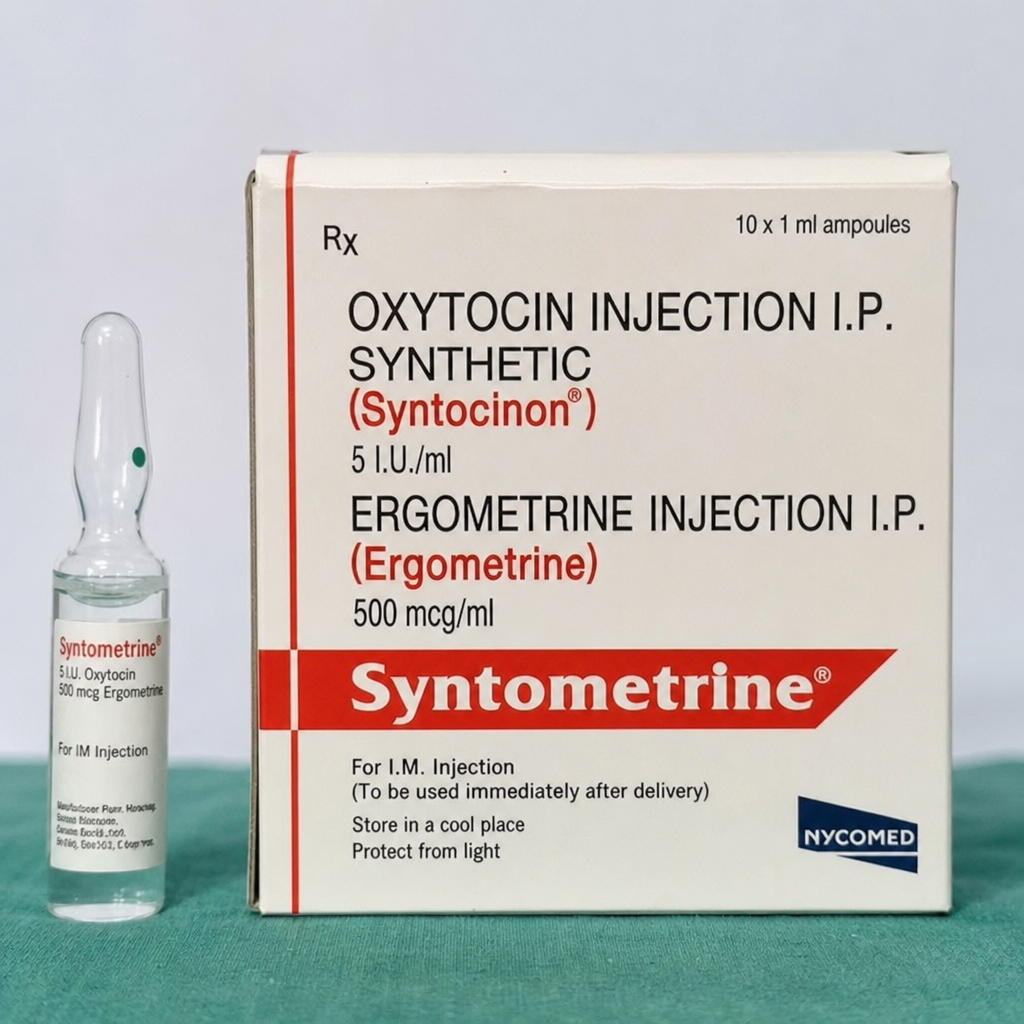
- A. Premature labour
- B. Hypothyroidism
- C. Malpresentation of fetus (Correct Answer)
- D. Heart disease in mother
Explanation: ***Malpresentation of fetus*** - The drug shown is **Oxytocin**, which induces strong uterine contractions. If the fetus is in an abnormal position (e.g., **transverse lie**, **breech**), forcing labor with oxytocin can lead to **uterine rupture** or **cord prolapse**. - Inducing labor in the setting of malpresentation is contraindicated because a safe vaginal delivery is not possible, and it significantly increases the risk of severe **fetal distress** and **maternal trauma**. *Heart disease in mother* - While caution is needed due to potential cardiovascular effects like **hypotension** and water retention, maternal heart disease is a relative contraindication, not an absolute one. - Oxytocin is crucial in the third stage of labor to prevent **postpartum hemorrhage**, which is a major concern in patients with cardiac conditions. *Premature labour* - Oxytocin is used to *induce* or *augment* labor, whereas in premature labor, the primary goal is often **tocolysis** (stopping contractions) with drugs like magnesium sulfate or nifedipine. - It is not a contraindication if a medically indicated preterm delivery is planned; rather, it is used when the decision to deliver has been made. *Hypothyroidism* - Maternal hypothyroidism, especially when well-controlled, is not a recognized contraindication for the use of oxytocin. - There is no known adverse interaction between thyroid status and the action of oxytocin on the uterus.
Question 232: Which of the following is the process of breaking the clavicle during delivery?
- A. Cleidotomy (Correct Answer)
- B. Zavanelli manoeuvre
- C. Craniotomy
- D. Symphysiotomy
Explanation: ***Cleidotomy*** - This is a destructive obstetric procedure where the fetal clavicle is intentionally broken or cut to reduce the **bisacromial diameter**. It is utilized primarily in cases of severe, unrelieved **shoulder dystocia**, especially if the fetus has already succumbed (**Fetal demise**). *Craniotomy* - This is a destructive procedure aimed at reducing the size of the **fetal head** by crushing or perforating the skull. It is performed when the fetal head is impacted and delivery is otherwise impossible, usually only if there is **fetal demise**. *Symphysiotomy* - This procedure involves surgically incising the **fibrocartilage** of the **pubic symphysis** to widen the pelvic outlet. It is used to relieve **obstructed labor** due to minor cephalopelvic disproportion, allowing vaginal delivery. *Zavanelli manoeuvre* - This is an emergency procedure for severe **shoulder dystocia** where the delivered fetal head is pushed back into the birth canal (**cephalic replacement**). It mandates immediate delivery via **Cesarean section** following the replacement.
Question 233: Which of the following is the best parameter for estimation of fetal age by ultrasound in 1st trimester?
- A. Crown rump length (Correct Answer)
- B. Biparietal Diameter
- C. Abdominal circumference
- D. Head circumference
Explanation: ***Crown rump length*** - The **Crown Rump Length (CRL)** is the most accurate parameter for estimating gestational age during the **first trimester** (up to 12 weeks of gestation). - This is because biological variation between fetuses is minimal during early development, providing a narrow range of error (typically ±5-7 days). *Biparietal Diameter* - **Biparietal Diameter (BPD)** becomes the primary parameter for dating in the **second trimester** (after 12 weeks of gestation). - Its accuracy in the first trimester is significantly lower than CRL due to difficulty in obtaining standardized measurements and higher potential for measurement variability. *Head circumference* - **Head circumference (HC)** is highly utilized, often alongside BPD, for fetal growth assessment and dating near the mid-to-late second trimester. - Like BPD, HC is not the most precise measure for dating during the **first trimester** when CRL dominates. *Abdominal circumference* - **Abdominal circumference (AC)** is mainly used to assess **fetal weight** and growth, often becoming inaccurate for dating due to high biological variability later in gestation. - It is the least accurate parameter for establishing gestational age in the **first trimester** compared to CRL, BPD, and HC.
Surgery
2 questionsFour patients were brought to the casualty after sustaining trauma. Which of the following is the correct match among the following?
A homosexual man complains of painful defecation and mass protruding from the anal canal. Biopsy reveals squamous cell carcinoma of anus. Correct management for this patient is
FMGE 2023 - Surgery FMGE Practice Questions and MCQs
Question 231: Four patients were brought to the casualty after sustaining trauma. Which of the following is the correct match among the following?
- A. Gaze palsy is - Midbrain lesion (Correct Answer)
- B. b.Penetrating injury to eustachian tube- CSF otorrhea
- C. c.Penetrating injury to eye- Battle sign
- D. a.Extradural hemorrhage (EDH)- Pin point pupil
Explanation: ***Gaze palseis-Mid brain lesion***- **Vertical gaze palsies** are commonly associated with lesions affecting the **midbrain**, particularly the **pretectal area** and the rostral interstitial nucleus of the **medial longitudinal fasciculus (riMLF)**.- Trauma or increased intracranial pressure leading to compression in this region, such as in **Parinaud syndrome**, can result in impaired upward or downward gaze.*Extradural hemorrhage (EDH)- Pin point pupil*- An **EDH** typically causes rapid mass effect and subsequent **uncal herniation**, leading to compression of the **oculomotor nerve (CN III)** and resulting in a fixed, **dilated pupil** (mydriasis) ipsilateral to the lesion.- **Pinpoint pupils** are classically associated with damage to the descending sympathetic pathways in the **pons** (pontine hemorrhage) or opioid overdose.*Penetrating injury to eustachian tube- CSF otorrhea*- **CSF otorrhea** (leakage of CSF from the ear) occurs due to a tear in the dura mater and the **temporal bone**, specifically involving the **petrous segment** and tympanic membrane rupture.- Injury to the **Eustachian tube** primarily connects the middle ear to the nasopharynx; damage here would typically cause air leak or middle ear bleeding, not primary CSF leakage through the external auditory canal.*Penetrating injury to eye- Battle sign*- **Battle sign** is ecchymosis (bruising) over the **mastoid process** and is a hallmark clinical indicator of a **basilar skull fracture**, usually involving the middle cranial fossa (temporal bone).- Penetrating injuries to the eye are associated with localized ocular trauma (e.g., globe rupture, hyphema) but are not typically linked to this specific sign of underlying skull base injury.
Question 232: A homosexual man complains of painful defecation and mass protruding from the anal canal. Biopsy reveals squamous cell carcinoma of anus. Correct management for this patient is
- A. Wide local excision
- B. Combined chemoradiation (Correct Answer)
- C. Chemotherapy
- D. Abdominoperineal repair
Explanation: ***Combined chemoradiation***- **Combined chemoradiation (Nigro protocol)** is the standard of care and preferred, organ-preserving primary treatment for most stages of squamous cell carcinoma of the anus.- This curative regimen typically involves sequential or concurrent use of **5-Fluorouracil**, **Mitomycin C** (or Cisplatin), and focused external beam radiation therapy, resulting in high rates of complete remission.*Chemotherapy*- Chemotherapy alone is insufficient as a curative primary modality for localized anal carcinoma and is inferior to combined treatment.- Systemic chemotherapy is primarily reserved for the management of **metastatic** disease or palliation in advanced, unresectable cases.*Abdominoperineal repair*- **Abdominoperineal resection (APR)**, which creates a permanent colostomy, is primarily reserved as a highly morbid **salvage operation** for locoregional failure following initial chemoradiation.- Primary APR is rarely performed because combined chemoradiation offers similar long-term survival rates with sphincter preservation.*Wide local excision*- **Wide local excision (WLE)** is only appropriate for very small (T1, <2cm), well-differentiated tumors located at the anal margin (perianal skin), which are much less common.- A bulky, protruding mass usually indicates a deeper primary tumor or involvement of the anal canal, requiring definitive **chemoradiation** rather than surgery.