Anatomy
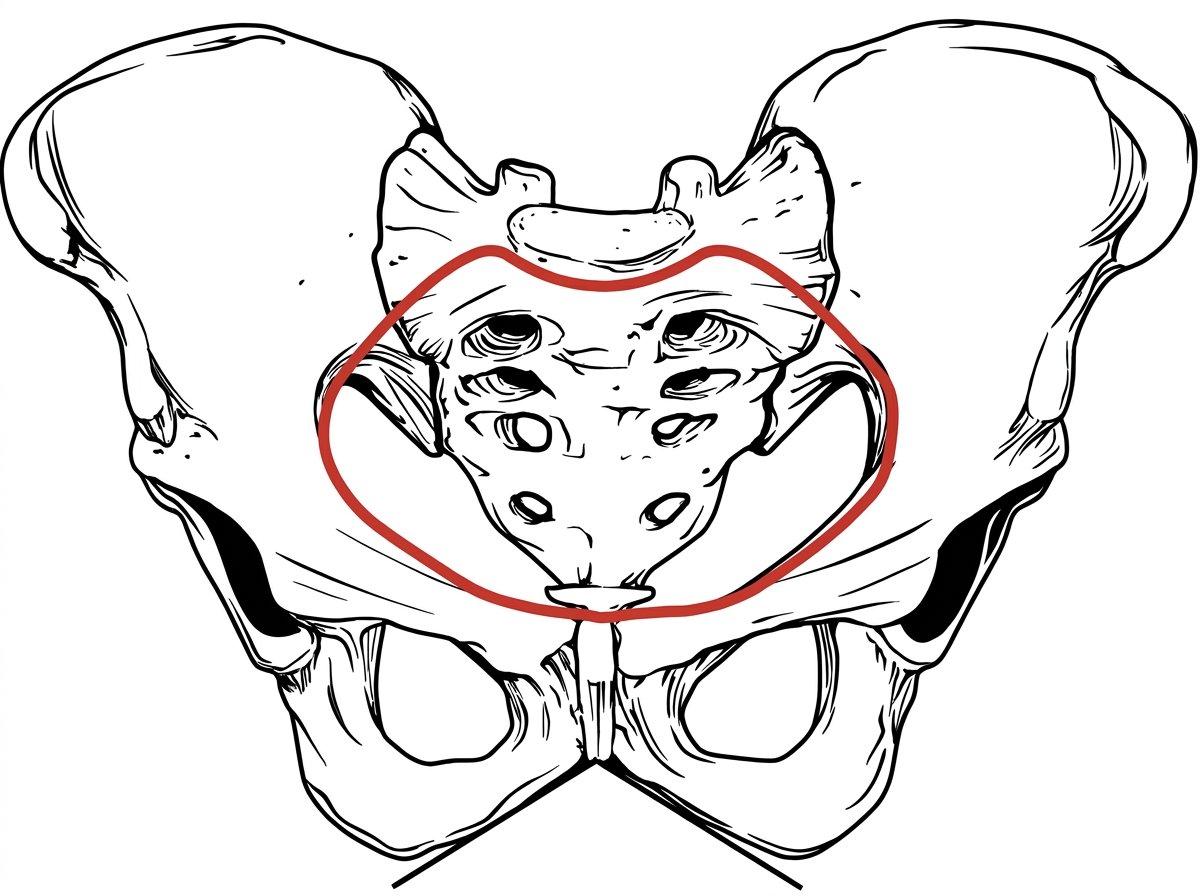
1 questionsIdentify the type of pelvis in the given image.
FMGE 2023 - Anatomy FMGE Practice Questions and MCQs
Question 221: Identify the type of pelvis in the given image.
- A. Android pelvis
- B. Gynecoid pelvis (Correct Answer)
- C. Platypelloid pelvis
- D. Anthropoid pelvis
Explanation: ***Gynecoid pelvis***- The **Gynecoid pelvis** is considered the classic female pelvis, characterized by a **round** or slightly oval pelvic inlet and a well-curved sacrum.- This type is optimal for vaginal delivery, featuring straight side walls, a spacious midpelvis, and a **wide subpubic angle** (arch of 90 degrees or more).*Android pelvis*- The **Android pelvis** possesses a characteristic **heart-shaped** or triangular pelvic inlet because the sacrum is pushed forward, leading to converging side walls.- This shape is typically associated with the male structure and increases the likelihood of obstructed labor due to a **narrow subpubic arch**.*Anthropoid pelvis*- The **Anthropoid pelvis** has an oval shape where the **anteroposterior diameter** is significantly longer than the transverse diameter (long, narrow oval).- The fetal head often engages in the occipito-anterior or occipito-posterior position, which may increase the chance of difficulty with rotation to the transverse diameter.*Platypelloid pelvis*- The **Platypelloid pelvis** (or flat pelvis) is characterized by a severely flattened, transversely oval or **kidney-shaped** inlet, meaning the transverse diameter is much greater than the AP diameter.- It frequently prevents the fetal head from properly engaging or rotating, often leading to transverse arrest and necessity for **cesarean section**.
Dermatology
1 questionsA patient presents with erythematous streaks extending peripherally from a site of infection on the skin. Involvement of which of the following structures leads to this clinical presentation?
FMGE 2023 - Dermatology FMGE Practice Questions and MCQs
Question 221: A patient presents with erythematous streaks extending peripherally from a site of infection on the skin. Involvement of which of the following structures leads to this clinical presentation?
- A. Superficial lymphatics (Correct Answer)
- B. Skin
- C. Superficial veins
- D. Deep lymphatics
Explanation: ***Superficial lymphatics*** (Assuming the image shows signs of **lymphangitis** or **cellulitis**, characterized by **red streaks** spreading from an infected site.)- The classic presentation of **acute lymphangitis** involves **erythematous streaks** extending peripherally from a site of infection (often a wound or cellulitis), which are typically visible superficial structures.- This pattern suggests inflammation and infection tracking along the **superficial lymphatic vessels** which drain the peripheral skin and subcutaneous tissues.*Deep lymphatics*- Involvement of the **deep lymphatics** (e.g., those alongside major blood vessels) typically leads to **lymphedema** (swelling) of the entire limb, rather than the visible **red streaking** seen in acute superficial lymphangitis.- They are located deeper and their inflammation is less likely to produce the superficial, linear rash visible on the skin.*Superficial veins*- Inflammation and thrombosis of superficial veins (**superficial thrombophlebitis**) typically presents as a localized, **palpable, tender cord** rather than multiple linear streaks that spread over distance, which are characteristic of lymphatic tracing.- This condition would primarily involve blood flow obstruction, not the characteristic infection tracking seen in lymphangitis.*Skin*- Although the signs are *visible* on the skin, the primary pathological process causing the streaks is the infection spreading *within* the **lymphatic vessels** beneath the skin surface, not solely a primary skin disease (like **erysipelas** or **cellulitis** alone).- Cellulitis is often the source, but the visible tracking (streaks) follows the path of the **superficial lymphatics**.
Forensic Medicine
2 questionsPost-mortem examination of a dead body reveals contraction of the hands with absent primary relaxation. What is this suggestive of?
Study of death in all aspects is known as:
FMGE 2023 - Forensic Medicine FMGE Practice Questions and MCQs
Question 221: Post-mortem examination of a dead body reveals contraction of the hands with absent primary relaxation. What is this suggestive of?
- A. Rigor mortis
- B. Algor mortis
- C. Livor mortis
- D. Cadaveric spasm (Correct Answer)
Explanation: ***Cadaveric spasm (Correct Answer)*** - Cadaveric spasm (also called **instantaneous rigor**) occurs **immediately upon death**, without passing through the stage of **primary muscular flaccidity**. - The key diagnostic feature is **absent primary relaxation**, which distinguishes it from typical rigor mortis. - This phenomenon often involves a **tight grasp** on an object (e.g., weapon, hair) and is characteristic of death occurring under conditions of **intense emotional stress** or **great physical exertion**. - It is **localized** (commonly hands) and **permanent** once formed. *Rigor mortis (Incorrect)* - Rigor mortis is a **delayed** post-mortem stiffening that begins **2-4 hours after death**. - Critically, it is **preceded by a period of primary flaccidity** (primary relaxation), unlike cadaveric spasm. - It is a **generalized** metabolic change caused by **ATP depletion** and affects all muscles sequentially. - It is **temporary** and eventually resolves. *Livor mortis (Incorrect)* - Livor mortis (post-mortem lividity) describes the **purplish discoloration** of dependent parts of the body due to gravity-induced pooling of blood. - This is a **coloring phenomenon** related to circulation cessation, not a form of **muscular contraction** or stiffening. *Algor mortis (Incorrect)* - Algor mortis is the process of **post-mortem cooling** of the body until it reaches ambient temperature. - This helps estimate the **time since death** but has no relationship with **muscle rigidity** or contraction.
Question 222: Study of death in all aspects is known as:
- A. Thanatology (Correct Answer)
- B. Forensic anthropology
- C. Toxicology
- D. Molecular death
Explanation: ***Correct: Thanatology*** - It is the academic and scientific study of death, encompassing **medical, psychological, social, and ethical aspects** related to dying and death. - The term comes from the Greek word *Thanatos* (death) and *logia* (study). - This is the comprehensive field that studies death "in all aspects" as stated in the question. *Incorrect: Forensic anthropology* - Involves the application of physical anthropology and osteology (study of bones) to **legal issues** in forensic contexts. - Primarily focuses on the **identification and examination of human skeletal remains** to aid law enforcement. - This is a specialized subset of forensic science, not the general study of death itself. *Incorrect: Toxicology* - The scientific study of the adverse effects of **chemical, physical, or biological agents** on living organisms and ecosystems. - While crucial for determining causes of death involving **poisoning or drugs**, it is a specialized branch of forensic science. - Not the comprehensive study of death in all its aspects. *Incorrect: Molecular death* - Refers specifically to the death of **individual cells and tissues** that occurs post-mortem following somatic death. - This is a **biological process or state**, not a field of study or academic discipline. - Distinguished from somatic death (death of the whole organism) and brain death.
Microbiology
1 questionsA soldier presents to a referral hospital one day after sustaining a high-velocity shrapnel injury to his right thigh. He complains of severe pain at the wound site. On examination, crepitus is present. Which of the following organisms is the most likely cause of his condition?
FMGE 2023 - Microbiology FMGE Practice Questions and MCQs
Question 221: A soldier presents to a referral hospital one day after sustaining a high-velocity shrapnel injury to his right thigh. He complains of severe pain at the wound site. On examination, crepitus is present. Which of the following organisms is the most likely cause of his condition?
- A. Clostridium perfringens (Correct Answer)
- B. Clostridium novyi
- C. Clostridium difficile
- D. Clostridium septicum
Explanation: ***Clostridium perfringens*** - *Clostridium perfringens* is the most common cause (80-90%) of **gas gangrene** (clostridial myonecrosis), especially following severe penetrating trauma such as that caused by a high-velocity shrapnel injury, which creates **anaerobic** conditions in deep tissue. - The organism produces potent toxins, primarily **alpha toxin** (a lecithinase), which causes rapid tissue necrosis, hemolysis, and the production of gas that manifests clinically as **crepitus**. *Incorrect: Clostridium septicum* - This organism is primarily associated with **spontaneous, non-traumatic gas gangrene**, often occurring in patients with underlying conditions like **colonic malignancy**, diabetes, or neutropenia. - While it can cause traumatic gas gangrene, it is significantly less frequent than *C. perfringens* in established wound infections. *Incorrect: Clostridium difficile* - *C. difficile* is the principal cause of **antibiotic-associated diarrhea** and **pseudomembranous colitis**. - It causes localized disease in the colon by producing **Toxin A (enterotoxin)** and **Toxin B (cytotoxin)** and does not typically cause myonecrosis or gas gangrene in penetrating wounds. *Incorrect: Clostridium novyi* - *C. novyi* is a recognized cause of gas gangrene but is less common than *C. perfringens* in traumatic settings and is sometimes associated with **intravenous illicit drug use**. - It is known for producing large amounts of **edema** compared to other clostridial species, causing a characteristic "malignant edema" syndrome rather than the primarily necrotizing and gas-producing infection seen with *C. perfringens*.
Obstetrics and Gynecology
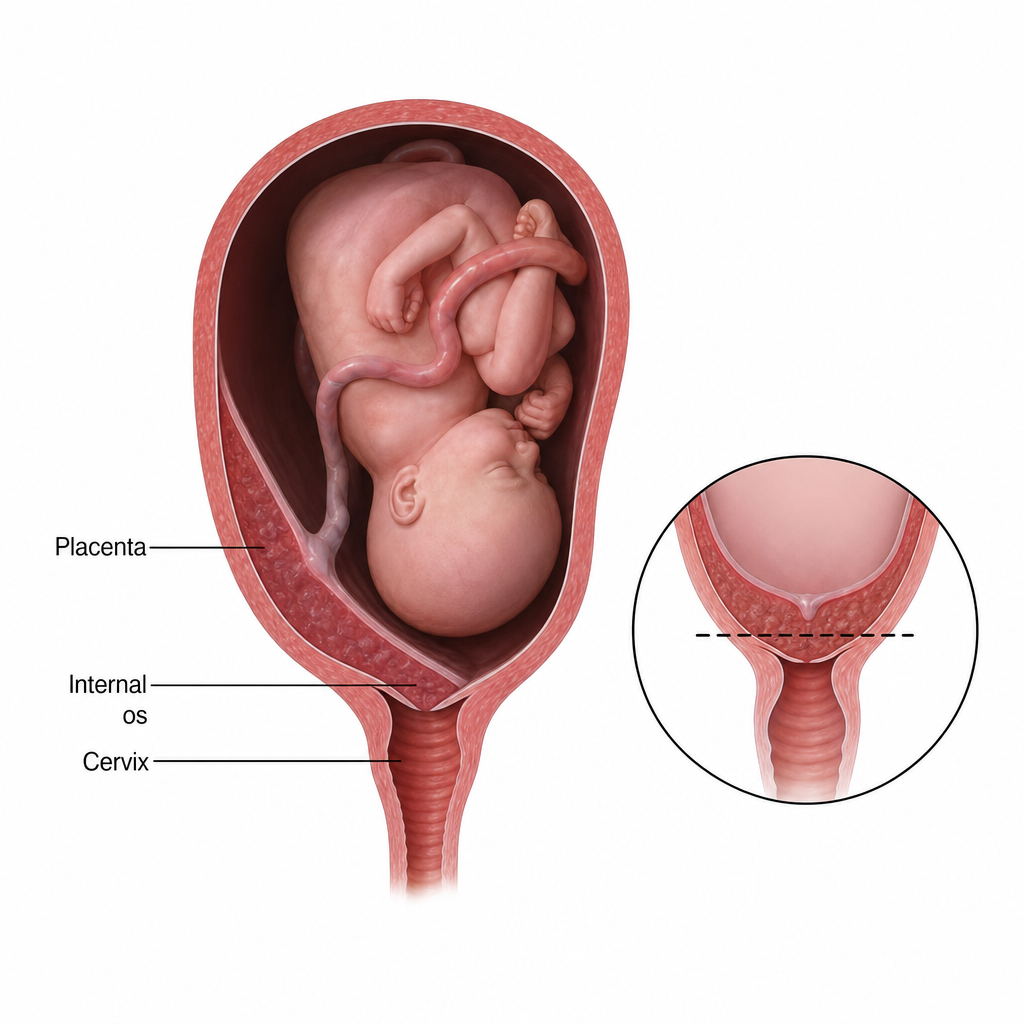
2 questionsIdentify the given image of the placenta previa. 
Identify the following instrument used by obstetricians:
FMGE 2023 - Obstetrics and Gynecology FMGE Practice Questions and MCQs
Question 221: Identify the given image of the placenta previa. 
- A. Incomplete
- B. Marginal (Correct Answer)
- C. Low lying
- D. Complete
Explanation: ***Marginal*** - In **marginal placenta previa**, the edge of the placenta is at the margin of the **internal cervical os** but does not cover it, which is consistent with the depiction in the image. - This type can lead to **painless, bright red vaginal bleeding**, particularly in the third trimester as the cervix begins to efface and dilate, causing separation of the placental edge. *Low lying* - A **low-lying placenta** is implanted in the lower uterine segment, and its edge is within **2 cm** of the internal os but does not reach the os itself. - The image shows the placenta directly abutting the os, which distinguishes it from a low-lying placenta where there would be a gap. *Incomplete* - **Incomplete** or **partial placenta previa** occurs when the placenta partially covers the internal cervical os. - The provided image clearly shows the cervical os is not covered by any placental tissue, ruling out this diagnosis. *Complete* - In **complete placenta previa**, the placenta entirely covers the internal cervical os, obstructing the birth canal. - This is the most severe form and is not represented in the image, as the os is visibly unobstructed.
Question 222: Identify the following instrument used by obstetricians:
- A. Tucker-McLane forceps
- B. Kielland forceps
- C. Piper's forceps
- D. Outlet forceps (Correct Answer)
Explanation: ***Outlet forceps*** - The instrument shown is a type of **outlet forceps**, specifically **Wrigley's forceps**, characterized by its short shanks and blades designed to minimize trauma. - These are used for **low-forceps deliveries** when the fetal head is visible on the perineum, requiring minimal traction and no rotation for delivery. *Kielland forceps* - **Kielland forceps** are primarily used for **rotational deliveries**, especially in cases of deep transverse arrest, and feature a minimal pelvic curve and a sliding lock. - The forceps in the image lack the characteristic sliding lock and long shanks of Kielland forceps. *Tucker Mclane forceps* - **Tucker-McLane forceps** have overlapping shanks and solid or pseudofenestrated blades, making them a type of classical forceps used for various mid-pelvic applications. - The instrument pictured has a distinctly different design with shorter components, not matching the Tucker-McLane structure. *Pipers forceps* - **Piper's forceps** are specialized instruments with long, curved shanks and a perineal curve, designed exclusively for delivering the **aftercoming head in a breech presentation**. - The forceps in the image are too short and lack the specific curvature required for managing a breech delivery.
Pharmacology
1 questionsWhat is the mechanism of action of dicumarol?
FMGE 2023 - Pharmacology FMGE Practice Questions and MCQs
Question 221: What is the mechanism of action of dicumarol?
- A. Inhibitor of factor Xa
- B. Activates antithrombin III.
- C. Inhibits tissue plasminogen activator
- D. Inhibits vitamin K dependant Clotting factors (Correct Answer)
Explanation: Inhibits vitamin K dependant Clotting factors- Dicumarol, a classic anticoagulant, acts as a **vitamin K antagonist** (VKA), preventing the utilization of vitamin K [1].- It inhibits the enzyme **vitamin K epoxide reductase**, which is essential for the activation (**gamma-carboxylation**) of factors II (prothrombin), VII, IX, and X [4]. *Activates antithrombin III.*- This mechanism is characteristic of **unfractionated heparin** and **low molecular weight heparins** (LMWH).- Heparin binds to **antithrombin III** (ATIII), greatly accelerating its ability to neutralize activated clotting factors, particularly Thrombin (IIa) and Factor Xa [2]. *Inhibits tissue plasminogen activator*- Dicumarol affects the synthesis of clotting factors and has no direct influence on the **fibrinolytic system** (clot breakdown).- Inhibition of **tissue plasminogen activator** (tPA) or plasmin is the role of anti-fibrinolytic drugs like **tranexamic acid**. *Inhibitor of factor Xa*- This is the specific mechanism utilized by the direct oral anticoagulants (DOACs), such as **rivaroxaban** and **apixaban** (referred to as 'xabans') [3].- While dicumarol ultimately reduces active **Factor X** levels, it acts indirectly by preventing its synthesis/activation, not by directly binding to and inhibiting the already formed Factor Xa.
Radiology
1 questionsA 30-year-old female patient involved in a road traffic accident had nausea and vomiting. She was brought unconscious to the emergency room. The NCCT brain reveals the following findings. What is the most likely diagnosis? 
FMGE 2023 - Radiology FMGE Practice Questions and MCQs
Question 221: A 30-year-old female patient involved in a road traffic accident had nausea and vomiting. She was brought unconscious to the emergency room. The NCCT brain reveals the following findings. What is the most likely diagnosis? 
- A. a. Extradural hemorrhage (Correct Answer)
- B. b. Subdural hemorrhage
- C. c. Intra-parenchymal hemorrhage
- D. d. Subarachnoid hemorrhage
Explanation: ***Extradural hemorrhage*** - The NCCT image displays a classic **biconvex** or **lens-shaped** hyperdense collection of blood, which is the hallmark radiological feature of an extradural (epidural) hemorrhage. - This type of hemorrhage is most commonly caused by trauma leading to a skull fracture that tears the **middle meningeal artery**, and the hematoma is confined by suture lines where the dura is tightly attached to the skull. *Subdural hemorrhage* - A subdural hemorrhage typically appears as a **crescent-shaped** collection of blood on a CT scan, as it spreads along the contour of the cerebral hemisphere. - It is usually caused by the tearing of **bridging veins** and, unlike an extradural hemorrhage, it can cross suture lines but is limited by dural reflections. *Intra-parenchymal hemorrhage* - This refers to bleeding **within the brain tissue** itself, which would appear as a hyperdense lesion located inside the brain parenchyma, often with surrounding edema. - While it can be caused by trauma (contusion), it is frequently associated with non-traumatic causes like **hypertension** or **amyloid angiopathy**. *Subarachnoid hemorrhage* - A subarachnoid hemorrhage is characterized by blood in the **subarachnoid space**, appearing as hyperdensity within the cerebral **sulci**, **fissures**, and **basal cisterns** on a CT scan. - It is commonly caused by the rupture of a **berry aneurysm** or trauma, but its appearance is distinctly different from the localized, lens-shaped collection seen in the image.
Surgery
1 questionsA 32-year-old female undergoes emergency laparotomy for perforation peritonitis. Which of the following is the surest sign of wound dehiscence?
FMGE 2023 - Surgery FMGE Practice Questions and MCQs
Question 221: A 32-year-old female undergoes emergency laparotomy for perforation peritonitis. Which of the following is the surest sign of wound dehiscence?
- A. Rebound tenderness
- B. Hypotension
- C. Copious sero-sanguinous discharge (Correct Answer)
- D. Hemorrhage
Explanation: ***Copious sero-sanguinous discharge*** - An abrupt increase in **sero-sanguinous fluid** (often described as salmon-colored or pink-brown) soaking the dressing is the **surest clinical sign** of underlying fascial dehiscence. - This discharge represents peritoneal fluid leaking through the broken-down **fascial closure**, usually preceding full **evisceration**. - Typically occurs 5-10 days post-operatively and is the most specific early warning sign. *Rebound tenderness* - **Rebound tenderness** is a sign of **peritonitis** or intra-abdominal inflammation, which is related to the primary pathology (perforation) but not a direct sign of **fascial integrity loss**. - If present post-operatively, it usually indicates persistent or recurrent **intra-abdominal sepsis**, abscess, or ongoing peritonitis. *Hemorrhage* - **Hemorrhage** (frank bleeding) indicates vascular injury or a defect in **hemostasis**, not mechanical failure of the fascial layer itself. - Significant wound bleeding is common in the immediate post-operative period but is not the specific pathognomonic finding for **wound dehiscence**. *Hypotension* - **Hypotension** is a non-specific sign of severe systemic compromise, such as **sepsis**, **hypovolemic shock**, or ongoing internal bleeding. - Although a major dehiscence could lead to sepsis and subsequent hypotension, it is not the initial or most **specific indicator** of the structural breakdown of the wound.