Anatomy
1 questionsIdentify the segment marked in red in the image below.
FMGE 2023 - Anatomy FMGE Practice Questions and MCQs
Question 201: Identify the segment marked in red in the image below.
- A. a.V (Correct Answer)
- B. c.VII
- C. b.IVa
- D. d.III
Explanation: ***a.V*** - The highlighted area represents **Segment V** of the liver according to the **Couinaud classification**. It is located in the inferior portion of the **right anterior section**. - It lies inferior to **Segment VIII** and is separated from the medial segment (IVb) by the **middle hepatic vein**. *b.IVa* - **Segment IVa** is part of the **left medial section** and is located superiorly, just inferior to the diaphragm. - The structure shown is in the **right lobe** of the liver, not the left medial section. *c.VII* - **Segment VII** is located in the superior part of the **right posterior section** of the liver. - The highlighted segment is in the **anterior section**, separated from the posterior section by the **right hepatic vein**. *III* - **Segment III** is part of the **left lateral section** of the liver, located anteriorly and inferiorly within that section. - The highlighted structure is part of the **right lobe**, well to the right of the falciform ligament and middle hepatic vein.
Obstetrics and Gynecology
5 questionsIn which of the following situations is ventouse not used?
Which of the following is not an indication for a cesarean section?
What is the level of the uterus immediately after delivery?
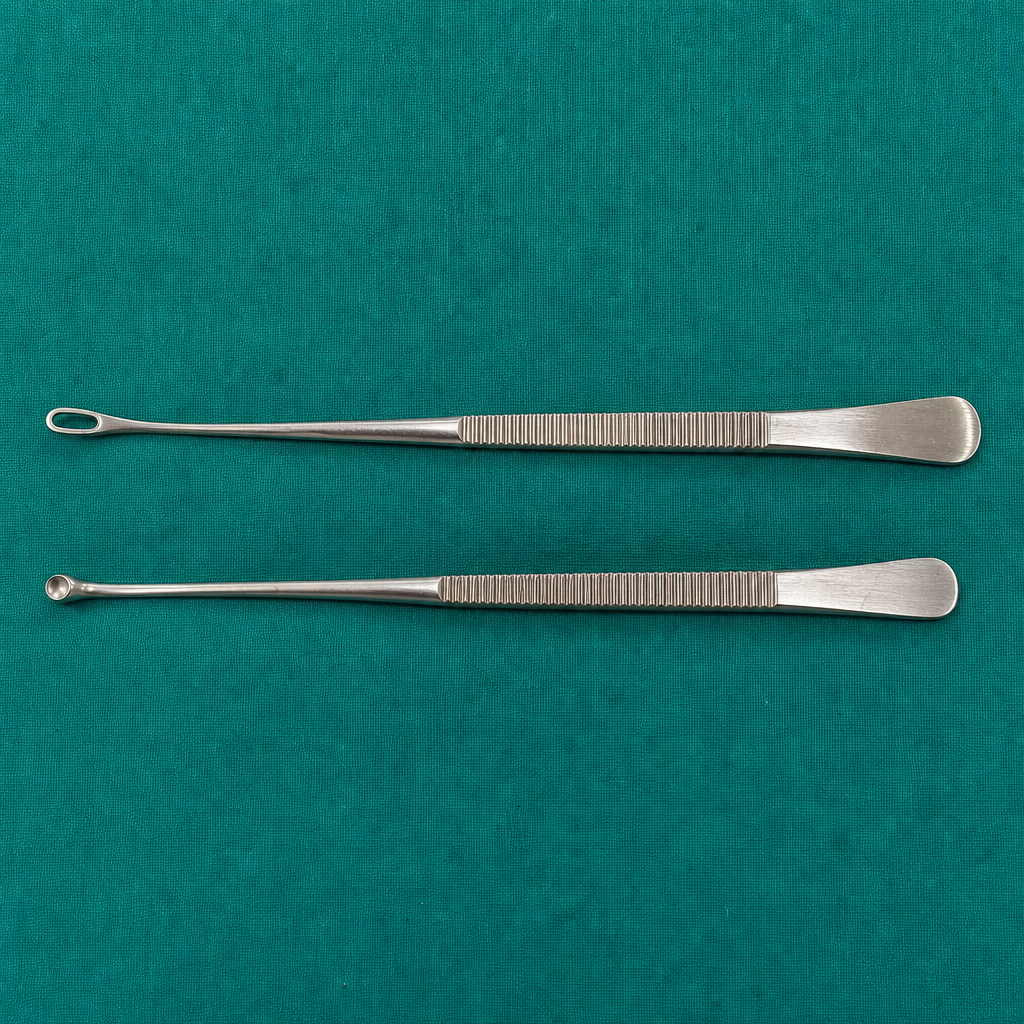
Which of the following procedures is done with the instrument shown below? 
Which of the following is the most common location of implantation in ectopic pregnancy? 
FMGE 2023 - Obstetrics and Gynecology FMGE Practice Questions and MCQs
Question 201: In which of the following situations is ventouse not used?
- A. Maternal exhaustion
- B. Prolonged second stage
- C. Premature baby (Correct Answer)
- D. Fetal distress
Explanation: ***Premature baby***- Ventouse traction carries a substantially higher risk of **neonatal intracranial hemorrhage** and **cephalhematoma** in premature infants due to the greater fragility and softness of the fetal skull and vasculature.- Vacuum extraction is generally contraindicated for fetuses less than **36 weeks gestation** or those weighing less than **2,500 grams**.*Prolonged second stage*- This represents a failure to progress during the expulsive phase of labor and is a primary indication for operative delivery to prevent adverse outcomes.- Ventouse is often preferred in cases of **arrest of descent** or prolonged pushing efforts, provided the cervix is fully dilated and the station is appropriate.*Maternal exhaustion*- This is a common indication for operative vaginal delivery, suggesting the mother is too fatigued to generate effective pushing efforts, leading to potential delivery stagnation.- Ventouse assists in shortening the second stage, thereby conserving maternal energy and reducing the risk associated with lengthy, ineffective pushing efforts.*Fetal distress*- Acute signs of **fetal compromise** (e.g., severe fetal bradycardia or late decelerations) necessitate the rapid termination of labor, often through operative vaginal delivery.- Ventouse is one of the methods used to achieve a quick and safe delivery when the fetal heart rate is non-reassuring and the fetal head is engaged.
Question 202: Which of the following is not an indication for a cesarean section?
- A. Previous history of macrosomia (Correct Answer)
- B. Central placenta previa
- C. Absolute cephalopelvic disproportion
- D. Advanced carcinoma cervix
Explanation: ***Previous history of macrosomia***- A previous history of **macrosomia** (birth weight >4000g) results in an increased risk of shoulder dystocia but is typically managed with careful monitoring and induction/elective C-section based on *estimated* fetal weight in the current pregnancy, not the history alone.- This is a risk factor, not an absolute primary indication for an elective C-section during the current pregnancy unless the estimated current fetal weight is excessive (e.g., >4500g or >5000g in specific circumstances) or there are other complicating factors (e.g., poorly controlled diabetes).*Absolute cephalopelvic disproportion*- **Absolute cephalopelvic disproportion (CPD)** means the fetal head cannot pass through the maternal pelvis, rendering vaginal delivery impossible and risking uterine rupture.- This condition is an absolute mechanical indication for C-section to ensure a safe delivery for both mother and fetus.*Central placenta previa*- **Central placenta previa** (or complete previa) involves the placenta completely covering the internal cervical os, blocking the birth canal.- Attempting vaginal delivery would lead to immediate and massive **uncontrollable hemorrhage** upon cervical effacement or dilation, thus mandating an elective C-section.*Advanced carcinoma cervix*- **Advanced carcinoma cervix** requires delivery via C-section, primarily to prevent severe, life-threatening hemorrhage and potential tumor fragmentation/seeding if vaginal delivery is attempted.- Additionally, the tumor mass mechanically obstructs the birth canal, often making vaginal delivery anatomically impossible or highly risky.
Question 203: What is the level of the uterus immediately after delivery?
- A. Above pubic symphysis
- B. Below the umbilicus (Correct Answer)
- C. Below pubic symphysis
- D. Above umbilicus
Explanation: ***Below the umbilicus*** Immediately after delivery, the uterus undergoes rapid contraction and the fundus is typically palpable **at or slightly below the level of the umbilicus**. This is due to myometrial contraction following placental separation. Within the first 12-24 hours postpartum, the fundus remains at approximately the umbilical level before beginning involution at approximately 1 cm per day. *Incorrect: Above pubic symphysis* This is too low for the immediate postpartum period. The uterus reaches this level only after several weeks of involution (around 2 weeks postpartum). *Incorrect: Below pubic symphysis* The uterus is palpable below the pubic symphysis only by 6 weeks postpartum when involution is complete and it has returned to its non-pregnant size. *Incorrect: Above umbilicus* The fundus is not palpable above the umbilicus immediately after delivery. A fundus above the umbilicus in the immediate postpartum period suggests uterine atony or retained products.
Question 204: Which of the following procedures is done with the instrument shown below? 
- A. Cervical sampling
- B. Endometrial sampling (Correct Answer)
- C. Hysterosalpingography
- D. Dilatation and curettage
Explanation: ***Endometrial sampling*** - The instrument shown is a **Sims uterine curette**, which is specifically designed with a fenestrated (windowed) tip to scrape and collect tissue from the uterine lining. - This procedure, also known as an **endometrial biopsy**, is performed to obtain a sample of the **endometrium** for histological examination, often to investigate abnormal uterine bleeding or infertility. - When asked about the **primary procedure** performed with this instrument, endometrial sampling is the most direct and specific answer. *Dilatation and curettage* - While a curette **is used** in a D&C, the question asks about the procedure done with **this specific instrument**. - D&C is a **two-step procedure**: cervical **dilatation** (using dilators) followed by **curettage** (using the curette). - The complete D&C procedure involves **multiple instruments**, whereas the curette shown specifically performs the endometrial sampling/curettage component. - Therefore, "endometrial sampling" more precisely describes what **this instrument alone** accomplishes. *Hysterosalpingography* - This is a radiological imaging procedure used to evaluate the uterus and fallopian tubes, not a tissue sampling method. - It involves injecting a contrast medium through the cervix using a **cannula**, followed by X-ray imaging. - A curette is not used in this procedure. *Cervical sampling* - This procedure, commonly for a **Pap smear**, uses instruments like an **Ayre's spatula** or a **cytobrush** to collect cells from the cervix. - A uterine curette is designed to reach the endometrium inside the uterus and is not used for sampling the cervix.
Question 205: Which of the following is the most common location of implantation in ectopic pregnancy? 
- A. A (Correct Answer)
- B. D
- C. B
- D. C
Explanation: ***A*** - Label A points to the **fallopian tube**, which is the site of over 95% of all ectopic pregnancies. The most common specific location within the tube is the **ampulla** (approximately 80% of tubal ectopics). - Risk factors such as **pelvic inflammatory disease (PID)**, previous tubal surgery, or endometriosis can damage the fallopian tube, impeding the transit of the fertilized ovum to the uterus. *D* - Label D indicates the **uterus**, which is the normal site for implantation in a healthy, **intrauterine pregnancy**. - By definition, an ectopic pregnancy is one that implants *outside* the uterine cavity, making this location incorrect. *B* - Label B indicates the **ovary**. An **ovarian ectopic pregnancy** is a rare form of ectopic implantation, constituting about 3% of cases. - This occurs if the egg is fertilized and implants on or within the ovary itself, before it enters the fallopian tube. *C* - Label C points to the **cervix**. A **cervical pregnancy** is a very rare type of ectopic pregnancy, accounting for less than 1% of cases. - This location is particularly dangerous due to a high risk of life-threatening **hemorrhage** because of the cervix's rich vascular supply.
Pathology
1 questionsA 5-year-old child presented with a history of edema of the face which later progressed to generalized edema. Urine showed massive proteinuria and light microscopy was normal. Electron microscopy showed effacement of podocyte foot processes. What is the diagnosis?
FMGE 2023 - Pathology FMGE Practice Questions and MCQs
Question 201: A 5-year-old child presented with a history of edema of the face which later progressed to generalized edema. Urine showed massive proteinuria and light microscopy was normal. Electron microscopy showed effacement of podocyte foot processes. What is the diagnosis?
- A. Post streptococcal glomerulonephritis
- B. Minimal change disease (Correct Answer)
- C. Focal segmental glomerulo sclerosis
- D. Membranous glomerulonephritis
Explanation: ***Minimal change disease*** - **Classic presentation** in children aged 2-6 years with nephrotic syndrome (edema, massive proteinuria) [1] - **Normal light microscopy** is the pathognomonic feature that distinguishes MCD from other glomerular diseases [3] - **Electron microscopy shows effacement of podocyte foot processes** (fusion of foot processes) - the only ultrastructural abnormality [1], [3] - **Most common cause** of nephrotic syndrome in children (~90% of cases <6 years) [1], [3] - Excellent response to corticosteroid therapy (steroid-sensitive) [3] *Post streptococcal glomerulonephritis* - Presents with **nephritic syndrome** (hematuria, hypertension, mild proteinuria), not nephrotic syndrome - Light microscopy shows **hypercellular glomeruli** with neutrophil infiltration - EM shows **subepithelial "humps"** (immune complex deposits), not foot process effacement alone *Focal segmental glomerulosclerosis (FSGS)* - Light microscopy shows **focal and segmental sclerosis** of some glomerular [1] - More common in adults and African Americans - Associated with obesity, HIV, heroin use [4] - Poor response to steroids (steroid-resistant nephrotic syndrome) [1] *Membranous glomerulonephritis* - Light microscopy shows **diffuse thickening of glomerular basement membrane** with "spike and dome" appearance [2], [4] - EM shows **subepithelial immune complex deposits** [2], [4] - More common cause of nephrotic syndrome in **adults**, not children [2] - Associated with autoimmune diseases, infections, and malignancies [2] **References:** [1] Kumar V, Abbas AK, et al.. Robbins and Cotran Pathologic Basis of Disease. 9th ed. The Kidney, pp. 927-928. [2] Kumar V, Abbas AK, et al.. Robbins and Cotran Pathologic Basis of Disease. 9th ed. The Kidney, pp. 919-921. [3] Kumar V, Abbas AK, et al.. Robbins and Cotran Pathologic Basis of Disease. 9th ed. The Kidney, pp. 922-923. [4] Cross SS. Underwood's Pathology: A Clinical Approach. 6th ed. Common Clinical Problems From Diseases Of The Urinary And Male Genital Tracts, pp. 531-532.
Pediatrics
2 questionsWhich of the following is not a correct match for ABCD according to pediatric advanced life support?
A child has elevated liver enzyme levels. A ring-like structure is noted on ocular examination. Which of the following is the cause for this?
FMGE 2023 - Pediatrics FMGE Practice Questions and MCQs
Question 201: Which of the following is not a correct match for ABCD according to pediatric advanced life support?
- A. Circulation
- B. Airway
- C. Dehydration (Correct Answer)
- D. Breathing
Explanation: ***Dehydration*** - In the mnemonic **ABCD** used in **Pediatric Advanced Life Support (PALS)** and basic life support (BLS), D stands for **Disability** (neurological status/deficit), not Dehydration. - Assessing **Disability** involves evaluating the infant's or child's neurological status using tools like the **AVPU scale** or **Glasgow Coma Scale (GCS)**. *Airway* - A stands correctly for **Airway** in the **ABCD** approach, focusing on ensuring a patent passage for breathing. - This step involves opening the airway using maneuvers like the **head tilt/chin lift** (for trauma absence) or **jaw thrust** (for suspected trauma). *Breathing* - B stands correctly for **Breathing**, which assesses the presence and adequacy of respiratory effort. - Management includes providing rescue breaths, using devices like a **bag-mask device**, and determining the need for **intubation**. *Circulation* - C stands correctly for **Circulation**, which evaluates heart rate, pulse strength, capillary refill time, and skin color. - Interventions include initiating **chest compressions** if a pulse is absent or too slow/weak, and managing **shock** (e.g., fluid resuscitation/medications).
Question 202: A child has elevated liver enzyme levels. A ring-like structure is noted on ocular examination. Which of the following is the cause for this?
- A. Zinc
- B. Copper (Correct Answer)
- C. Selenium
- D. Iron
Explanation: ***Copper***- The combination of elevated **liver enzymes** (hepatitis/cirrhosis) and the characteristic **Kayser-Fleischer (KF) rings** visible on ocular examination is pathognomonic for **Wilson's disease**.- **Wilson's disease** is an inherited disorder involving defective biliary excretion of **copper**, causing its toxic accumulation in tissues, notably the liver, brain, and cornea.*Zinc*- Zinc is an essential trace element, but its deficiency presents primarily with **acrodermatitis enteropathica**, not hepatic failure and KF rings.- Zinc supplementation is sometimes used as a treatment for Wilson's disease because it inhibits the absorption of **copper** in the gut.*Selenium*- Deficiency of **Selenium** is associated with **Keshan disease** (cardiomyopathy) and impaired antioxidant protection, rather than liver disease with corneal rings.- High levels of selenium, though rare, can lead to hair loss and nail changes (**selenosis**).*Iron*- Excessive accumulation of **Iron** causes **hemochromatosis**, which leads to hepatomegaly, cirrhosis, and **bronze diabetes**.- Iron overload does not result in the formation of **Kayser-Fleischer rings**; these rings are exclusively caused by **copper** deposition in the Descemet membrane.
Radiology
1 questionsIdentify the rib highlighted in the X-ray.
FMGE 2023 - Radiology FMGE Practice Questions and MCQs
Question 201: Identify the rib highlighted in the X-ray.
- A. 3rd rib posterior part (Correct Answer)
- B. 4th rib anterior part
- C. 3rd rib anterior part
- D. 1st rib anterior part
Explanation: ***3rd rib posterior part*** - On a posteroanterior (PA) chest X-ray, the **posterior ribs** are more prominent and have a more horizontal orientation as they articulate with the thoracic vertebrae, which matches the highlighted structure. - When counting from the top, the first rib is the highest and most curved. The highlighted rib is clearly the third one down from the apex of the thorax, confirming it as the **3rd posterior rib**. *3rd rib anterior part* - The **anterior parts** of the ribs are more difficult to visualize and course downwards and medially towards the sternum. The highlighted rib is oriented horizontally. - Anterior ribs connect to the sternum via **costal cartilage**, which is not as radiopaque as bone and thus appears less distinct on an X-ray than the highlighted structure. *4th rib anterior part* - This option is incorrect as the highlighted structure is a **posterior rib**, not an anterior one, based on its orientation. - Additionally, counting reveals the rib to be the third, not the fourth. The **fourth rib** would be located inferior to the highlighted one. *1st rib anterior part* - The **1st rib** is the most superior and has a very sharp curvature, often partially obscured by the clavicle. The highlighted rib is located below the first and second ribs. - This is also incorrect because the image highlights the **posterior aspect** of a rib, not the anterior aspect.