Which of the following is shown in the given image? 
In which of the following situations is ventouse not used?
Which of the following is not an indication for a cesarean section?
What is the level of the uterus immediately after delivery?
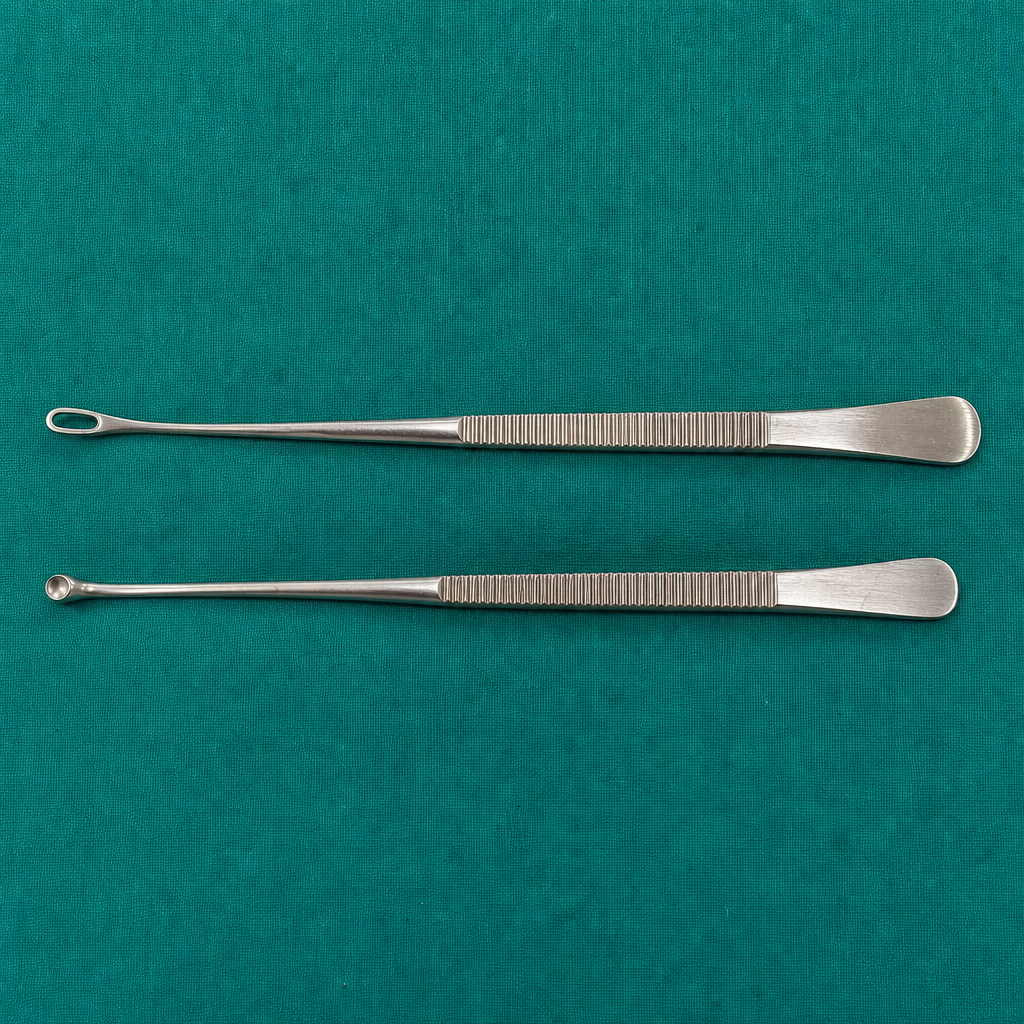
Which of the following procedures is done with the instrument shown below? 
Which of the following is the most common location of implantation in ectopic pregnancy? 
A young sexually active female patient presented to the outpatient department with complaints of lower abdominal pain, fever, vomiting, and foul-smelling vaginal discharge. On examination, the body temperature is 103 degrees Fahrenheit, pulse rate is 109 per minute and there is abdominal tenderness. Cervical motion tenderness is present on examination. What is the most likely diagnosis?
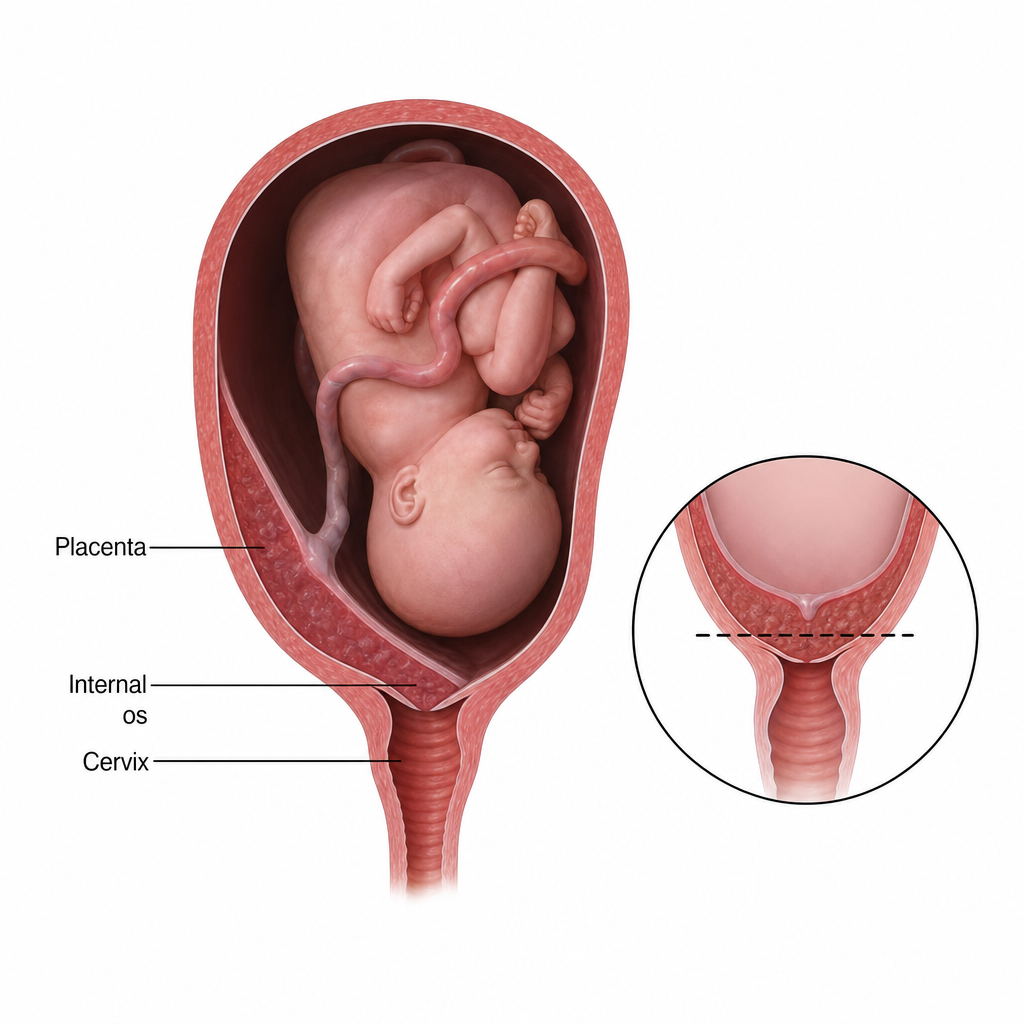
Identify the given image of the placenta previa. 
Identify the following instrument used by obstetricians:
In which of the following cases is the drug below contraindicated?
FMGE 2023 - Obstetrics and Gynecology FMGE Practice Questions and MCQs
Question 11: Which of the following is shown in the given image? 
- A. Striae gravidarum
- B. Chloasma
- C. Linea alba
- D. Linea nigra (Correct Answer)
Explanation: ***Linea nigra*** - The image shows a dark, vertical line running down the midline of a pregnant woman's abdomen, which is the classic presentation of **linea nigra**. - This hyperpigmentation of the **linea alba** is a normal physiological change during pregnancy, caused by increased levels of hormones such as **melanocyte-stimulating hormone (MSH)** and **estrogen**. *Striae gravidarum* - **Striae gravidarum**, commonly known as stretch marks, are atrophic linear bands that result from the rapid stretching of the skin. They are not represented by the single, dark vertical line shown. - Initially, they appear as reddish or purplish lines (**striae rubrae**) and later fade to a silvery-white color (**striae albicantes**). *Chloasma* - **Chloasma**, or melasma, is a form of hyperpigmentation that appears on the face, particularly on the cheeks, forehead, and upper lip, often referred to as the "mask of pregnancy". - This condition affects facial skin and does not present as a line on the abdomen. *Linea alba* - The **linea alba** ("white line") is the fibrous connective tissue that runs down the midline of the abdomen in all individuals. It is typically pale and not easily visible. - During pregnancy, the **linea alba** darkens due to hormonal influences, transforming into the **linea nigra**. Therefore, the image shows the pigmented version, not the original linea alba.
Question 12: In which of the following situations is ventouse not used?
- A. Maternal exhaustion
- B. Prolonged second stage
- C. Premature baby (Correct Answer)
- D. Fetal distress
Explanation: ***Premature baby***- Ventouse traction carries a substantially higher risk of **neonatal intracranial hemorrhage** and **cephalhematoma** in premature infants due to the greater fragility and softness of the fetal skull and vasculature.- Vacuum extraction is generally contraindicated for fetuses less than **36 weeks gestation** or those weighing less than **2,500 grams**.*Prolonged second stage*- This represents a failure to progress during the expulsive phase of labor and is a primary indication for operative delivery to prevent adverse outcomes.- Ventouse is often preferred in cases of **arrest of descent** or prolonged pushing efforts, provided the cervix is fully dilated and the station is appropriate.*Maternal exhaustion*- This is a common indication for operative vaginal delivery, suggesting the mother is too fatigued to generate effective pushing efforts, leading to potential delivery stagnation.- Ventouse assists in shortening the second stage, thereby conserving maternal energy and reducing the risk associated with lengthy, ineffective pushing efforts.*Fetal distress*- Acute signs of **fetal compromise** (e.g., severe fetal bradycardia or late decelerations) necessitate the rapid termination of labor, often through operative vaginal delivery.- Ventouse is one of the methods used to achieve a quick and safe delivery when the fetal heart rate is non-reassuring and the fetal head is engaged.
Question 13: Which of the following is not an indication for a cesarean section?
- A. Previous history of macrosomia (Correct Answer)
- B. Central placenta previa
- C. Absolute cephalopelvic disproportion
- D. Advanced carcinoma cervix
Explanation: ***Previous history of macrosomia***- A previous history of **macrosomia** (birth weight >4000g) results in an increased risk of shoulder dystocia but is typically managed with careful monitoring and induction/elective C-section based on *estimated* fetal weight in the current pregnancy, not the history alone.- This is a risk factor, not an absolute primary indication for an elective C-section during the current pregnancy unless the estimated current fetal weight is excessive (e.g., >4500g or >5000g in specific circumstances) or there are other complicating factors (e.g., poorly controlled diabetes).*Absolute cephalopelvic disproportion*- **Absolute cephalopelvic disproportion (CPD)** means the fetal head cannot pass through the maternal pelvis, rendering vaginal delivery impossible and risking uterine rupture.- This condition is an absolute mechanical indication for C-section to ensure a safe delivery for both mother and fetus.*Central placenta previa*- **Central placenta previa** (or complete previa) involves the placenta completely covering the internal cervical os, blocking the birth canal.- Attempting vaginal delivery would lead to immediate and massive **uncontrollable hemorrhage** upon cervical effacement or dilation, thus mandating an elective C-section.*Advanced carcinoma cervix*- **Advanced carcinoma cervix** requires delivery via C-section, primarily to prevent severe, life-threatening hemorrhage and potential tumor fragmentation/seeding if vaginal delivery is attempted.- Additionally, the tumor mass mechanically obstructs the birth canal, often making vaginal delivery anatomically impossible or highly risky.
Question 14: What is the level of the uterus immediately after delivery?
- A. Above pubic symphysis
- B. Below the umbilicus (Correct Answer)
- C. Below pubic symphysis
- D. Above umbilicus
Explanation: ***Below the umbilicus*** Immediately after delivery, the uterus undergoes rapid contraction and the fundus is typically palpable **at or slightly below the level of the umbilicus**. This is due to myometrial contraction following placental separation. Within the first 12-24 hours postpartum, the fundus remains at approximately the umbilical level before beginning involution at approximately 1 cm per day. *Incorrect: Above pubic symphysis* This is too low for the immediate postpartum period. The uterus reaches this level only after several weeks of involution (around 2 weeks postpartum). *Incorrect: Below pubic symphysis* The uterus is palpable below the pubic symphysis only by 6 weeks postpartum when involution is complete and it has returned to its non-pregnant size. *Incorrect: Above umbilicus* The fundus is not palpable above the umbilicus immediately after delivery. A fundus above the umbilicus in the immediate postpartum period suggests uterine atony or retained products.
Question 15: Which of the following procedures is done with the instrument shown below? 
- A. Cervical sampling
- B. Endometrial sampling (Correct Answer)
- C. Hysterosalpingography
- D. Dilatation and curettage
Explanation: ***Endometrial sampling*** - The instrument shown is a **Sims uterine curette**, which is specifically designed with a fenestrated (windowed) tip to scrape and collect tissue from the uterine lining. - This procedure, also known as an **endometrial biopsy**, is performed to obtain a sample of the **endometrium** for histological examination, often to investigate abnormal uterine bleeding or infertility. - When asked about the **primary procedure** performed with this instrument, endometrial sampling is the most direct and specific answer. *Dilatation and curettage* - While a curette **is used** in a D&C, the question asks about the procedure done with **this specific instrument**. - D&C is a **two-step procedure**: cervical **dilatation** (using dilators) followed by **curettage** (using the curette). - The complete D&C procedure involves **multiple instruments**, whereas the curette shown specifically performs the endometrial sampling/curettage component. - Therefore, "endometrial sampling" more precisely describes what **this instrument alone** accomplishes. *Hysterosalpingography* - This is a radiological imaging procedure used to evaluate the uterus and fallopian tubes, not a tissue sampling method. - It involves injecting a contrast medium through the cervix using a **cannula**, followed by X-ray imaging. - A curette is not used in this procedure. *Cervical sampling* - This procedure, commonly for a **Pap smear**, uses instruments like an **Ayre's spatula** or a **cytobrush** to collect cells from the cervix. - A uterine curette is designed to reach the endometrium inside the uterus and is not used for sampling the cervix.
Question 16: Which of the following is the most common location of implantation in ectopic pregnancy? 
- A. A (Correct Answer)
- B. D
- C. B
- D. C
Explanation: ***A*** - Label A points to the **fallopian tube**, which is the site of over 95% of all ectopic pregnancies. The most common specific location within the tube is the **ampulla** (approximately 80% of tubal ectopics). - Risk factors such as **pelvic inflammatory disease (PID)**, previous tubal surgery, or endometriosis can damage the fallopian tube, impeding the transit of the fertilized ovum to the uterus. *D* - Label D indicates the **uterus**, which is the normal site for implantation in a healthy, **intrauterine pregnancy**. - By definition, an ectopic pregnancy is one that implants *outside* the uterine cavity, making this location incorrect. *B* - Label B indicates the **ovary**. An **ovarian ectopic pregnancy** is a rare form of ectopic implantation, constituting about 3% of cases. - This occurs if the egg is fertilized and implants on or within the ovary itself, before it enters the fallopian tube. *C* - Label C points to the **cervix**. A **cervical pregnancy** is a very rare type of ectopic pregnancy, accounting for less than 1% of cases. - This location is particularly dangerous due to a high risk of life-threatening **hemorrhage** because of the cervix's rich vascular supply.
Question 17: A young sexually active female patient presented to the outpatient department with complaints of lower abdominal pain, fever, vomiting, and foul-smelling vaginal discharge. On examination, the body temperature is 103 degrees Fahrenheit, pulse rate is 109 per minute and there is abdominal tenderness. Cervical motion tenderness is present on examination. What is the most likely diagnosis?
- A. Pelvic inflammatory disease (Correct Answer)
- B. Adenomyosis
- C. Endometriosis
- D. Appendicitis
Explanation: ***Pelvic inflammatory disease*** - The presentation —lower abdominal pain, high **fever**, **foul-smelling vaginal discharge**, and severe **cervical motion tenderness (CMT)** in a sexually active woman —is the classic clinical triad for **acute Pelvic Inflammatory Disease (PID)**. - CMT, often called the **"Chandelier sign"**, is highly characteristic of PID, indicating inflammation of the fallopian tubes and surrounding structures (*salpingitis*). *Endometriosis* - This condition is characterized by chronic, cyclical pelvic pain, **dysmenorrhea**, and **dyspareunia**, and generally lacks acute signs of infection like high fever and leukorrhea. - It results from the presence of **endometrial tissue** outside the uterus and does not cause purulent vaginal discharge or acute CMT characteristic of infectious PID. *Adenomyosis* - Typically presents with **menorrhagia** (heavy bleeding) and worsening **dysmenorrhea** in older, often multiparous women, without acute febrile illness or infectious discharge. - It involves the invasion of **endometrial tissue** into the myometrium (uterine muscle wall), leading to a diffusely enlarged, globular uterus. *Appendicitis* - While it causes acute lower abdominal pain, fever, and vomiting, **appendicitis** typically presents with pain localized to the **right lower quadrant (RLQ)** and lacks the prominent **vaginal discharge** and specific **cervical motion tenderness** seen in PID. - The primary pathology involves inflammation of the appendix, not the female genital tract, thus the absence of associated **foul-smelling vaginal discharge**.
Question 18: Identify the given image of the placenta previa. 
- A. Incomplete
- B. Marginal (Correct Answer)
- C. Low lying
- D. Complete
Explanation: ***Marginal*** - In **marginal placenta previa**, the edge of the placenta is at the margin of the **internal cervical os** but does not cover it, which is consistent with the depiction in the image. - This type can lead to **painless, bright red vaginal bleeding**, particularly in the third trimester as the cervix begins to efface and dilate, causing separation of the placental edge. *Low lying* - A **low-lying placenta** is implanted in the lower uterine segment, and its edge is within **2 cm** of the internal os but does not reach the os itself. - The image shows the placenta directly abutting the os, which distinguishes it from a low-lying placenta where there would be a gap. *Incomplete* - **Incomplete** or **partial placenta previa** occurs when the placenta partially covers the internal cervical os. - The provided image clearly shows the cervical os is not covered by any placental tissue, ruling out this diagnosis. *Complete* - In **complete placenta previa**, the placenta entirely covers the internal cervical os, obstructing the birth canal. - This is the most severe form and is not represented in the image, as the os is visibly unobstructed.
Question 19: Identify the following instrument used by obstetricians:
- A. Tucker-McLane forceps
- B. Kielland forceps
- C. Piper's forceps
- D. Outlet forceps (Correct Answer)
Explanation: ***Outlet forceps*** - The instrument shown is a type of **outlet forceps**, specifically **Wrigley's forceps**, characterized by its short shanks and blades designed to minimize trauma. - These are used for **low-forceps deliveries** when the fetal head is visible on the perineum, requiring minimal traction and no rotation for delivery. *Kielland forceps* - **Kielland forceps** are primarily used for **rotational deliveries**, especially in cases of deep transverse arrest, and feature a minimal pelvic curve and a sliding lock. - The forceps in the image lack the characteristic sliding lock and long shanks of Kielland forceps. *Tucker Mclane forceps* - **Tucker-McLane forceps** have overlapping shanks and solid or pseudofenestrated blades, making them a type of classical forceps used for various mid-pelvic applications. - The instrument pictured has a distinctly different design with shorter components, not matching the Tucker-McLane structure. *Pipers forceps* - **Piper's forceps** are specialized instruments with long, curved shanks and a perineal curve, designed exclusively for delivering the **aftercoming head in a breech presentation**. - The forceps in the image are too short and lack the specific curvature required for managing a breech delivery.
Question 20: In which of the following cases is the drug below contraindicated?
- A. Premature labour
- B. Hypothyroidism
- C. Malpresentation of fetus (Correct Answer)
- D. Heart disease in mother
Explanation: ***Malpresentation of fetus*** - The drug shown is **Oxytocin**, which induces strong uterine contractions. If the fetus is in an abnormal position (e.g., **transverse lie**, **breech**), forcing labor with oxytocin can lead to **uterine rupture** or **cord prolapse**. - Inducing labor in the setting of malpresentation is contraindicated because a safe vaginal delivery is not possible, and it significantly increases the risk of severe **fetal distress** and **maternal trauma**. *Heart disease in mother* - While caution is needed due to potential cardiovascular effects like **hypotension** and water retention, maternal heart disease is a relative contraindication, not an absolute one. - Oxytocin is crucial in the third stage of labor to prevent **postpartum hemorrhage**, which is a major concern in patients with cardiac conditions. *Premature labour* - Oxytocin is used to *induce* or *augment* labor, whereas in premature labor, the primary goal is often **tocolysis** (stopping contractions) with drugs like magnesium sulfate or nifedipine. - It is not a contraindication if a medically indicated preterm delivery is planned; rather, it is used when the decision to deliver has been made. *Hypothyroidism* - Maternal hypothyroidism, especially when well-controlled, is not a recognized contraindication for the use of oxytocin. - There is no known adverse interaction between thyroid status and the action of oxytocin on the uterus.