Pediatric Radiology Indian Medical PG Flashcards - Medical Study Cards
Master Pediatric Radiology with OnCourse flashcards. These spaced repetition flashcards are designed for medical students preparing for NEET PG, USMLE Step 1, USMLE Step 2, MBBS exams, and other medical licensing examinations.
Pediatric Radiology Flashcard Deck - 53 Cards
Flashcard 1: Contrast enema shows an empty microcolon in case of _____
Answer: Meconium ileus
Flashcard 2: Target sign on USG Abdomen is suggestive of _____.
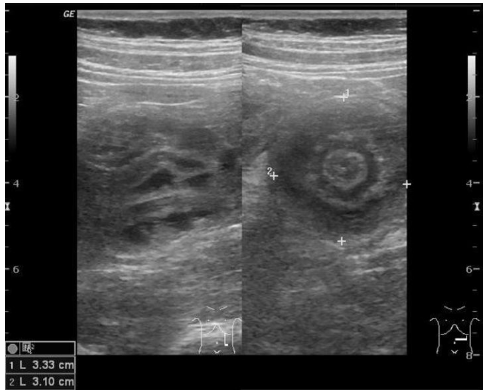
Answer: intussusception
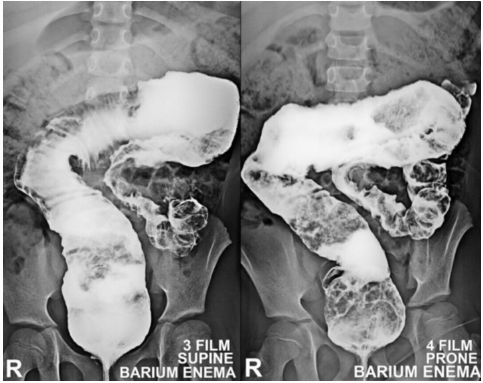
Flashcard 3: The given barium enema is suggestive of _____ disease
Answer: Hirschsprung
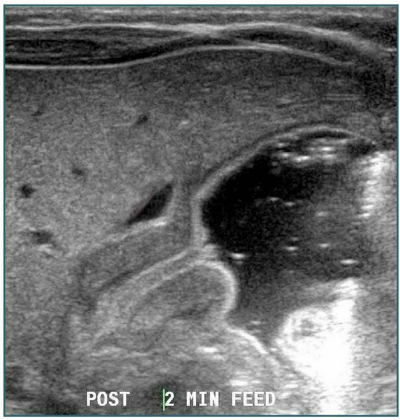
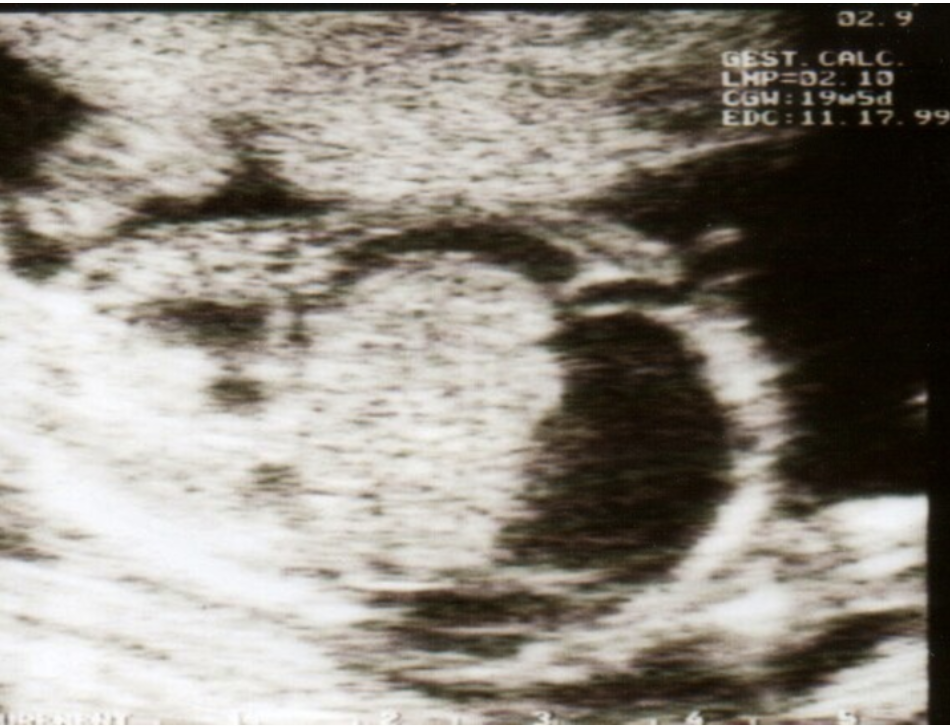
Flashcard 4: The given USG shows _____ sign and _____ sign in congenital hypertrophic pyloric stenosis
Answer: cervix
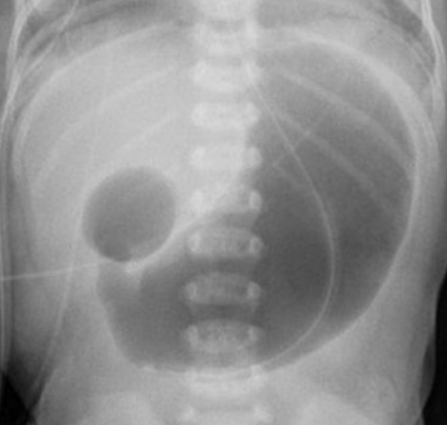
Flashcard 5: Double bubble sign which is a feature of the _____ atresia.
Answer: duodenal
Flashcard 6: Buddha sign/Halo sign is suggestive of _____
Answer: hydrops fetalis.
Flashcard 7: _____ sign is an ultrasonographic sign seen in boys with posterior urethral valves
Answer: Keyhole
Flashcard 8: _____ sign which is seen in the duplex kidney
Answer: Drooping lily
Flashcard 9: _____ appearance is the characteristic finding seen in Barium enema X-ray in a case of intussusception.
Answer: Coiled spring
Flashcard 10: Metaphyseal densities (_____) in lead poisoning are due to deposition of Calcium in growth plates
Answer: Lead lines
Flashcard 11: Narrowing of the _____ and subglottic region produces the "steeple sign" on CXR of croup (parainfluenza virus)
Answer: trachea
Flashcard 12: _____ sign Increased pericranial fat seen in fetal death in-utero
Answer: Deuels halo
Flashcard 13: Neuroblastoma shows _____ calcifications and vascular encasement on CECT
Answer: intratumoral
Flashcard 14: _____ sign is a radiological feature of scurvy.
Answer: Wimberger's ring
Flashcard 15: The X-ray of choice to determine the skeletal age of a 12 to 14 year-old boy is X-ray of the _____ and hip.
Answer: elbow
Flashcard 16: _____, fraying, and splaying are the metaphyseal radiological features seen in rickets.
Answer: Cupping
Flashcard 17: Localized bilateral _____ destruction of the medial proximal tibia is called as Wimberger's sign and is seen in early congenital syphilis.
Answer: metaphyseal
Flashcard 18: Typical USG findings of _____ in an infant with persistent jaundice is the triangular cord sign
Answer: biliary atresia
Flashcard 19: The X-ray of choice to determine the skeletal age of a 1 to 13 year-old boy is X-ray of the _____ and wrist.
Answer: hands
Flashcard 20: Investigation of choice in vesicoureteric reflex is _____
Answer: MCU
Flashcard 21: Investigation of choice in evaluation of posterior urethral valve is _____
Answer: MCU
Flashcard 22: What is a feature of child abuse (Caffey's syndrome) on X-ray?Metaphyseal _____ fracture
Answer: bucket handle (not corner #)
Flashcard 23: What is a feature of child abuse on MRI?_____
Answer: Sub-epiphyseal micro-fracture
Flashcard 24: _____ sign is seen on barium swallow in CHPS because of mass impression upon antrum with streak of barium pointing towards pyloric channel
Answer: Beak
Flashcard 25: A triple bubble sign on X-ray implies a diagnosis of _____
Answer: jejunal atresia
Flashcard 26: The X-ray of choice to determine the skeletal age of a 3 to 9 month-old boy is X-ray of the _____
Answer: shoulder
Flashcard 27: Calcific stippling of the patellae, hips, and other epiphysis, also called _____ is seen in the majority of the patients of Zellweger's syndrome
Answer: chondrodysplasia punctata
Flashcard 28: What is the imaging modality of choice for diagnosing ventricular dilatation in neonates?_____
Answer: Neurosonogram
Flashcard 29: USG shows _____ sign in EHBA
Answer: triangular cord
Flashcard 30: Non-visualization of the kidney of IVP is seen in the _____
Answer: multicystic dysplastic kidney (MCDK)
Flashcard 31: Earliest Skull X-ray sign in a child with raised ICT is _____
Answer: Sutural diastasis
Flashcard 32: Cloverleaf skull is seen on USG in _____
Answer: craniosynostosis
Flashcard 33: _____ sign is seen on barium swallow in CHPS because of gastric hyperperistaltic waves
Answer: Caterpillar
Flashcard 34: What type of nephrogram is seen in ARPKD?_____
Answer: Striated nephrogram
Flashcard 35: _____ sign is seen on barium swallow in CHPS because of elongated pylorus with a narrow lumen which may appear duplicated due to puckering of the mucosa
Answer: Double track
Flashcard 36: X-rays of the skull reveal enlarged sella and intersutural (wormian) bones in children with Congenital _____
Answer: hypothyroidism
Flashcard 37: _____ sign is seen on barium swallow in CHPS because of indentation of base of duodenal bulb by pylorus
Answer: Mushroom/kirkin/umbrella
Flashcard 38: CT/MRI in children with obstructive hydrocephalus, may show ballooning of the frontal horns of the lateral ventricles and third ventricle, also called _____ ventricles
Answer: Mickey mouse
Flashcard 39: What is the imaging of choice for diagnosing appendicitis in children?_____
Answer: USG
Flashcard 40: _____ sign is seen on barium swallow in CHPS because of round indentation caused by hypertrophied pyloric muscle
Answer: Shoulder
Flashcard 41: _____ vertebrae are usually seen in patients with Alagille syndrome on x-ray
Answer: Butterfly
Flashcard 42: What is the diagnostic indicator of midgut volvulus?_____
Answer: Corkscrew sign
Flashcard 43: Radiological features of scurvy: _____: Circular, opaque radiological shadow surrounding epiphyseal centres of ossification, which may result from bleeding.
Answer: Wimberger ring
Flashcard 44: Double bubble sign which is a feature of the _____ atresia.
Answer: duodenal
Flashcard 45: Which is the neuroimaging modality of choice for etiological evaluation of seizures in a neonate?_____
Answer: MRI
Flashcard 46: Earliest radiological finding of rickets is _____
Answer: loss of provisional zone of calcification
Flashcard 47: Wilm's tumor shows _____ calcification in contrast-enhanced CT
Answer: peripheral
Flashcard 48: Radiological features of scurvy: _____: Expansion of the costochondral junctions
Answer: Scorbutic rosary
Flashcard 49: _____ is the investigation of choice for retinoblastoma
Answer: MRI of the orbit + brain
Flashcard 50: What is the next best investigation for a patient with suspected jejunal atresia on x-ray?
Answer: Gastrograffin follow through
Flashcard 51: What is the initial investigation of choice for multicystic dysplastic kidney?_____*what sign is seen?
Answer: USG
Flashcard 52: Contrast enema shows an empty microcolon in case of _____
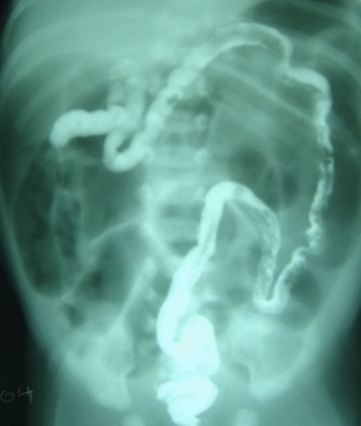
Answer: Meconium ileus
Flashcard 53: _____ on chest x-ray is suggestive of neonatal respiratory distress syndrome.
Answer: Air bronchogram
Keywords: Pediatric Radiology flashcards, medical flashcards, NEET PG preparation, USMLE Step 1 flashcards, Anki alternative, spaced repetition medical, OnCourse flashcards