Pediatric Orthopaedics Indian Medical PG Flashcards - Medical Study Cards
Master Pediatric Orthopaedics with OnCourse flashcards. These spaced repetition flashcards are designed for medical students preparing for NEET PG, USMLE Step 1, USMLE Step 2, MBBS exams, and other medical licensing examinations.
Pediatric Orthopaedics Flashcard Deck - 84 Cards
Flashcard 1: What is the pathogenesis of Perthe's disease?
_____
Answer:
Flashcard 2: Which of the following is associated with acute hip/knee pain and altered gait (outward facing toe gait)?
_____
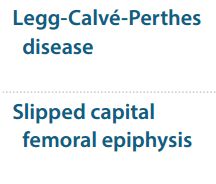
Answer: Slipped Capital Femoral Epiphysis
Flashcard 3: _____ disease is intraarticular epiphyseal osteochondromas.
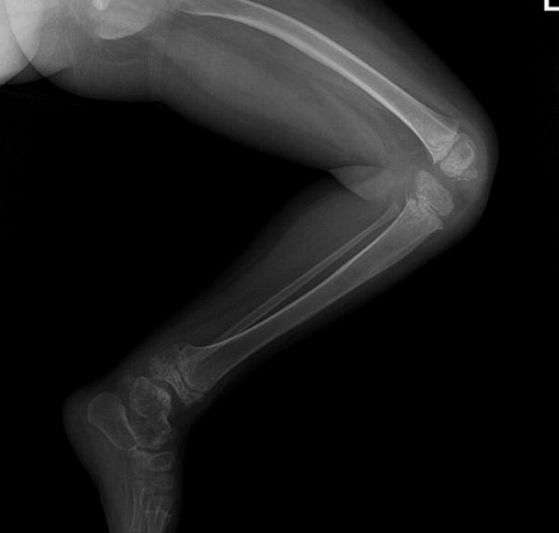
Answer: Trevor's
Flashcard 4: Which of the following usually occurs in children between 12-14 years old?
_____
Answer: Slipped Capital Femoral Epiphyses
Flashcard 5: Which of the following is self-limited (~2-3 years)?
_____
Answer: Legg-Calve-Perthes
Flashcard 6: Which of the following occurs in males in a 4:1 ratio?
_____
Answer: Legg-Calve-Perthes
Flashcard 7: Which of the following usually occurs in children between 5-7 years old?
_____
Answer: Legg-Calve-Perthes
Flashcard 8: Which of the following is associated with hypothyroidism as a predisposing condition?
_____
Answer: Slipped Capital Femoral Epiphysis
Flashcard 9: Which of the following is more associated with obesity?
_____
Answer: Slipped Capital Femoral Epiphyses
Flashcard 10: Which of the following is associated with an insidious onset of hip pain?
_____
Answer: Legg-Calve-Perthes
Flashcard 11: Which of the following requires surgery?
_____
Answer: Slipped Capital Femoral Epiphysis
Flashcard 12: 1. Identify → _____
Answer: Salter's scale
Extra:
Flashcard 13: The epiphyses in _____ have V-shaped distal ends with deep intercondylar notchesthe chevron sign.
Answer: achondroplasia
Flashcard 14: When the neck-shaft angle is <_____, the condition is known as coxa vara
Answer: 120
Flashcard 15: Evidence of _____ includes subdural hematomas, retinal hemorrhages, cervical spine injury, and posterior rib fractures
Answer: Shaken Baby Syndrome
Flashcard 16: _____ fractures and torus fractures are both common fractures in pediatric populations
Answer: Greenstick
Flashcard 17: Developmental Dysplasia of the Hip can be treated with a Pavlik Harness, which keeps the hips _____ and abducted
Answer: flexed
Flashcard 18: _____ can be used in displaced fractures of the femoral shaft in children less than 2 years of age and weight less than 12kgs.
Answer: Gallows traction
Flashcard 19: _____ sign evaluates skeletal maturation using the ossification of the iliac apophysis, in the evaluation of scoliosis
Answer: Risser's
Flashcard 20: What is the management of fracture neck of femur if patient age 3 weeks (MRI shows viability) ?_____
Answer: fixation with osteotomy
Flashcard 21: Syndromes associated with SCFE include: _____ syndrome, Klinefelter's syndrome
Answer: Turner's
Flashcard 22: In Blount's disease, the _____ femoral condyle may sublux posteromedially (into the depressed medial tibial plateau) at 10-20 degrees of flexion. This is also called as Siffert-katz sign
Answer: medial
Flashcard 23: In Slipped-Capital Femoral Epiphysis, increased _____ force on the femoral head results in the femoral epiphysis displacing relative to femoral neck
Answer: axial
Flashcard 24: Common presentations of unicameral bone cysts include _____ and may cause growth disturbances due to its proximity to the growth plate.
Answer: pathological fractures
Flashcard 25: A _____ fracture occurs due when axial force is applied to immature bone, leading to a simple buckle fracture of the cortex.
Answer: torus
Flashcard 26: _____ is characterised by partial deficiency of growth of distal radial physis
Answer: Madelung deformity
Flashcard 27: _____ nose vertebrae with posterior scalloping are seen in achondroplasia
Answer: Bullet
Flashcard 28: In _____, the Kite's angle is less than 25 degrees
Answer: CTEV
Flashcard 29: The most progressive type of congenital scoliosis is a con_____, unilateral unsegmented bar with a convex hemivertebra
Answer: cave
Flashcard 30: _____ disease is progressive pathologic genu varum centered at the tibia
Answer: Blount's
Flashcard 31: SCFE presents with limitation of _____uction and internal rotation
Answer: abd
Flashcard 32: Type I and II spondylolisthesis (Wiltse-Newman) are commonly seen in _____ most commonly at the L5-S1 level.
Answer: childhood and adolescence
Flashcard 33: In _____ cast for Perthe's disease, the leg is kept in an aBducted and internally rotated position
Answer: Petrie/Broomstick
Flashcard 34: In DDH, _____duction and external rotation movements of the hip are decreased.
Answer: aB
Flashcard 35: _____ gait is seen in SCFE
Answer: Outward facing toe
Flashcard 36: Ribbon rib deformity is a feature of _____
Answer: neurofibromatosis 1
Flashcard 37: Straight inner border of CTEV shoes prevents _____
Answer: adduction
Flashcard 38: The CTEV shoes can be used until _____ years
Answer: 5
Flashcard 39: _____ angle, which is the angle between the long axis of talus and long axis of calcaneum.
Answer: Kites
Flashcard 40: The greater trochanter is displaced _____wards in coxa vara, impinging on the pelvis
Answer: up
Flashcard 41: The _____ classification is used to grade the severity of Sprengel deformity.
Answer: Cavendish
Flashcard 42: In Ponseti's method _____ knee cast is used to correct clubfoot.
Answer: above
Flashcard 43: Fracture of _____ condyle of humerus occurs when the child falls on the hand with the elbow extended and forced into varus
Answer: lateral
Flashcard 44: Madelung deformity is commonly associated with which disorder?_____
Answer: Leri-Weill dyschondrosteosis
Flashcard 45: A _____ clubfoot results from the fetus's position in the uterus and is often associated with a restrictive uterine environment (oligohydramnios, uterine anomalies)
Answer: positional
Flashcard 46: In Blount's disease, the knee is stable in full _____
Answer: extension (flexion/extension)
Flashcard 47: Most common curve seen in infantile scoliosis is _____ thoracic
Answer: left
Flashcard 48: Most common cause of acquired genu recurvatum is _____.
Answer: poliomyelitis
Flashcard 49: Outer raise of CTEV shoes prevents _____
Answer: inversion
Flashcard 50: There is _____ternal rotation of tibia in CTEV.
Answer: in
Flashcard 51: What is Siffert-katz sign in Blount's disease?_____
Answer: The medial femoral condyle may sublux posteromedially (into the depressed medial tibial plateau) at 10-20 degrees of flexion
Flashcard 52: 1o CTEV is usually _____lateral
Answer: bi
Flashcard 53: Most common curve seen in juvenile idiopathic scoliosis is _____ thoracic
Answer: right
Flashcard 54: _____creased lumbar lordosis is seen in DDH.
Answer: In
Flashcard 55: Is an x-ray obligatory for diagnosing radial head subluxation?_____
Answer: No
Flashcard 56: What will be the presentation of a child with radial head subluxation?_____
Answer: extended and pronated forearm
Flashcard 57: The metaphyseal fragment in Type II Salter Harris # is sometimes called the _____ fragment
Answer: Thurston-Holland
Flashcard 58: Which side is more commonly affected by DDH?_____
Answer: left>B/L>right
Flashcard 59: A Slipped Capito-femoral Epiphysis occurs during the period of rapid growth, commonly during _____ years
Answer: 11-20
Flashcard 60: What is the attitude of limb in transient synovitis of hip?_____
Answer: FABER
Flashcard 61: What is the most common cause of disproportionate dwarfism?_____
Answer: Achondroplasia
Flashcard 62: The main objective of treatment of Perthe's disease is to relieve force on the femoral head to reduce any further _____
Answer: ischemia
Flashcard 63: _____ disease is intraarticular epiphyseal osteochondromas.
Answer: Trevor's
Flashcard 64: Absence of heel in CTEV shoes prevents _____
Answer: equinus
Flashcard 65: Most common bone to be fractured in children is _____.
Answer: distal forearm bones
Flashcard 66: _____ are used to prevent progression and avoid surgery in scoliotic curves between 20 and 30 degrees
Answer: Braces
Flashcard 67: Hip fractures in the pediatric population are classified according to _____ classification
Answer: Delbet's
Flashcard 68: _____ U/L ratio is seen in spondyloepiphyseal dysplasia and vertebral anomalies
Answer: Low
Flashcard 69: The most common site of fracture of mandible in children is the _____
Answer: condyle
Flashcard 70: The treatment of choice for neglected case of DDH with secondary arthritic changes in a 12 year child is _____.
Answer: total hip replacement
Flashcard 71: _____ traction is used for SupraconDylar fracture of humerus
Answer: Dunlop/Smith
Flashcard 72: Tom-Smith's arthritis causes severe destruction of the _____ of the femur as it is cartilaginous at this age.
Answer: head
Flashcard 73: Fracture of radial head occurs when the child falls on the hand with the elbow extended and forced into _____
Answer: valgus (varus/valgus)
Flashcard 74: There may be an _____-shaped deformity at the elbow in supracondylar humerus #
Answer: S
Flashcard 75: Most common cause of CTEV is _____
Answer: idiopathic
Flashcard 76: In children, _____ pole of scaphoid # is more common to undergo non-union
Answer: distal
Flashcard 77: _____ Ligament in Madelung Deformity is believed to impede the growth of the ulnopalmar aspect of the distal radius
Answer: Vicker s
Flashcard 78: _____ idiopathic scoliosis is classically defined as scoliosis that is first diagnosed between birth and 3 years of age
Answer: Infantile
Flashcard 79: Why is fat embolism syndrome not common in kids?_____
Answer: No fat in medullary cavity
Flashcard 80: X-ray showing compression on one side of the radius causing the other side to bend/ buckle suggests a _____ fracture.
Answer: torus
Flashcard 81: _____ angle is used to diagnose CTEV and the normal value is _____ degrees.
Answer: Kite's; 20-40
Flashcard 82: _____ angle is used to diagnose CTEV and the normal value is _____ degrees.
Answer: Kite's; 20-40
Flashcard 83: Supracondylar fracture more commonly leads to cubitus _____
Answer: varus
Flashcard 84: Bladder extrophy may present with a characteristic _____ gait
Answer: broad-based
Keywords: Pediatric Orthopaedics flashcards, medical flashcards, NEET PG preparation, USMLE Step 1 flashcards, Anki alternative, spaced repetition medical, OnCourse flashcards