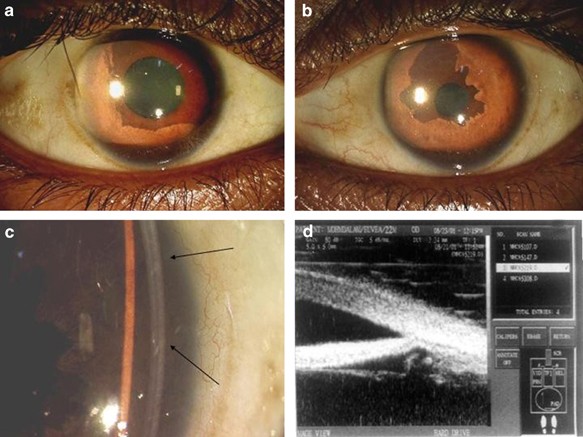
Ocular Manifestations of Systemic Disorders Indian Medical PG Flashcards - Medical Study Cards
Master Ocular Manifestations of Systemic Disorders with OnCourse flashcards. These spaced repetition flashcards are designed for medical students preparing for NEET PG, USMLE Step 1, USMLE Step 2, MBBS exams, and other medical licensing examinations.
Ocular Manifestations of Systemic Disorders Flashcard Deck - 83 Cards
Flashcard 1: Congenital ectropion uveae and prominent corneal nerves are commonly seen in _____
Answer: neurofibromatosis type 1
Flashcard 2: Iris pearls are pearly-white iris nodules seen at the pupillary border of the iris in uveitis due to _____.
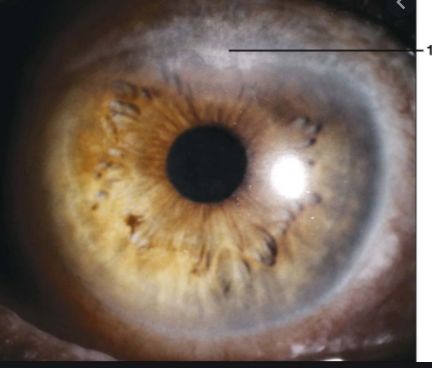
Answer: leprosy
Flashcard 3: Vogt–Koyanagi–Harada syndrome is associated with _____ appearance of fundus
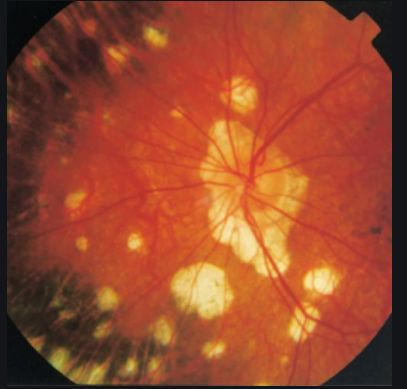
Answer: sunset glow
Flashcard 4: Retinal _____ and atypical iris colobomas are commonly seen in tuberous sclerosis
Answer: astrocytomas
Flashcard 5: Fundus in sarcoidosis shows thick venous sheathing of periphlebitis, also called as _____
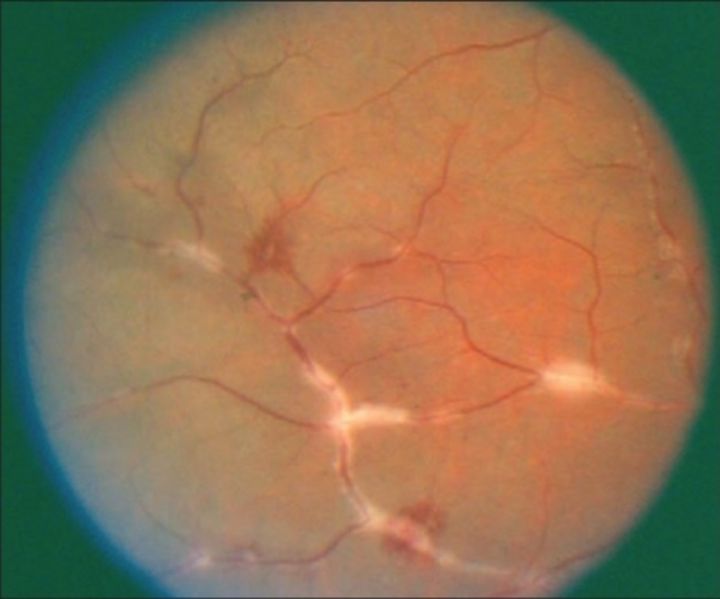
Answer: Candle-wax dripping
Flashcard 6: Fundus in sarcoidosis shows pre-retinal nodules, also called as _____ sign
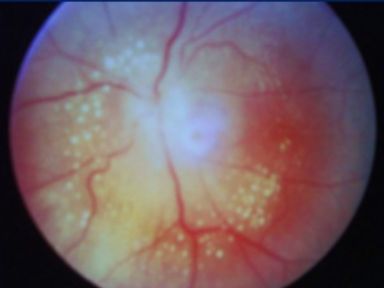
Answer: Lander's
Flashcard 7: Ocular manifestations of neurofibromatosis type 2 include _____ cataract and Hamartomas of the retinal pigment epithelium (RPE) and retina
Answer: Posterior subcapsular
Flashcard 8: Myotonic dystrophy is associated with _____ cataract and _____ fundus.
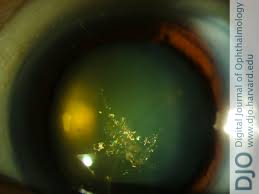
Answer: Christmas tree
Flashcard 9: Choroidal _____, Iris heterochromia and ipsilateral glaucoma (most common) are seen in Sturge–Weber syndrome
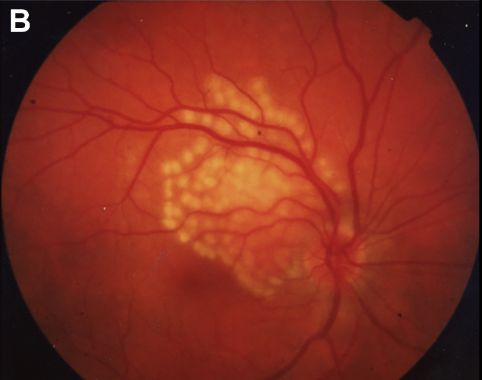
Answer: hemangioma
Flashcard 10: _____ KPs are composed of lymphocyte cells seen in Non-Granulomatous uveitis
Answer: Granular
Flashcard 11: Patients with multifocal and bilateral choroidal metastases are treated with systemic _____therapy, immunotherapy, hormone therapy, or whole eye radiotherapy
Answer: chemo
Flashcard 12: Neurofibromatosis _____ is associated with juvenile cataracts
Answer: II
Flashcard 13: Ocular manifestations seen in gout are _____itis, scleritis, and uveitis.
Answer: episcler
Flashcard 14: One sign of vitamin _____ deficiency is bitot spots on conjunctiva due to squamous metaplasia of corneal epithelium
Answer: A
Flashcard 15: Choroidal _____, Iris heterochromia and ipsilateral glaucoma (most common) are seen in Sturge Weber syndrome
Answer: hemangioma
Flashcard 16: _____ of margin and occlusion pupillae are seen in pupillary signs of anterior uveitis
Answer: Ectropion
Flashcard 17: Banking of veins distal to arteriovenous crossings is known as _____ sign and is seen in Grade III hypertensive retinopathy
Answer: Bonnet
Flashcard 18: The most common secondaries in choroid originate from the _____ (overall and in females), and lungs (in males).
Answer: breast
Flashcard 19: Vogt Koyanagi Harada syndrome is associated with perilimbal _____ also known as Suguiura's sign
Answer: vitiligo
Flashcard 20: Most common syndrome associated with RP is _____ syndrome which is sensorineural deafness +RP
Answer: Usher
Flashcard 21: _____ rule states that if the tip of the nose is involved, there will be a significant risk of ocular involvement in herpes zoster ophthlamicus
Answer: Hutchinson's
Flashcard 22: Centrocecal scotoma is most commonly seen in _____-induced amblyopia and also seen in vitamin B12 deficiency
Answer: tobacco
Flashcard 23: A transient mobile _____ in a relatively white eye is characteristic of uveitis in Behcet's disease
Answer: hypopyon
Flashcard 24: Ocular manifestations of _____ include Posterior subcapsular cataract and Hamartomas of the retinal pigment epithelium (RPE) and retina
Answer: neurofibromatosis type 2
Flashcard 25: An individual who is immuno-_____, with vesicles in a V1 distributionand vision loss may have Herpes Zoster Ophthalmicus
Answer: compromised
Flashcard 26: _____ represent melanocytic hamartomas of the iris
Answer: Lisch nodules
Flashcard 27: Retinal and optic nerve _____ are commonly seen in VHL syndrome
Answer: hemangiomas
Flashcard 28: _____ appearance of the cornea is classically associated with florid syphilitic infection.
Answer: Salmon patch
Flashcard 29: Myotonic dystrophy is associated with _____ cataract and salt and pepper fundus.
Answer: Christmas tree
Flashcard 30: Patients with hypertensive retinopathy will present on fundoscopy with _____-shaped retinal hemorrhages, arteriovenous nicking, microaneurysms, macular star, and cotton-wool spots
Answer: flame
Flashcard 31: Retinal _____ and atypical iris colobomas are commonly seen in tuberous sclerosis
Answer: astrocytomas
Flashcard 32: Triple therapy for ocular toxoplasmosis: Systemic _____, Pyrimethamine and Sulfadiazine
Answer: steroids
Flashcard 33: _____ of the helminth Onchocerca volvulus can enter the eye and cause blindness
Answer: Microfilariae
Flashcard 34: _____ are floaters, composed of calcium and lipids, seen in old age and in association with diabetes mellitus, hypertension, and high cholesterol levels.
Answer: Asteroid bodies
Flashcard 35: Aqueous flare is usually marked in _____ and minimal in granulomatous uveitis.(granulomatous/non-granulomatous)
Answer: non-granulomatous
Flashcard 36: Most common site of extracutaneous involvement in juvenile xanthogranuloma is the _____, with a predilection for the iris
Answer: eye
Flashcard 37: _____ is a neurocutaneous disorder associated with episcleral hemangiomas, which may cause increased IOP and early-onset glaucoma
Answer: Sturge-Weber syndrome
Flashcard 38: Vogt Koyanagi Harada syndrome is associated with _____ilateral chronic non granulomatous panuveitis
Answer: b
Flashcard 39: Koeppe's nodules and Bussaca's nodules develop on the iris in _____ uveitis.
Answer: granulomatous
Flashcard 40: The most common ocular motility defect seen in Grave's disease is _____.
Answer: elevator restriction
Flashcard 41: Spontaneous hyphema (blood in anterior chamber) is seen in juvenile _____.
Answer: xanthogranuloma
Flashcard 42: Tiny crystals (Russell bodies) may be present on the iris surface in _____
Answer: Fuchs heterochromic iridocyclitis
Flashcard 43: _____ nodule seen at the anterior surface of the iris in anterior uveitis
Answer: Busacca
Flashcard 44: _____ uveitis is the most common manifestation of sarcoidosis
Answer: Granulomatous anterior
Flashcard 45: Fundoscopic abnormalities in Waldenstrm macroglobulinemia include dilated, segmented, tortuous veins, giving it a "_____" appearance
Answer: sausage link
Flashcard 46: A positive antinuclear antibody (ANA) test result in children with JIA requires periodic _____ examination.
Answer: slit-lamp
Flashcard 47: Fundus in sarcoidosis shows pre-retinal nodules, also called as _____ sign
Answer: Lander's
Flashcard 48: The most common allergic manifestation of TB is _____.
Answer: phlyctenular keratoconjunctivitis
Flashcard 49: Dot-blot or flame shaped hemorrages, macular star and cotton wool exudates are seen in Grade _____ hypertensive retinopathy
Answer: III
Flashcard 50: In tuberculosis (TB), _____ is the most common ocular feature.
Answer: granulomatous panuveitis
Flashcard 51: Iris pearls are pearly-white iris nodules seen at the pupillary border of the iris in uveitis due to _____.
Answer: leprosy
Flashcard 52: Optic neuritis and retinits can be caused by viral infections such as _____
Answer: measles
Flashcard 53: Spontaneous absorption of lens material is seen in _____ syndrome.*other ocular changes?
Answer: Hallermann Streiff
Flashcard 54: Marfan's syndrome present with _____lateral ptosis
Answer: uni
Flashcard 55: Which ophthalmic pathology is pathognomonic of primary hyperparathyroidism?_____
Answer: Band keratopathy
Flashcard 56: Congenital ectropion uveae and prominent corneal nerves are commonly seen in _____
Answer: neurofibromatosis type 1 (inherited condition)
Flashcard 57: What is the most common finding in HIV retinopathy?_____
Answer: Cotton-wool spots/Soft exudates (axonal debris)
Flashcard 58: Anteriorly dislocated lens of _____ syndrome may present as malignant glaucoma
Answer: Weill Marchesani
Flashcard 59: Chronic Progressive External Ophthalmoplegia may occur isolatedly or in association with _____ syndrome or oculopharyngeal dystrophy
Answer: Kearns-Sayre
Flashcard 60: The pathognomonic feature of xerophthalmia is the appearance of _____.
Answer: Bitot's spots
Flashcard 61: Which disease is also known as transient hypopyon syndrome?_____
Answer: Behcet's disease
Flashcard 62: Vogt Koyanagi Harada syndrome is associated with autoimmunity against _____.
Answer: melanocytes
Flashcard 63: Vogt Koyanagi Harada syndrome is associated with _____ appearance of fundus
Answer: sunset glow
Flashcard 64: _____ is preferred in patients with choroidal mets and poor systemic status.
Answer: Observation
Flashcard 65: What is the earliest anterior chamber sign in anterior uveitis?_____
Answer: Aqueous flare
Flashcard 66: Signs in Grave's ophthalmopathy:_____ sign: Lack of wrinkling of the forehead on superior gaze
Answer: Joffroy s
Flashcard 67: _____ nodule seen at the pupillary margin in anterior uveitis
Answer: Koeppe's
Flashcard 68: Where do telangectasias first appear in ataxia telangectasia or Louis-Bar syndrome?_____
Answer: Conjunctiva
Flashcard 69: Upto what stage of WHO grading is Vitamin A deficiency correctable by addition of supplements?_____
Answer: X1B
Flashcard 70: The most common ocular manifestation of rheumatoid arthritis is _____.
Answer: keratoconjunctivitis sicca
Flashcard 71: _____ syndrome is characterised by production and progressive accumulation of fibrillar extracellular material in many ocular and systemic tissues.
Answer: Pseudoexfoliation
Flashcard 72: The most common ocular manifestation of COVID-19 is _____ conjunctivitis.
Answer: follicular
Flashcard 73: The most common ocular adverse effect in patients receiving highly active antiretroviral therapy (HAART) is _____
Answer: immune recovery uveitis
Flashcard 74: Stage _____ of WHO grading of Vitamin A deficiency corresponds to Corneal xerosis
Answer: X2
Flashcard 75: What is the most common ocular feature of rubella?_____
Answer: Salt and Pepper fundus
Flashcard 76: The most common ocular manifestation of Crohn s disease is _____.
Answer: episcleritis
Flashcard 77: The pathogenesis of Ocular Rosacea seems to be closely associated with _____ dysfunction.
Answer: meibomian gland
Flashcard 78: A patient with Alagille syndrome may show _____ in their eye
Answer: posterior embryotoxon
Flashcard 79: The most common ocular manifestation in mumps is _____.
Answer: dacrocystadenitis
Flashcard 80: Iridocyclitis in Toxoplasmosis is granulomatous or non-granulomatous?_____
Answer: can be either
Flashcard 81: Fluctuating refractive error is seen with _____ cataract
Answer: diabetic
Flashcard 82: The most severe manifestation of Onchocerchiasis is _____ and chorioretinitis which causes blindness.
Answer: sclerosing keratitis
Flashcard 83: Vitreoretinal abscesses and string of pearl appearence on fundoscopy in AIDS patient, is suggestive of _____ Endophthalmitis
Answer: Candida
Keywords: Ocular Manifestations of Systemic Disorders flashcards, medical flashcards, NEET PG preparation, USMLE Step 1 flashcards, Anki alternative, spaced repetition medical, OnCourse flashcards