Respiratory and Airway Management Indian Medical PG Flashcards - Medical Study Cards
Master Respiratory and Airway Management with OnCourse flashcards. These spaced repetition flashcards are designed for medical students preparing for NEET PG, USMLE Step 1, USMLE Step 2, MBBS exams, and other medical licensing examinations.
Respiratory and Airway Management Flashcard Deck - 62 Cards
Flashcard 1: _____ delivers oxygen at 40-60 L/min and increases PEEP
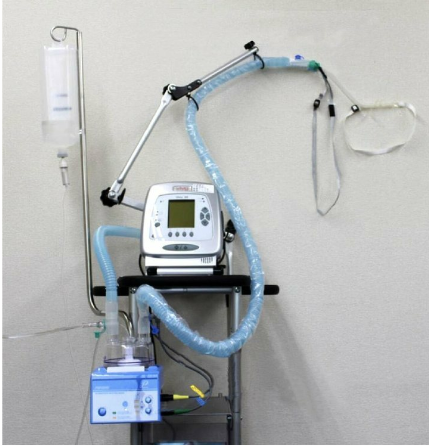
Answer: High-flow nasal cannula
Flashcard 2: The following capnography waveform represents:
_____
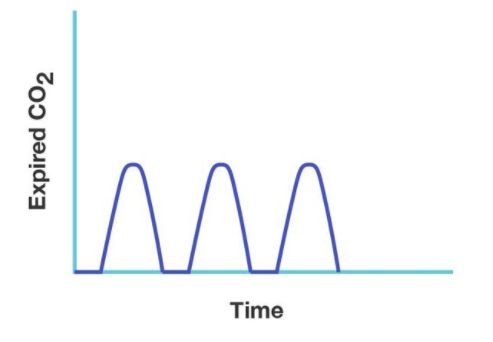
Answer: spontaneous breathing
Flashcard 3: The following capnography waveform represents:
_____
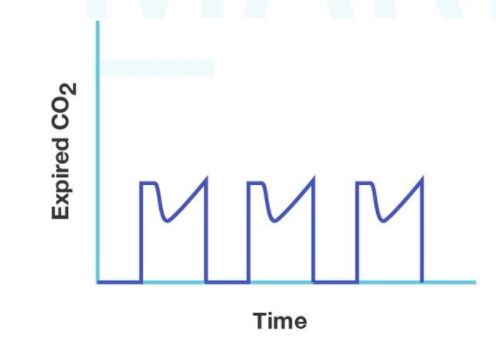
Answer: single lung transplant
Flashcard 4: The following capnography waveform represents:
_____
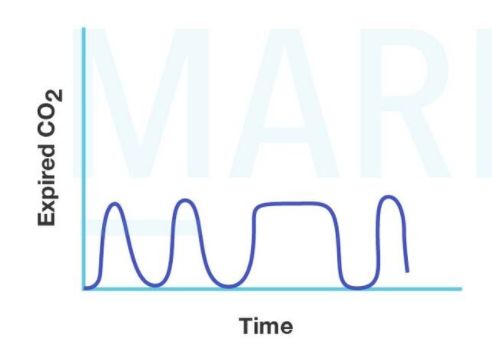
Answer: IMV in midst of spontaneous breathing
Flashcard 5: The following capnography waveform represents:
_____
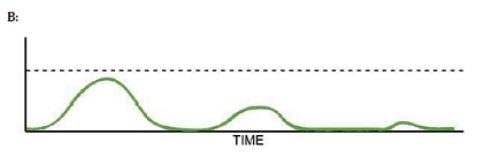
Answer: esophageal intubation
Flashcard 6: The Modified Mallampati classification is used to predict difficulty in tracheal intubation: _____ No answer
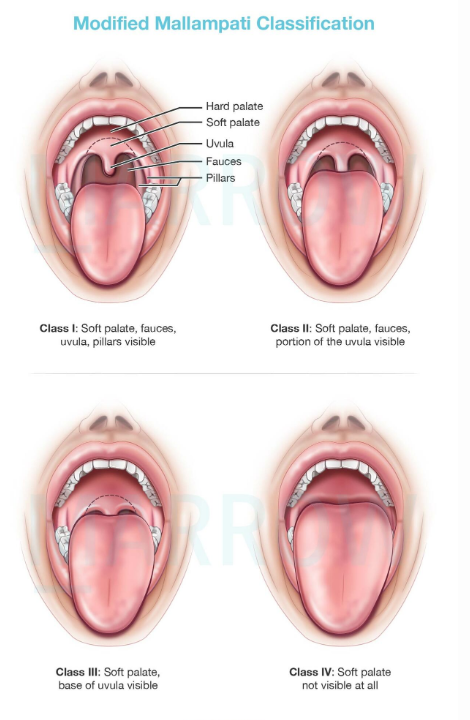
Answer: :)
Flashcard 7: The following capnography waveform represents:
_____
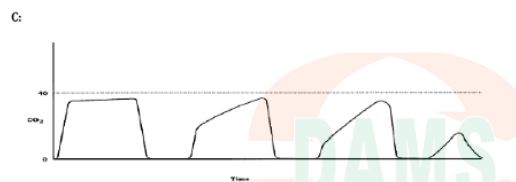
Answer: bronchospasm
Flashcard 8: In case of endotracheal intubation or tracheostomy, the _____ component of the score is denoted as NT.
Answer: verbal
Flashcard 9: Grade _____ Cormack-Lehane system means that more than 50% of the glottis is visible
Answer: 1
Flashcard 10: _____ is a technique of external laryngeal manipulation of the airway during intubation for better visualization of the larynx.
Answer: BURP
Flashcard 11: Nasal cannula, non rebreathing mask, and nasal mask are _____ flow variable performance systems
Answer: low
Flashcard 12: Initial ventilatory settings are started as PEEP of _____ cm of H2O and titrated slowly to 10 cm H2O
Answer: 5
Flashcard 13: Maximum inspiratory force >_____ cm H2O is an indication for mechanical ventilation
Answer: -25
Flashcard 14: Airway is secured in laser airway sx using cuffed silicone or rubber based ET tubes filled with _____
Answer: saline
Flashcard 15: _____ with direct visualization is the first choice for definitive airway management in caustic ingestion
Answer: Oral intubation
Flashcard 16: The following capnography waveform represents:_____
Answer: bronchospasm
Flashcard 17: Grade _____ Cormack-Lehane system means that only the epiglottis is seen
Answer: 3
Flashcard 18: Which teeth are most commonly injured during laryngoscopy?_____
Answer: Upper central incisors
Flashcard 19: Grade _____ Cormack-Lehane system means that posterior part of glottis and arytenoids is seen
Answer: 2
Flashcard 20: Laryngeal mask airway and other supraglottic airway devices are part of advanced airway management, which comes under _____ guidelines
Answer: ACLS
Flashcard 21: Preoxygenation with tidal volume breathing of _____ mins is required before tracheal intubation
Answer: 3
Flashcard 22: _____ is a fixed performance device which delivers a fixed concentration of oxygen (FiO2), irrespective of the patient efforts.
Answer: Venturi mask
Flashcard 23: The following capnography waveform represents:_____
Answer: esophageal intubation
Flashcard 24: HFNC leads to warming and _____ of inspired air
Answer: humidification
Flashcard 25: Preoxygenation before intubation helps delay the onset of critical hypoxia during the period of apnea by _____ minutes
Answer: 5-8
Flashcard 26: PEEP should be increased slowly when initiating ventilation as high PEEP may impair _____
Answer: ventricular filling
Flashcard 27: Arterial O2 tension mechanical ventilation
Answer: Arterial O2 tension mechanical ventilation
Flashcard 28: Phase _____ of normal capnography is the plateau, corresponding to the pCO2 in the alveolar compartment
Answer: III
Flashcard 29: _____ angle is the transition from phase III to phase 0 in normal capnograph
Answer:
Flashcard 30: _____ position is for direct laryngoscopy or bronchoscopy
Answer: Barking-dog
Flashcard 31: In mouth-to-mouth resuscitation, the percentage of oxygen delivered is _____%.
Answer: 16
Flashcard 32: The following capnography waveform represents:_____
Answer: IMV in midst of spontaneous breathing
Flashcard 33: The nasal cannula can provide a maximum inspired oxygen concentration of _____ % at flow rates greater than 10L/ min for short periods
Answer: 40-50
Flashcard 34: Phase _____ of normal capnography is exhalation of dead space gas
Answer: I
Flashcard 35: The following capnography waveform represents:_____
Answer: spontaneous breathing
Flashcard 36: Grade _____ Cormack-Lehane system means that not even the epiglottis is seen
Answer: 4
Flashcard 37: What is the ideal tidal volume for ventilator settings in ARDS?_____
Answer: 6ml/kg body wt.
Flashcard 38: What is the target SpO2 in ARDS ventilation?_____
Answer: 88-95%
Flashcard 39: What is the target PEEP for lung protection in ARDS ventilation?_____
Answer: 5-15cm H2O
Flashcard 40: The ideal rescue breath rate for adults is _____ breaths/min
Answer: 10
Flashcard 41: _____ faced Ring-Adair-Elwyn (RAE) endotracheal tube is preferred for oral and dental surgeries
Answer: North
Flashcard 42: HFNC _____ the positive end-expiratory pressure (PEEP), and reduces the work of breathing
Answer: increases
Flashcard 43: Thiopentone produces dose-related central respiratory depression, producing a characteristic ventilatory pattern called '_____''
Answer: double apnea
Flashcard 44: If an airway fire occurs during laser airway sx, it should be extinguised with _____
Answer: saline
Flashcard 45: The following capnography waveform represents:_____
Answer: hypoventilation
Flashcard 46: Tidal volume mechanical ventilation
Answer: Tidal volume mechanical ventilation
Flashcard 47: For laser airway sx, the concn of inspired O2 should be as _____ as possible
Answer: low
Flashcard 48: Which anesthetic agents are preferred for laser airway sx?_____
Answer: Halothane and enflurane
Flashcard 49: The following capnography waveform represents:_____
Answer: single lung transplant
Flashcard 50: What is the most important treatment step of opioid intoxication?_____
Answer: Airway protection and ventilatory maintenance
Flashcard 51: Phase _____ of normal capnography is sharp rise in pCO2 to a plateau indicating sampling of transitional gas between the airways and alveoli
Answer: II
Flashcard 52: Extreme obesity is a _____indication for IPPV
Answer: contra
Flashcard 53: Percentage of glottic opening (POGO score) and Cormack Lehane (CL) classification is broadly used to describe _____ view during direct laryngoscopy
Answer: laryngeal
Flashcard 54: Management of flail chest with respiratory failure is _____
Answer: IPPV
Flashcard 55: PaO2/FiO2 ratio mechanical ventilation
Answer: PaO2/FiO2 ratio mechanical ventilation
Flashcard 56: Which ventilatory mode can lead to potential hyperventilation?_____
Answer: Assist control mode ventilation
Flashcard 57: _____ Ventilation is time-triggered, time-cycled, and pressure-limited.
Answer: Pressure Controlled
Flashcard 58: Patients with an RSBI _____ are eligible candidates for successful extubation
Answer: 100
Flashcard 59: Assist Control Mode Ventilation has a risk of _____ventilation
Answer: hyper::hyper/hypo
Flashcard 60: _____ airway is also known as Guedel airway
Answer: Oropharyngeal
Flashcard 61: _____ delivers oxygen at 40-60 L/min and increases PEEP
Answer: High-flow nasal cannula
Flashcard 62: Laryngeal mask airway is associated with _____ risk of gastrointestinal aspiration when compared with tracheal intubation.
Answer: increased
Keywords: Respiratory and Airway Management flashcards, medical flashcards, NEET PG preparation, USMLE Step 1 flashcards, Anki alternative, spaced repetition medical, OnCourse flashcards