Back
NEET PG Result 2025: What the Cutoffs Mean and What to Do Next for NEET PG 2026
Complete analysis of NEET PG 2025 cutoff scores and comprehensive preparation strategy for NEET PG 2026. Learn what your result means and get a proven 12-month study plan to dominate next year's exam.
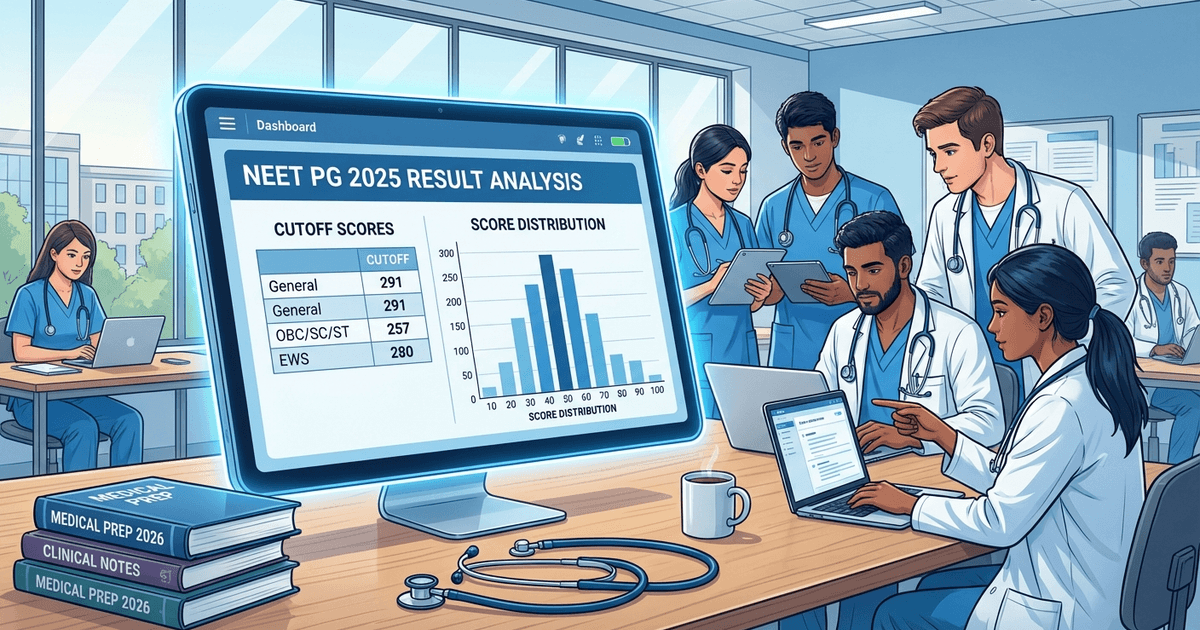
NEET PG Result 2025: What the Cutoffs Mean and What to Do Next for NEET PG 2026
You are probably refreshing your NBE dashboard for the hundredth time today. NEET PG Result 2025 is out, and those cutoff numbers are staring back at you. Whether you cleared it or not, you need a game plan for what comes next.
NEET PG 2025 had 1,86,000 candidates fighting for 28,000 seats. That's a 15% selection rate. If you didnt make it this time, you are not alone — 1,58,000 others are in the same boat. But here's what matters now: understanding what those cutoff scores actually mean and building a bulletproof strategy for NEET PG 2026.
The general category cutoff hit 50th percentile this year, translating to roughly 360-370 marks out of 800. OBC and SC/ST categories saw cutoffs at 40th percentile (around 320-330 marks). These numbers tell a story about where the competition stands and exactly what you need to target for 2026.
Understanding NEET PG 2025 Cutoff Scores
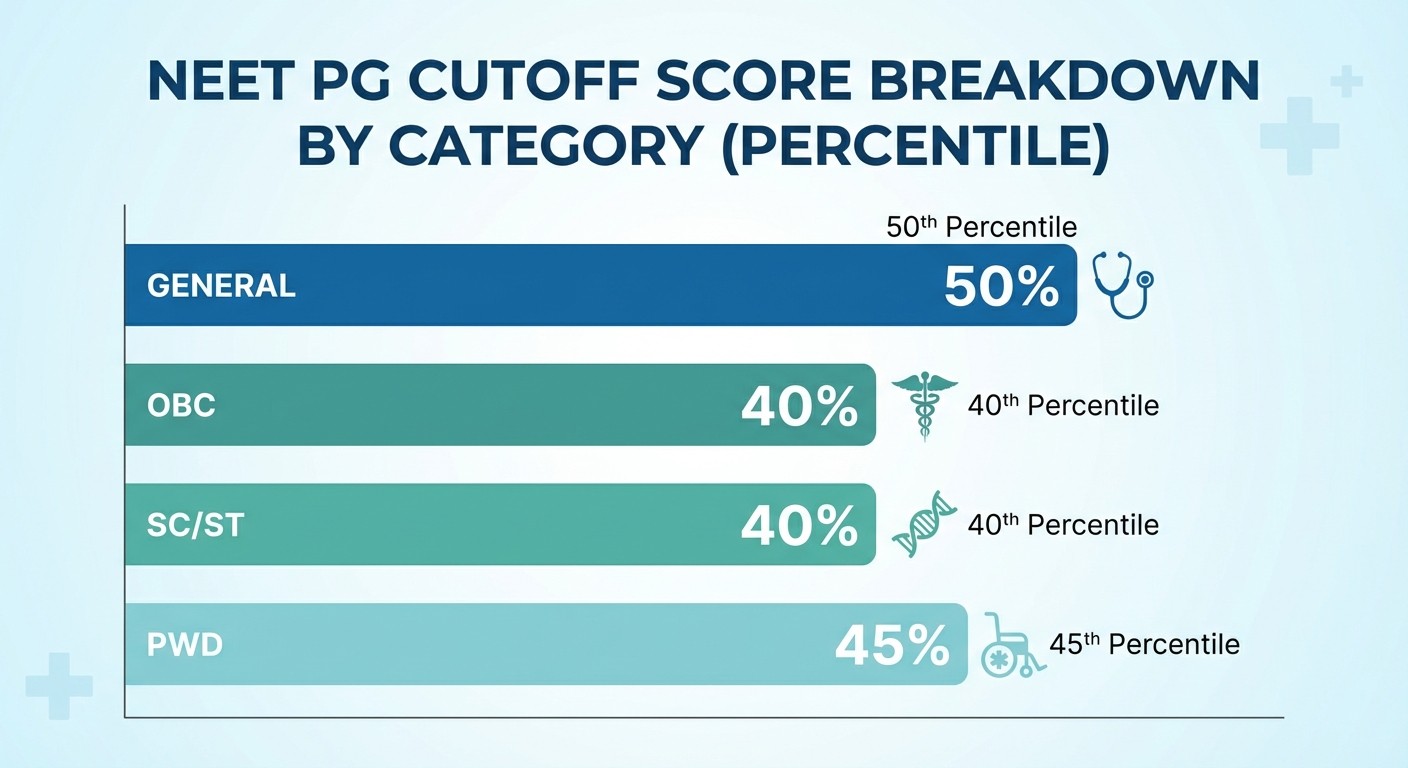
The National Board of Examinations (NBE) sets NEET PG cutoffs based on percentile rankings, not absolute scores. This percentile system means your performance is measured against every other candidate who took the exam.
Category-wise Cutoff Breakdown
Category | Percentile Required | Approximate Score Range |
|---|---|---|
General | 50th percentile | 360-370 marks |
OBC-NCL | 40th percentile | 320-330 marks |
SC/ST | 40th percentile | 320-330 marks |
EWS | 50th percentile | 360-370 marks |
PWD | 45th percentile | 340-350 marks |
These cutoffs represent the minimum qualifying marks, not guarantee of admission. For popular specialties like Radiology, Dermatology, or Ophthalmology, you need scores well above 600 marks to secure a seat in government colleges.
The percentile system means that even if the paper was tougher this year, the relative ranking determines who qualifies. If everyone struggled equally, the cutoff marks come down automatically.
What Your Score Means
Scored 400+ marks: You are in a strong position for most clinical specialties in state quota seats. Focus on counseling strategy and seat matrix analysis. Scored 320-400 marks: You qualify but need strategic college and specialty selection. Consider state quotas where competition is relatively lower. Scored below 320 marks: Time to regroup for NEET PG 2026. The good news? You have a full year to fix the gaps and come back stronger.
Common Mistakes That Led to Lower Scores in 2025
Weak Foundation in Basic Subjects
Most candidates who scored below cutoff had shaky concepts in Anatomy, Physiology, and Biochemistry. These subjects form the backbone for clinical understanding, and weak basics show up everywhere.
Practice with NEET PG anatomy questions to identify exactly where your foundation needs work.
Inadequate Mock Test Analysis
Taking 50 mock tests means nothing if you dont analyze why you got questions wrong. Most candidates treated mocks as score-checking exercises instead of learning opportunities.
Subject Imbalance
Spending 60% time on Medicine and Surgery while ignoring Pediatrics, ENT, and Orthopedics is a recipe for disaster. NEET PG tests breadth, not depth in 2-3 subjects.
Poor Time Management During Exam
With 200 questions in 3.5 hours, you get 63 seconds per question. Candidates who spent 3 minutes on tough questions ended up leaving easy ones unanswered.
Your NEET PG 2026 Action Plan
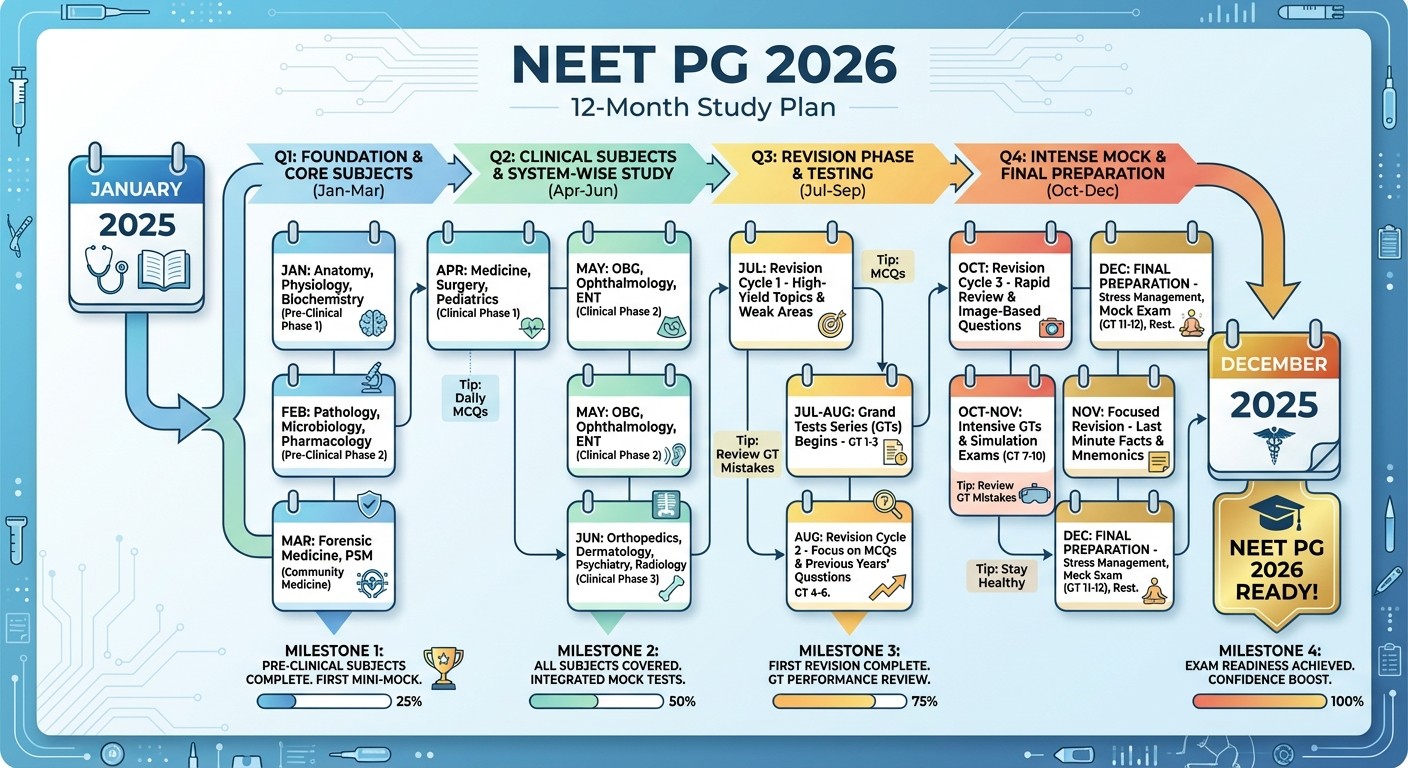
January-March 2026: Foundation Building Phase
Start with basic sciences. Master Anatomy, Physiology, Biochemistry, Pathology, Pharmacology, and Microbiology before touching clinical subjects.
Use spaced repetition flashcards for long-term retention. Your brain forgets 70% of new information within 24 hours without active recall.
Daily Schedule:
8 hours focused study
2 hours MCQ practice (minimum 100 questions)
1 hour flashcard revision
30 minutes analyzing wrong answers
April-July 2026: Clinical Integration Phase
Now layer clinical subjects over your solid foundation. Medicine, Surgery, Obstetrics & Gynecology, and Pediatrics carry maximum weightage.
Focus on high-yield topics that appear repeatedly. For Internal Medicine, master clinical case analysis and diagnostic reasoning patterns.
Key Strategy: Link every clinical finding back to basic science. When you see "chest pain with ST elevation," immediately recall coronary anatomy, physiology of cardiac blood supply, and pharmacology of anti-platelet drugs.
August-October 2026: Subject Completion and Mock Tests
Finish all 19 subjects by August. September and October are for intensive mock testing and identifying weak areas.
Take one full-length mock test every alternate day. Analyze each test for:
Subject-wise accuracy
Time spent per question
Reason for wrong answers (concept gap vs silly mistake vs time pressure)
Use NEET PG practice questions to drill specific topics you keep getting wrong.
November-December 2026: Final Revision and Strategy
Last 2 months are pure revision. No new topics. Strengthen what you already know.
Revision Strategy:
1. High-yield flashcards daily
2. Previous year questions (2019-2025) twice
3. Mock tests every 3rd day
4. Subject-wise target practice for weak areas
Subject-wise Weightage and Target Scores
Subject | Questions (Approx) | Target Accuracy |
|---|---|---|
Medicine | 30-35 | 85%+ |
Surgery | 25-30 | 80%+ |
Obstetrics & Gynecology | 18-20 | 85%+ |
Pediatrics | 18-20 | 80%+ |
Anatomy | 14-16 | 90%+ |
Physiology | 12-14 | 85%+ |
Pathology | 14-16 | 85%+ |
Pharmacology | 12-14 | 80%+ |
Community Medicine | 8-10 | 70%+ |
Others (ENT, Ophthalmology, etc.) | 20-25 | 75%+ |
To score 420+ marks (safe for most specialties), you need 52-55% overall accuracy. The table above shows realistic targets per subject based on typical question distribution.
Study Resources That Actually Work
Primary Study Material
Stick to one primary source per subject. Too many books create confusion, not clarity.
Recommended Pattern:
Read topic from primary book
Solve MCQs immediately
Make flashcards for weak concepts
Review with spaced repetition
Mock Test Strategy
Quality over quantity. 30 well-analyzed mock tests beat 100 randomly attempted ones.
Mock Test Analysis Framework:
1. Calculate subject-wise accuracy
2. Identify pattern in wrong answers
3. Time analysis - which questions took too long
4. Conceptual gaps vs careless mistakes
5. Plan specific action for improvement
Flashcard System for Long-term Retention
Your brain needs multiple exposures to store information permanently. Create flashcards for:
Drug names with mechanisms
Disease criteria and classifications
Anatomical relations and clinical correlations
Numerical values and cutoff points
Practice biochemistry flashcards to see how effective spaced repetition can be for complex topics.
Common Study Mistakes to Avoid in 2026
Mistake 1: Starting with Mock Tests Too Early
Taking mock tests without completing syllabus is like checking your swimming speed before learning to swim. Complete at least 70% syllabus before your first full-length mock.
Mistake 2: Ignoring Previous Year Patterns
NEET PG follows predictable patterns. Certain topics repeat every 2-3 years. Analyze previous patterns to identify high-yield areas.
Mistake 3: Passive Reading Without Active Recall
Reading the same chapter 5 times gives false confidence. Test yourself frequently. If you cant explain a concept without looking at the book, you dont know it.
Mistake 4: Not Tracking Performance Metrics
Study without data is blind effort. Track:
Daily question count and accuracy
Subject-wise weak areas
Time taken per question type
Improvement trends over weeks
Time Management During NEET PG 2026
You have 3.5 hours for 200 questions. That's 63 seconds per question average, but smart allocation matters more than equal distribution.
Question-wise Time Allocation
Easy Questions (100-120 questions): 30-45 seconds each
Direct factual recalls
Basic anatomy and physiology
Simple drug mechanisms
Medium Questions (60-80 questions): 60-90 seconds each
Clinical case analysis
Differential diagnosis
Applied pharmacology
Difficult Questions (20-40 questions): 2-3 minutes each
Complex case scenarios
Multi-step clinical reasoning
Calculation-based questions
During the Exam Strategy
1. First Pass (90 minutes): Answer all easy and medium questions you are confident about
2. Second Pass (60 minutes): Tackle remaining medium questions and easier difficult ones
3. Final Pass (30 minutes): Attempt remaining difficult questions and review marked answers
4. Buffer Time (10 minutes): Double-check OMR marking and obvious mistakes
Never spend more than 3 minutes on any single question. It's better to guess and move on than lose time for 3-4 easier questions ahead.
How to Use AI for Smart Preparation
Traditional study methods leave gaps that AI can fill. Modern AI tools help identify exactly where you are weak and provide personalized practice.
AI Advantages for NEET PG Prep:
Adaptive question selection based on your weak areas
Instant explanations that connect concepts across subjects
Personalized study plans that adjust based on your progress
Pattern recognition to predict likely exam questions
Oncourse AI integrates these features into one platform. Instead of juggling multiple apps, you get adaptive MCQs, instant AI explanations, and personalized study tracking in one place.
The AI analyzes your answer patterns and focuses practice on topics you consistently get wrong. This targeted approach is far more efficient than random question practice.
Subject-specific Preparation Strategies
High-yield Medicine Preparation
Internal Medicine carries 30+ questions. Master common presentations, diagnostic criteria, and management protocols.
Focus Areas:
Cardiology: ECG interpretation, heart failure management, acute coronary syndromes
Endocrinology: Diabetes complications, thyroid disorders, adrenal emergencies
Gastroenterology: GI bleeding, liver disease staging, inflammatory bowel disease
Nephrology: Acute kidney injury, electrolyte imbalances, glomerular diseases
Use internal medicine strategy guides for topic-wise preparation plans.
Surgery Focus Areas
General Surgery and subspecialties together contribute 25-30 questions.
High-yield Topics:
Emergency surgery presentations and management
Oncology staging and treatment principles
Minimal access surgery indications
Trauma management protocols
Obstetrics & Gynecology Strategy
ObGyn is high-scoring if you know the right approach. Focus on numerical values, drug protocols, and emergency management.
Must-know Areas:
Menstrual disorders and PCOS management
High-risk pregnancy monitoring
Labor management and complications
Contraception methods and failure rates
Pediatrics High-yield Content
Pediatrics questions often involve calculations, milestones, and vaccination schedules.
Focus Areas:
Growth and development milestones
Common pediatric emergencies
Vaccination schedule and contraindications
Nutritional disorders and management
Creating Your Daily Study Schedule
Sample Daily Routine for NEET PG 2026
5:30-6:00 AM: Wake up, light exercise/meditation 6:00-8:00 AM: Basic science subjects (Anatomy/Physiology/Pathology) 8:00-8:30 AM: Breakfast break 8:30-11:30 AM: Clinical subjects (Medicine/Surgery/ObGyn/Pediatrics) 11:30-12:00 PM: MCQ practice (50 questions) 12:00-1:00 PM: Lunch and rest 1:00-4:00 PM: Remaining clinical subjects or revision 4:00-4:30 PM: Tea break 4:30-6:30 PM: MCQ practice (100 questions) with analysis 6:30-7:30 PM: Dinner break 7:30-9:30 PM: Flashcard revision and weak topic practice 9:30-10:00 PM: Plan next day and relax 10:00 PM: Sleep
Weekly Schedule Template
Monday-Friday: Regular study schedule Saturday: Mock test + comprehensive analysis Sunday: Revision day + planning next week
Adjust based on your peak performance hours. Some candidates study better late night, others prefer early morning. Find your rhythm and stick to it.
Managing Stress and Motivation
NEET PG preparation is a marathon, not a sprint. Burnout is real, and mental health matters as much as academic preparation.
Stress Management Strategies
Regular Breaks: Take 10 minutes off every 2 hours of study. Your brain needs processing time. Physical Activity: 30 minutes daily exercise improves memory consolidation and reduces stress hormones. Sleep Hygiene: 7-8 hours sleep is non-negotiable. Sleep deprivation kills retention and focus. Social Support: Stay connected with family and friends. Isolation worsens anxiety and depression.
Motivation Maintenance
Track Progress: Maintain a study log with daily achievements. Seeing progress builds momentum. Small Wins: Celebrate weekly targets completed. Motivation comes from success, however small. Visualization: Regularly visualize yourself succeeding in NEET PG 2026. Mental rehearsal improves actual performance. Purpose Clarity: Remember why you chose medicine. Connect daily effort to your larger purpose.
Mock Test Strategy and Analysis
Mock tests are your reality check. They show exactly where you stand and what needs fixing.
Mock Test Schedule
Months 1-6: One mock test weekly after completing relevant syllabus Months 7-9: Two mock tests weekly with thorough analysis Months 10-12: Three mock tests weekly in final preparation phase
Comprehensive Analysis Framework
After each mock test, spend 2-3 hours analyzing:
1. Score Analysis:
- Overall score and percentile
- Subject-wise breakdown
- Comparison with previous attempts
2. Time Analysis:
- Average time per question
- Questions taking excessive time
- Sections rushed due to time pressure
3. Accuracy Analysis:
- Questions correct on first attempt
- Questions changed from right to wrong
- Questions left blank vs wrong attempts
4. Conceptual Analysis:
- Topics consistently going wrong
- Silly mistakes vs genuine knowledge gaps
- Pattern in wrong answer choices
5. Strategy Analysis:
- Question selection strategy effectiveness
- Time management success
- Areas needing strategy modification
Acting on Mock Test Results
Analysis without action is worthless. Based on mock test performance:
Weak Subjects: Allocate extra study time and focused practice Time Management Issues: Practice with timer, skip difficult questions faster Silly Mistakes: Double-check answers, improve concentration techniques Knowledge Gaps: Revisit basic concepts, create targeted flashcards
Technology Tools for NEET PG 2026
Smart preparation means using technology effectively. The right tools can dramatically improve efficiency.
Essential App Features
Adaptive Learning: Questions adjust based on your performance Spaced Repetition: Automated review schedules for long-term retention Performance Analytics: Detailed insights into strengths and weaknesses Offline Capability: Study without internet dependency Cross-device Sync: Seamless experience across phone, tablet, and computer
Oncourse provides all these features with 1 lakh+ NEET PG questions, AI-powered explanations, and personalized study paths. The adaptive algorithm ensures you practice exactly what you need most.
Using AI for Concept Clarity
Modern AI can explain complex medical concepts in simple terms, connect topics across subjects, and provide instant doubt resolution.
Instead of waiting hours for teacher responses or searching through multiple textbooks, AI gives immediate explanations with visual aids and memory techniques.
Subject Integration and Cross-connections
NEET PG tests your ability to connect concepts across subjects. A single question might involve anatomy, physiology, pathology, pharmacology, and clinical medicine.
Building Cross-subject Connections
Disease-based Integration:
Take diabetes: involves anatomy (pancreas), physiology (glucose metabolism), pathology (complications), pharmacology (treatment), and clinical management
System-based Integration:
Study cardiovascular system: anatomy of heart and vessels, cardiac physiology, cardiac pathology, cardiovascular drugs, and clinical cardiology together
Case-based Learning:
Practice clinical scenarios that require knowledge from multiple subjects
Understand how basic science applies to clinical decision-making
Creating Concept Maps
Visual connections help memory and understanding. Create mind maps connecting:
Symptoms to underlying pathophysiology
Drugs to mechanisms and side effects
Anatomical structures to clinical correlations
Disease processes to diagnostic tests
Frequently Asked Questions
When should I start preparing for NEET PG 2026?
Start immediately if you didnt clear NEET PG 2025. The earlier you begin, the more time you have for multiple revisions and concept consolidation. Beginning in January 2026 gives you a full 12 months for comprehensive preparation.
How many hours should I study daily for NEET PG?
Quality matters more than quantity. 8-10 focused hours daily with proper breaks is better than 14 hours of distracted study. Include 2-3 hours for MCQ practice in your daily schedule.
Should I join a coaching institute for NEET PG 2026?
Coaching isnt mandatory if you have good study materials and self-discipline. Online platforms like Oncourse provide structured content, mock tests, and AI guidance without the overhead of physical coaching. Choose based on your learning style and self-motivation level.
How many mock tests should I take for NEET PG?
Aim for 150-200 mock tests spread across 12 months. Start with topic-wise tests, progress to subject-wise, and finally take full-length mocks. Quality analysis after each test matters more than the total number.
What if I keep scoring low in mock tests?
Low mock test scores early in preparation are normal. Focus on learning from mistakes rather than scores. If scores dont improve after 6 months of consistent effort, reassess your study strategy and seek guidance.
How do I manage NEET PG preparation with internship duties?
Create a realistic schedule that balances both. Use clinical exposure during internship to reinforce theoretical knowledge. Study high-yield topics during break times and dedicate focused hours after duty for systematic preparation.
Your Path Forward: NEET PG 2026 Success Strategy
NEET PG 2025 results are behind you now. What matters is how you use this experience to dominate NEET PG 2026.
If you qualified but didnt get your desired specialty or college, analyze what score range you need and build a targeted strategy. If you didnt qualify, treat this as valuable feedback about exactly where your preparation needs strengthening.
The candidates who succeed in NEET PG 2026 will be those who start systematic preparation now, learn from 2025 patterns, and use smart study techniques instead of just putting in hours.
Your competition has access to the same books and coaching. Your advantage comes from using adaptive learning technology, focusing on weak areas identified through data, and maintaining consistent daily progress toward specific targets.
Start with foundation subjects, build systematic knowledge, practice extensively with analysis, and gradually increase difficulty. The formula is simple — execution separates winners from the rest.
Prepare smarter with Oncourse AI — adaptive MCQs, spaced repetition, and AI explanations built for NEET PG. Download free on Android and iOS.