Mastering Microbiology for NEET PG 2026: High-Yield Organisms, Buzzwords, and Exam Strategy
Master microbiology for NEET PG 2026 with high-yield organisms, essential buzzwords, and proven exam strategies. Complete guide covering bacteriology, virology, parasitology, and mycology for maximum scores.
Mastering Microbiology for NEET PG 2026: High-Yield Organisms, Buzzwords, and Exam Strategy
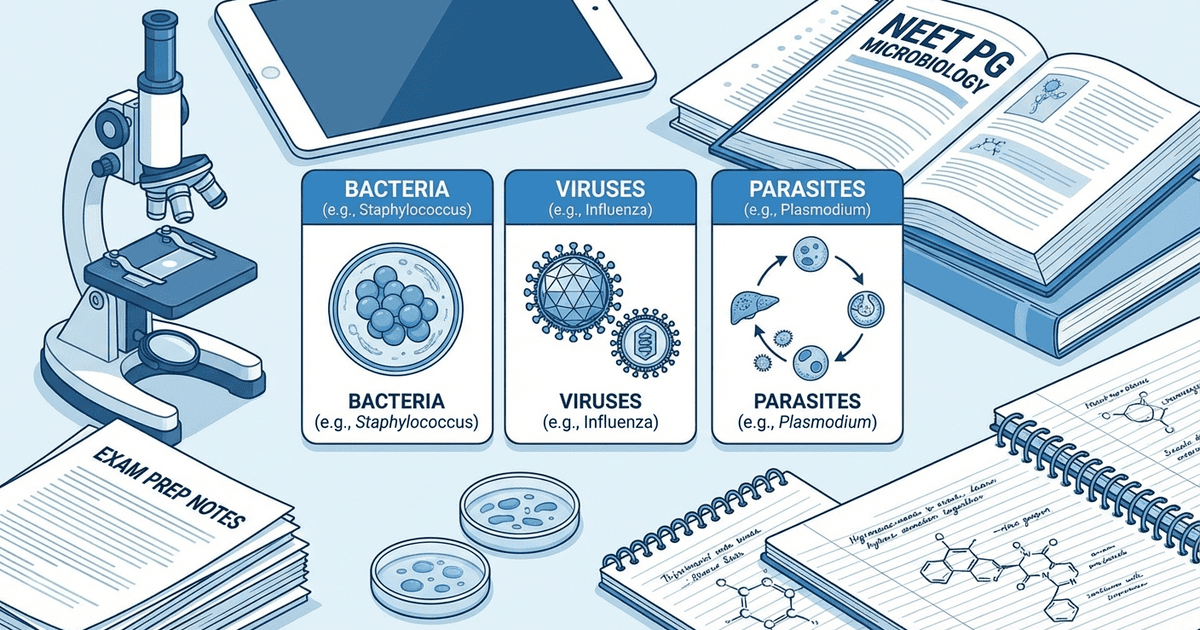
Microbiology consistently ranks among the top-scoring subjects in NEET-PG, contributing 10-12 questions annually. Yet many candidates struggle with the overwhelming number of organisms, complex lifecycles, and diagnostic criteria. Here's the truth: microbiology NEET PG preparation isn't about memorizing every organism – it's about mastering the high-yield buzzwords, understanding exam patterns, and using smart retention strategies.
After analyzing the last five years of NEET-PG papers, certain organisms and concepts appear repeatedly. This guide breaks down the high-yield microbiology NEET PG topics, essential buzzwords, and proven study strategies that can help you score 8-10 marks consistently in this subject.
Understanding NEET PG Microbiology Exam Pattern
Component | Weightage | Key Focus Areas |
|---|---|---|
Bacteriology | 40-50% | Gram-positive cocci, Enterobacteriaceae, Anaerobes |
Virology | 25-30% | DNA/RNA viruses, Hepatitis panel, CNS infections |
Parasitology | 15-20% | Protozoa lifecycles, Helminths, Vector-borne diseases |
Mycology | 10-15% | Systemic mycoses, Candida, Dermatophytes |
The exam heavily favors organism-specific facts, diagnostic methods, and clinical correlations. Microbiology mnemonics for medical exams become crucial for rapid recall during the 3.5-hour time crunch.
High-Yield Bacteriology: The Big Scorers
Gram-Positive Cocci: NEET PG Favorites
Staphylococcus aureus appears in 2-3 questions every year. Master these buzzwords:
Coagulase positive (vs. CoNS)
Golden yellow colonies on blood agar
Protein A - binds IgG Fc region
PVL toxin - necrotizing pneumonia
TSST-1 - toxic shock syndrome
MRSA: mecA gene, vancomycin treatment
Streptococcus pyogenes (Group A Strep):
β-hemolytic on blood agar
Bacitracin sensitive (vs. Group B)
M protein - major virulence factor
ASO titer elevation in rheumatic fever
Erythrogenic toxin - scarlet fever rash
Practice these concepts with Oncourse bacteriology lessons and reinforce through bacteriology MCQs.
Enterobacteriaceae: The Clinical Correlators
This family dominates UTI and gastroenteritis questions. Focus on:
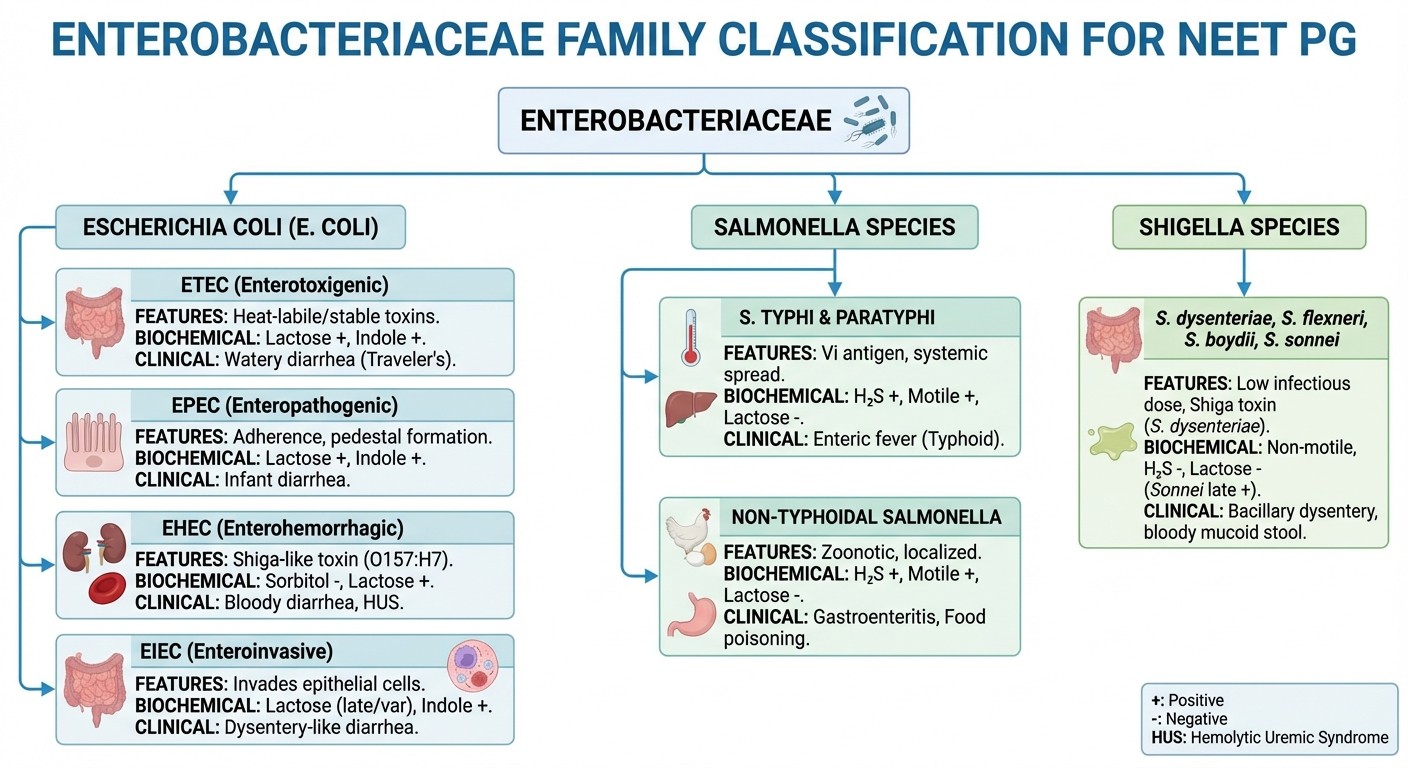
E. coli:
ETEC: Heat-labile/stable toxins, traveler's diarrhea
EPEC: Adherence, infantile diarrhea
EHEC: Shiga-like toxin, HUS, bloody diarrhea
EIEC: Invasion, dysentery-like illness
Salmonella:
Non-lactose fermenting
H2S positive on TSI
Typhi: Vi antigen, rose spots, Widal test
Paratyphi: Milder typhoid syndrome
Shigella:
Non-motile (vs. Salmonella)
Glucose positive, lactose negative
Shiga toxin - dysenteriae serotype
Person-to-person spread
Anaerobes: The Forgotten High-Yielders
Clostridium difficile questions have surged post-COVID:
Pseudomembranous colitis
Toxin A & B detection
Metronidazole/vancomycin resistance patterns
Spore-forming - alcohol-based sanitizers ineffective
Bacteroides fragilis:
Most common anaerobic pathogen
Bile-tolerant
β-lactamase producer
Intra-abdominal infections
Virology: Board Favorites and Buzzwords
DNA Viruses: The Usual Suspects
Hepatitis B Virus dominates hepatitis questions:
Marker | Acute | Chronic | Recovered | Vaccinated |
|---|---|---|---|---|
HBsAg | + | + | - | - |
Anti-HBs | - | - | + | + |
Anti-HBc IgM | + | - | - | - |
Anti-HBc IgG | + | + | + | - |
HBeAg | + | +/- | - | - |
Epstein-Barr Virus (EBV):
Heterophile antibodies - monospot test
Atypical lymphocytes - Downey cells
Burkitt lymphoma association
Nasopharyngeal carcinoma (endemic areas)
RNA Viruses: The Clinical Correlators
Dengue Virus (increasing NEET-PG frequency):
Flavivirus family
Aedes aegypti vector
NS1 antigen - early detection
Tourniquet test - capillary fragility
Thrombocytopenia - key lab finding
Rotavirus:
Double-stranded RNA
Leading cause infantile gastroenteritis
Wheel-like electron microscopy
Oral rehydration mainstay treatment
Strengthen your virology concepts through virology lessons and test retention with virology practice questions.
Parasitology: Lifecycle Mnemonics That Work
Bacteriology virology parasitology NEET PG questions often focus on diagnostic stages and vector relationships.
Protozoan Parasites: The Lifecycle Masters
Plasmodium falciparum:
Most severe malaria species
No relapse (liver forms absent)
Banana-shaped gametocytes
Cerebral malaria complication
Mnemonic for Plasmodium species severity: "Falciparum Vivax Ovale Malariae" = "Fatal Very Often Mild" Entamoeba histolytica:
Flask-shaped ulcers in colon
Trophozoites with ingested RBCs
Liver abscess - "anchovy sauce"
Metronidazole treatment
Helminths: The Vector Relationships
Wuchereria bancrofti:
Culex mosquito vector
Nocturnal periodicity
Microfilariae in blood smears
Elephantiasis chronic manifestation
Taenia solium:
Pork tapeworm
Cysticercosis - larval stage in humans
Neurocysticercosis - brain involvement
"Swiss cheese" brain on imaging
Use parasitology flashcards for lifecycle memorization and parasitology MCQs for concept testing.
Mycology: The Underestimated Section
Systemic Mycoses: Geographic Correlations
Histoplasma capsulatum:
Ohio/Mississippi River Valley
Bird/bat droppings association
Macrophages with intracellular yeasts
"Sailor's wheel" appearance
Cryptococcus neoformans:
Pigeon droppings source
India ink preparation - capsule
Immunocompromised patients
CSF involvement common
Superficial Mycoses: The Clinical Presentations
Candida albicans:
Germ tube test positive
Pseudohyphae formation
Thrush - oral manifestation
KOH preparation - budding yeasts
NEET PG Microbiology Buzzwords Checklist
Master these high-frequency terms that appear across multiple questions:
Diagnostic Tests
Coagulase test - S. aureus
Catalase test - Staphylococcus vs. Streptococcus
Oxidase test - Pseudomonas positive
Urease test - H. pylori, Proteus
CAMP test - Group B Streptococcus
Culture Media
Blood agar - hemolysis patterns
MacConkey agar - lactose fermentation
Chocolate agar - fastidious organisms
Mannitol salt agar - Staphylococcus selection
Thayer-Martin agar - Neisseria isolation
Molecular Markers
16S rRNA - bacterial identification
mecA gene - MRSA detection
vanA gene - VRE resistance
CTX-M - ESBL production
NDM-1 - carbapenemase
Smart Study Strategies for Long-Term Retention
The Oncourse Advantage: AI-Powered Learning
Traditional microbiology preparation relies heavily on rote memorization, leading to rapid forgetting. Oncourse revolutionizes this approach through:
1. Spaced Repetition Science
40,000+ high-yield flashcards with optimized intervals
AI-powered scheduling based on your performance
Organism-specific cards covering buzzwords, diagnostics, and clinical correlations
2. Rezzy AI Explanations
Instant clarifications on complex lifecycle diagrams
Comparative analysis between similar organisms
Clinical correlation explanations for better retention
3. Adaptive Learning
Weakness identification through performance analytics
Focused review sessions for challenging topics
Progress tracking across bacteriology, virology, and parasitology
The Buzzword Method
Create organism-specific buzzword lists and review them daily:
Example - Vibrio cholerae:
Comma-shaped
Alkaline peptone water
Rice-water stools
Cholera toxin
Oral rehydration therapy
Clinical Integration Strategy
Link every organism to its clinical presentation:
S. pyogenes → Pharyngitis, Rheumatic fever
E. coli O157:H7 → Bloody diarrhea, HUS
C. neoformans → Immunocompromised, Meningitis
Common NEET PG Microbiology Traps
Trap 1: Similar-Sounding Organisms
Cryptococcus vs. Histoplasma - both cause pulmonary infections
Shigella vs. Salmonella - both cause gastroenteritis
Group A vs. Group B Strep - hemolysis patterns differ
Trap 2: Diagnostic Test Confusion
Coagulase (S. aureus) vs. Catalase (all Staphylococci)
Oxidase positive - Pseudomonas, Vibrio, Neisseria
H2S production - Salmonella, Proteus, but NOT Shigella
Trap 3: Treatment Mismatches
MRSA - vancomycin, NOT methicillin
Pseudomonas - anti-pseudomonal β-lactams
Anaerobes - metronidazole, NOT aminoglycosides
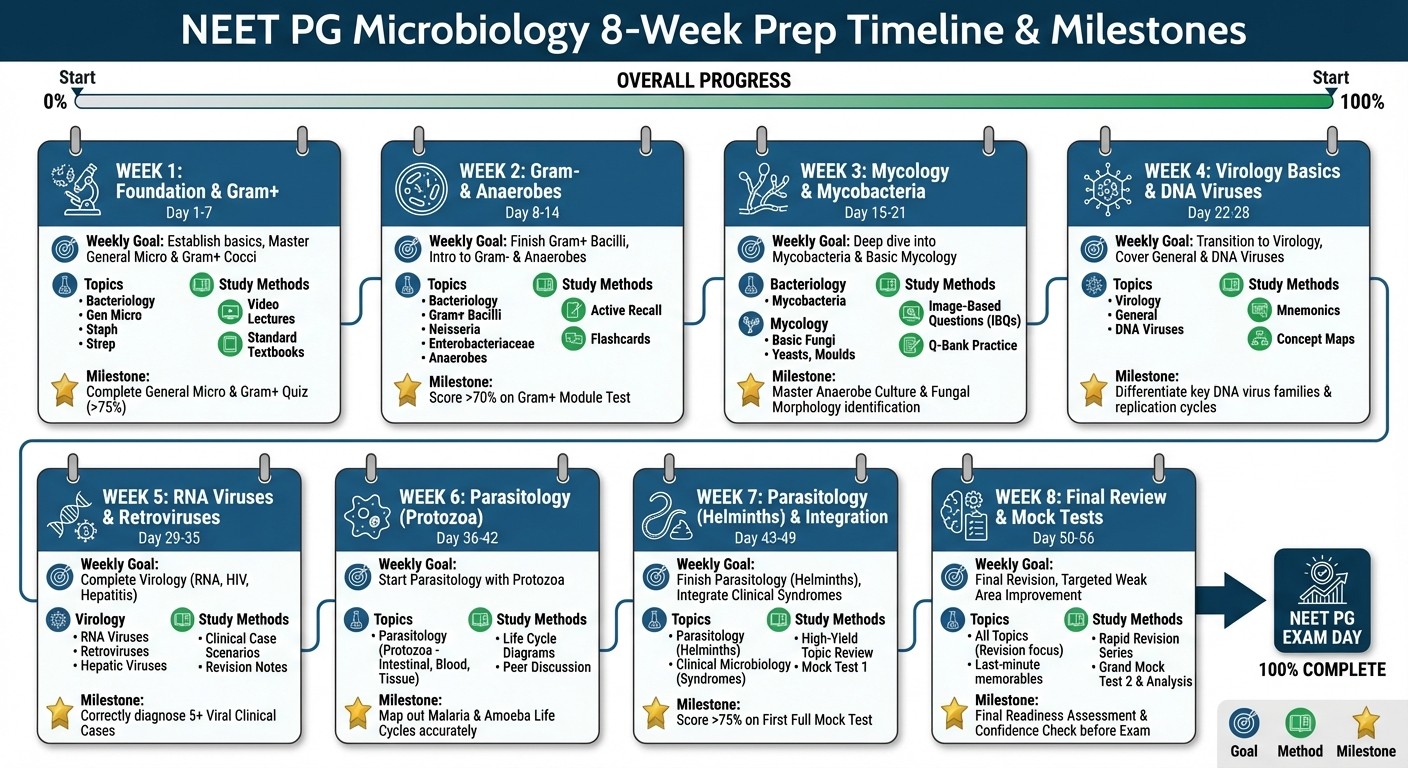
Creating Your 60-Day Microbiology Study Plan
Weeks 1-2: Foundation Building
Complete bacteriology lessons on Oncourse
Create organism-specific buzzword lists
Practice basic bacteriology MCQs
Weeks 3-4: Virology Mastery
Focus on virology concepts
Memorize hepatitis markers table
Use virology flashcards daily
Weeks 5-6: Parasitology Deep Dive
Master lifecycle diagrams through parasitology lessons
Create vector-pathogen association charts
Practice parasitology questions intensively
Weeks 7-8: Integration & Revision
Mixed practice sessions across all topics
Focus on weak areas identified by Oncourse analytics
Final buzzword revision using spaced repetition
Last-Minute Revision Strategy
The 48-Hour Formula
Day 1: High-yield organisms only
Review buzzword lists for top 20 organisms
Practice diagnostic test mnemonics
Quick MCQ rounds using Oncourse mobile app
Day 2: Clinical correlations
Link organisms to clinical syndromes
Review treatment algorithms
Final flashcard revision using spaced repetition
Mobile Learning with Oncourse
Download the Oncourse app for:
Offline flashcard access during commute
Quick MCQ sessions between study breaks
Rezzy AI consultations for last-minute doubts
Your Path to Microbiology Mastery
Microbiology success in NEET-PG isn't about memorizing textbooks – it's about strategic preparation focusing on high-yield organisms, mastering buzzwords, and using smart retention techniques. The combination of traditional study methods with AI-powered platforms like Oncourse creates a powerful learning ecosystem.
Key takeaways for microbiology NEET PG preparation:
1. Focus on the top 50 organisms that appear repeatedly
2. Master buzzwords for rapid question solving
3. Use spaced repetition for long-term retention
4. Practice clinical correlation regularly
5. Leverage AI explanations for complex concepts
With Oncourse's 40,000+ flashcards, AI-powered explanations, and adaptive learning system, you can transform microbiology from a memorization nightmare into your highest-scoring subject. The platform's free tier provides access to essential study materials, while premium features unlock unlimited AI consultations and personalized learning paths.
Ready to master microbiology for NEET-PG 2026? Start your journey with Oncourse today. Download the app, access free microbiology lessons, and experience how AI-powered learning can revolutionize your preparation. Your dream PG seat is just smart preparation away.
---
Join 10,000+ medical students who've transformed their NEET-PG preparation with Oncourse. Free tier available with premium plans for comprehensive features.