Back
How to Study Rheumatology for USMLE Step 2 CK 2026: High-Yield Topics, Clinical Vignette Strategy and Exam Checklist
Master rheumatology for USMLE Step 2 CK with this complete 2026 guide. Learn high-yield autoimmune diseases, crystal arthropathies, vasculitis patterns, and proven clinical vignette strategies.
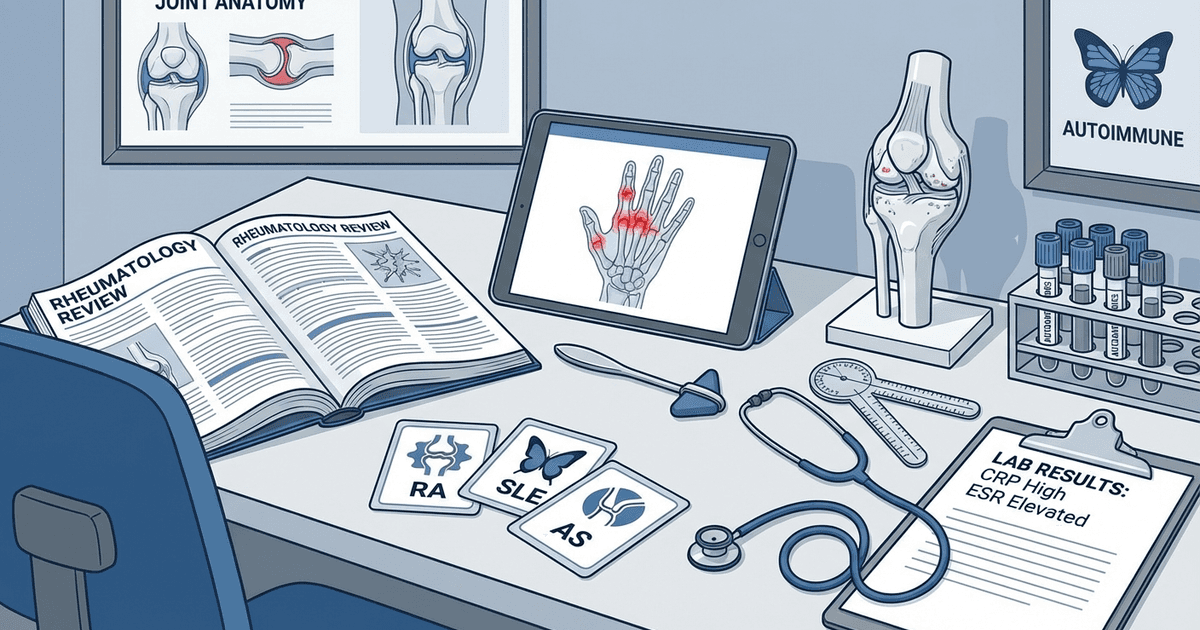
How to Study Rheumatology for USMLE Step 2 CK 2026: High-Yield Topics, Clinical Vignette Strategy and Exam Checklist
You are probably staring at your Step 2 CK content outline, seeing "rheumatology" tucked between cardiology and endocrinology, wondering if you can skip it. Bad news: you cant. Rheumatology shows up in 15-20 questions on test day — enough to swing your score by 10-15 points. Unlike other specialties with dominant resources, rheumatology requires strategic studying across scattered high-yield topics.
Step 2 CK tests rheumatology differently than Step 1. Instead of memorizing pathways, you need to recognize clinical presentations, interpret lab patterns, and make management decisions. The questions are clinical vignettes — real patients with joint pain, rashes, and organ involvement. Miss the pattern recognition, miss the points.
This guide covers exactly what matters for Step 2 CK: the 12 highest-yield rheumatologic diseases, how to approach clinical vignettes systematically, and a pre-exam checklist to ensure you dont leave points on the table.
Why Rheumatology Is High-Yield for Step 2 CK
Step 2 CK loves rheumatology because it tests clinical reasoning across multiple organ systems. A single SLE vignette can test nephrology (lupus nephritis), dermatology (malar rash), hematology (thrombocytopenia), and rheumatology (joint pain) — exactly what Step 2 CK measures.
The questions follow predictable patterns:
Autoimmune overlap syndromes: RA vs SLE vs Sjogren vs Scleroderma
Crystal arthropathies: Gout vs Pseudogout — crystal type and joint distribution
Vasculitis by vessel size: Large (GCA/Takayasu), medium (PAN), small (ANCA-associated)
Seronegative spondyloarthropathies: AS, PsA, ReA, IBD-associated arthritis
First-line management decisions: When to start methotrexate, when to refer urgently, when to drain joints
Most students underestimate rheumatology because internal medicine rotations dont emphasize it. But Step 2 CK questions are written by rheumatologists who know exactly which clinical pearls separate strong from weak test-takers.
High-Yield Disease Categories
Autoimmune Connective Tissue Disorders
Rheumatoid Arthritis (RA)
Clinical pattern: Symmetric PIP/MCP joint involvement, morning stiffness >1 hour, rheumatoid nodules
Labs: Positive RF (70-80%), anti-CCP (more specific), elevated ESR/CRP
Extra-articular: Pulmonary nodules, pleural effusion, pericarditis, dry eyes (secondary Sjogren)
First-line treatment: Methotrexate (DMARD), not just NSAIDs
Step 2 CK pearl: Anti-CCP is more specific than RF — if both positive, think RA over lupus
Systemic Lupus Erythematosus (SLE)
Clinical criteria: Malar rash, discoid rash, photosensitivity, oral ulcers, arthritis, serositis, renal involvement, neurologic involvement
Labs: ANA positive (95%), anti-dsDNA (specific for SLE), anti-Sm (highly specific), low complement (C3/C4)
Lupus nephritis: Proteinuria, hematuria, hypertension — requires renal biopsy and aggressive immunosuppression
Drug-induced lupus: Hydralazine, procainamide, isoniazid — anti-histone antibodies positive, kidney sparing
Management: Hydroxychloroquine (mild), methotrexate (moderate), biologics (severe)
When reviewing rheumatology autoimmune diseases, the pattern recognition between RA and SLE often trips students up — Oncourse AI explanations break down why joint distribution (symmetric vs asymmetric) and antibody patterns (anti-CCP vs anti-dsDNA) point to specific diagnoses. Sjogren Syndrome
Primary complaint: Dry eyes (keratoconjunctivitis sicca) and dry mouth (xerostomia)
Labs: Anti-Ro/SSA and anti-La/SSB antibodies, positive RF, positive ANA
Complications: Lymphoma (especially MALT), peripheral neuropathy, interstitial lung disease
Associated conditions: Often secondary to RA or SLE
Systemic Sclerosis (Scleroderma)
Limited cutaneous (lcSSc/CREST): Calcinosis, Raynaud, Esophageal dysmotility, Sclerodactyly, Telangiectasias
Diffuse cutaneous (dcSSc): Proximal skin involvement, pulmonary fibrosis, scleroderma renal crisis
Labs: Anti-centromere (limited), anti-Scl-70/topoisomerase (diffuse), anti-RNA polymerase III (renal crisis)
Management: ACE inhibitors for renal crisis, immunosuppression for lung involvement
Crystal Arthropathies
Gout
Crystal type: Monosodium urate (MSU) — negatively birefringent under polarized light
Joint pattern: First MTP joint (podagra) most common, can affect any joint
Clinical phases: Asymptomatic hyperuricemia → acute gout attacks → intercritical periods → chronic tophaceous gout
Acute treatment: NSAIDs, colchicine, or corticosteroids — never start allopurinol during acute attack
Chronic management: Allopurinol (xanthine oxidase inhibitor) target uric acid <6 mg/dL
Pseudogout (CPPD)
Crystal type: Calcium pyrophosphate dihydrate — positively birefringent under polarized light
Joint pattern: Knees most common, can mimic RA or osteoarthritis
X-ray finding: Chondrocalcinosis (calcification of fibrocartilage, especially menisci)
Associated conditions: Hyperparathyroidism, hemochromatosis, hypothyroidism
Treatment: NSAIDs, colchicine — no uric acid lowering therapy
Seronegative Spondyloarthropathies
All share: Asymmetric large joint arthritis, axial involvement, HLA-B27 association, negative RF, extra-articular manifestations (eye, skin, GI).
Ankylosing Spondylitis (AS)
Demographics: Young men (3:1), onset <40 years
Clinical: Inflammatory back pain (improves with exercise, worse at rest), reduced spinal mobility
X-ray: Bamboo spine, sacroiliitis, syndesmophytes
Extra-articular: Anterior uveitis (25%), aortic regurgitation, apical pulmonary fibrosis
Treatment: NSAIDs, anti-TNF agents (adalimab, infliximab)
Psoriatic Arthritis (PsA)
Joint patterns: DIP involvement, asymmetric oligoarthritis, symmetric polyarthritis, arthritis mutilans, axial
Skin: Psoriatic plaques often precede arthritis, nail pitting/onycholysis
X-ray: "Pencil-in-cup" deformity, ankylosis
Treatment: Methotrexate, anti-TNF agents
Reactive Arthritis (ReA)
Triggers: GI infections (Salmonella, Shigella, Campylobacter) or GU infections (Chlamydia)
Classic triad: Arthritis, urethritis, conjunctivitis ("cant see, cant pee, cant climb a tree")
Extra-articular: Keratoderma blennorrhagicum, circinate balanitis, oral ulcers
Treatment: NSAIDs, treat underlying infection if persistent
Vasculitis by Vessel Size
Large Vessel Giant Cell Arteritis (GCA)
Demographics: >50 years, females 3:1
Clinical: Temporal headache, jaw claudication, vision changes (emergency!), scalp tenderness
Labs: Markedly elevated ESR (often >100), elevated CRP
Diagnosis: Temporal artery biopsy within 72 hours of steroid initiation
Treatment: High-dose corticosteroids immediately — dont wait for biopsy if vision threatened
Takayasu Arteritis
Demographics: Young Asian women <40 years
Clinical: Arm claudication, blood pressure discrepancies between arms, bruits
Imaging: Angiography shows aortic arch vessel stenosis
Treatment: Corticosteroids, methotrexate
Medium Vessel Polyarteritis Nodosa (PAN)
Clinical: Systemic symptoms, skin nodules, mononeuritis multiplex, mesenteric ischemia
Labs: Negative ANCA (distinguishes from microscopic polyangiitis)
Associated: Hepatitis B infection (30%)
Treatment: Corticosteroids, cyclophosphamide
Small Vessel (ANCA-Associated) Granulomatosis with Polyangiitis (GPA/Wegener)
Triad: Upper respiratory tract, lower respiratory tract, kidneys
Labs: c-ANCA positive (anti-PR3), tissue shows necrotizing granulomatous inflammation
Treatment: Cyclophosphamide induction, methotrexate maintenance
Eosinophilic Granulomatosis with Polyangiitis (EGPA/Churg-Strauss)
Clinical: Asthma, eosinophilia, neuropathy, cardiac involvement
Labs: p-ANCA positive (anti-MPO) in 50%
Treatment: Corticosteroids, cyclophosphamide for organ-threatening disease
Microscopic Polyangiitis (MPA)
Clinical: Rapidly progressive glomerulonephritis, pulmonary capillaritis
Labs: p-ANCA positive (anti-MPO)
Treatment: Cyclophosphamide, corticosteroids
Inflammatory Myopathies
Polymyositis vs Dermatomyositis
Polymyositis: Proximal muscle weakness, elevated CK, muscle biopsy shows inflammation
Dermatomyositis: Same as polymyositis PLUS skin findings
Dermatomyositis skin signs: Gottron papules (knuckles), heliotrope rash (eyelids), shawl sign, mechanic hands
Associated malignancy: Dermatomyositis (especially ovarian, lung, breast), less with polymyositis
Treatment: Corticosteroids, methotrexate, screen for malignancy in dermatomyositis
Clinical Vignette Strategy for Step 2 CK
Step 2 CK rheumatology questions test clinical decision-making, not just pattern recognition. Here's how to approach them systematically.
Step 1: Demographics and Timeline
Age/gender: AS (young men), GCA (elderly women), SLE (young women)
Acute vs chronic: Gout flares acutely, OA develops insidiously
Symptom duration: Inflammatory arthritis (morning stiffness >1 hour), mechanical arthritis (end-of-day pain)
Step 2: Joint Distribution Pattern
Symmetric small joints: RA, SLE
Asymmetric large joints: Seronegative spondyloarthropathies
DIP involvement: Osteoarthritis, psoriatic arthritis
First MTP: Gout until proven otherwise
Axial involvement: Seronegative spondyloarthropathies
Step 3: Organ System Involvement
Skin: Malar rash (SLE), psoriasis (PsA), nodules (RA, gout tophi)
Eyes: Dry eyes (Sjogren), uveitis (AS, ReA), vision loss (GCA — emergency)
Kidneys: Lupus nephritis, ANCA-associated vasculitis
Lungs: RA (nodules), scleroderma (fibrosis), GPA (nodules/hemorrhage)
GI: Scleroderma (dysmotility), IBD (associated arthritis)
Step 4: Laboratory Interpretation
Always look for patterns, not isolated values:
ANA + anti-dsDNA + low complement: SLE
RF + anti-CCP: RA
Anti-centromere: Limited scleroderma (CREST)
Anti-Scl-70: Diffuse scleroderma
c-ANCA (anti-PR3): GPA
p-ANCA (anti-MPO): MPA, EGPA
Step 5: Management Decision
Step 2 CK tests what you do next, not just diagnosis:
Acute gout: NSAIDs/colchicine/steroids — never allopurinol
New RA: Start methotrexate early
GCA with vision symptoms: High-dose steroids immediately
Lupus nephritis: Renal biopsy, aggressive immunosuppression
Joint effusion: Always aspirate if infection suspected
Laboratory Patterns That Win Points
ANA Patterns and Associated Diseases
ANA Pattern | Associated Disease | Additional Testing |
|---|---|---|
Homogeneous | SLE, drug-induced lupus | Anti-dsDNA, anti-histone |
Speckled | Mixed connective tissue disease, Sjogren | Anti-Sm, anti-RNP, anti-Ro/La |
Nucleolar | Scleroderma | Anti-Scl-70, anti-centromere |
Centromere | Limited scleroderma (CREST) | Anti-centromere |
ANCA Patterns
c-ANCA (cytoplasmic): Anti-PR3 antibodies → GPA (Wegener)
p-ANCA (perinuclear): Anti-MPO antibodies → MPA, EGPA (Churg-Strauss)
For complex serology patterns like these, spaced repetition flashcards help cement the associations — Oncourse AI's algorithm resurfaces the exact antibody-disease pairs you keep missing until they stick.
Complement Levels
Low C3/C4: Active SLE (consumed in immune complex formation)
Normal complement: Most other rheumatologic diseases
Low C3, normal C4: Membranoproliferative glomerulonephritis
Crystal Analysis
Gout: Needle-shaped, negatively birefringent monosodium urate crystals
Pseudogout: Rod-shaped, positively (weakly) birefringent calcium pyrophosphate dihydrate crystals
Septic arthritis: >50,000 WBC, >75% neutrophils, positive gram stain/culture
Treatment Strategies and First-Line Therapies
DMARDs (Disease-Modifying Antirheumatic Drugs)
Methotrexate: First-line for RA, psoriatic arthritis — monitor LFTs, add folic acid
Hydroxychloroquine: First-line for SLE — monitor for retinal toxicity
Sulfasalazine: IBD-associated arthritis, AS
Leflunomide: Alternative to methotrexate
Biologics
Anti-TNF: Adalimab, infliximab, etanercept — for RA, AS, PsA when methotrexate insufficient
IL-6 inhibition: Tocilizumab — for RA, GCA
B-cell depletion: Rituximab — for RA, ANCA-associated vasculitis
Complement inhibition: Eculizumab — for atypical HUS
Acute Management
Gout flare: NSAIDs (indomethacin), colchicine, corticosteroids
RA flare: Corticosteroids (bridge therapy), increase DMARD
Lupus flare: Corticosteroids, may need immunosuppression escalation
GCA: High-dose prednisolone 1mg/kg immediately
When drilling rheumatology practice questions, treatment decisions often hinge on disease activity and organ involvement — Oncourse AI's explanations detail exactly why methotrexate beats biologics for first-line RA therapy, breaking down cost-effectiveness and side effect profiles.
Emergency Scenarios
Recognize these immediately:
GCA with vision changes: Steroid-responsive emergency
Scleroderma renal crisis: Malignant hypertension, microangiopathic hemolytic anemia — ACE inhibitors
Septic arthritis: Joint aspiration, antibiotics within 6 hours
Antiphospholipid syndrome with thrombosis: Anticoagulation
Pre-Exam Checklist: 21 Days Out
Week 3: Foundation Building
[ ] Complete 40-50 rheumatology MCQs to identify weak areas
[ ] Memorize autoantibody associations (ANA patterns, ANCA, RF/anti-CCP)
[ ] Practice crystal arthropathy differentiation (MSU vs CPPD)
[ ] Review vasculitis by vessel size classification
Week 2: Pattern Recognition
[ ] Drill joint distribution patterns (symmetric vs asymmetric, small vs large)
[ ] Practice interpreting synovial fluid analysis
[ ] Review skin manifestations (malar rash, Gottron papules, psoriatic plaques)
[ ] Memorize HLA-B27 associations and extra-articular features
Week 1: Clinical Decision Making
[ ] Practice management decisions (when to start DMARDs, when to refer)
[ ] Review emergency scenarios (GCA, scleroderma renal crisis)
[ ] Final pass through drug-induced lupus triggers
[ ] Complete timed rheumatology question sets
Day Before Exam
[ ] Quick review of treatment contraindications (methotrexate + pregnancy, TNF inhibitors + active infections)
[ ] Scan through high-yield lab values one final time
[ ] Rest — you know this material
Common Step 2 CK Rheumatology Mistakes
Diagnostic Errors
Mistaking fibromyalgia for inflammatory arthritis: Fibromyalgia doesnt cause joint swelling or elevated inflammatory markers
Missing drug-induced lupus: Always ask about hydralazine, procainamide, isoniazid
Confusing crystal types: MSU (gout) = negatively birefringent, CPPD (pseudogout) = positively birefringent
Overlooking HLA-B27 diseases: Asymmetric arthritis + back pain in young adults
Management Errors
Starting allopurinol during acute gout: Never — will worsen the flare
Delaying steroids in GCA: Visual symptoms = emergency, start prednisone immediately
Undertreating lupus nephritis: Requires renal biopsy and aggressive immunosuppression
Missing methotrexate contraindications: Pregnancy, active liver disease, significant alcohol use
Laboratory Misinterpretation
Anti-CCP vs RF: Anti-CCP more specific for RA
ANA without specific antibodies: Not diagnostic — need anti-dsDNA, anti-Sm for SLE
Normal ESR in elderly: ESR normally rises with age — "normal" may actually be low
Complement consumption: Low C3/C4 in active SLE, normal in most other conditions
When working through challenging vignettes that test these exact decision points, Oncourse AI's adaptive daily plans ensure you get proportional rheumatology coverage based on your current performance — no cramming random questions the week before your exam.
Beyond Step 2 CK: Clinical Pearls
These insights come from rheumatology attendings and rarely appear in textbooks:
Joint Examination Clues
Boggy synovitis: Inflammatory arthritis (RA, lupus)
Hard bony enlargement: Osteoarthritis
Joint line tenderness: Meniscal tears, not arthritis
Warmth and erythema: Septic arthritis, gout, rarely RA
Medication Pearls
Hydroxychloroquine: Takes 3-6 months to work — dont stop too early
Methotrexate: Always give folic acid 5mg weekly to prevent side effects
TNF inhibitors: Screen for latent TB, hepatitis B/C before starting
Prednisone taper: Dont stop abruptly after >3 weeks — risk adrenal insufficiency
Red Flags for Immediate Rheumatology Referral
Monoarticular arthritis in young adults (rule out infection)
New neurologic symptoms with positive ANA (CNS lupus)
Rapidly progressive glomerulonephritis (ANCA-associated vasculitis)
Vision changes with temporal headaches (GCA)
Frequently Asked Questions
How many rheumatology questions are on Step 2 CK?
Expect 15-20 rheumatology questions on your 318-question exam. This represents roughly 5-6% of total questions — enough to significantly impact your score if you struggle with the topic.
Should I focus more on diagnosis or management for rheumatology?
Step 2 CK emphasizes management decisions. While you need to recognize classic presentations, questions often test what to do next: when to start DMARDs, when to aspirate joints, when to refer emergently.
Which rheumatology resource is most high-yield for Step 2 CK?
No single resource dominates rheumatology like Pathoma does for pathology. Use a combination of question banks, focused review materials, and clinical cases to build pattern recognition across the spectrum of rheumatologic diseases.
How do I differentiate overlapping autoimmune diseases?
Focus on specific antibodies and organ involvement patterns. SLE has kidney involvement and anti-dsDNA, RA has symmetric joint involvement and anti-CCP, Sjogren has sicca symptoms and anti-Ro/La.
What's the most commonly missed rheumatology topic on Step 2 CK?
Vasculitis classification and ANCA patterns. Students often confuse GPA (c-ANCA, upper/lower respiratory tract) with MPA (p-ANCA, kidney/lung) because both affect lungs and kidneys.
How important are X-ray findings for rheumatology questions?
Very important. Learn to recognize bamboo spine (AS), erosions at PIP/MCP (RA), chondrocalcinosis (pseudogout), and sacroiliitis patterns. Step 2 CK frequently provides imaging as the diagnostic clue.
Prepare smarter with Oncourse AI — adaptive MCQs, spaced repetition, and AI explanations built for USMLE Step 2 CK. Download free on Android and iOS.