Back
Gynecomastia in NEET PG: 40-Year-Old Male with Breast Tissue — Causes, Drug Culprits & High-Yield MCQ Guide (2026)
Master gynecomastia for NEET PG 2026: pathophysiology, drug causes (spironolactone, ketoconazole), clinical presentation, management, and high-yield MCQ patterns. Complete guide with practice questions.
Gynecomastia in NEET PG: 40-Year-Old Male with Breast Tissue — Causes, Drug Culprits & High-Yield MCQ Guide (2026)
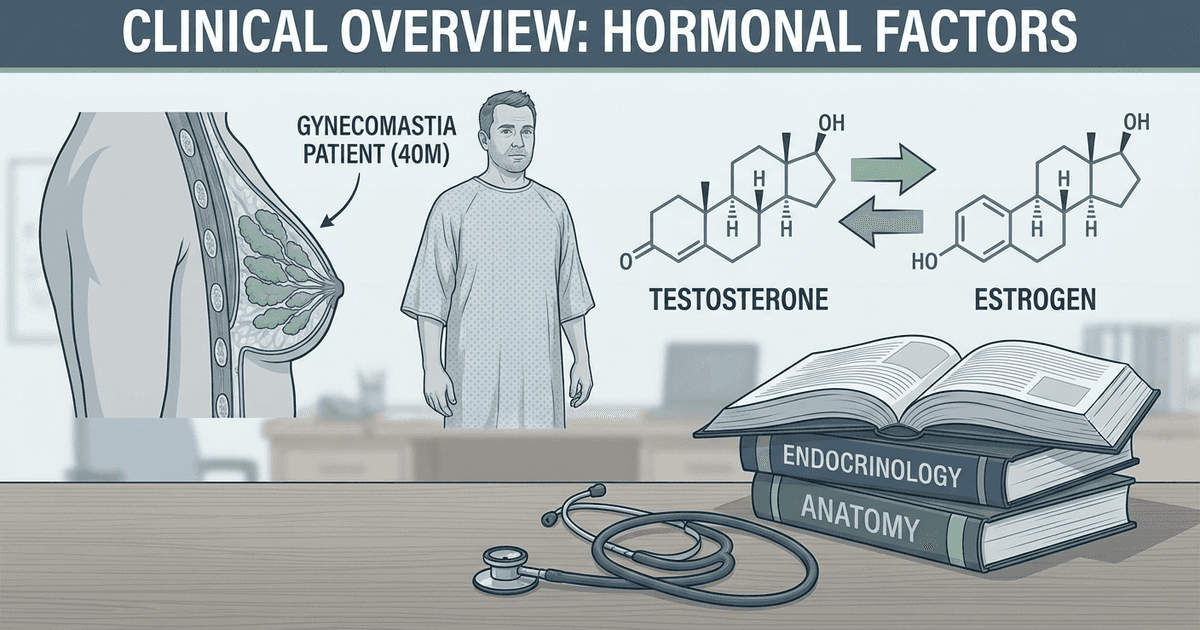
You are probably seeing this scenario in your NEET PG practice tests: "A 40-year-old male presents with bilateral breast enlargement..." Your brain immediately goes to cancer, but wait. Gynecomastia questions appear in 8-12% of surgery and medicine papers, and they love testing the drug causes. Miss the spironolactone connection, lose 4 marks.
NEET PG examiners have a pattern. They give you a middle-aged male with breast tissue and expect you to work backwards through the hormonal chaos. The pathophysiology isnt rocket science — its an estrogen-to-testosterone ratio gone wrong. But the drug list? That is where students crash and burn.
Here is what really matters: gynecomastia affects 60-70% of adolescent males and up to 65% of men over 50. When you see it in a 40-year-old, think drugs first, then pathology. The exam wants you to nail the mechanism, spot the culprit medications, and know when to worry about malignancy.
What is Gynecomastia? The Hormonal Imbalance Behind Breast Tissue Growth
Gynecomastia is the benign enlargement of male breast tissue due to an altered estrogen-to-androgen ratio. Not pseudogynecomastia (just fat), not breast cancer — actual glandular tissue proliferation.
The core mechanism:
Normal males: testosterone >> estrogen
Gynecomastia: estrogen activity ↑ or testosterone activity ↓
Result: ductal elongation and stromal proliferation
Three phases of development: 1. Proliferative phase (first 6 months): reversible tissue growth 2. Intermediate phase (6-12 months): mixed picture 3. Fibrotic phase (>12 months): irreversible fibrosis
The exam loves testing when gynecomastia becomes irreversible. Answer: after 12 months of persistent enlargement.
Physiological Gynecomastia: When Its Normal
NEET PG will test three physiological scenarios where gynecomastia is expected:
1. Neonatal Gynecomastia (First few weeks)
Caused by maternal estrogens
Resolves spontaneously
No intervention needed
2. Pubertal Gynecomastia (10-14 years)
Affects 60-70% of boys
Peak at Tanner stage 3-4
Usually bilateral and tender
Resolves in 85% by age 17
3. Senescent Gynecomastia (>50 years)
Due to declining testosterone
Increased aromatase activity
Often requires evaluation for underlying causes
High-yield point: Pubertal gynecomastia lasting >2 years or developing after age 14 needs investigation.
Pathological Causes: The Big 4 Categories
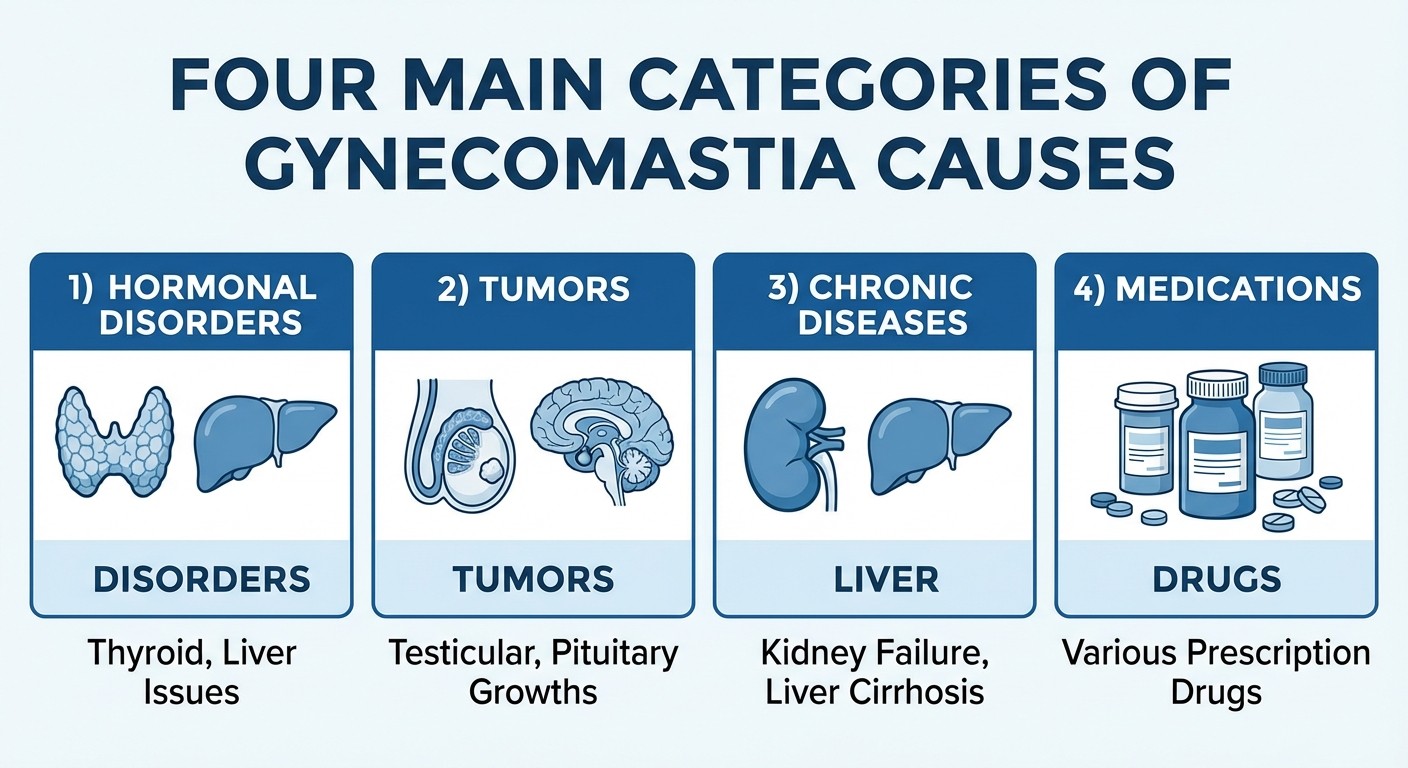
1. Hormonal Disorders
Primary hypogonadism (most common pathological cause):
Klinefelter syndrome (XXY) — think tall, small testes, gynecomastia triad
Testicular trauma, infection, or torsion
Cryptorchidism
Secondary hypogonadism:
Kallmann syndrome
Pituitary adenomas
Hyperprolactinemia
Other endocrine causes:
Hyperthyroidism: increases SHBG, reduces free testosterone
Adrenal disorders: CAH with 11β-hydroxylase deficiency
2. Tumors
Testicular tumors (5-10% of gynecomastia):
Leydig cell tumors: produce estrogen
Sertoli cell tumors: aromatase activity
HCG-secreting tumors: seminoma, embryonal carcinoma
Non-testicular HCG-secreting tumors:
Lung cancer (especially large cell)
Gastric cancer
Renal cell carcinoma
Estrogen-secreting tumors:
Adrenal adenomas
Liver tumors (rare)
3. Chronic Diseases
Liver cirrhosis (common in clinical practice):
Decreased testosterone clearance
Increased SHBG
Enhanced aromatization
Chronic kidney disease:
Uremia affects testosterone production
Secondary hyperparathyroidism
Malnutrition and refeeding:
Disrupted hormone synthesis
Rapid weight changes
4. Drugs — The High-Yield Category
This is where NEET PG gets specific. They love drug-induced gynecomastia because the mechanism varies by medication class.
Drug-Induced Gynecomastia: The Complete List
Mechanism-based classification (this is how the exam thinks):
Anti-Androgens and Hormone Modulators
Spironolactone (most common cause): blocks androgen receptors
Finasteride: 5α-reductase inhibition reduces DHT
Flutamide, bicalutamide: AR antagonists
GnRH agonists: leuprolide, goserelin
Estrogen-Like Activity
Digitalis: plant estrogens (phytoestrogens)
Marijuana: contains phytoestrogens
Anabolic steroids: aromatized to estrogen
Enzyme Inhibition
Ketoconazole: inhibits testosterone synthesis (17,20-lyase)
Metronidazole: similar mechanism
Isoniazid: interferes with androgen production
Dopamine Blockers (↑ Prolactin)
Metoclopramide
Domperidone
Antipsychotics: haloperidol, risperidone
H2 Blockers
Cimetidine: anti-androgenic activity
Ranitidine (less common)
Calcium Channel Blockers
Nifedipine
Verapamil
Diltiazem
Miscellaneous
Omeprazole: PPI with weak anti-androgenic effects
Amiodarone: iodine content affects thyroid
Tricyclic antidepressants
Chemotherapy: especially alkylating agents
Exam tip: If you see spironolactone + gynecomastia, that is the answer 95% of the time. The mechanism is direct androgen receptor blockade.
Clinical Presentation: What You Need to Recognize
History Points That Matter
Age of onset: pubertal vs adult-onset
Unilateral vs bilateral: unilateral suggests malignancy
Pain/tenderness: suggests recent, active growth
Drug history: go through the list systematically
Associated symptoms: galactorrhea (prolactin), virilization
Physical Examination
Breast examination:
- Concentric, firm, mobile disc of tissue
- Starts beneath areola
- Distinguish from lipomastia (soft, diffuse)
Testicular examination:
- Size, consistency, masses
- Klinefelter: small, firm testes (<15 mL)
Secondary sexual characteristics:
- Body hair pattern
- Voice changes
- Muscle mass
Key differentials to rule out: 1. Breast cancer: hard, fixed, eccentric mass 2. Lipomastia: soft fat without glandular tissue 3. Muscle hypertrophy: pectoralis major enlargement
Diagnostic Workup: Step-by-Step Approach
First-Line Tests
1. LH, FSH, testosterone:
- Low testosterone + high LH/FSH = primary hypogonadism
- Low testosterone + low LH/FSH = secondary hypogonadism
- Normal levels = drug-induced or idiopathic
2. Prolactin: if >25 ng/mL, investigate pituitary
3. TSH: hyperthyroidism screening
4. Liver function tests: rule out cirrhosis
5. Renal function: chronic kidney disease
Second-Line Tests (If Indicated)
Estradiol: rarely helpful unless very elevated
HCG: if tumor suspected
DHEAS: adrenal causes
Karyotype: if Klinefelter suspected
Imaging
Testicular ultrasound: if clinical suspicion of tumor
Mammography: only if malignancy suspected (unilateral, hard mass)
Chest X-ray: HCG-secreting lung tumors
Clinical pearl: Most gynecomastia (85%) is idiopathic or physiological. Extensive workup isnt always needed if history and exam are reassuring.
Management: When to Treat and How
Observation vs Intervention
Observe if:
Asymptomatic
Bilateral
<4 cm diameter
<12 months duration
No underlying pathology
Treat if:
Painful or tender
Cosmetically bothersome
Psychological impact
Persistent >2 years (in adolescents)
Medical Management
For reversible cases (<12 months):
1. Tamoxifen (first choice):
- Dose: 10-20 mg daily for 6 months
- SERM — blocks estrogen receptors in breast
- Response rate: 60-80%
2. Aromatase inhibitors (second choice):
- Anastrozole 1 mg daily
- Blocks estrogen synthesis
- Less evidence than tamoxifen
3. Androgens (limited use):
- Testosterone if hypogonadal
- Risk of aromatization to estrogen
Surgical Management
Indications:
Failed medical therapy
Fibrotic gynecomastia (>12 months)
Severe cosmetic deformity
Suspected malignancy
Procedures: 1. Subcutaneous mastectomy: removal of glandular tissue 2. Liposuction: for lipomastia component 3. Combined approach: most common for grade 2-3 Surgical grading system:
Grade 1: Small enlargement, no skin excess
Grade 2: Moderate enlargement ± skin excess
Grade 3: Marked enlargement with skin excess
High-Yield MCQ Patterns: What NEET PG Tests
Pattern 1: Drug Identification
"A 45-year-old male on treatment for heart failure develops bilateral breast enlargement. Which drug is most likely responsible?"
Answer approach:
Look for heart failure = spironolactone
Other options: digoxin (less common)
Mechanism: AR blockade vs phytoestrogens
Pattern 2: Pathophysiology
"The mechanism of spironolactone-induced gynecomastia involves:"
a) Increased estrogen synthesis
b) Androgen receptor blockade ← Correct
c) Prolactin elevation
d) Thyroid dysfunction
Pattern 3: Timing and Reversibility
"Gynecomastia becomes irreversible after:"
a) 3 months
b) 6 months
c) 12 months ← Correct
d) 24 months
Pattern 4: Clinical Scenario
"A 16-year-old boy has bilateral tender breast enlargement for 8 months. Appropriate management:"
a) Immediate surgery
b) Observation ← Correct
c) Tamoxifen
d) Testosterone therapy
Rationale: Physiological pubertal gynecomastia resolves spontaneously in 85% by age 17.
Pattern 5: Differential Diagnosis
"Which feature distinguishes gynecomastia from breast cancer in males?"
a) Bilateral presentation
b) Concentric growth from areola ← Correct
c) Size >2 cm
d) Age >40 years
Key point: Gynecomastia is concentric and mobile; cancer is eccentric, hard, and may be fixed.
Practice Questions: Test Your Knowledge
Question 1
A 42-year-old male with chronic heart failure on multiple medications develops bilateral breast enlargement over 6 months. His medications include enalapril, metoprolol, furosemide, and spironolactone. Which is the most likely cause?
a) Enalapril
b) Metoprolol
c) Furosemide
d) Spironolactone ← Correct
Explanation: Spironolactone causes gynecomastia in 5-25% of patients through androgen receptor blockade. The other medications dont typically cause gynecomastia.
Question 2
A 17-year-old male has had bilateral breast enlargement for 18 months. It started at age 15. What is the most appropriate management?
a) Observation ← Correct
b) Tamoxifen therapy
c) Surgical excision
d) Hormone replacement
Explanation: Pubertal gynecomastia can persist up to 2 years and still resolve spontaneously. Surgery is considered only after 2 years of persistence with significant cosmetic concern.
Question 3
Which investigation is most useful in a 35-year-old male with unilateral breast enlargement?
a) Serum testosterone
b) Mammography ← Correct
c) Thyroid function
d) Liver function tests
Explanation: Unilateral breast enlargement in adults raises suspicion of malignancy and requires imaging evaluation with mammography or ultrasound.
For more practice with surgery MCQs, check out our comprehensive breast surgery questions and general surgery principles to master these high-yield topics.
Red Flags: When Gynecomastia Needs Urgent Evaluation
Immediate Referral Indicators
1. Unilateral enlargement in adults 2. Hard, fixed mass on examination 3. Rapid growth over weeks 4. Nipple discharge (especially bloody) 5. Lymphadenopathy (axillary, supraclavicular) 6. Associated testicular mass
Concerning History Features
Recent onset in older men (>50 years)
Family history of breast/ovarian cancer
Previous radiation to chest
Klinefelter syndrome (higher cancer risk)
Remember: Male breast cancer accounts for <1% of all breast cancers, but unilateral gynecomastia in adults needs imaging to rule it out.
Special Considerations for NEET PG
Klinefelter Syndrome Connection
Karyotype: 47, XXY (most common)
Clinical triad: tall stature, small testes, gynecomastia
Additional features: learning difficulties, infertility
Cancer risk: 20× higher risk of breast cancer
Management: testosterone replacement + regular screening
Thyrotoxicosis and Gynecomastia
Mechanism: increased SHBG reduces free testosterone
Additional signs: weight loss, palpitations, tremor
Investigation: suppressed TSH, elevated T3/T4
Treatment: antithyroid drugs resolve gynecomastia
Liver Cirrhosis Pathophysiology
Multiple mechanisms:
- Decreased testosterone metabolism
- Increased SHBG production
- Enhanced peripheral aromatization
- Alcohol-related testicular toxicity
Study these pathways in detail with our endocrinology lessons and pharmacology modules covering drug side effects.
Frequently Asked Questions
What is the most common cause of gynecomastia in a 40-year-old male?
Drug-induced gynecomastia, particularly from spironolactone, is the leading cause in middle-aged men. Other common culprits include cimetidine, ketoconazole, and calcium channel blockers.
When does gynecomastia become irreversible?
Gynecomastia becomes irreversible after 12 months of persistent enlargement due to fibrosis replacing the initial ductal proliferation. Medical therapy is most effective within the first 6 months.
How do you differentiate gynecomastia from male breast cancer?
Gynecomastia presents as bilateral, concentric, mobile breast tissue beneath the areola. Male breast cancer is typically unilateral, hard, eccentric, and may be fixed to underlying structures with possible nipple retraction.
What is the first-line medical treatment for gynecomastia?
Tamoxifen 10-20 mg daily for 6 months is the first-line medical treatment for symptomatic or bothersome gynecomastia of less than 12 months duration.
Which hormone levels should be checked in gynecomastia evaluation?
First-line hormonal tests include testosterone, LH, FSH, and prolactin. TSH should also be checked to rule out hyperthyroidism. Estradiol is rarely helpful unless markedly elevated.
Is surgery always required for gynecomastia?
No, surgery is reserved for cases that fail medical therapy, cause significant psychological distress, or persist beyond 12-24 months (especially in adolescents). Most physiological gynecomastia resolves spontaneously.
Prepare smarter with Oncourse AI — adaptive MCQs, spaced repetition, and AI explanations built for NEET PG. Download free on Android and iOS.