Back
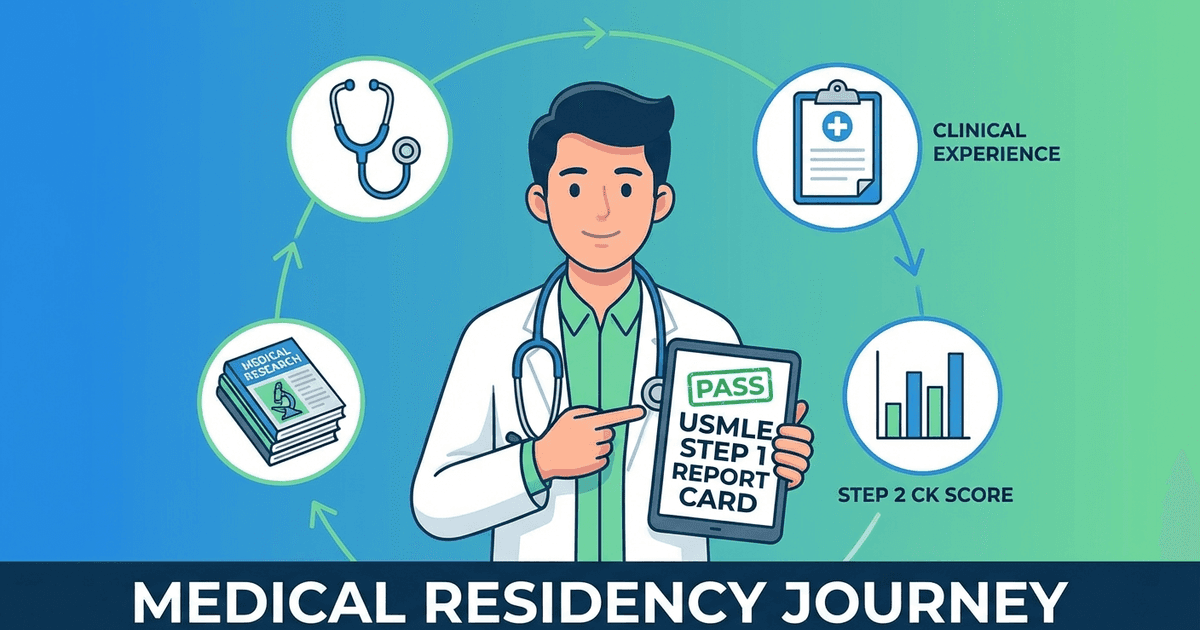
USMLE Step 1 Is Pass/Fail Now — Here's What IMGs Actually Need to Do to Match in 2026
Complete IMG matching strategy for the USMLE Step 1 pass/fail era. Step 2 CK targets, clinical experience requirements, and timeline for residency match success in 2026.
USMLE Step 1 Is Pass/Fail Now — Here's What IMGs Actually Need to Do to Match in 2026
You are probably wondering how badly the Step 1 pass/fail change screwed your chances of matching as an IMG. The answer is: it definitely changed the game, but not in the way most people think.
Here's the reality check: 43% of IMGs matched in 2024 compared to 97% of US MDs. The Step 1 scoring change didnt create this gap — it just shifted where programs look for differentiation. And honestly? That might actually work in your favor if you know what matters now.
The old system was simple: score 250+ on Step 1, check the box. The new system requires you to excel across multiple dimensions, but it also means a single mediocre Step 1 score wont kill your dreams. You just need to know exactly where to focus your energy.
How the Pass/Fail Change Actually Impacts IMGs
What Changed in January 2022
USMLE Step 1 transitioned from a 3-digit score to pass/fail reporting. This means:
No more 220, 240, or 260 scores to compare
Programs cant use Step 1 scores for initial screening filters
Step 2 CK became the primary numerical differentiator
Everything else in your application gained more weight
The Real Numbers Game Now
Without Step 1 scores, here's what residency programs actually use to screen IMGs:
Primary Filters (2024 data):
Step 2 CK Score: 89% of programs
USCE/Clinical Experience: 76% of programs
Research/Publications: 71% of programs
Letters of Recommendation: 68% of programs
Medical School Reputation: 45% of programs
The shift is obvious: Step 2 CK performance now carries the weight that Step 1 used to bear. But unlike the old system where one score dominated, you now have multiple pathways to stand out.
Your New Matching Strategy: The 4-Pillar Approach
Pillar 1: Dominate Step 2 CK (Priority #1)
Step 2 CK is now your primary weapon. The median Step 2 CK score for matched IMGs in 2024 was 247 — significantly higher than pre-2022 levels.
Target Score by Specialty:
Competitive: 260+ (Dermatology, Radiology, Emergency Medicine)
Moderate: 250+ (Internal Medicine, Family Medicine, Pediatrics)
Less Competitive: 240+ (Psychiatry, Pathology, Physical Medicine)
Study Strategy:
Dedicate 4-6 months minimum to Step 2 CK prep
Focus heavily on clinical decision-making and patient management
Use USMLE Step 2 CK practice questions to build pattern recognition
Take 3-4 practice exams before your actual test
The clinical reasoning skills you develop here directly translate to what programs want to see in residents.
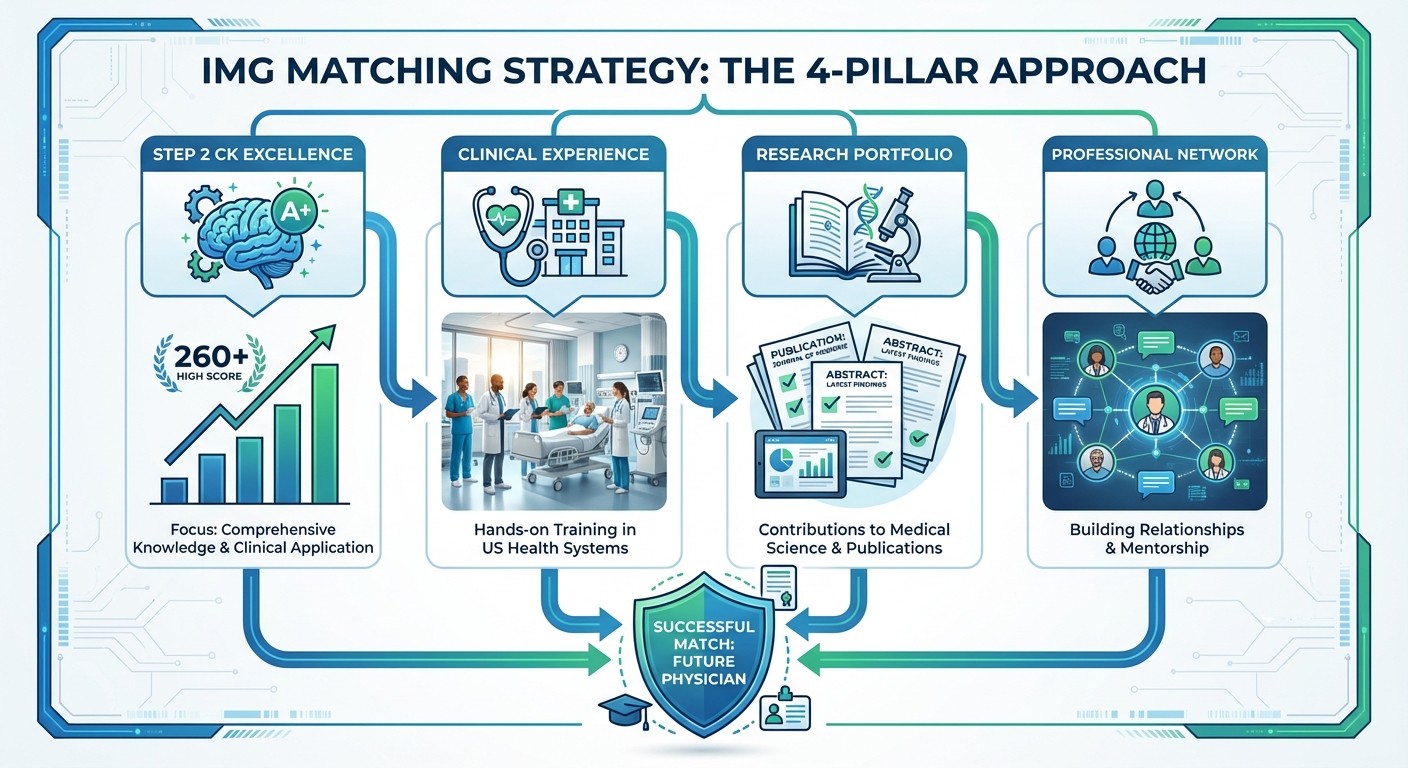
Pillar 2: Get Meaningful US Clinical Experience
US Clinical Experience (USCE) isn't just a checkbox anymore — it's often the deciding factor between similar candidates.
Types of Clinical Experience (in order of value): 1. Research with Clinical Component (12+ months): Working with attendings who can write strong letters 2. Observerships (1-2 months each): Direct patient care observation 3. Externships (4-6 weeks): Hands-on clinical rotations 4. Volunteering (ongoing): Hospital or clinic volunteer work How to Secure Clinical Experience:
Start 18-24 months before you plan to match
Apply to 50-100 programs — expect a 5-10% response rate
Focus on community hospitals and academic affiliates, not top-tier institutions initially
Network through medical school alumni, LinkedIn connections, and professional conferences
The key is getting attendings who can speak to your clinical abilities, not just observation skills.
Pillar 3: Build a Research Portfolio
Research publications give you something concrete to discuss in interviews and demonstrate your commitment to US medicine.
Research Strategy Timeline:
Year 1-2: Join 2-3 research projects as a data collector/analyst
Year 2-3: Lead 1-2 projects toward publication
Year 3: Submit abstracts to national conferences
What Counts:
PubMed-indexed publications (case reports count)
Conference presentations and posters
Meta-analyses and systematic reviews
Quality improvement projects
How to Find Research:
Email faculty at academic centers with specific project proposals
Join virtual research collaboratives
Partner with residents/fellows on ongoing projects
Focus on your target specialty's research areas
Even 2-3 publications put you ahead of most IMG applicants.
Pillar 4: Master the Application Mechanics
With increased competition, every element of your application needs optimization.
Personal Statement Strategy:
Lead with your "why US medicine" story
Include specific examples of clinical experiences
Mention research projects and outcomes
Connect your background to your specialty choice
Keep it to exactly one page
Letters of Recommendation:
3-4 letters total: 2 clinical, 1-2 research/academic
At least 1 letter from US clinical experience
Choose attendings who know your work, not famous names
Provide letter writers with your CV and personal statement
CV Optimization:
List Step scores prominently (Step 2 CK score, Step 1 "Pass")
Group research by themes (publications, presentations, ongoing)
Include specific clinical experience details (months, patient populations)
Add leadership, volunteer work, and language skills
Specialty-Specific Adjustments
For Competitive Specialties (Dermatology, Radiology, Emergency Medicine)
You need exceptional performance across all pillars:
Step 2 CK: 260+
2+ years of research with 5+ publications
12+ months of US clinical experience
Strong connections within the specialty
For Moderate Competitiveness (Internal Medicine, Family Medicine)
Focus on 2-3 pillars excellently rather than all four adequately:
Step 2 CK: 250+
Either strong research (3+ publications) OR extensive clinical experience (12+ months)
Apply to 100+ programs including community hospitals
For Less Competitive Specialties (Psychiatry, Pathology)
Step 2 CK performance becomes even more critical since other differentiators matter less:
Step 2 CK: 240+
Basic research experience (1-2 publications)
Some US clinical exposure (3-6 months)
Strong personal statement explaining specialty choice
Timeline: 24 Months to Match
Months 1-6: Foundation Building
Take Step 1 (focus on passing confidently)
Begin research projects
Start networking for clinical experience
Improve English proficiency if needed
Months 7-12: Step 2 CK Preparation
Dedicated Step 2 CK study period
Continue research projects
Secure clinical experience commitments
Take Step 2 CK
Months 13-18: Experience Accumulation
Complete US clinical rotations
Work on research publications
Build relationships with letter writers
Retake Step 2 CK if needed (aim for 10-15 point improvement)
Months 19-24: Application Season
Finalize personal statement and CV
Collect letters of recommendation
Submit ERAS application
Prepare for interviews
Take Step 3 (if applying Internal Medicine or Family Medicine)
Common Mistakes IMGs Make in the New Era
Mistake #1: Still Obsessing Over Step 1
You passed Step 1 — that's all that matters now. Spending extra months trying to "ace" a pass/fail exam is wasted energy. Move to Step 2 CK preparation immediately.
Mistake #2: Treating Research as a Checkbox
Listing 5 research projects without publications is worse than having 2 completed projects with papers. Programs want to see follow-through and intellectual contribution.
Mistake #3: Generic Clinical Experience
Observing surgeries for 200 hours teaches you less about US medicine than working closely with one attending for 50 hours. Quality and relationships matter more than quantity.
Mistake #4: Applying Too Narrowly
Even with strong credentials, IMGs should apply broadly. The match is competitive enough that you need multiple options at different program tiers.
Mistake #5: Ignoring Step 3
For Internal Medicine and Family Medicine, taking Step 3 before ERAS submission can differentiate you from other IMGs. It shows commitment and reduces the program's post-match requirements.
How Oncourse Helps IMGs Succeed
The USMLE preparation landscape has evolved beyond just question banks. You need adaptive learning that builds clinical reasoning skills, not just memorization.
Oncourse's IMG-Specific Features:
AI-powered explanations that break down complex clinical scenarios
Spaced repetition algorithms that optimize long-term retention
Clinical case-solving games that mirror Step 2 CK format
Progress tracking across USMLE topics
Free tier access to get started immediately
The platform adapts to your learning patterns and identifies knowledge gaps before they become exam weaknesses. With 1 lakh+ practice questions and detailed AI explanations, you get exposure to the clinical reasoning patterns US residency programs expect.
Advanced Strategies for 2026 and Beyond
Strategy #1: Geographic Clustering
Apply to multiple programs in the same geographic region. This increases your chances of matching AND makes interview travel more efficient.
Target Regions:
Northeast: New York, New Jersey, Connecticut, Pennsylvania
Southeast: Florida, North Carolina, Georgia, Virginia
Midwest: Ohio, Michigan, Illinois, Wisconsin
Southwest: Texas, Arizona, New Mexico
Strategy #2: Pathway Programs
Look for IMG-friendly programs that specifically recruit international graduates:
University-based community programs: Often more open to IMGs
Rural and underserved programs: May have IMG-specific tracks
Preliminary programs: Can be stepping stones to advanced positions
Strategy #3: Alternative Pathways
If you dont match in your first attempt:
Research Year: Use the time for publications and stronger letters
Masters Programs: MPH or clinical research degrees add credentials
Preliminary Positions: Internal Medicine or Surgery prelim years
International Rotations: Some programs value global health experience
Frequently Asked Questions
Should I retake Step 1 even though its pass/fail?
No. Once you pass, retaking Step 1 provides zero additional value. Focus that time and energy on Step 2 CK preparation.
How important is Step 2 CK compared to the old Step 1?
More important. Step 2 CK is now the primary numerical differentiator, and programs set higher score thresholds than they used to for Step 1.
Can I match without US clinical experience?
Technically yes, but your chances drop significantly. 76% of programs consider USCE essential for IMG applicants.
How many research publications do I actually need?
For most specialties, 2-3 meaningful publications (case reports count) put you in good standing. Quality and your role matter more than quantity.
Should I take Step 3 before applying?
For Internal Medicine and Family Medicine, yes — it can differentiate you. For other specialties, its less critical but still beneficial.
What if my Step 2 CK score is below 240?
Consider retaking if you scored below 235. The score improvement often justifies the delay, especially for competitive specialties.
The USMLE Step 1 pass/fail change forced IMGs to become more well-rounded candidates. That's actually good news — it means you have multiple pathways to demonstrate your readiness for residency, rather than depending on a single test score.
Focus on excelling at Step 2 CK, gaining meaningful US clinical experience, building research credentials, and crafting a compelling application narrative. The match is competitive, but with the right strategy and preparation, IMG success is absolutely achievable.
Prepare smarter with Oncourse AI — adaptive MCQs, spaced repetition, and AI explanations built for USMLE success. Download free on Android and iOS.