Back
USMLE Step 2 CK: Complete Exam Guide 2026 — Format, Scoring, High-Yield Topics, and How to Pass
Complete USMLE Step 2 CK guide covering exam format (318 questions), scoring scale, high-yield topics by subject, and proven passing strategies for 2026.
USMLE Step 2 CK: Complete Exam Guide 2026 — Format, Scoring, High-Yield Topics, and How to Pass
You are probably staring at a 318-question exam that stands between you and residency. Step 2 CK isnt just another multiple-choice test — its the clinical knowledge gatekeeper that determines whether you can think like a doctor under pressure.
The numbers are stark: 318 questions across 6 blocks, each clocking at 63 seconds per question. You cant afford to waste time on low-yield topics when Internal Medicine alone makes up 20% of your score. Most students spend months memorizing minutiae while missing the pattern recognition that actually matters on exam day.
This guide breaks down everything you need to know about the USMLE Step 2 CK format, scoring scale, high-yield topics, and proven strategies to pass. Whether you're an MD student gunning for a competitive specialty or an IMG fighting for that first match, the approach is different but the exam remains the same.
USMLE Step 2 CK Exam Overview
Step 2 CK tests your ability to apply medical knowledge in clinical scenarios. Unlike Step 1's focus on basic sciences, Step 2 CK throws you into the emergency room, clinic, and hospital ward through case-based questions.
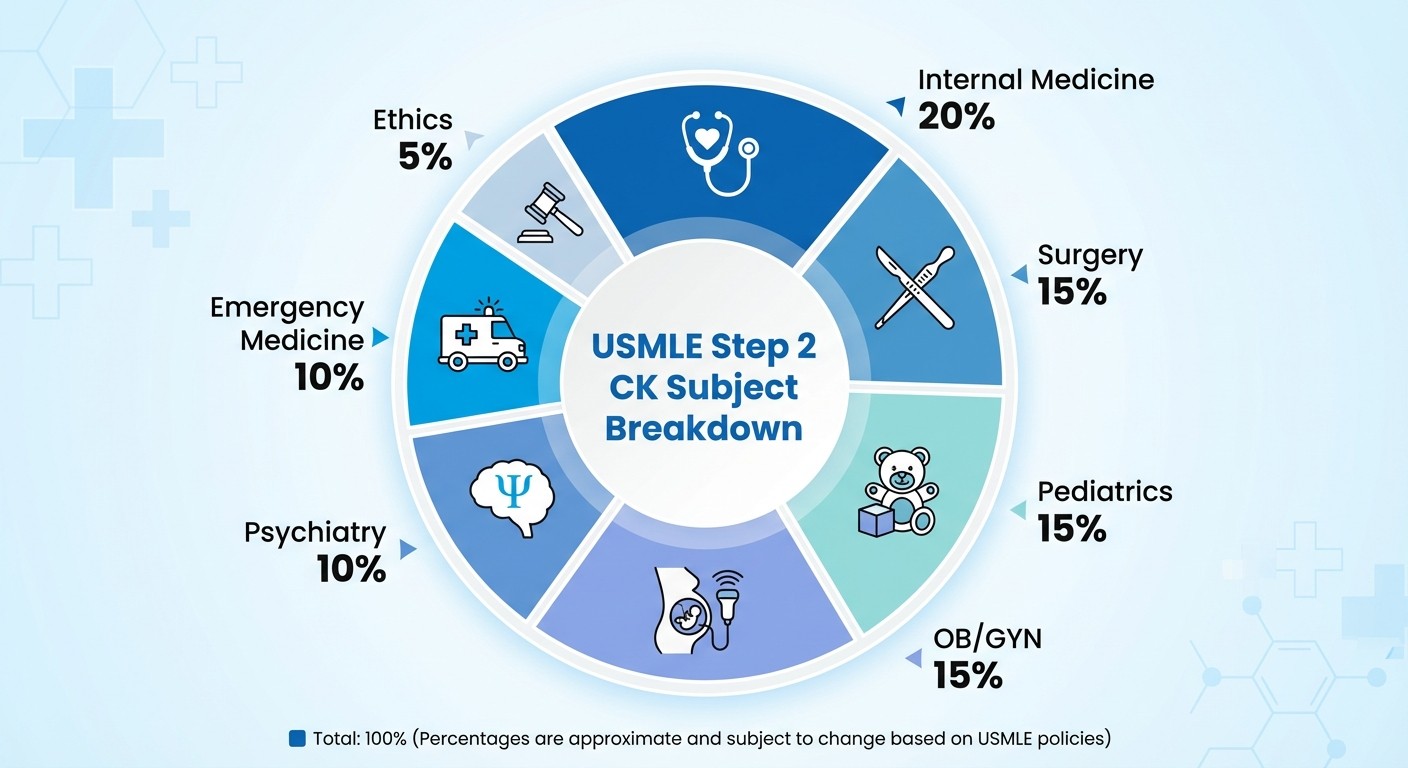
The exam covers seven core areas: Internal Medicine, Surgery, Pediatrics, Obstetrics & Gynecology, Psychiatry, Emergency Medicine, and Ethics. Each question presents a clinical vignette followed by diagnostic, treatment, or management choices.
What sets Step 2 CK apart is its emphasis on next-best-step thinking. The exam doesnt want you to recite textbook facts — it wants you to prioritize like a resident. Should you order labs first or start treatment? Which imaging study comes next? These judgment calls determine your score more than memorizing drug side effects.
For US students, Step 2 CK often carries more weight in residency applications than Step 1 (especially post-2022 when Step 1 became pass/fail). For IMGs, its frequently the make-or-break exam that determines whether your application gets a second look.
Exam Format & Timing
The USMLE Step 2 CK consists of 318 questions divided into 6 blocks of 53 questions each. You have exactly 63 seconds per question, with each block lasting 56 minutes.
Block Structure
6 blocks of 53 questions each
56 minutes per block
15-minute break between blocks (optional)
Total testing time: 5.6 hours
Total appointment time: 7 hours (including breaks)
The exam is computer-based and taken at Prometric testing centers. Questions appear one at a time — you cant skip ahead or return to previous blocks once completed.
Question Types
Every question follows the clinical vignette format:
Patient presentation: Age, chief complaint, history
Physical exam findings: Vital signs, examination details
Diagnostic information: Lab results, imaging, tests
Question stem: What is the most likely diagnosis? Next best step? Most appropriate treatment?
Unlike Step 1, Step 2 CK questions often include normal lab values and reference ranges. The exam assumes you can interpret results rather than memorize every normal value.
Oncourse's adaptive question bank mirrors this exact format, with 318 questions distributed across the same subject weightings you'll see on test day. When you're consistently missing cardiology questions, the platform automatically increases your cardiology exposure until your performance levels out — exactly what you need for Internal Medicine's 20% exam weighting.
Scoring System
Step 2 CK uses a 1-300 scale with the current passing score around 214. Your three-digit score converts to a two-digit score (historically used for residency applications), though most programs now focus on the three-digit number.
Score Breakdown
Passing score: ~214 (subject to change)
Average score: 245-250 for US seniors
Competitive scores:
- Internal Medicine: 240+
- Emergency Medicine: 250+
- Dermatology/Orthopedics: 260+
Score Timeline
Results typically release 3-4 weeks after your test date. You'll receive:
Pass/Fail status
Three-digit score (if passed)
Performance profile showing strength/weakness areas
The scoring algorithm uses Item Response Theory (IRT), meaning harder questions carry more weight. A 250 on Step 2 CK demonstrates stronger clinical knowledge than the same score on Step 1.
For IMGs, the score bar is higher. Most successful IMG candidates score 250+ to remain competitive, especially for Internal Medicine and Family Medicine positions.
Oncourse's performance analytics track your predicted score trajectory week by week, showing whether you're on pace to hit your target before exam day. The dashboard breaks down your strengths and gaps by subject, so you know exactly where those extra 10-15 points are hiding.
High-Yield Topics by Subject
Internal Medicine (20% of exam)
Internal Medicine dominates Step 2 CK, covering both inpatient and outpatient scenarios.
Cardiology
Acute coronary syndromes (STEMI/NSTEMI management)
Heart failure (systolic vs diastolic, medication management)
Arrhythmias (atrial fibrillation, ventricular tachycardia)
Hypertension management and complications
Pulmonology
Asthma and COPD exacerbations
Pneumonia (community-acquired vs hospital-acquired)
Pulmonary embolism diagnosis and treatment
Pleural effusion workup
Gastroenterology
GI bleeding (upper vs lower, acute management)
Inflammatory bowel disease (Crohn's vs UC)
Peptic ulcer disease and H. pylori
Hepatitis and cirrhosis complications
Endocrinology
Diabetes management (Type 1, Type 2, DKA, HHS)
Thyroid disorders (hyperthyroid, hypothyroid)
Adrenal insufficiency and Cushing's syndrome
Practice with our Internal Medicine question bank and reinforce key concepts using Internal Medicine flashcards.
Surgery (15% of exam)
Surgery questions focus on preoperative, intraoperative, and postoperative management rather than surgical techniques.
General Surgery
Acute abdomen (appendicitis, bowel obstruction, perforation)
Trauma management (primary and secondary survey)
Postoperative complications (wound infection, anastomotic leak)
Orthopedics
Fracture management and complications
Joint infections and arthritis
Sports medicine injuries
Anesthesia
Preoperative risk assessment
Perioperative medication management
Pain control strategies
Pediatrics (15% of exam)
Pediatric questions emphasize development, vaccination schedules, and age-specific presentations.
Well-child care
Growth charts and developmental milestones
Vaccination schedules and contraindications
Adolescent health and confidentiality issues
Acute pediatric conditions
Fever in different age groups
Respiratory distress (bronchiolitis, pneumonia)
GI complaints (intussusception, pyloric stenosis)
Pediatric emergencies
Status epilepticus and seizure management
Dehydration and fluid management
Child abuse recognition and reporting
Obstetrics & Gynecology (15% of exam)
Obstetrics
Prenatal care and screening
Labor and delivery management
Pregnancy complications (preeclampsia, gestational diabetes)
Postpartum care and complications
Gynecology
Menstrual disorders and abnormal bleeding
Contraception counseling
Sexually transmitted infections
Gynecologic cancers and screening
Psychiatry (10% of exam)
Psychiatry questions test diagnostic criteria, medication management, and therapeutic approaches.
Mood disorders
Major depressive disorder
Bipolar disorder management
Suicide risk assessment
Anxiety disorders
Panic disorder and agoraphobia
Generalized anxiety disorder
PTSD and trauma-related disorders
Psychotic disorders
Schizophrenia and schizoaffective disorder
Antipsychotic medication management
Substance use disorders
For detailed psychiatry preparation, check our Step 2 CK Psychiatry guide with DSM-5 high-yield topics.
Emergency Medicine (10% of exam)
Acute cardiac conditions
MI management and complications
Cardiac arrest and resuscitation
Shock (cardiogenic, septic, hypovolemic)
Toxicology
Common overdoses (acetaminophen, salicylates, opioids)
Antidote administration
Withdrawal syndromes
Trauma
Head trauma and increased ICP
Abdominal trauma evaluation
Fracture management in the ED
Ethics & Patient Communication (5% of exam)
Informed consent
Capacity assessment
Surrogate decision-making
Advance directives
Confidentiality
HIPAA requirements
Mandatory reporting situations
Adolescent confidentiality
End-of-life care
DNR orders and palliative care
Withdrawal of life support
Family communication
Study Timeline & Planning
8-Week Study Plan (Recommended)
Most successful candidates spend 8-12 weeks preparing for Step 2 CK. Here's the optimal timeline: Weeks 1-2: Foundation Building
Complete subject review (Internal Medicine priority)
Start question banks (50-75 questions daily)
Identify knowledge gaps through initial assessments
Weeks 3-5: Subject Mastery
Deep dive into weak areas identified
Increase question volume (100-150 daily)
Focus on high-yield topics within each specialty
Weeks 6-7: Practice Tests & Review
Take 2-3 full-length practice exams
Review all incorrects thoroughly
Final weak area remediation
Week 8: Final Preparation
Light review of high-yield facts
Maintain question practice (75-100 daily)
Rest and mental preparation
Oncourse's AI-generated daily study plan automatically breaks the syllabus into exam-aligned daily goals, so you never fall behind on the surgery, emergency medicine, and ethics topics that most students under-prepare. The 8-week countdown plan adjusts based on your chosen exam date and current performance level.
Study Resources
Primary Resources
Question banks (UWorld, Oncourse, Kaplan)
Clinical reference (UpToDate, Step-Up to Medicine)
Practice exams (NBME, UWorld Self-Assessments)
Supplemental Resources
CCS cases for clinical skills practice
Anki decks for spaced repetition
Subject-specific review books
Time Management Strategy
Dedicate 4-6 hours daily to active studying
Split time: 70% questions, 30% content review
Track performance weekly to adjust focus areas
Simulate exam conditions during practice tests
For a detailed study schedule, check our Step 2 CK study plan guide with week-by-week breakdowns.
Passing Strategies
Question Approach
1. Read the last line first — know what you're solving for 2. Identify the clinical scenario — emergency vs outpatient vs inpatient 3. Look for key buzzwords — specific symptom clusters point to diagnoses 4. Eliminate obviously wrong answers — narrow down to 2-3 options 5. Choose the most likely/next best step — not the most interesting
Time Management
Spend 60 seconds maximum per question initially
Mark difficult questions for review if time permits
Dont second-guess unless you find a clear error
Finish each block — unanswered questions are automatically wrong
Common Mistakes to Avoid
Overthinking straightforward questions — trust your clinical judgment
Choosing rare diagnoses — common things are common
Ignoring patient age/demographics — these guide likelihood
Missing the question type — diagnosis vs management vs prognosis
Mental Preparation
Step 2 CK is a marathon, not a sprint. The mental endurance required for 5.6 hours of clinical decision-making cant be underestimated.
Week before exam:
Maintain normal sleep schedule (7-8 hours nightly)
Avoid cramming new material — review high-yield facts only
Practice relaxation techniques for test anxiety
Simulate test conditions during final practice sessions
Day of exam:
Arrive 30 minutes early to settle in
Eat protein-rich breakfast to maintain energy
Use breaks strategically — rest vs review based on energy level
Trust your preparation — you've seen these patterns before
How Oncourse Helps You Pass
Oncourse transforms Step 2 CK preparation from passive review to adaptive learning. While traditional platforms give you the same questions regardless of performance, Oncourse's AI engine personalizes your prep based on real-time weaknesses.
The platform's Rezzy AI tutor functions like having a senior resident available 24/7. When you miss a cardiology question about heart failure management, Rezzy immediately explains why diuretics come before ACE inhibitors in acute settings, then generates similar scenarios until the pattern clicks.
For study planning, Oncourse eliminates the guesswork. Input your exam date and current level, and the platform generates an 8-week countdown with daily goals tailored to Step 2 CK's subject distribution. No more wondering if you're spending enough time on emergency medicine or ethics.
The performance dashboard tracks your predicted score week-by-week across all seven subject areas. When you see your Internal Medicine score plateau at 70% while Surgery climbs to 85%, you know exactly where to focus your final two weeks.
Frequently Asked Questions
How long should I study for USMLE Step 2 CK?
Most students need 8-12 weeks of dedicated preparation. MD/DO students with strong clinical rotations can succeed with 8 weeks, while IMGs typically benefit from 10-12 weeks to account for different clinical exposure patterns.
What is a good USMLE Step 2 CK score?
For US students, 240+ opens doors to most specialties, while 250+ positions you competitively for dermatology, orthopedics, and other competitive fields. IMGs should target 250+ to remain competitive for most residency programs.
Should I take Step 2 CK before or after clinical rotations?
For US students, taking Step 2 CK after core rotations (typically M4 year) provides optimal clinical exposure. IMGs should complete the exam after adequate clinical preparation, typically 3-6 months of focused study.
Can I retake USMLE Step 2 CK if I fail?
Yes, but each attempt appears on your transcript. You can retake the exam after a 60-day waiting period, with a maximum of 4 attempts per 7-year period.
How important is Step 2 CK for residency applications?
Very important. With Step 1 becoming pass/fail, Step 2 CK often serves as the primary objective measure of clinical knowledge for residency programs. Many programs use Step 2 CK scores for initial screening.
What happens if I dont pass Step 2 CK?
Failing Step 2 CK delays graduation for US students and significantly impacts IMG match chances. Focus on identifying knowledge gaps, extending preparation time, and using different study resources for the retake.
Step 2 CK represents your transition from student to doctor. The exam tests not just what you know, but how you think under pressure. With focused preparation, strategic practice, and the right resources, you can master the clinical reasoning that defines excellent patient care.
Prepare smarter with Oncourse AI — adaptive MCQs, spaced repetition, and AI explanations built for USMLE Step 2 CK. Download free on Android and iOS.