Preoperative and Postoperative Care — Surgery
Free FMGE lesson notes, MCQs, tables, flowcharts & PYQ papers for Surgery
Try 10 free Preoperative and Postoperative Care questions
Answer each MCQ to check yourself, then unlock the explanation with your email.
According to ERAS recommendations, what is advised regarding routine postoperative nasogastric decompression after uncomplicated gynecological oncology surgery?
Answer: B. Avoid routine decompression
What is the principal intended metabolic benefit of preoperative oral carbohydrate loading in a non-diabetic adult undergoing elective surgery within an ERAS pathway?
Answer: B. By reducing insulin resistance and catabolism
Which component is NOT a core element of the Enhanced Recovery After Surgery (ERAS) protocol?
Answer: A. Prolonged preoperative fasting
A 60-year-old man with no significant past medical history is scheduled for elective cholecystectomy. He has been taking aspirin daily solely for primary prevention. What preoperative recommendation should be made regarding his aspirin use?
Answer: A. Stop 7 days preoperatively
A 53-year-old man with no significant medical problems undergoes lysis of adhesions for a small-bowel obstruction. Postoperatively, he has high nasogastric output and low urine output. What is the most appropriate management of his fluids?
Answer: D. Maintenance plus Ringer lactate replacement
According to the enhanced recovery program in colon surgeries, which of the following is true?
Answer: D. Avoidance of fluid overload
A 70-year-old woman has a small-bowel fistula with an output of 1.5 L/d. Replacement of daily losses should be handled using which of the following fluid solutions based on its composition in mEq/L?
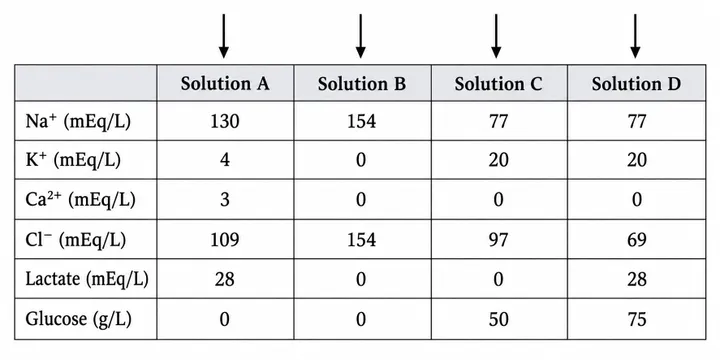
Answer: D. Solution A composition
A burst abdomen following laparotomy typically occurs after how many days?
Answer: D. 7-10 days
What is the most common early postoperative complication following splenectomy?
Answer: B. Left basal collapse
What is the conventionally quoted approximate minimum daily nitrogen requirement of a resting adult?
Answer: A. 5.5-6.5 g
Chapter Downloads
12 chapters
Preoperative Risk Assessment

Perioperative Management of Comorbidities

Preparation of Patient for Surgery

Informed Consent Process

Post-Anesthesia Care

Pain Management

Wound Care and Dressings

Drain Management

Postoperative Complications Detection

Early Ambulation and Rehabilitation

Enhanced Recovery After Surgery (ERAS) Protocols

Discharge Planning and Follow-up
About Preoperative and Postoperative Care for FMGE
Preoperative and Postoperative Care is an important topic within Surgery for FMGE preparation. Understanding the core concepts, key applications, and frequently tested areas in Preoperative and Postoperative Care can make a significant difference in your exam performance. This page brings together all the study resources you need for Preoperative and Postoperative Care in one place.
The downloadable PDFs include a comprehensive MCQ question bank with answer keys, concise lesson notes that cover high-yield points, comparison tables for quick revision, and flowcharts that simplify complex mechanisms and classifications. Previous year questions (PYQs) are also available so you can see exactly how Preoperative and Postoperative Care has been tested in past FMGE exams.
All resources are free to download and designed for offline study. Whether you are doing a first read or a last-minute revision, these PDFs give you a structured way to cover Preoperative and Postoperative Care under Surgery. For an even more interactive experience — with spaced-repetition flashcards, adaptive question practice, and AI-powered explanations — download the Oncourse app.
Frequently Asked Questions
How do I download Preoperative and Postoperative Care MCQ PDF for FMGE?
Are the Preoperative and Postoperative Care question banks free?
How many Preoperative and Postoperative Care MCQs can I get for FMGE?
What formats are available for Preoperative and Postoperative Care study material?
Is the Preoperative and Postoperative Care content updated for the latest FMGE syllabus?
More Surgery downloads
Browse other topics