Respiratory System — Physiology
Free FMGE lesson notes, MCQs, tables, flowcharts & PYQ papers for Physiology
Try 5 free Respiratory System questions
Answer each MCQ to check yourself, then unlock the explanation with your email.
A 58-year-old male with a 35 pack-year smoking history presents with progressive exertional dyspnoea and a chronic productive cough for the past 4 years. Spirometry is performed before and after bronchodilator administration. The tracing obtained is shown (Image 1). Which of the following best explains the characteristic shape of the expiratory limb seen in this tracing?
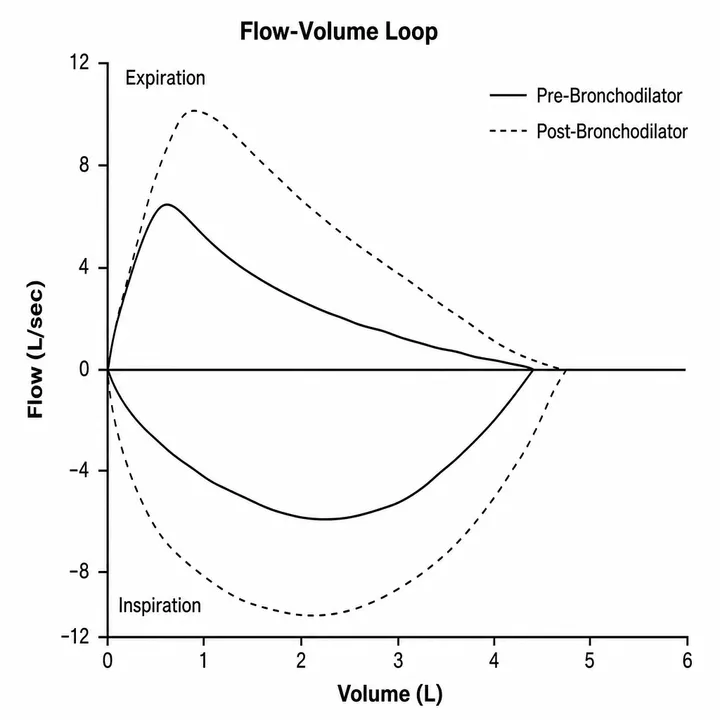
Answer: D. Dynamic expiratory airway collapse
The compliance curve of the lung is shown below. Curve A signifies which of the following?
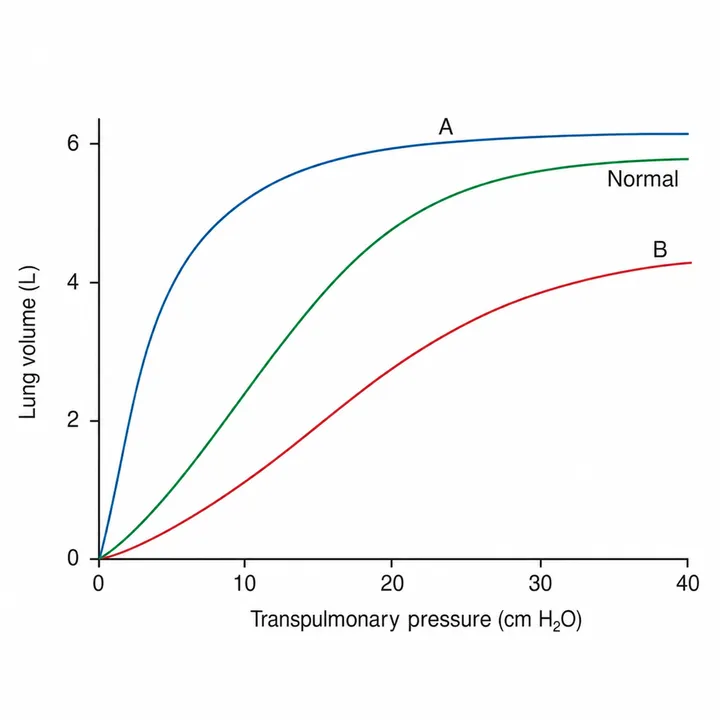
Answer: B. Diffuse pulmonary emphysema
Which of the following statements regarding dyspnoea are True or False? a. It is caused by disease of respiratory system, cardiovascular system, blood, neuromuscular system, chest wall, or psychogenic illness. b. In paroxysmal nocturnal dyspnoea, episodes of dyspnoea occur during sleep and forces the patient to sit up in bed. c. Central obesity and ascites do not cause dyspnoea. d. The sensation of air hunger is characteristic of dyspnoea. e. Hyperventilation in anxiety state may cause dyspnoea.
Answer: A. a,b,d,e - True; c - False
A patient with carbon monoxide poisoning is treated with hyperbaric oxygen that increases the arterial PO2 to 2000 mm Hg. The amount of oxygen dissolved in the arterial blood (in ml/100 ml) is:
Answer: C. 6
Pulmonary vascular resistance is reduced by:
Answer: B. Acutely raising pulmonary venous pressure
Chapter Downloads
10 chapters


About Respiratory System for FMGE
Respiratory System is an important topic within Physiology for FMGE preparation. Understanding the core concepts, key applications, and frequently tested areas in Respiratory System can make a significant difference in your exam performance. This page brings together all the study resources you need for Respiratory System in one place.
The downloadable PDFs include a comprehensive MCQ question bank with answer keys, concise lesson notes that cover high-yield points, comparison tables for quick revision, and flowcharts that simplify complex mechanisms and classifications. Previous year questions (PYQs) are also available so you can see exactly how Respiratory System has been tested in past FMGE exams.
All resources are free to download and designed for offline study. Whether you are doing a first read or a last-minute revision, these PDFs give you a structured way to cover Respiratory System under Physiology. For an even more interactive experience — with spaced-repetition flashcards, adaptive question practice, and AI-powered explanations — download the Oncourse app.
Frequently Asked Questions
How do I download Respiratory System MCQ PDF for FMGE?
Are the Respiratory System question banks free?
How many Respiratory System MCQs can I get for FMGE?
What formats are available for Respiratory System study material?
Is the Respiratory System content updated for the latest FMGE syllabus?
More Physiology downloads
Browse other topics