Cardiovascular System — Physiology
Free FMGE lesson notes, MCQs, tables, flowcharts & PYQ papers for Physiology
Try 3 free Cardiovascular System questions
Answer each MCQ to check yourself, then unlock the explanation with your email.
A 45-year-old man with diabetes insipidus forgets to take his desmopressin for 24 hours. His serum sodium is 158 mEq/L and osmolality is 320 mOsm/kg. Despite severe hypernatremia, his blood pressure remains stable at 130/80 mmHg. Which mechanism best explains this?
Answer: D. Intracellular-to-extracellular water shift
The fetal cardiac structure marked A closes functionally shortly after birth. Which pressure change principally causes this closure?
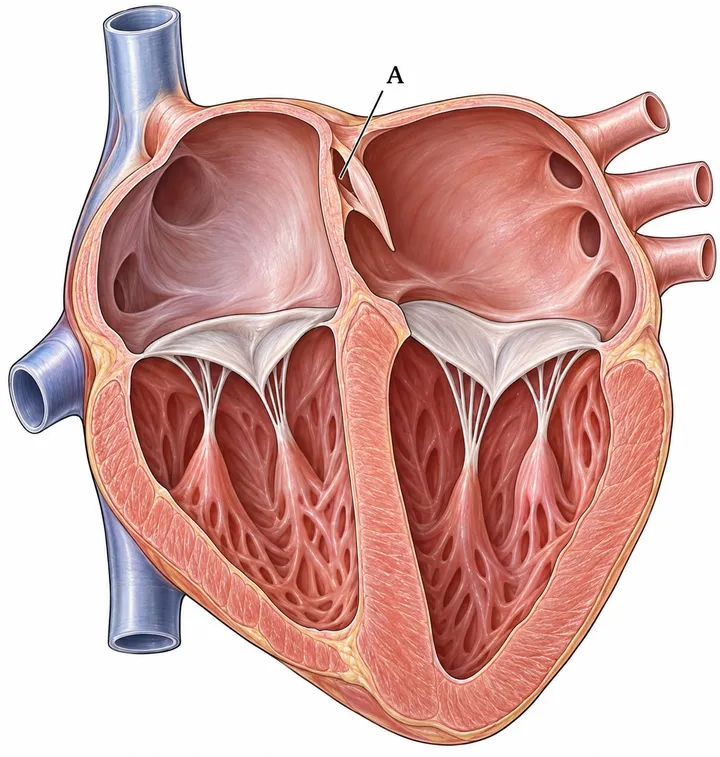
Answer: C. Increased left atrial pressure
A left ventricular pressure-volume loop is shown. During exercise within physiological limits, what is the effect on end-systolic volume?
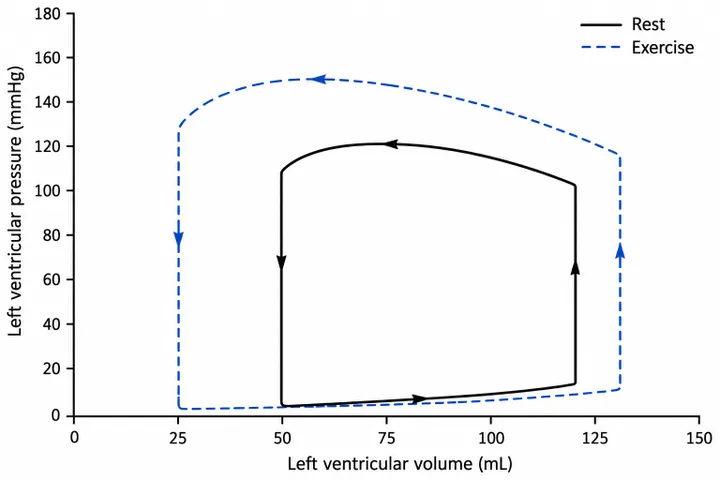
Answer: A. Decreases during exercise
Chapter Downloads
10 chapters


About Cardiovascular System for FMGE
Cardiovascular System is an important topic within Physiology for FMGE preparation. Understanding the core concepts, key applications, and frequently tested areas in Cardiovascular System can make a significant difference in your exam performance. This page brings together all the study resources you need for Cardiovascular System in one place.
The downloadable PDFs include a comprehensive MCQ question bank with answer keys, concise lesson notes that cover high-yield points, comparison tables for quick revision, and flowcharts that simplify complex mechanisms and classifications. Previous year questions (PYQs) are also available so you can see exactly how Cardiovascular System has been tested in past FMGE exams.
All resources are free to download and designed for offline study. Whether you are doing a first read or a last-minute revision, these PDFs give you a structured way to cover Cardiovascular System under Physiology. For an even more interactive experience — with spaced-repetition flashcards, adaptive question practice, and AI-powered explanations — download the Oncourse app.
Frequently Asked Questions
How do I download Cardiovascular System MCQ PDF for FMGE?
Are the Cardiovascular System question banks free?
How many Cardiovascular System MCQs can I get for FMGE?
What formats are available for Cardiovascular System study material?
Is the Cardiovascular System content updated for the latest FMGE syllabus?
More Physiology downloads
Browse other topics