Acid-Base Balance — Physiology
Free FMGE lesson notes, MCQs, tables, flowcharts & PYQ papers for Physiology
Try 10 free Acid-Base Balance questions
Answer each MCQ to check yourself, then unlock the explanation with your email.
A patient with prolonged vomiting develops hypokalemia. Which acid-base disorder is most likely?
Answer: B. Metabolic alkalosis
In a child with normal renal function and sustained respiratory acidosis, approximately how long is required for near-maximal renal compensation?
Answer: C. 3-4 days
Hyperaldosteronism is characterized by which acid-base disturbance?
Answer: A. Metabolic alkalosis
A 72-year-old man with diabetes mellitus has Kussmaul respirations, glucose 380 mg/dL, and arterial pH 7.32. Which bicarbonate–PaCO₂ pair indicates metabolic acidosis with appropriate respiratory compensation?
Answer: C. Bicarbonate of 15 mM and PCO2 of 30 mmHg
In severe metabolic alkalosis, which of the following is NOT typically seen?
Answer: A. Pulmonary edema
Which group consists entirely of substances that act as blood buffers?
Answer: A. Bicarbonate, hemoglobin and plasma proteins
Sustained diarrhea can lead to which of the following acid-base disturbances?
Answer: D. Metabolic acidosis
A man is found comatose in his room, having taken an unknown number of sleeping pills. An arterial blood sample yields the following values: pH 6.88, HCO3 - 12 meq/liter, PaCO2 66 mm Hg. This patient's acid-base status is most accurately described as:
Answer: D. Respiratory acidosis with metabolic acidosis
What acid-base status is suggested by the given parameters?
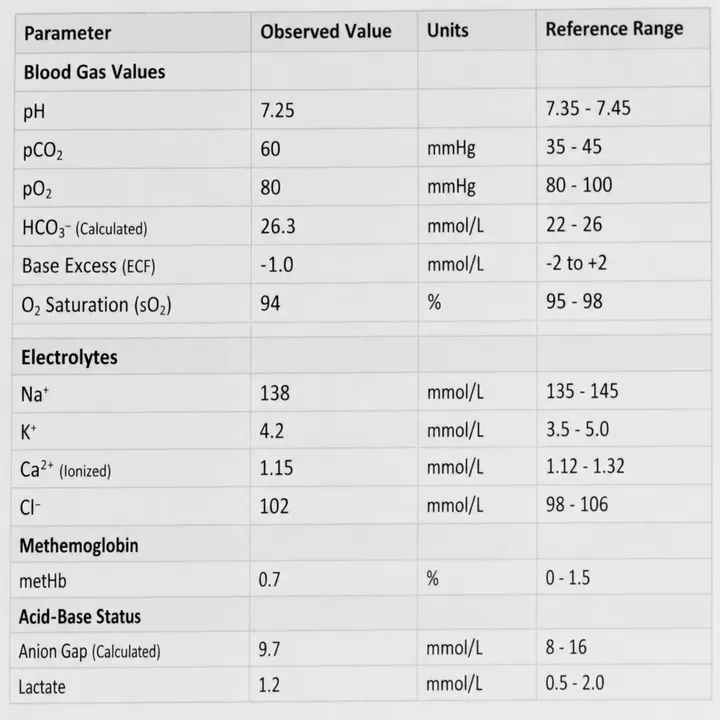
Answer: A. Acute respiratory acidosis with appropriate compensation
In the following flow diagram, Box A represents:
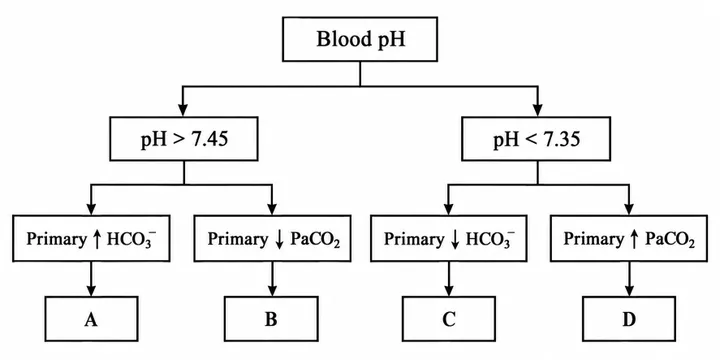
Answer: B. Metabolic alkalosis
Chapter Downloads
10 chapters
Acid-Base Chemistry

Respiratory Regulation of Acid-Base Balance

Renal Regulation of Acid-Base Balance

Bicarbonate Buffer System

Non-Bicarbonate Buffer Systems

Respiratory Acidosis and Alkalosis

Metabolic Acidosis and Alkalosis

Mixed Acid-Base Disorders

Compensatory Mechanisms

Clinical Assessment of Acid-Base Status
About Acid-Base Balance for FMGE
Acid-Base Balance is an important topic within Physiology for FMGE preparation. Understanding the core concepts, key applications, and frequently tested areas in Acid-Base Balance can make a significant difference in your exam performance. This page brings together all the study resources you need for Acid-Base Balance in one place.
The downloadable PDFs include a comprehensive MCQ question bank with answer keys, concise lesson notes that cover high-yield points, comparison tables for quick revision, and flowcharts that simplify complex mechanisms and classifications. Previous year questions (PYQs) are also available so you can see exactly how Acid-Base Balance has been tested in past FMGE exams.
All resources are free to download and designed for offline study. Whether you are doing a first read or a last-minute revision, these PDFs give you a structured way to cover Acid-Base Balance under Physiology. For an even more interactive experience — with spaced-repetition flashcards, adaptive question practice, and AI-powered explanations — download the Oncourse app.
Frequently Asked Questions
How do I download Acid-Base Balance MCQ PDF for FMGE?
Are the Acid-Base Balance question banks free?
How many Acid-Base Balance MCQs can I get for FMGE?
What formats are available for Acid-Base Balance study material?
Is the Acid-Base Balance content updated for the latest FMGE syllabus?
More Physiology downloads
Browse other topics