Immunopathology — Pathology
Free FMGE lesson notes, MCQs, tables, flowcharts & PYQ papers for Pathology
Try 10 free Immunopathology questions
Answer each MCQ to check yourself, then unlock the explanation with your email.
A 30-year-old male presents with rapidly progressive renal failure over 3 weeks, haematuria, and red cell casts in urine. Serum creatinine has risen from 1.2 to 7.8 mg/dL within one month. ANCA is positive. The renal biopsy is shown in Image 3. Which cells principally compose the prominent glomerular lesion?
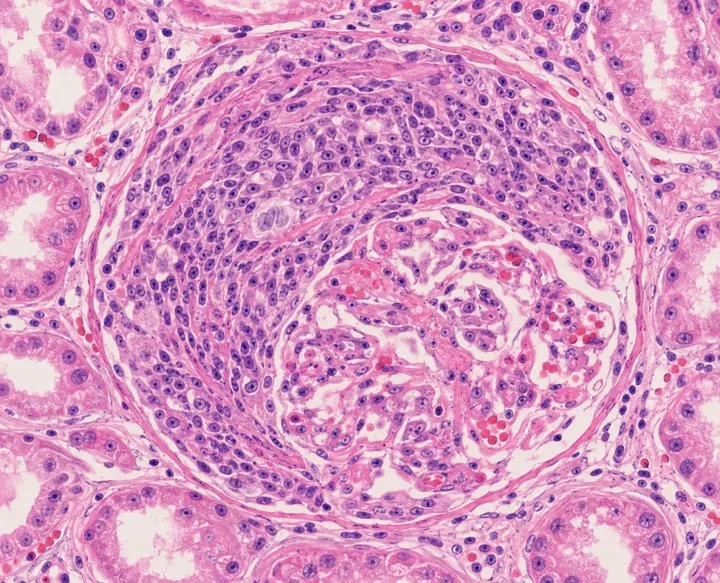
Answer: D. Parietal epithelial cells and macrophages
Which of the following diseases is mediated through complement activation?
Answer: C. Necrotising vasculitis
A 6-year-old boy has recurrent Staphylococcus aureus abscesses, oral thrush and a perineal rash. A stimulated nitroblue tetrazolium reduction test is shown. What is the most common mode of inheritance of this disorder?
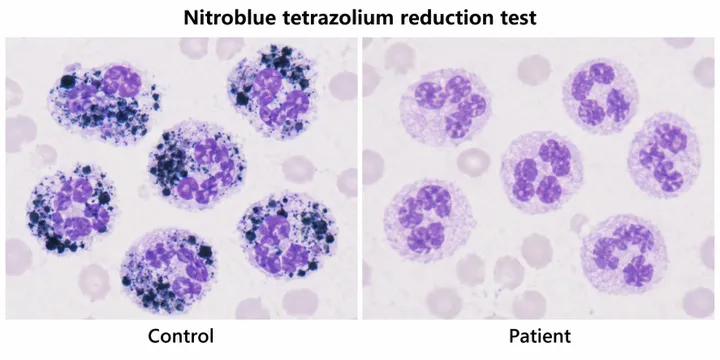
Answer: A. X-linked recessive inheritance
Sago spleen is seen in which condition?
Answer: D. Amyloidosis
A 5-year-old boy presented with pyogenic abscess, runny nose, oral thrush & rash on perineal areas. On culturing pus Staphylococcus aureus was isolated. A test was performed whose finding is shown below. Which of the following is the most likely gene involved in the above condition?
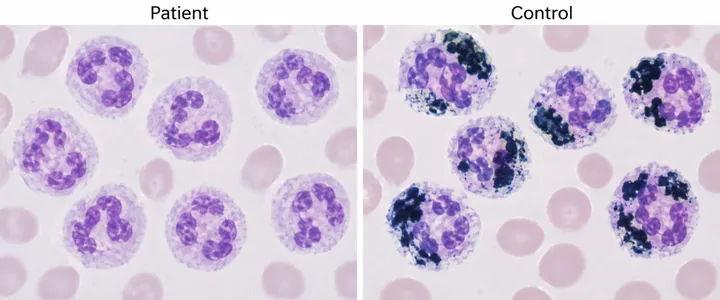
Answer: A. CYBB
Which immune-system protein is encoded at the chromosomal locus marked in the figure?
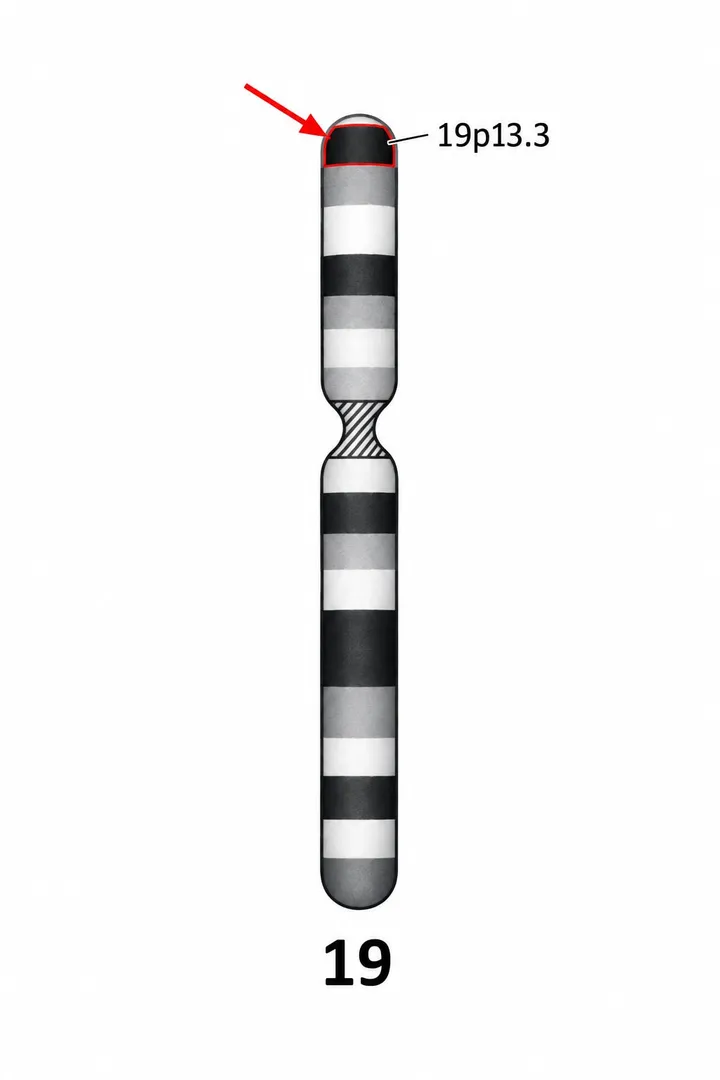
Answer: A. Complement C3
In common variable immunodeficiency (CVID), which of the following is the typical finding for the total peripheral blood B-cell count?
Answer: D. Normal B cell count
A middle-aged woman presents with painful flaccid blisters and erosions involving the oral mucosa and skin. Histopathology shows suprabasal acantholysis, and direct immunofluorescence reveals intercellular IgG deposition in a 'fishnet' pattern. Which of the following types of hypersensitivity reactions is associated with the condition?
Answer: A. Type II hypersensitivity
A 63-year-old man presents with a 15-year history of chronic arthritis. Physical examination reveals ulnar deviation, bony ankylosis, and swan neck deformities of the fingers. Laboratory findings include 4.2 g of protein in a 24-hour urine collection, a serum creatinine of 3.1 mg/dL, and blood urea nitrogen of 30 mg/dL. The C-reactive protein level is markedly elevated. Rectal biopsy shows eosinophilic extracellular deposits on H&E that are positive on a separate Congo red stain. Which of the following proteins is the most likely precursor to this material in the mucosa?
Answer: C. Serum amyloid A
The image shows a cellular finding in a peripheral blood smear. This finding is most characteristic of which condition?
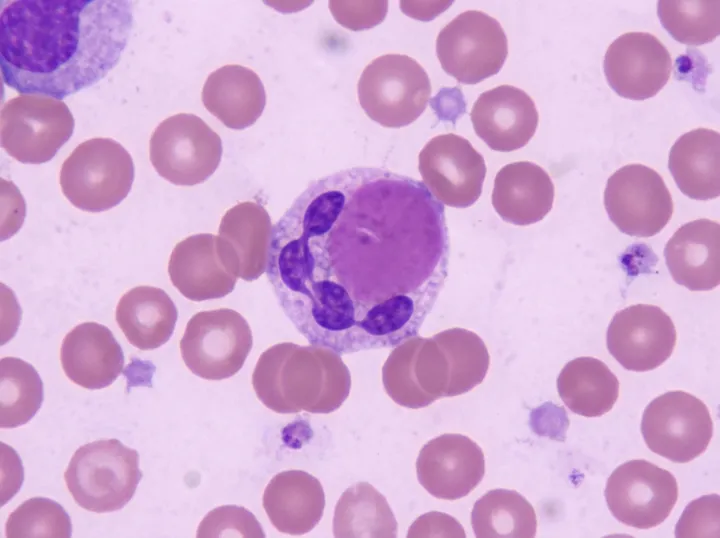
Answer: A. Lupus
Chapter Downloads
10 chapters


About Immunopathology for FMGE
Immunopathology is an important topic within Pathology for FMGE preparation. Understanding the core concepts, key applications, and frequently tested areas in Immunopathology can make a significant difference in your exam performance. This page brings together all the study resources you need for Immunopathology in one place.
The downloadable PDFs include a comprehensive MCQ question bank with answer keys, concise lesson notes that cover high-yield points, comparison tables for quick revision, and flowcharts that simplify complex mechanisms and classifications. Previous year questions (PYQs) are also available so you can see exactly how Immunopathology has been tested in past FMGE exams.
All resources are free to download and designed for offline study. Whether you are doing a first read or a last-minute revision, these PDFs give you a structured way to cover Immunopathology under Pathology. For an even more interactive experience — with spaced-repetition flashcards, adaptive question practice, and AI-powered explanations — download the Oncourse app.
Frequently Asked Questions
How do I download Immunopathology MCQ PDF for FMGE?
Are the Immunopathology question banks free?
How many Immunopathology MCQs can I get for FMGE?
What formats are available for Immunopathology study material?
Is the Immunopathology content updated for the latest FMGE syllabus?
More Pathology downloads
Browse other topics