Zoonotic Diseases — Microbiology
Free FMGE lesson notes, MCQs, tables, flowcharts & PYQ papers for Microbiology
Try 10 free Zoonotic Diseases questions
Answer each MCQ to check yourself, then unlock the explanation with your email.
A 20-year-old man has fever and a painful axillary bubo. The stained aspirate smear is shown. What is the traditional drug of choice for the most likely infection?
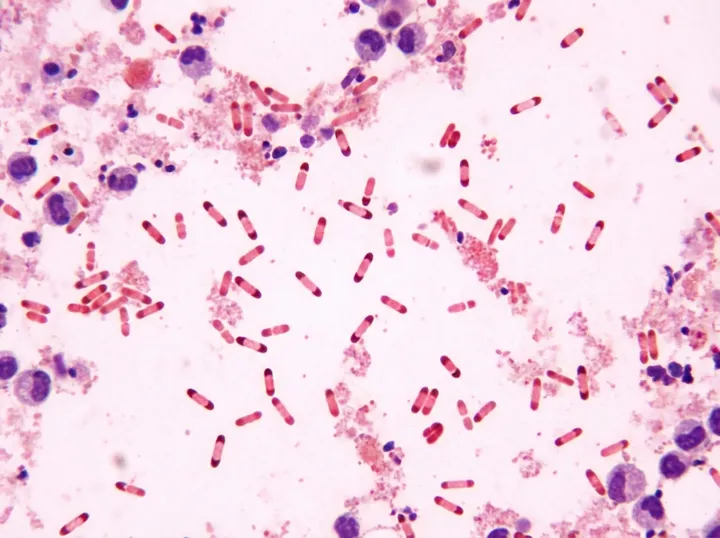
Answer: A. Streptomycin
A 35-year-old man has fever for 4 weeks. Blood culture on Castaneda’s biphasic medium yields small gram-negative coccobacilli that are oxidase-positive and rapidly urease-positive. Which organism is most likely?
Answer: C. Brucella spp.
A 45-year-old male veterinary surgeon develops a painless black eschar on his hand 5 days after an injury while handling animals. Marked surrounding edema and peripheral vesicles are present. What is the most likely diagnosis?
Answer: B. Cutaneous anthrax
Which is the characteristic presentation of Leptospira canicola infection?
Answer: A. Aseptic meningitis
Regarding rickettsial infections, all of the following are correct EXCEPT:
Answer: A. Cephalosporins as first-line treatment
What is the pathogen that causes pneumonia in patients exposed to rabbits?
Answer: D. Francisella tularensis
A 50-year-old man develops fever, dyspnoea and hemoptysis over 2 days. Sputum culture yields a urease-negative bacillus showing stalactite growth in ghee broth. Which vector classically transmits this infection from rodents to humans?
Answer: B. Rat flea
A patient develops recurrent fever after seven afebrile days. Which vector group transmits the organism shown in this peripheral blood smear?
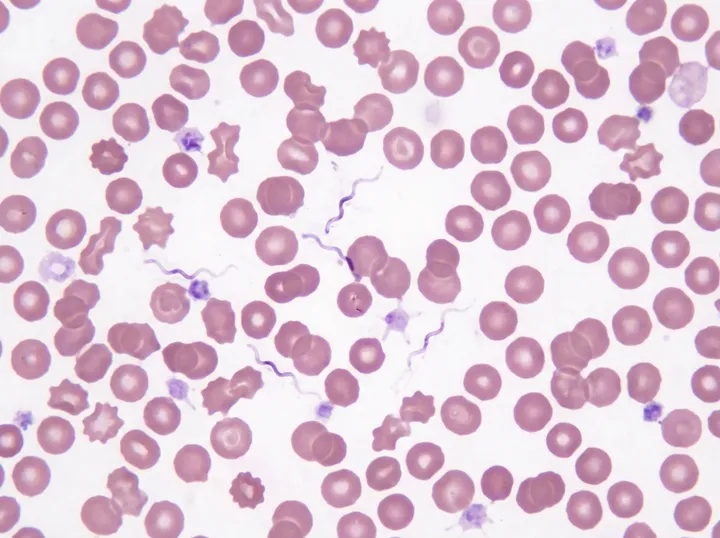
Answer: D. Soft ticks and body lice
All of the following are true about Epidemic typhus except?
Answer: B. Also known as Flea borne typhus
Undulant fever is caused by which organism?
Answer: D. Brucella melitensis
Chapter Downloads
12 chapters
Principles of Zoonotic Transmission

Viral Zoonoses

Bacterial Zoonoses

Parasitic Zoonoses

Vector-Borne Zoonoses

Foodborne Zoonoses

Emerging Zoonotic Diseases

One Health Approach to Zoonoses

Prevention and Control of Zoonoses

Occupational Exposure to Zoonoses

Wildlife Reservoirs of Zoonotic Pathogens

Global Impact of Zoonotic Diseases
About Zoonotic Diseases for FMGE
Zoonotic Diseases is an important topic within Microbiology for FMGE preparation. Understanding the core concepts, key applications, and frequently tested areas in Zoonotic Diseases can make a significant difference in your exam performance. This page brings together all the study resources you need for Zoonotic Diseases in one place.
The downloadable PDFs include a comprehensive MCQ question bank with answer keys, concise lesson notes that cover high-yield points, comparison tables for quick revision, and flowcharts that simplify complex mechanisms and classifications. Previous year questions (PYQs) are also available so you can see exactly how Zoonotic Diseases has been tested in past FMGE exams.
All resources are free to download and designed for offline study. Whether you are doing a first read or a last-minute revision, these PDFs give you a structured way to cover Zoonotic Diseases under Microbiology. For an even more interactive experience — with spaced-repetition flashcards, adaptive question practice, and AI-powered explanations — download the Oncourse app.
Frequently Asked Questions
How do I download Zoonotic Diseases MCQ PDF for FMGE?
Are the Zoonotic Diseases question banks free?
How many Zoonotic Diseases MCQs can I get for FMGE?
What formats are available for Zoonotic Diseases study material?
Is the Zoonotic Diseases content updated for the latest FMGE syllabus?
More Microbiology downloads
Browse other topics