
Retained surgical items — MCQs

The surgical equipment used during a craniectomy is sterilized using pressurized steam at 121°C for 15 minutes. Reuse of these instruments can cause transmission of which of the following pathogens?
A 50-year-old male presents to the emergency with abdominal pain. He reports he has had abdominal pain associated with meals for several months and has been taking over the counter antacids as needed, but experienced significant worsening pain one hour ago in the epigastric region. The patient reports the pain radiating to his shoulders. Vital signs are T 38, HR 120, BP 100/60, RR 18, SpO2 98%. Physical exam reveals diffuse abdominal rigidity with rebound tenderness. Auscultation reveals hypoactive bowel sounds. Which of the following is the next best step in management?
A 63-year-old woman is brought to the emergency department because of severe abdominal pain and vomiting for 3 hours. She had previous episodes of abdominal pain that lasted for 10–15 minutes and resolved with antacids. She lives with her daughter and grandchildren. She divorced her husband last year. She is alert and oriented. Her temperature is 37.3°C (99.1°F), pulse is 134/min, and blood pressure is 90/70 mm Hg. The abdomen is rigid and diffusely tender. Guarding and rebound tenderness are present. Rectal examination shows a collapsed rectum. Infusion of 0.9% saline is begun and a CT of the abdomen shows intestinal perforation. The surgeon discusses the need for emergent exploratory laparotomy with the patient and she agrees to it. Written informed consent is obtained. While in the holding area awaiting emergent transport to the operating room, she calls for the surgeon and informs him that she no longer wants the surgery. He explains the risks of not performing the surgery to her and she indicates she understands but is adamant about not proceeding with surgery. Which of the following is the most appropriate next step in management?
A 43-year-old male visits the emergency room around 4 weeks after getting bitten by a bat during a cave diving trip. After cleansing the wound with water, the patient reports that he felt well enough not to seek medical attention immediately following his trip. He does endorse feeling feverish in the past week but a new onset of photophobia and irritability led him to seek help today. What would the post-mortem pathology report show if the patient succumbs to this infection?
A 30-year-old male presents with a testicular mass of unknown duration. The patient states he first noticed something unusual with his right testicle two weeks ago, but states he did not think it was urgent because it was not painful and believed it would resolve on its own. It has not changed since he first noticed the mass, and the patient still denies pain. On exam, the patient’s right testicle is non-tender, and a firm mass is felt. There is a negative transillumination test, and the mass is non-reducible. Which of the following is the best next step in management?
A 32-year-old man comes to the emergency department for acute pain in the left eye. He reports having awoken in the morning with a foreign body sensation. He had forgotten to remove his contact lenses before sleeping. Following lens removal, he experienced immediate pain, discomfort, and tearing of the left eye. He reports that the foreign body sensation persists and that rinsing with water has not improved the pain. He has been wearing contact lenses for 4 years and occasionally forgets to remove them at night. He has no history of serious medical illness. On examination, the patient appears distressed with pain and photophobia in the left eye. Administration of a topical anesthetic relieves the pain. Visual acuity is 20/20 in both eyes. Ocular motility and pupillary response are normal. The corneal reflex is normal and symmetric in both eyes. Which of the following is most likely to establish the diagnosis in this patient?
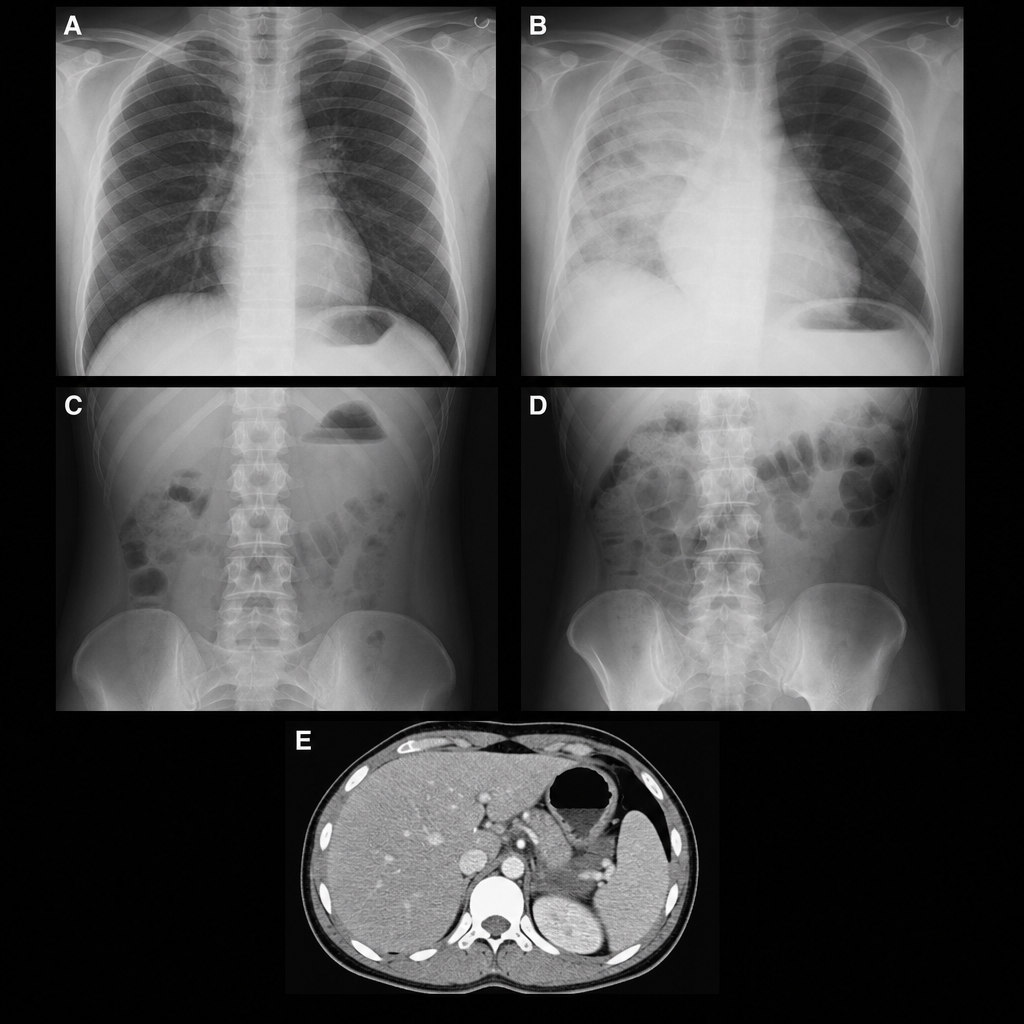
A 24-year-old male is brought in by fire rescue after being the restrained driver in a motor vehicle accident. There was a prolonged extraction. At the scene, the patient was GCS 13. The patient was boarded and transported. In the trauma bay, vitals are T 97.2°F, HR 132 bpm, BP 145/90 mmHg, RR 22/min, and O2 Sat 100%. ABCs are intact with a GCS of 15, and on secondary survey you note the following (Figure F). FAST exam is positive at Morrison's pouch. Abdominal exam shows exquisite tenderness to palpation with rebound and guarding. Which of the following radiographs is most likely to be present in this patient?
A 64-year-old woman presents to the physician’s office to find out the results of her recent abdominal CT. She had been complaining of fatigue, weight loss, and jaundice for 6 months prior to seeing the physician. The patient has a significant medical history of hypothyroidism, generalized anxiety disorder, and hyperlipidemia. She takes levothyroxine, sertraline, and atorvastatin. The vital signs are stable today. On physical examination, her skin shows slight jaundice, but no scleral icterus is present. The palpation of the abdomen reveals no tenderness, guarding, or masses. The CT results shows a 3 x 3 cm mass located at the head of the pancreas. Which of the following choices is most appropriate for delivering bad news to the patient?
A 35-year-old man arrives at the emergency department within minutes after a head-on motor vehicle accident. He suffered from blunt abdominal trauma, several lacerations to his face as well as lacerations to his upper and lower extremities. The patient is afebrile, blood pressure is 45/25 mmHg and pulse is 160/minute. A CBC is obtained and is most likely to demonstrate which of the following?
A 30-year-old male gang member is brought to the emergency room with a gunshot wound to the abdomen. The patient was intubated and taken for an exploratory laparotomy, which found peritoneal hemorrhage and injury to the small bowel. He required 5 units of blood during this procedure. Following the operation, the patient was sedated and remained on a ventilator in the surgical intensive care unit (SICU). The next day, a central line is placed and the patient is started on total parenteral nutrition. Which of the following complications is most likely in this patient?
Want unlimited practice?
Get full access to all questions, explanations, and performance tracking.
Scan to download app