
Internal fixation methods — MCQs

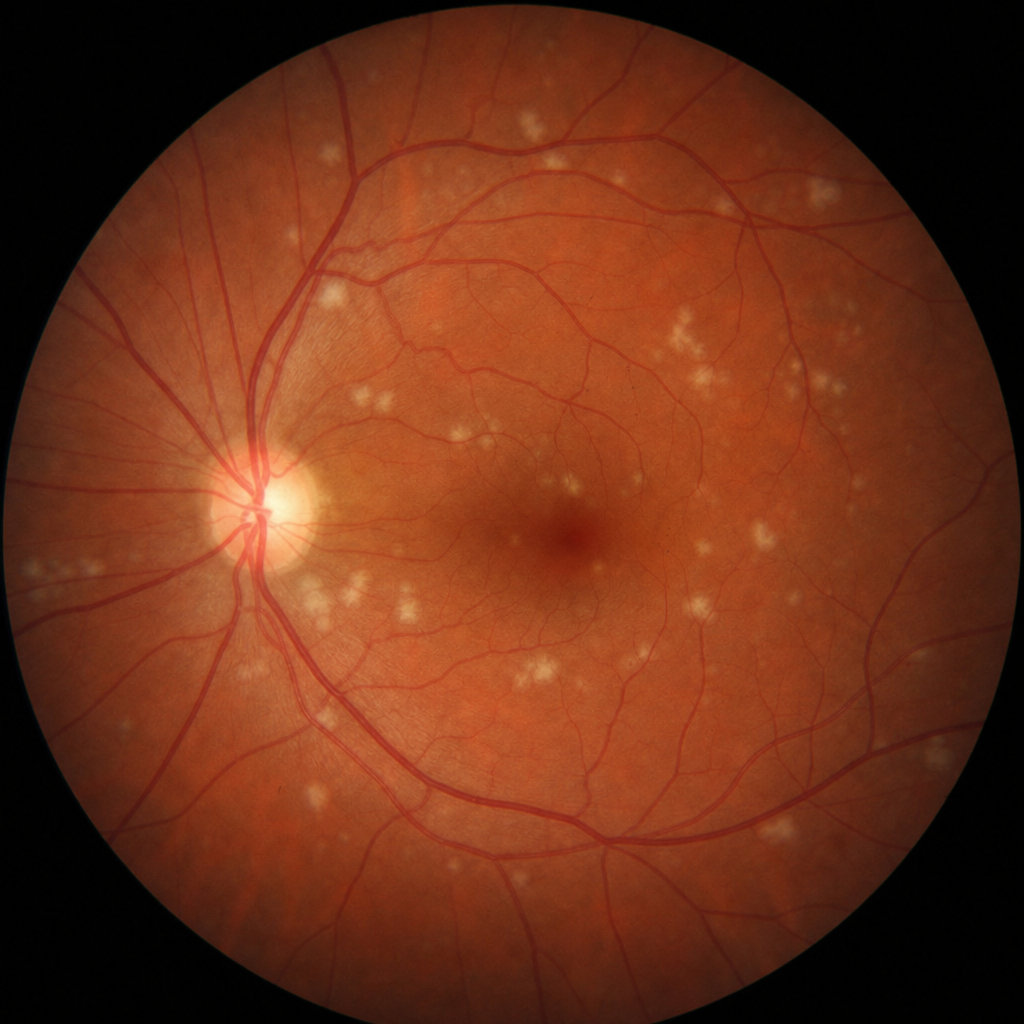
On physical examination and imaging, a 3-year-old male shows evidence of multiple healed fractures and bruising. On eye exam, the child's sclerae appear blue, and results of a fundoscopic exam are shown in Image A. What is the most appropriate next step in the care of this patient?
A 6-week-old boy is brought for routine examination at his pediatrician’s office. The patient was born at 39 weeks to a 26-year-old G1P1 mother by normal vaginal delivery. External cephalic version was performed successfully at 37 weeks for breech presentation. Pregnancy was complicated by gestational diabetes that was well-controlled with insulin. The patient’s maternal grandmother has early onset osteoporosis. On physical examination, the left hip dislocates posteriorly with adduction and depression of a flexed femur. An ultrasound is obtained that reveals left acetabular dysplasia and a dislocated left femur. Which of the following is the next best step in management?
A 65-year-old man presents to the emergency department with a complaint of intense pain in his right foot for the past month, along with fever and chills. He denies any traumatic injury to his foot in recent memory. He has a medical history of poorly-controlled type II diabetes and is a former smoker with extensive peripheral vascular disease. On physical exam, the area of his right foot around the hallux is swollen, erythematous, tender to light palpation, and reveals exposed bone. Labs are notable for elevated C-reactive protein and erythrocyte sedimentation rate. The physician obtains a biopsy for culture. What is the most likely causative organism for this patient’s condition?
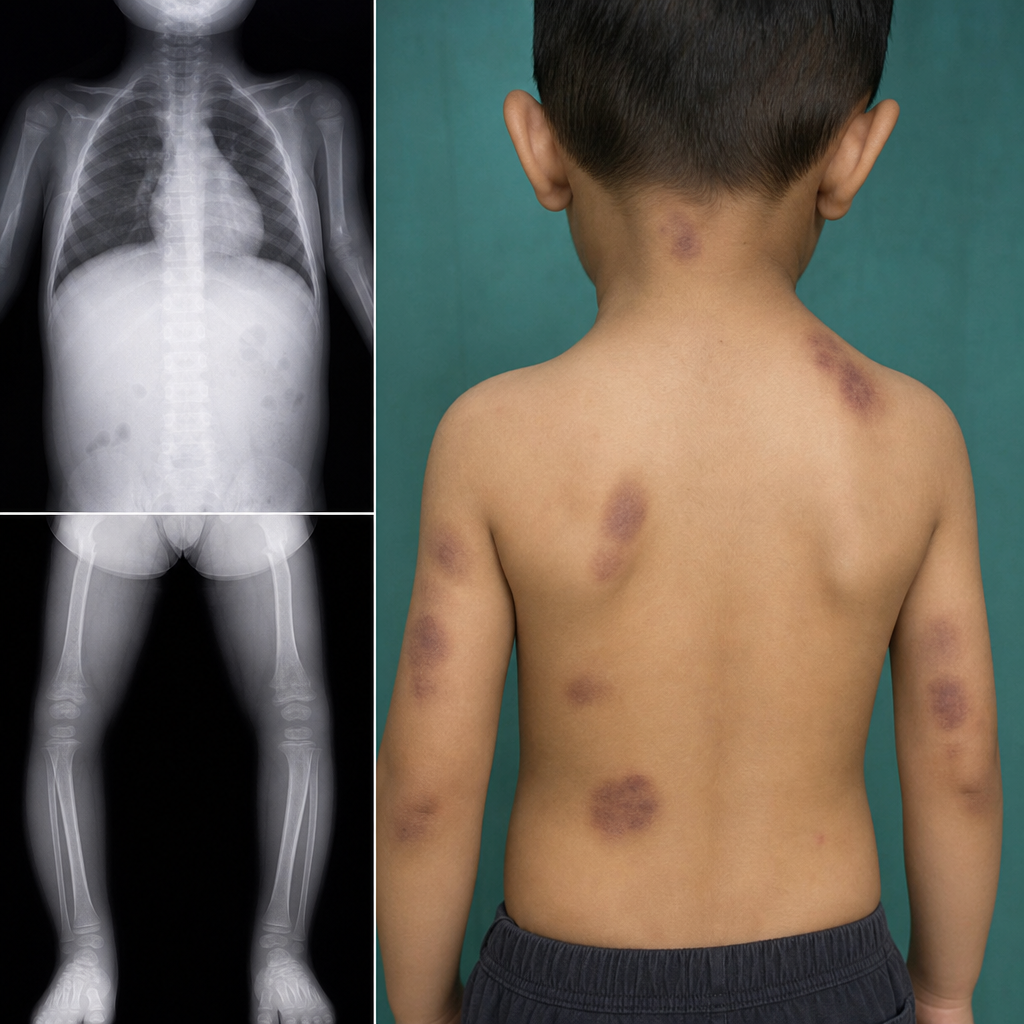
A 5-year-old boy is brought to the emergency department by his stepmother because of multiple injuries. She says that he sustained these injuries while playing. Radiographic findings show multiple fractures in various stages of healing. Physical examination shows the findings in the image below. What is the most likely diagnosis in this patient?
A 69-year-old woman presents with pain in her hip and groin. She states that the pain is present in the morning, and by the end of the day it is nearly unbearable. Her past medical history is notable for a treated episode of acute renal failure, diabetes mellitus, obesity, and hypertension. Her current medications include losartan, metformin, insulin, and ibuprofen. The patient recently started taking high doses of vitamin D as she believes that it could help her symptoms. She also states that she recently fell off the treadmill while exercising at the gym. On physical exam you note an obese woman. There is pain, decreased range of motion, and crepitus on physical exam of her right hip. The patient points to the areas that cause her pain stating that it is mostly over the groin. The patient's skin turgor reveals tenting. Radiography is ordered. Which of the following is most likely to be found on radiography?
A 63-year-old female recovering from a total shoulder arthroplasty completed 6 days ago presents complaining of joint pain in her repaired shoulder. Temperature is 39 degrees Celsius. Physical examination demonstrates erythema and significant tenderness around the incision site. Wound cultures reveal Gram-positive cocci that are resistant to nafcillin. Which of the following organisms is the most likely cause of this patient's condition?
A 35-year-old man is referred to a physical therapist due to limitation of movement in the wrist and fingers of his left hand. He cannot hold objects or perform daily activities with his left hand. He broke his left arm at the humerus one month ago. The break was simple and treatment involved a cast for one month. Then he lost his health insurance and could not return for follow up. Only after removing the cast did he notice the movement issues in his left hand and wrist. His past medical history is otherwise insignificant, and vital signs are within normal limits. On examination, the patient’s left hand is pale and flexed in a claw-like position. It is firm and tender to palpation. Right radial pulse is 2+ and left radial pulse is 1+. The patient is unable to actively extend his fingers and wrist, and passive extension is difficult and painful. Which of the following is a proper treatment for the presented patient?
A 56-year-old woman comes to the emergency department because of worsening pain and swelling in her right knee for 3 days. She underwent a total knee arthroplasty of her right knee joint 5 months ago. The procedure and immediate aftermath were uneventful. She has hypertension and osteoarthritis. Current medications include glucosamine, amlodipine, and meloxicam. Her temperature is 37.9°C (100.2°F), pulse is 95/min, and blood pressure is 115/70 mm Hg. Examination shows a tender, swollen right knee joint; range of motion is limited by pain. The remainder of the examination shows no abnormalities. Arthrocentesis of the right knee is performed. Analysis of the synovial fluid shows: Appearance Cloudy Viscosity Absent WBC count 78,000/mm3 Segmented neutrophils 94% Lymphocytes 6% Synovial fluid is sent for culture and antibiotic sensitivity. Which of the following is the most likely causal pathogen?
An MRI of a patient with low back pain reveals compression of the L5 nerve root. Which of the following muscles would most likely show weakness during physical examination?
A 17-year-old boy comes to the emergency department following an injury during football practice. He fell and landed on the lateral aspect of his right shoulder. He is holding his right arm supported by his left arm, with his right arm adducted against his side. He is tender to palpation directly over the middle third of his clavicle. Radiographs reveal a non-displaced fracture of the middle third of the clavicle. Which of the following is the most appropriate treatment at this time?
Want unlimited practice?
Get full access to all questions, explanations, and performance tracking.
Scan to download app