
Spinal fusion procedures — MCQs

A 14-year-old girl is brought to the physician for a follow-up examination. She has had frequent falls over the past two years. During the past six months, the patient has been unable to walk or stand without assistance and she now uses a wheelchair. Her mother was diagnosed with a vestibular schwannoma at age 52. Her vital signs are within normal limits. Her speech is slow and unclear. Neurological examination shows nystagmus in both eyes. Her gait is wide-based with irregular and uneven steps. Her proprioception and vibration sense are absent. Muscle strength is decreased especially in the lower extremities. Deep tendon reflexes are 1+ bilaterally. The remainder of the examination shows kyphoscoliosis and foot inversion with hammer toes. This patient is most likely to die from which of the following complications?
A 23-year-old man complains of lower back pain that began approximately 6 months ago. He is unsure why he is experiencing this pain and notices that this pain is worse in the morning after waking up and improves with physical activity. Ibuprofen provides significant relief. He denies bowel and bladder incontinence or erectile dysfunction. Physical exam is notable for decreased chest expansion, decreased spinal range of motion, 5/5 strength in both lower extremities, 2+ patellar reflexes bilaterally, and an absence of saddle anesthesia. Which of the following is the most appropriate next test for this patient?
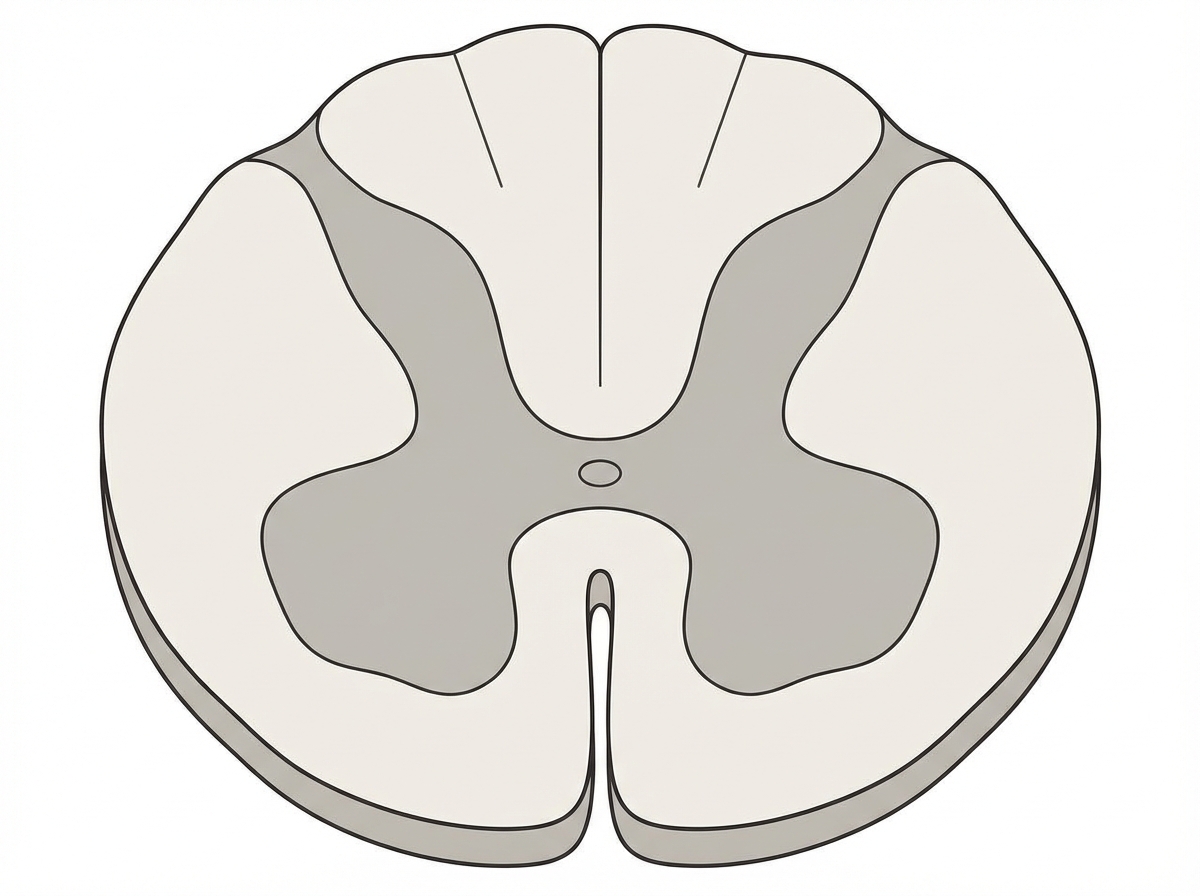
A 45-year-old man is brought to the emergency department by ambulance after a motor vehicle collision. He is not responsive to verbal commands and is unable to provide any history. His pulse is 108/min and regular. Physical examination shows ecchymoses over the neck and back. Neurological examination indicates damage to the spinal cord at the level shown in the illustration. This patient's injury is most likely located at which of the following levels of the spinal cord?
A 57-year-old woman presents to her primary care physician with a concern for joint pain. She states that she often feels minor joint pain and morning stiffness in both of her hands every day, particularly in the joints of her fingers. Her symptoms tend to improve as the day goes on and she states they are not impacting the quality of her life. She lives alone as her partner recently died. She smokes 1 pack of cigarettes per day and drinks 2-3 alcoholic drinks per day. Her last menses was at age 45 and she works at a library. The patient has a history of diabetes and chronic kidney disease with her last GFR at 45 mL/min. Her temperature is 97.5°F (36.4°C), blood pressure is 117/58 mmHg, pulse is 90/min, respirations are 14/min, and oxygen saturation is 98% on room air. Physical examination is within normal limits. Which of the following interventions is appropriate management of future complications in this patient?
A 54-year-old man presents to his primary care physician for back pain. His back pain worsens with standing for a prolonged period of time or climbing down the stairs and improves with sitting. Medical history is significant for hypertension, type II diabetes mellitus, and hypercholesterolemia. Neurologic exam demonstrates normal tone, 5/5 strength, and a normal sensory exam throughout the bilateral lower extremity. Skin exam is unremarkable and dorsalis pedis and posterior tibialis pulses are 3+. Which of the following is the best next step in management?
A patient undergoes spinal surgery at the L4-L5 level. During the procedure, which of the following ligaments must be divided first to access the spinal canal?
A 45-year-old man undergoes elective vasectomy for permanent contraception. The procedure is performed under local anesthesia. There are no intra-operative complications and he is discharged home with ibuprofen for post-operative pain. This patient is at increased risk for which of the following complications?
A 57-year-old man presents to the ED complaining of back and left leg pain. He was lifting heavy furniture while helping his daughter move into college when all of sudden he felt a sharp pain at his back. The pain is described as severe, worse with movement, and shoots down his lateral thigh. The patient denies any bowel/urinary incontinence, saddle anesthesia, weight loss, or weakness. He denies any past medical history but endorses a family history of osteoporosis. He has been smoking 1 pack per day for the past 20 years. Physical examination demonstrated decreased sensation at the left knee, decreased patellar reflex, and a positive straight leg test. There is diffuse tenderness to palpation at the lower back but no vertebral step-offs were detected. What is the most likely etiology for this patient’s pain?
A 22-year-old man is brought to the emergency department after he was impaled by a metal rod during a work accident. The rod went into his back around the level of T9 but was removed before arrival. He has no past medical history and does not take any medications. On physical examination, he has significant muscle weakness in his entire left lower body. He also exhibits impaired vibration and proprioception in his left leg as well as loss of pain and temperature sensation in his right leg. Which of the following sections of the spinal cord was most likely damaged in this patient?
A 28-year-old male presents to his primary care physician with complaints of intermittent abdominal pain and alternating bouts of constipation and diarrhea. His medical chart is not significant for any past medical problems or prior surgeries. He is not prescribed any current medications. Which of the following questions would be the most useful next question in eliciting further history from this patient?
Want unlimited practice?
Get full access to all questions, explanations, and performance tracking.
Scan to download app