
Chromosomal Disorders — MCQs

All of the following are true about Down syndrome except for one.
Which of the following translocations is not associated with Down syndrome?
Which of the following is not the karyotype of Turner syndrome?
A karyotyping image is given below. What are the clinical features most likely to be expected in such patients?
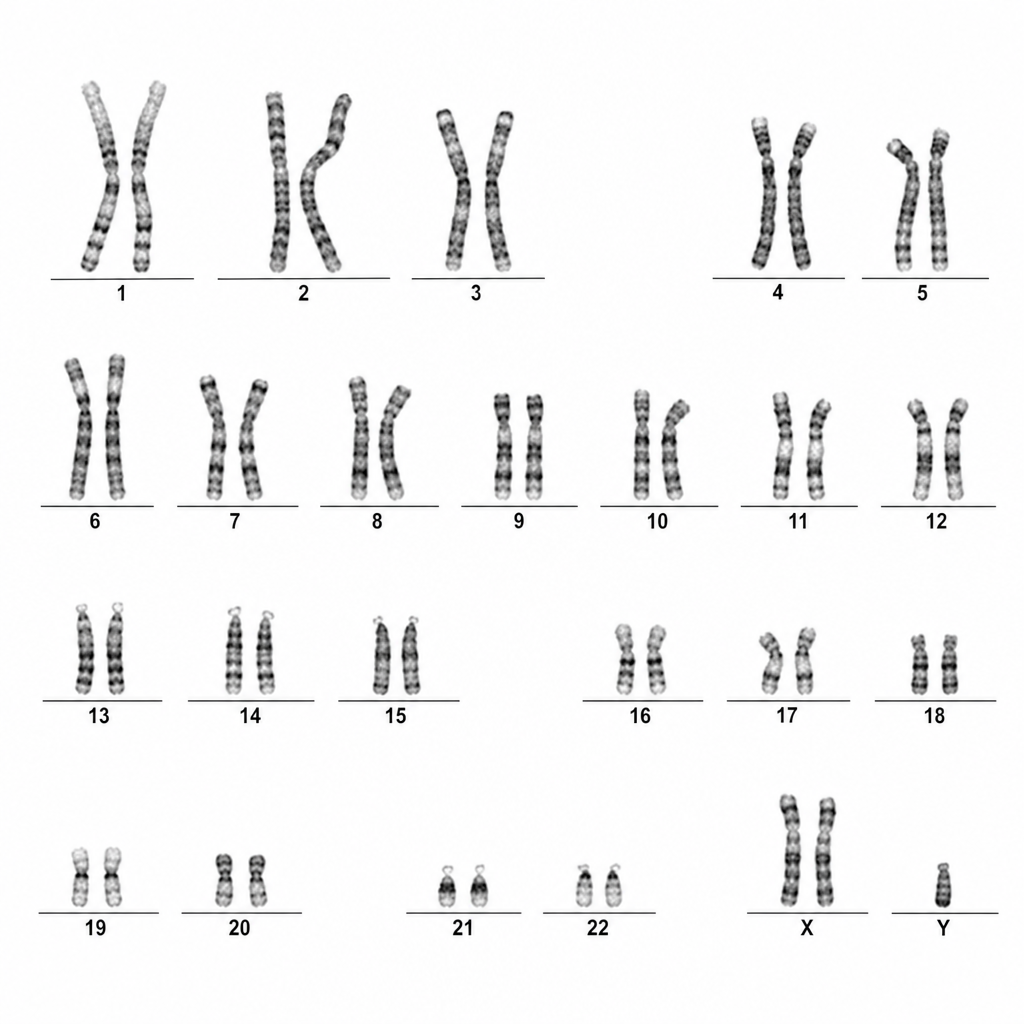
The diagrammatic representation of the karyotype of an individual indicates a specific genetic abnormality. What is the diagnosis?
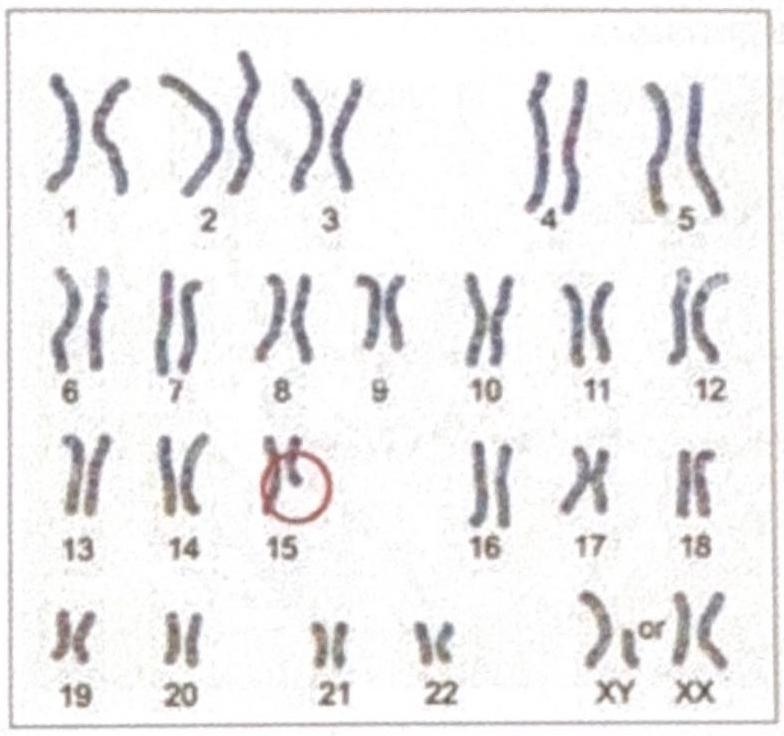
Syndrome which is characterized by 2X chromosomes and 1Y chromosome is:
A 1-year-old girl born to a 40-year-old woman is undergoing an examination by a pediatric resident in the hospital. The pregnancy was uneventful and there were no complications during the delivery. The physical examination reveals midface hypoplasia with a flat nasal bridge and upslanting palpebral fissures. She has a small mouth and chest auscultation reveals a blowing holosystolic murmur that is heard best along the sternal border. The family history is unremarkable. A karyotype analysis is ordered because the resident suspects a numerical chromosomal disorder. Which of the following phenomena leads to the infant’s condition?
A 16-year-old male presents to an ophthalmologist as a new patient with a complaint of blurry vision. He reports that over the past several months he has had increasing difficulty seeing the board from the back of the classroom at school. The patient is otherwise doing well in school and enjoys playing basketball. His past medical history is otherwise significant for scoliosis which is managed by an orthopedic surgeon. His family history is significant for a mother with type II diabetes mellitus, and a father who underwent aortic valve replacement last year. On physical exam, the patient is tall for his age and has long arms. He has 20 degrees of thoracic scoliosis, which is stable from previous exams. On slit-lamp examination, the patient is found to have bilateral upward lens subluxation and is prescribed corrective lenses. Which of the following is the most likely etiology of this patient’s presentation?
A 12-year-old boy is brought by his mother to a neurologist for continuing evaluation of seizures. His seizures were previously well-controlled on medication but over the last month he has been having seizures several times per week. The boy is non-verbal and has had severe developmental delays and cognitive disability since birth. On exam, the boy is found to be enthusiastically playing with the toys in the office and laughing at almost any stimulus. Furthermore, his movements are found to be uncoordinated with a wide based gait. Previous genetic testing has revealed an abnormality in an E3 ubiquitin ligase gene. Compared to unaffected individuals, which of the following patterns of gene expression is most likely seen in this patient?
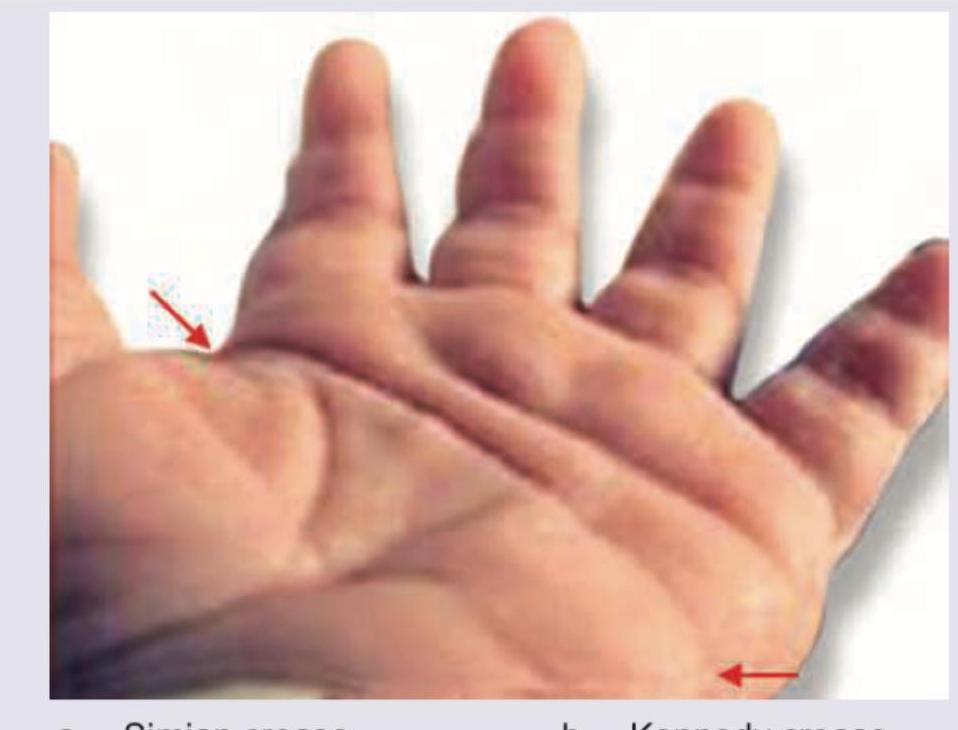
During evaluation of a child with Down syndrome, the following finding is noted. Identify?
Want unlimited practice?
Get full access to all questions, explanations, and performance tracking.
Scan to download app