
Core body temperature maintenance — MCQs

A 25-year-old man presents to the emergency department after a motor vehicle accident. He was the unrestrained front seat driver in a head on collision. The patient is unresponsive and his medical history is unknown. His temperature is 99.5°F (37.5°C), blood pressure is 67/38 mmHg, pulse is 190/min, respirations are 33/min, and oxygen saturation is 98% on room air. The patient is started on IV fluids, blood products, and norepinephrine. A FAST exam is performed and a pelvic binder is placed. One hour later, his temperature is 98.3°F (36.8°C), blood pressure is 119/66 mmHg, pulse is 110/min, respirations are 15/min, and oxygen saturation is 97% on room air. The patient is currently responsive. Management of the patient's pelvic fracture is scheduled by the orthopedic service. While the patient is waiting in the emergency department he suddenly complains of feeling hot, aches, and a headache. The patient's temperature is currently 101°F (38.3°C). He has not been given any pain medications and his past medical history is still unknown. Which of the following is the most likely diagnosis?
A scientist is trying to design a drug to modulate cellular metabolism in the treatment of obesity. Specifically, he is interested in understanding how fats are processed in adipocytes in response to different energy states. His target is a protein within these cells that catalyzes catabolism of an energy source. The products of this reaction are subsequently used in gluconeogenesis or β-oxidation. Which of the following is true of the most likely protein that is being studied by this scientist?
A 55-year-old woman with diabetes presents to the emergency department due to swelling of her left leg, fever, and chills for the past 2 days. The woman’s maximum recorded temperature at home was 38.3°C (101.0°F). Her left leg is red and swollen from her ankle to the calf, with an ill-defined edge. Her vital signs include: blood pressure 120/78 mm Hg, pulse rate 94/min, temperature 38.3°C (101.0°F), and respiratory rate 16/min. On physical examination, her left leg shows marked tenderness and warmth compared with her right leg. The left inguinal lymph node is enlarged to 3 x 3 cm. Which of the following chemical mediators is the most likely cause of the woman’s fever?
A 3-day-old female newborn is brought to the emergency department because of fever, poor feeding, and irritability for 6 hours. She was delivered at home at 39 weeks' gestation and delivery was uncomplicated. The mother had no prenatal care. Her temperature is 39.8°C (103.6°F), pulse is 172/min, respirations are 58/min, and blood pressure is 74/45 mm Hg. She appears lethargic. Physical examination shows expiratory grunting and nasal flaring. Serum studies show elevated levels of interleukin-6. Which of the following is the most likely effect of this laboratory finding?
An 11-year-old boy presents with a 2-day history of uncontrollable shivering. During admission, the patient’s vital signs are within normal limits, except for a fluctuating body temperature registering as low as 35.0°C (95.0°F) and as high as 40.0°C (104.0°F), requiring alternating use of cooling and warming blankets. A complete blood count (CBC) is normal, and a chest radiograph is negative for consolidations and infiltrates. An MRI of the brain reveals a space-occupying lesion infiltrating the posterior hypothalamus and extending laterally. Which of the following additional findings are most likely, based on this patient’s physical examination?
A 20-year-old woman reports to student health complaining of 5 days of viral symptoms including sneezing and a runny nose. She started coughing 2 days ago and is seeking cough medication. She additionally mentions that she developed a fever 2 days ago, but this has resolved. On exam, her temperature is 99.0°F (37.2°C), blood pressure is 118/76 mmHg, pulse is 86/min, and respirations are 12/min. Changes in the activity of warm-sensitive neurons in which part of her hypothalamus likely contributed to the development and resolution of her fever?
A 33-year-old man presents to the emergency department acutely confused. The patient was found down at a local construction site by his coworkers. The patient has a past medical history of a seizure disorder and schizophrenia and is currently taking haloperidol. He had recent surgery 2 months ago to remove an inflamed appendix. His temperature is 105°F (40.6°C), blood pressure is 120/84 mmHg, pulse is 150/min, respirations are 19/min, and oxygen saturation is 99% on room air. Physical exam is notable for a confused man who cannot answer questions. His clothes are drenched in sweat. He is not making purposeful movements with his extremities although no focal neurological deficits are clearly apparent. Which of the following is the most likely diagnosis?
A previously healthy 44-year-old man is brought by his coworkers to the emergency department 45 minutes after he became light-headed and collapsed while working in the boiler room of a factory. He did not lose consciousness. His coworkers report that 30 minutes prior to collapsing, he told them he was nauseous and had a headache. The patient appears sweaty and lethargic. He is not oriented to time, place, or person. The patient’s vital signs are as follows: temperature 41°C (105.8°F); heart rate 133/min; respiratory rate 22/min; and blood pressure 90/52 mm Hg. Examination shows equal and reactive pupils. Deep tendon reflexes are 2+ bilaterally. His neck is supple. A 0.9% saline infusion is administered. A urinary catheter is inserted and dark brown urine is collected. The patient’s laboratory test results are as follows: Laboratory test Blood Hemoglobin 15 g/dL Leukocyte count 18,000/mm3 Platelet count 51,000/mm3 Serum Na+ 149 mEq/L K+ 5.0 mEq/L Cl- 98 mEq/L Urea nitrogen 42 mg/dL Glucose 88 mg/dL Creatinine 1.8 mg/dL Aspartate aminotransferase (AST, GOT) 210 Alanine aminotransferase (ALT, GPT) 250 Creatine kinase 86,000 U/mL Which of the following is the most appropriate next step in patient management?
You have been asked to deliver a lecture to medical students about the effects of various body hormones and neurotransmitters on the metabolism of glucose. Which of the following statements best describes the effects of sympathetic stimulation on glucose metabolism?
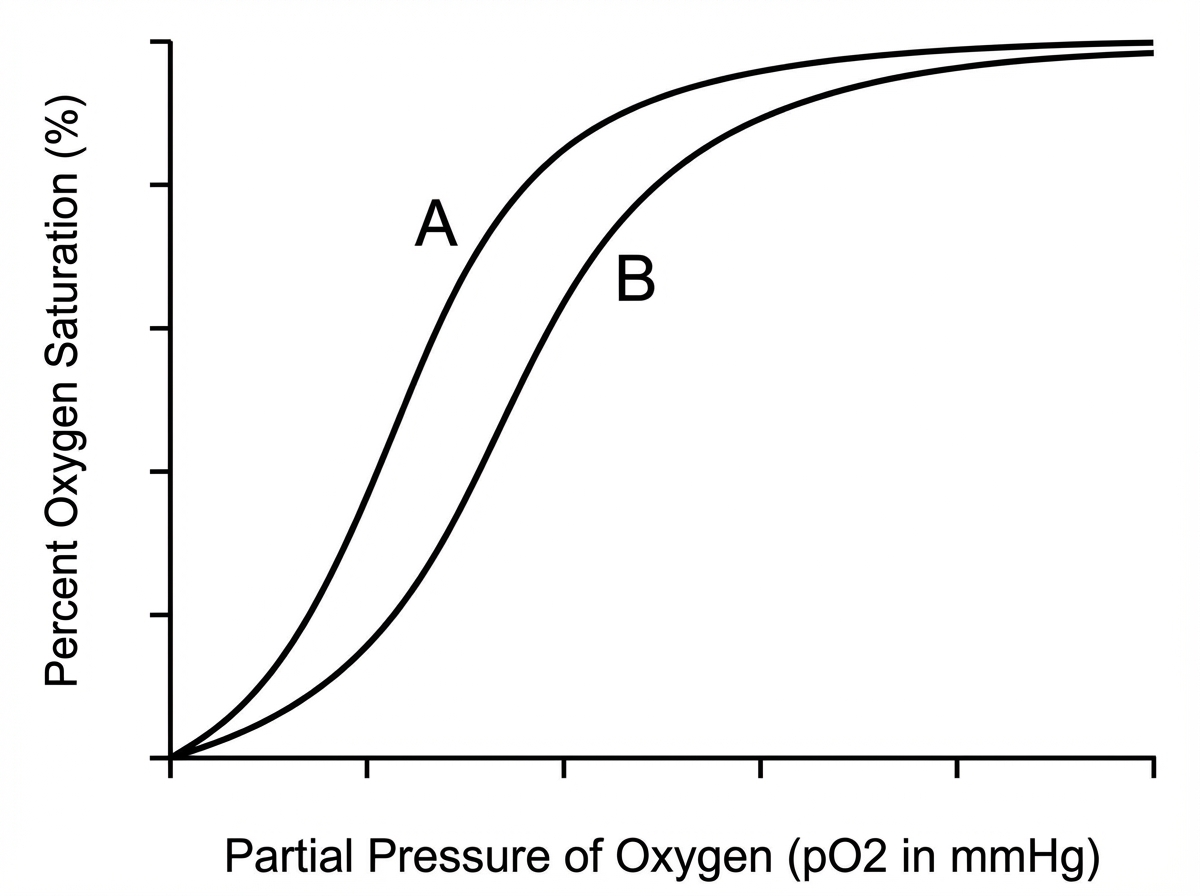
An investigator is conducting a study on hematological factors that affect the affinity of hemoglobin for oxygen. An illustration of two graphs (A and B) that represent the affinity of hemoglobin for oxygen is shown. Which of the following best explains a shift from A to B?
Want unlimited practice?
Get full access to all questions, explanations, and performance tracking.
Scan to download app