
Venous pressure and return — MCQs

A 40-year-old female volunteers for an invasive study to measure her cardiac function. She has no previous cardiovascular history and takes no medications. With the test subject at rest, the following data is collected using blood tests, intravascular probes, and a closed rebreathing circuit: Blood hemoglobin concentration 14 g/dL Arterial oxygen content 0.22 mL O2/mL Arterial oxygen saturation 98% Venous oxygen content 0.17 mL O2/mL Venous oxygen saturation 78% Oxygen consumption 250 mL/min The patient's pulse is 75/min, respiratory rate is 14/ min, and blood pressure is 125/70 mm Hg. What is the cardiac output of this volunteer?
A 27-year-old man is brought to the emergency department 30 minutes after being shot in the abdomen during a violent altercation. His temperature is 36.5°C (97.7°F), pulse is 118/min and regular, and blood pressure is 88/65 mm Hg. Examination shows cool extremities. Abdominal examination shows a 2.5-cm entrance wound in the left upper quadrant at the midclavicular line, below the left costal margin. Focused ultrasound shows free fluid in the left upper quadrant. Which of the following sets of hemodynamic changes is most likely in this patient? Cardiac output (CO) | Pulmonary capillary wedge pressure (PCWP) | Systemic vascular resistance (SVR) | Central venous pressure (CVP)
A 60-year-old male engineer who complains of shortness of breath when walking a few blocks undergoes a cardiac stress test because of concern for coronary artery disease. During the test he asks his cardiologist about what variables are usually used to quantify the functioning of the heart. He learns that one of these variables is stroke volume. Which of the following scenarios would be most likely to lead to a decrease in stroke volume?
A 32-year-old woman comes to the physician for a screening health examination that is required for scuba diving certification. The physician asks her to perform a breathing technique: following deep inspiration, she is instructed to forcefully exhale against a closed airway and contract her abdominal muscles while different cardiovascular parameters are evaluated. Which of the following effects is most likely after 10 seconds in this position?
A 37-year-old man is brought to the emergency department following a motor vehicle collision. His temperature is 38.1°C (100.6°F), pulse is 39/min, respirations are 29/min, and blood pressure is 58/42 mm Hg. There is no improvement in his blood pressure despite adequate fluid resuscitation. A drug is administered that causes increased IP3 concentrations in arteriolar smooth muscle cells and increased cAMP concentrations in cardiac myocytes. This drug only has a negligible effect on cAMP concentration in bronchial smooth muscle cells. Which of the following sets of cardiovascular changes is most likely following administration of this drug?
A 71-year-old man presents to the emergency department with severe substernal chest pain. An initial EKG demonstrates ST elevation in leads V2, V3, V4, and V5 with reciprocal changes. The patient is started on aspirin and heparin and is transferred to the cardiac catheterization lab. The patient recovers over the next several days. On the floor, the patient complains of feeling very fatigued and feels too weak to ambulate even with the assistance of physical therapy. Chest radiography reveals an enlarged cardiac silhouette with signs of fluid bilaterally in the lung bases. His temperature is 98.4°F (36.9°C), blood pressure is 85/50 mmHg, pulse is 110/min, respirations are 13/min, and oxygen saturation is 97% on room air. Which of the following would be expected to be seen in this patient?
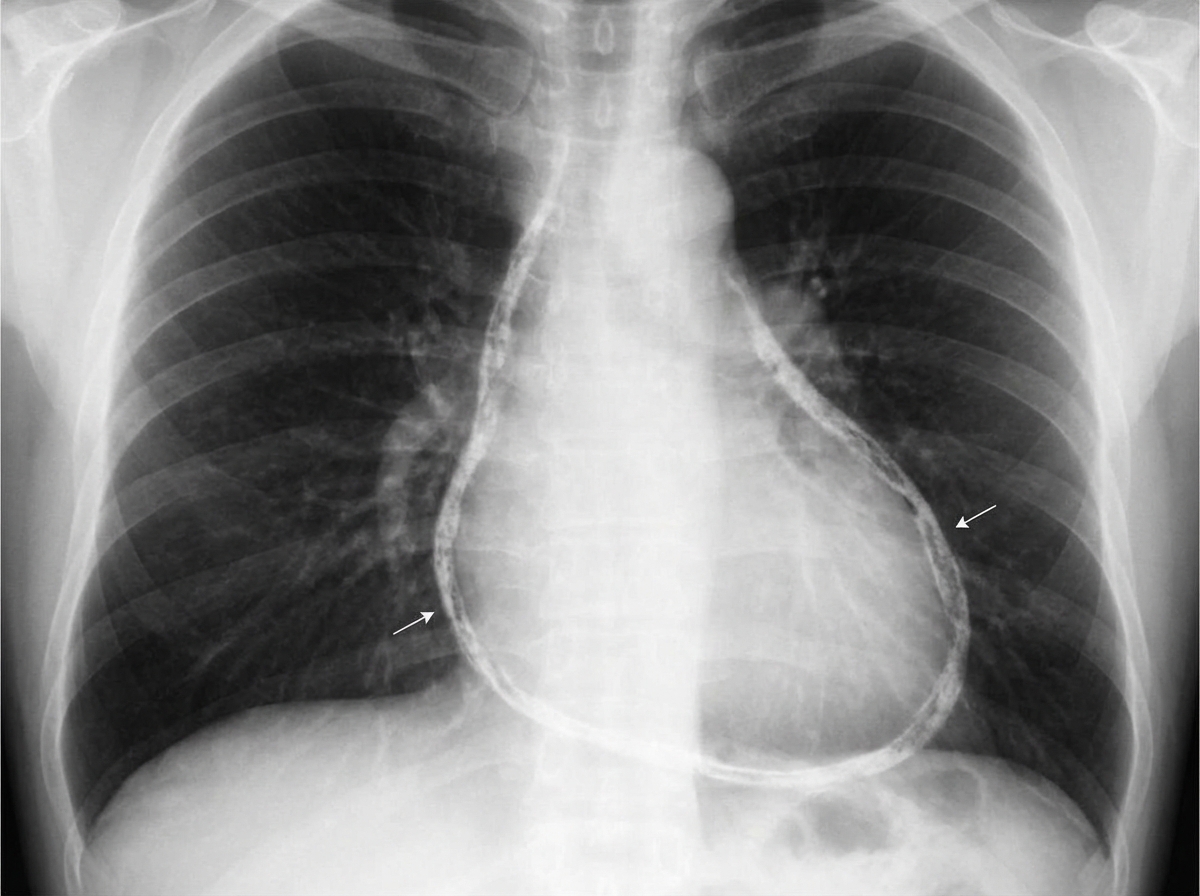
A 64-year-old man who recently immigrated to the United States from Haiti comes to the physician because of a 3-week history of progressively worsening exertional dyspnea and fatigue. For the past few days, he has also had difficulty lying flat due to trouble breathing. Over the past year, he has had intermittent fever, night sweats, and cough but he has not been seen by a physician for evaluation of these symptoms. His temperature is 37.8°C (100°F). An x-ray of the chest is shown. Further evaluation of this patient is most likely to show which of the following findings?
A 64-year-old male with a history of coronary artery disease, hypertension, hyperlipidemia, and type II diabetes presents to his primary care physician with increasing shortness of breath and ankle swelling over the past month. Which of the following findings is more likely to be seen in left-sided heart failure and less likely to be seen in right-sided heart failure?
A 37-year-old man is brought to the emergency department by ambulance after a motor vehicle accident. He suffered multiple deep lacerations and experienced significant blood loss during transport. In the emergency department, his temperature is 98.6°F (37°C), blood pressure is 102/68 mmHg, pulse is 112/min, and respirations are 22/min. His lacerations are sutured and he is given 2 liters of saline by large bore intravenous lines. Which of the following changes will occur in this patient's cardiac physiology due to this intervention?
A 19-year-old man presents to the clinic with a complaint of increasing shortness of breath for the past 2 years. His shortness of breath is associated with mild chest pain and occasional syncopal attacks during strenuous activity. There is no history of significant illness in the past, however, one of his uncles had similar symptoms when he was his age and died while playing basketball a few years later. He denies alcohol use, tobacco consumption, and the use of recreational drugs. On examination, pulse rate is 76/min and is regular and bounding; blood pressure is 130/70 mm Hg. A triple apical impulse is observed on the precordium and a systolic ejection crescendo-decrescendo murmur is audible between the apex and the left sternal border along with a prominent fourth heart sound. The physician then asks the patient to take a deep breath, close his mouth, and pinch his nose and try to breathe out without allowing his cheeks to bulge out. In doing so, the intensity of the murmur increases. Which of the following hemodynamic changes would be observed first during this maneuver?
Want unlimited practice?
Get full access to all questions, explanations, and performance tracking.
Scan to download app