
Gastrointestinal hormones — MCQs

A scientist is studying the mechanism by which the gastrointestinal system coordinates the process of food digestion. Specifically, she is interested in how distension of the lower esophagus by a bolus of food changes responses in the downstream segments of the digestive system. She observes that there is a resulting relaxation and opening of the lower esophageal (cardiac) sphincter after the introduction of a food bolus. She also observes a simultaneous relaxation of the orad stomach during this time. Which of the following substances is most likely involved in the process being observed here?
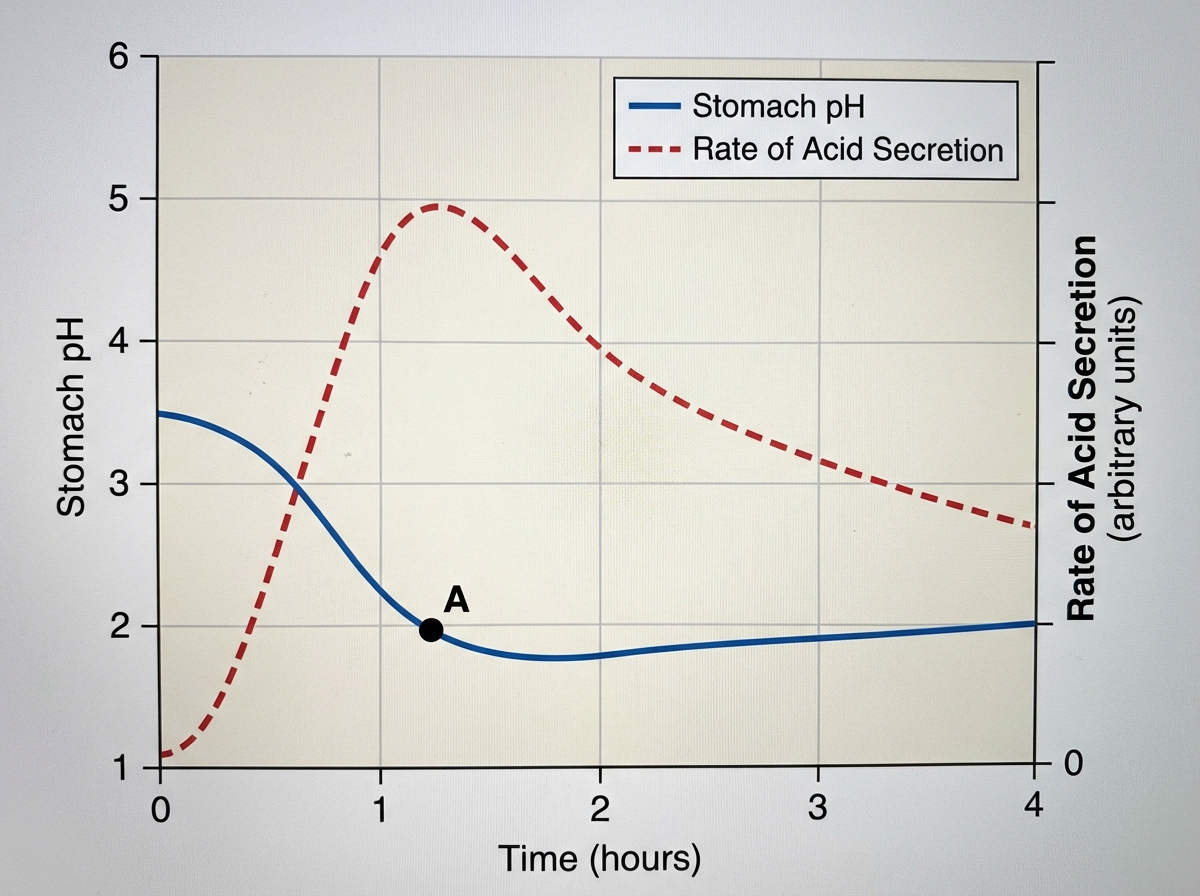
Nine healthy subjects participate in a study of gastric secretions. Subjects are asked to eat a meal at hour 0, at which time the pH of stomach contents and rate of stomach acid secretions are measured over the next 4 hours. Results of the study are shown. Which of the following mediators is most active at point A in the graph?
A 49-year-old male complains of heartburn, epigastric pain, and diarrhea. He has a past medical history significant for heartburn that is nonresponsive to omeprazole. He denies any alcohol intake, and has not been taking any nonsteroidal anti-inflammatory drugs. An endoscopy is performed, which shows two ulcers in the proximal duodenum, and one in the distal third of the duodenum. Which of the following is most likely true about this patient’s current condition?
A 57-year-old male presents to his primary care physician with upper abdominal pain. He reports a 3-month history of mild epigastric pain that improves with meals. He has lost 15 pounds since his symptoms started. His past medical history is notable for gynecomastia in the setting of a prolactinoma for which he underwent surgical resection over 10 years prior. He has a 15-pack-year smoking history, a history of heroin abuse, and is on methadone. His family history is notable for parathyroid adenoma in his father. His temperature is 98.8°F (37.1°C), blood pressure is 125/80 mmHg, pulse is 78/min, and respirations are 18/min. This patient’s symptoms are most likely due to elevations in a substance with which of the following functions?
An investigator is studying gastric secretions in human volunteers. Measurements of gastric activity are recorded after electrical stimulation of the vagus nerve. Which of the following sets of changes is most likely to occur after vagus nerve stimulation? $$$ Somatostatin secretion %%% Gastrin secretion %%% Gastric pH $$$
A 39-year-old woman presents to her primary care physician because she has been experiencing intermittent abdominal pain for the last 2 weeks. She says that the pain is squeezing in nature, is located in the right upper quadrant, and is particularly severe after eating a meal. After a diagnosis is made, the patient asks why the pain gets worse after eating. The physician explains that food is detected by the gastrointestinal tract through numerous receptors and that this information is transmitted to other parts of the body to cause compensatory changes. The neurons responsible for transmitting this information are most likely located in a layer of the intestine that has which of the following characteristics?
During a study on gastrointestinal hormones, a volunteer is administered the hormone secreted by S cells. Which of the following changes most likely represent the effect of this hormone on gastric and duodenal secretions? $$$ Gastric H+ %%% Duodenal HCO3- %%% Duodenal Cl- $$$
Which of the following cells in the body depends on dynein for its unique functioning?
A 50-year-old woman with long-standing diabetes presents with severe, watery diarrhea that wakes her at night. Stool studies show normal osmotic gap and negative stool cultures. Colonoscopy is normal. Trial of fasting does not improve diarrhea. Gastric emptying study shows delayed emptying. What neurotransmitter deficiency in the enteric nervous system best explains both her gastric and colonic dysmotility?
A 25-year-old man undergoes extensive small bowel resection following trauma, leaving 40 cm of jejunum anastomosed to the ascending colon. The ileocecal valve is removed. Six months postoperatively, he requires total parenteral nutrition. Despite this, he develops calcium oxalate kidney stones. Evaluate the mechanism linking his intestinal resection to nephrolithiasis.
Want unlimited practice?
Get full access to all questions, explanations, and performance tracking.
Scan to download app