
Buffer systems (bicarbonate, phosphate, protein) — MCQs

Which factor most strongly influences protein filtration at the glomerulus?
An investigator studying epigenetic mechanisms isolates histone proteins, the structural motifs involved in DNA binding and regulation of transcription. The peptide bonds of histone proteins are hydrolyzed and one type of amino acid is isolated. At normal body pH, this amino acid has a net charge of +1 . The investigator performs titration of this amino acid and obtains the graph shown. The isolated amino acid is most likely which of the following?
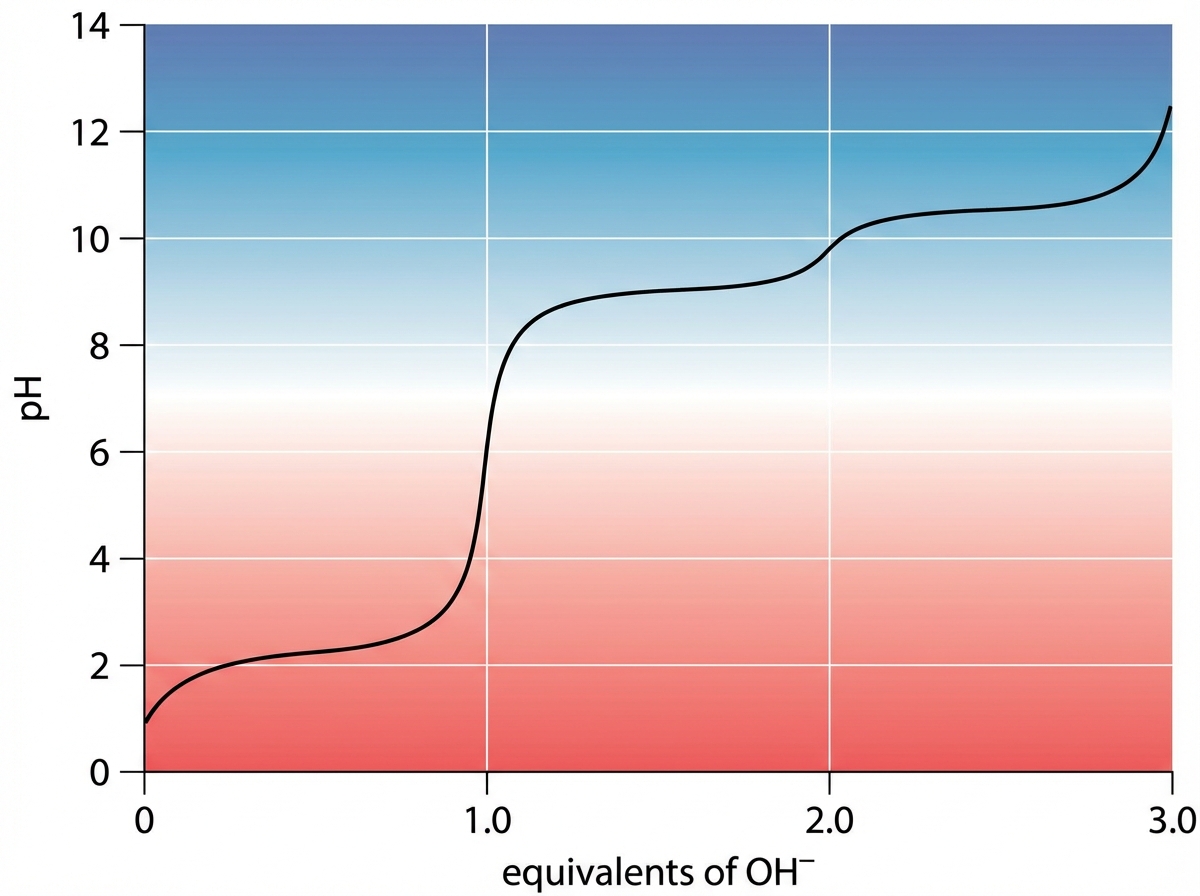
Which transport mechanism is primarily responsible for calcium reabsorption in the proximal tubule?
A 24-year-old male is brought in by ambulance to the emergency department after he was found unresponsive at home for an unknown length of time. Upon arrival, he is found to be severely altered and unable to answer questions about his medical history. Based on clinical suspicion, a panel of basic blood tests are obtained including an arterial blood gas, which shows a pH of 7.32, a pCO2 of 70, and a bicarbonate level of 30 mEq/L. Which of the following is most likely the primary disturbance leading to the values found in the ABG?
A 25-year-old woman with an extensive psychiatric history is suspected of having metabolic acidosis after ingesting a large amount of aspirin in a suicide attempt. Labs are drawn and the values from the ABG are found to be: PCO2: 25, and HCO3: 15, but the pH value is smeared on the print-out and illegible. The medical student is given the task of calculating the pH using the pCO2 and HCO3 concentrations. He recalls from his first-year physiology course that the pKa of relevance for the bicarbonate buffering system is approximately 6.1. Which of the following is the correct formula the student should use, using the given values from the incomplete ABG?
A 39-year-old man comes to the emergency department because of a 2-day history of fever, chills, dyspnea, and a non-bloody productive cough. He was diagnosed with HIV infection 4 years ago and has been on highly active antiretroviral therapy since then. His temperature is 38.8°C (101.8°F). Examination shows crackles over the left lower lung base. His CD4+ T-lymphocyte count is 520/mm3 (N ≥ 500). An x-ray of the chest shows an infiltrate in the left lower lobe. Sputum cultures grow colonies with a narrow zone of green hemolysis without clearing on blood agar. The most likely causal pathogen of this patient's condition produces which of the following virulence factors?
A 44-year-old Caucasian male complains of carpopedal spasms, peri-oral numbness, and paresthesias of the hands and feet. His wife also mentions that he had a seizure not too long ago. His past surgical history is significant for total thyroidectomy due to papillary thyroid carcinoma. They then realized all of the symptoms occurred after the surgery. Which of the following would be present in this patient?
A 41-year-old man presents to urgent care with a 1-week history of severe diarrhea. He says that he has been having watery stools every 2-3 hours. The stools do not contain blood and do not float. On presentation, he is observed to have significant facial flushing, and laboratory tests reveal the following: Serum: Na+: 137 mEq/L K+: 2.7 mEq/L Cl-: 113 mEq/L HCO3-: 14 mEq/L A computed tomography scan reveals a small intra-abdominal mass. Staining of this mass would most likely reveal production of which of the following?
A 67-year-old woman presents to the Emergency Department complaining of weakness and fatigue. She says she caught a “stomach bug” and has not been able to eat anything without vomiting for three days. Past medical history is significant for hyperlipidemia. She takes atorvastatin and a multivitamin daily, except for the last two days due to nausea. Today her heart rate is 106/min, respiratory rate is 16/min, temperature is 37.6°C (99.7°F) and blood pressure of 110/70 mm Hg. On physical examination, her oral mucosa is dry and she looks pale and uncomfortable. She is admitted for care and administered ondansetron. An intravenous infusion of normal saline is also initiated. An arterial blood gas is collected. Which of the following results is expected to be seen in this patient?
A 22-year-old woman presents to the physician due to lightheadedness. Earlier in the day, she had her first job interview since graduating from college 3 months ago. While waiting outside the interviewer’s office, she began to feel nervous and started breathing really fast. She then felt as if she was going to faint. She excused herself from the interview, and requested a friend to drive her to the clinic. Which of the following is responsible for her symptoms?
Want unlimited practice?
Get full access to all questions, explanations, and performance tracking.
Scan to download app