
Hormonal contraceptives — MCQs

A 22-year-old woman comes to the physician for a follow-up examination. She had a spontaneous abortion 3 months ago. Her last menstrual period was 3 weeks ago. She reports feeling sad occasionally but has continued working and attending social events. She does not have any suicidal ideation or tendencies. She does not smoke. Vital signs are within normal limits. Physical examination including pelvic examination show no abnormalities. A urine pregnancy test is negative. She wants to avoid becoming pregnant for the foreseeable future and is started on combined oral contraceptive pills. Which of the following is the patient at risk of developing?
A 36-year-old woman comes to the physician to discuss contraceptive options. She is currently sexually active with one male partner, and they have not been using any contraception. She has no significant past medical history and takes no medications. She has smoked one pack of cigarettes daily for 15 years. She is allergic to latex and copper. A urine pregnancy test is negative. Which of the following contraceptive methods is contraindicated in this patient?
A 19-year-old woman comes to the physician because of recent weight gain. She started a combined oral contraceptive for dysmenorrhea and acne six months ago. She has been taking the medication consistently and experiences withdrawal bleeding on the 4th week of each pill pack. Her acne and dysmenorrhea have improved significantly. The patient increased her daily exercise regimen to 60 minutes of running and weight training three months ago. She started college six months ago. She has not had any changes in her sleep or energy levels. Her height is 162 cm and she weighs 62 kg; six months ago she weighed 55 kg. Examination shows clear skin and no other abnormalities. A urine pregnancy test is negative. Which of the following is the most appropriate next step in management?
A 22-year-old female presents to her PCP after having unprotected sex with her boyfriend 2 days ago. She has been monogamous with her boyfriend but is very concerned about pregnancy. The patient requests emergency contraception to decrease her likelihood of getting pregnant. A blood hCG test returns negative. The PCP prescribes the patient ethinyl estradiol 100 mcg and levonorgestrel 0.5 mg to be taken 12 hours apart. What is the most likely mechanism of action for this combined prescription?
An otherwise healthy 18-year-old girl comes to the physician because of a 1-year history of severe acne vulgaris over her face, upper back, and arms. Treatment with oral antibiotics and topical combination therapy with benzoyl peroxide and retinoid has not completely resolved her symptoms. Examination shows oily skin with numerous comedones, pustules, and scarring over the face and upper back. Long-term therapy is started with combined oral contraceptives. This medication significantly reduces the risk of developing which of the following conditions?
A 21-year-old G2P1 woman presents to the clinic and is curious about contraception immediately after her baby is born. She is anxious about taking care of one child and does not believe that she can handle the responsibility of caring for another. She has no other questions or complaints today. Her past medical history consists of generalized anxiety disorder, antithrombin deficiency, and chronic deep vein thrombosis. She has been hospitalized for acute on chronic deep vein thrombosis. Her only medication is buspirone. Her blood pressure is 119/78 mm Hg and the heart rate is 78/min. BMI of the patient is 32 kg/m2. On physical examination, her fundal height is 21 cm from pubic symphysis. No ovarian masses are palpated during the bimanual examination. Ultrasound exhibits a monoamniotic, monochorionic fetus. Which of the following forms of contraception would be the most detrimental given her risk factors?
A 44-year-old woman comes to the physician because of a 6-month history of fatigue, constipation, and a 7-kg (15.4-lb) weight gain. Menses occur irregularly in intervals of 40–50 days. Her pulse is 51/min, and blood pressure is 145/86 mm Hg. Examination shows conjunctival pallor and cool, dry skin. There is mild, nonpitting periorbital edema. Serum thyroid-stimulating hormone concentration is 8.1 μU/mL. Treatment with the appropriate pharmacotherapy is initiated. After several weeks of therapy with this drug, which of the following hormonal changes is expected?
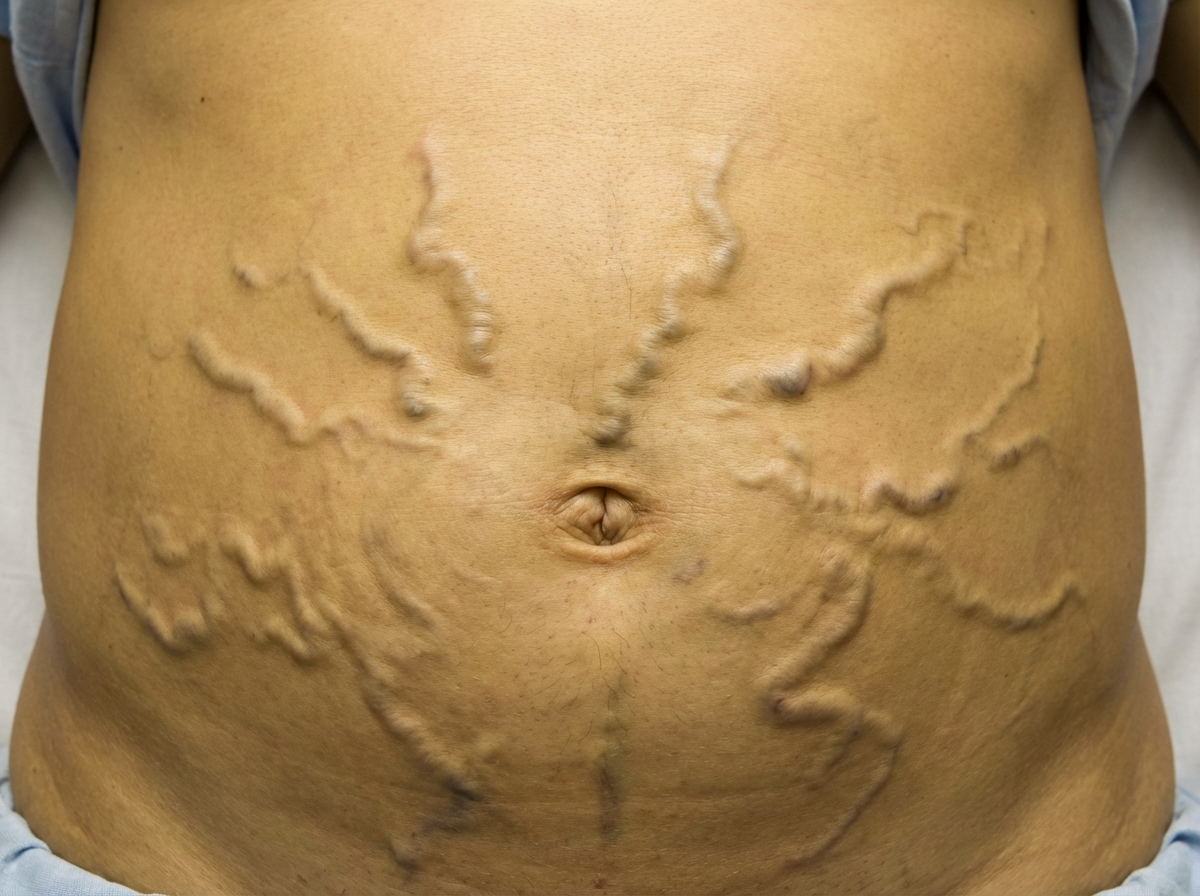
A 56-year-old homeless male presents to a free clinic for a health evaluation. He states that he has not seen a physician in over 25 years but finally decided to seek medical attention after he noticed recent chronic fatigue and weight gain. Upon questioning, he endorses drinking 2 handles of whiskey per day. On exam, the physician observes the findings shown in Figures A-D. Which of the following findings would also be expected to be observed in this patient?
A 58-year-old woman presents to the office after receiving a bone mineral density screening test result with a T score of -4.1 and a Z score of -3.8. She is diagnosed with osteoporosis. A review of her medical history reveals that she has taken estrogen-containing oral contraceptive pills from the age of 20 to 30. She suffered from heartburn from the age of 45 and took lansoprazole and ranitidine often for her symptoms. She also was on lithium for 2 years after being diagnosed with bipolar disorder at the age of 54. Last year she was diagnosed with congestive heart failure and was started on low dose hydrochlorothiazide. Which of her medications most likely contributed to the development of her osteoporosis?
A 50-year-old woman comes to the physician for the evaluation of excessive hair growth on her chin over the past 2 weeks. She also reports progressive enlargement of her gums. Three months ago, she underwent a liver transplantation due to Wilson disease. Following the procedure, the patient was started on transplant rejection prophylaxis. She has a history of poorly-controlled type 2 diabetes mellitus. Temperature is 37°C (98.6°F), pulse is 80/min, respirations are 22/min, and blood pressure is 150/80 mm Hg. Physical examination shows dark-pigmented, coarse hair on the chin, upper lip, and chest. The gingiva and the labial mucosa are swollen. There is a well-healed scar on her right lower abdomen. Which of the following drugs is the most likely cause of this patient's findings?
Want unlimited practice?
Get full access to all questions, explanations, and performance tracking.
Scan to download app