
Local anesthetics — MCQs

During a nerve conduction study, which of the following ions is primarily responsible for the rapid upstroke of the action potential?
Two hours after undergoing elective cholecystectomy with general anesthesia, a 41-year-old woman is evaluated for decreased mental status. BMI is 36.6 kg/m2. Respirations are 18/min and blood pressure is 126/73 mm Hg. Physical examination shows the endotracheal tube in normal position. She does not respond to sternal rub and gag reflex is absent. Arterial blood gas analysis on room air shows normal PO2 and PCO2 levels. Which of the following anesthetic properties is the most likely cause of these findings?
A group of researchers is studying various inhaled substances to determine their anesthetic properties. In particular, they are trying to identify an anesthetic with fast onset and quick recovery for use in emergencies. They determine the following data: Inhalational anesthetic Blood-gas partition coefficient A 0.15 B 0.92 C 5.42 Which of the following statements is accurate with regard to these inhaled anesthetic substances?
A 42-year-old man presents to his family physician for evaluation of oral pain. He states that he has increasing pain in a molar on the top left of his mouth. The pain started 1 week ago and has been progressively worsening since then. His medical history is significant for hypertension and type 2 diabetes mellitus, both of which are currently controlled with lifestyle modifications. His blood pressure is 124/86 mm Hg, heart rate is 86/min, and respiratory rate is 14/min. Physical examination is notable for a yellow-black discoloration of the second molar on his left upper mouth. The decision is made to refer him to a dentist for further management of this cavity. The patient has never had any dental procedures and is nervous about what type of sedation will be used. Which of the following forms of anesthesia utilizes solely an oral or intravenous anti-anxiety medication?
A 28-year-old man comes to the emergency department for an injury sustained while doing construction. Physical examination shows a long, deep, irregular laceration on the lateral aspect of the left forearm with exposed fascia. Prior to surgical repair of the injury, a brachial plexus block is performed using a local anesthetic. Shortly after the nerve block is performed, he complains of dizziness and then loses consciousness. His radial pulse is faint and a continuous cardiac monitor shows a heart rate of 24/min. Which of the following is the most likely mechanism of action of the anesthetic that was administered?
A 50-year-old male is brought to the dermatologist's office with complaints of a pigmented lesion. The lesion is uniformly dark with clean borders and no asymmetry and has been increasing in size over the past two weeks. He works in construction and spends large portions of his day outside. The dermatologist believes that this mole should be biopsied. To prepare the patient for the biopsy, the dermatologist injects a small amount of lidocaine into the skin around the lesion. Which of the following nerve functions would be the last to be blocked by the lidocaine?
A 45-year-old homeless man presents to the emergency department with a 1-week history of an intensely pruritic, red rash on his hands, wrists, and finger webs. The itching is worse at night. Physical examination reveals small, erythematous papules and burrows. A topical drug with which of the following mechanisms of action is most likely to be effective in treating this condition?
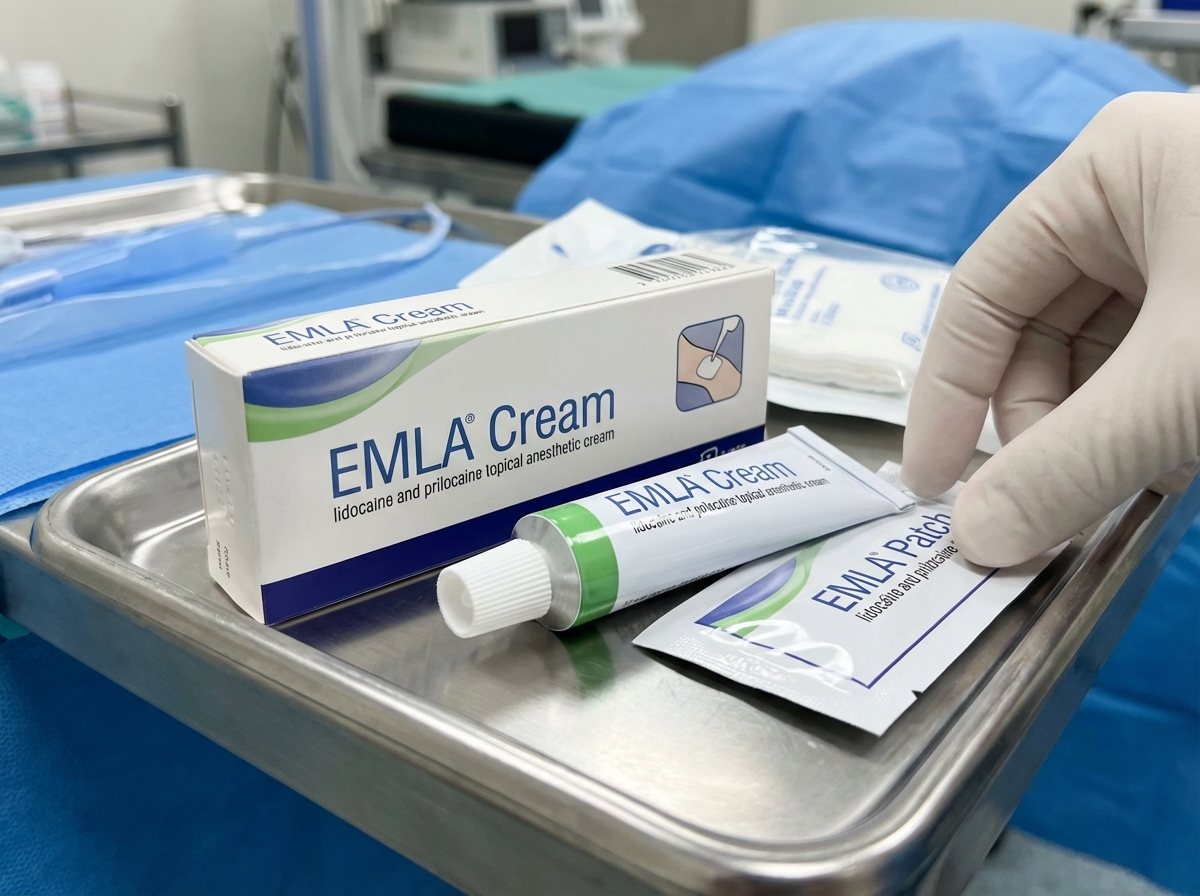
Which of the following statements regarding the patch shown in the figure is correct?
A 4-year-old boy presents to the Emergency Department with wheezing and shortness of breath after playing with the new family pet. Which of the following immunological factors is most involved in generating the antibodies necessary for mast cell Fc-receptor cross-linking and degranulation?
A 20-year-old woman presents to the emergency department after developing a widespread rash when she was playing in the park. She states she feels somewhat light-headed. She is otherwise healthy and has no significant past medical history. Her temperature is 97.0°F (36.1°C), blood pressure is 84/54 mmHg, pulse is 130/min, respirations are 22/min, and oxygen saturation is 95% on room air. Physical exam is notable for bilateral wheezing and a diffuse urticarial rash. Which of the following is the next best step in management?
Want unlimited practice?
Get full access to all questions, explanations, and performance tracking.
Scan to download app