
Direct vasodilators — MCQs

A 72-year-old man comes to the emergency department because of blurry vision for the past 3 days. He has also had 4 episodes of right-sided headaches over the past month. He has no significant past medical history. His father died of coronary artery disease at the age of 62 years. His temperature is 37.2°C (99°F), pulse is 94/min, and blood pressure is 232/128 mm Hg. Fundoscopy shows right-sided optic disc blurring and retinal hemorrhages. A medication is given immediately. Five minutes later, his pulse is 75/min and blood pressure is 190/105 mm Hg. Which of the following drugs was most likely administered?
A 75 year-old gentleman presents to his general practitioner. He is currently being treated for hypertension and is on a multi-drug regimen. His current blood pressure is 180/100. The physician would like to begin treatment with minoxidil or hydralazine. Which of the following side effects is associated with administration of these drugs?
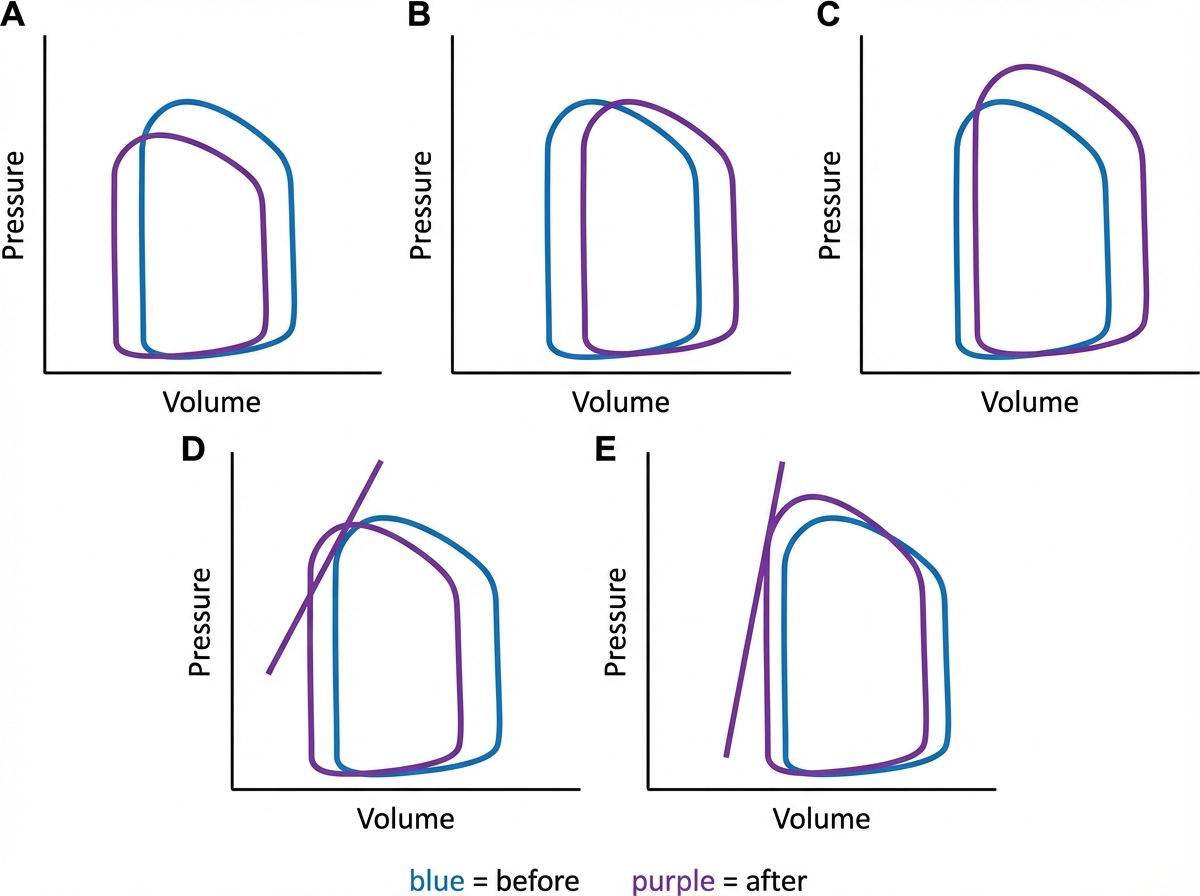
A 55-year-old man presents to the emergency department complaining of mild vision changes, dizziness, and severe pain in the chest for the past hour. He has also been experiencing nausea since this morning and has already vomited twice. Past medical history includes poorly controlled type 2 diabetes and end-stage renal disease requiring dialysis. His blood pressure is 210/100 mm Hg, pulse is 110/min, and respirations are 18/min. Ophthalmic examination of his eyes show papilledema and flame-shaped hemorrhages and he is diagnosed with hypertensive emergency. Treatment involves rapidly lowering his blood pressure, and he is started on intravenous sodium nitroprusside while emergent dialysis is arranged. Which of the following cardiac pressure-volume loops closely represents the action of the drug he has been administered, where blue represents before administration and purple represent after administration?
A 55-year-old woman comes to the physician because of involuntary hand movements that improve with alcohol consumption. Physical examination shows bilateral hand tremors that worsen when the patient is asked to extend her arms out in front of her. The physician prescribes a medication that is associated with an increased risk of bronchospasms. This drug has which of the following immediate effects on the cardiovascular system? Stroke volume | Heart rate | Peripheral vascular resistance
A research team is studying the effects of a novel drug that was discovered to treat type 2 diabetes. In order to learn more about its effects, they follow patients who are currently taking the drug and determine whether there are adverse effects that exceed anticipated levels and may therefore be drug-related. They discover that the drug causes an excess of sudden cardiac death in 19 patients with renal failure out of 2 million total patients that are followed. Based on these results, an additional warning about this serious adverse effect is added to the investigator brochure for the drug. Which of the following clinical phase studies does this study most likely describe?
A 28-year-old woman, gravida 1, para 0, at 32 weeks' gestation is admitted to the hospital for the management of elevated blood pressures. On admission, her pulse is 81/min, and blood pressure is 165/89 mm Hg. Treatment with an intravenous drug is initiated. Two days after admission, she has a headache and palpitations. Her pulse is 116/min and regular, and blood pressure is 124/80 mm Hg. Physical examination shows pitting edema of both lower extremities that was not present on admission. This patient most likely was given a drug that predominantly acts by which of the following mechanisms?
A 54-year-old African American male presents to the emergency department with 1 day history of severe headaches. He has a history of poorly controlled hypertension and notes he hasn't been taking his antihypertensive medications. His temperature is 100.1 deg F (37.8 deg C), blood pressure is 190/90 mmHg, pulse is 60/min, and respirations are 15/min. He is started on a high concentration sodium nitroprusside infusion and transferred to the intensive care unit. His blood pressure eventually improves over the next two days and his headache resolves, but he becomes confused and tachycardic. Labs reveal a metabolic acidosis. Which of the following is the best treatment?
A 61-year-old obese man with recently diagnosed hypertension returns to his primary care provider for a follow-up appointment and blood pressure check. He reports feeling well with no changes since starting his new blood pressure medication 1 week ago. His past medical history is noncontributory. Besides his blood pressure medication, he takes atorvastatin and a daily multivitamin. The patient reports a 25-pack-year smoking history and is a social drinker on weekends. Today his physical exam is normal. Vital signs and laboratory results are provided in the table. Laboratory test 2 weeks ago Today Blood pressure 159/87 mm Hg Blood pressure 164/90 mm Hg Heart rate 90/min Heart rate 92/min Sodium 140 mE/L Sodium 142 mE/L Potassium 3.1 mE/L Potassium 4.3 mE/L Chloride 105 mE/L Chloride 103 mE/L Carbon dioxide 23 mE/L Carbon dioxide 22 mE/L BUN 15 mg/dL BUN 22 mg/dL Creatinine 0.80 mg/dL Creatinine 1.8 mg/dL Magnetic resonance angiography (MRA) shows a bilateral narrowing of renal arteries. Which of the following is most likely this patient's new medication that caused his acute renal failure?
A 27-year-old G1P0 woman at 25 weeks estimated gestational age presents with a blood pressure of 188/99 mm Hg during a routine prenatal visit. She has no symptoms, except for a mild headache. The patient's heart rate is 78/min. An injectable antihypertensive along with a beta-blocker is administered, and her blood pressure returns to normal within a couple of hours. She is sent home with advice to continue the beta-blocker. The patient returns after a couple of weeks with joint pain in both of her knees and fatigue. A blood test for anti-histone antibodies is positive. Which of the following is the mechanism of action of the intravenous antihypertensive medication most likely used in this patient?
A 70-year-old man comes to the physician for the evaluation of pain, cramps, and tingling in his lower extremities over the past 6 months. The patient reports that the symptoms worsen with walking more than two blocks and are completely relieved by rest. Over the past 3 months, his symptoms have not improved despite his participating in supervised exercise therapy. He has type 2 diabetes mellitus. He had smoked one pack of cigarettes daily for the past 50 years, but quit 3 months ago. He does not drink alcohol. His current medications include metformin, atorvastatin, and aspirin. Examination shows loss of hair and decreased skin temperature in the lower legs. Femoral pulses are palpable; pedal pulses are absent. Which of the following is the most appropriate treatment for this patient?
Want unlimited practice?
Get full access to all questions, explanations, and performance tracking.
Scan to download app