
Terbinafine — MCQs

You are seeing a patient in clinic who recently started treatment for active tuberculosis. The patient is currently being treated with rifampin, isoniazid, pyrazinamide, and ethambutol. The patient is not used to taking medicines and is very concerned about side effects. Specifically regarding the carbohydrate polymerization inhibiting medication, which of the following is a known side effect?
A scientist is studying the excretion of a novel toxin X by the kidney in order to understand the dynamics of this new substance. He discovers that this new toxin X has a clearance that is half that of inulin in a particular patient. This patient's filtration fraction is 20% and his para-aminohippuric acid (PAH) dynamics are as follows: Urine volume: 100 mL/min Urine PAH concentration: 30 mg/mL Plasma PAH concentration: 5 mg/mL Given these findings, what is the clearance of the novel toxin X?
A 65-year-old man comes to the physician for a routine health maintenance examination. He feels well. His most recent examination 2 years ago included purified protein derivative (PPD) skin testing and showed no abnormalities. He is a retired physician and recently came back from rural China where he completed a voluntary service at a local healthcare center. A PPD skin test is performed. Three days later, an induration of 12 mm is noted. An x-ray of the chest shows no abnormalities. He is started on a drug that inhibits the synthesis of mycolic acid. This patient is at greatest risk of developing which of the following adverse effects?
A 67-year-old man presents to his family physician’s office for a routine visit and to discuss a growth on his toenail that has been gradually enlarging for a month. He has a history of diabetes mellitus, hyperlipidemia, and hypertension and is on metformin, atorvastatin, and lisinopril. He admits to smoking 2 packs of cigarettes daily for the past 45 years. His blood pressure reading today is 132/88 mm Hg, heart rate is 78/min, respiration rate is 12/min and his temperature is 37.1°C (98.8°F). On exam, the patient appears alert and in no apparent distress. Capillary refill is 3 seconds. Diminished dull and sharp sensations are present bilaterally in the lower extremities distal to the mid-tibial region. An image of the patient’s toenail is provided. A potassium hydroxide (KOH) preparation of a nail clipping sample confirms the presence of hyphae. Which of the following treatment options will be most effective for this condition?
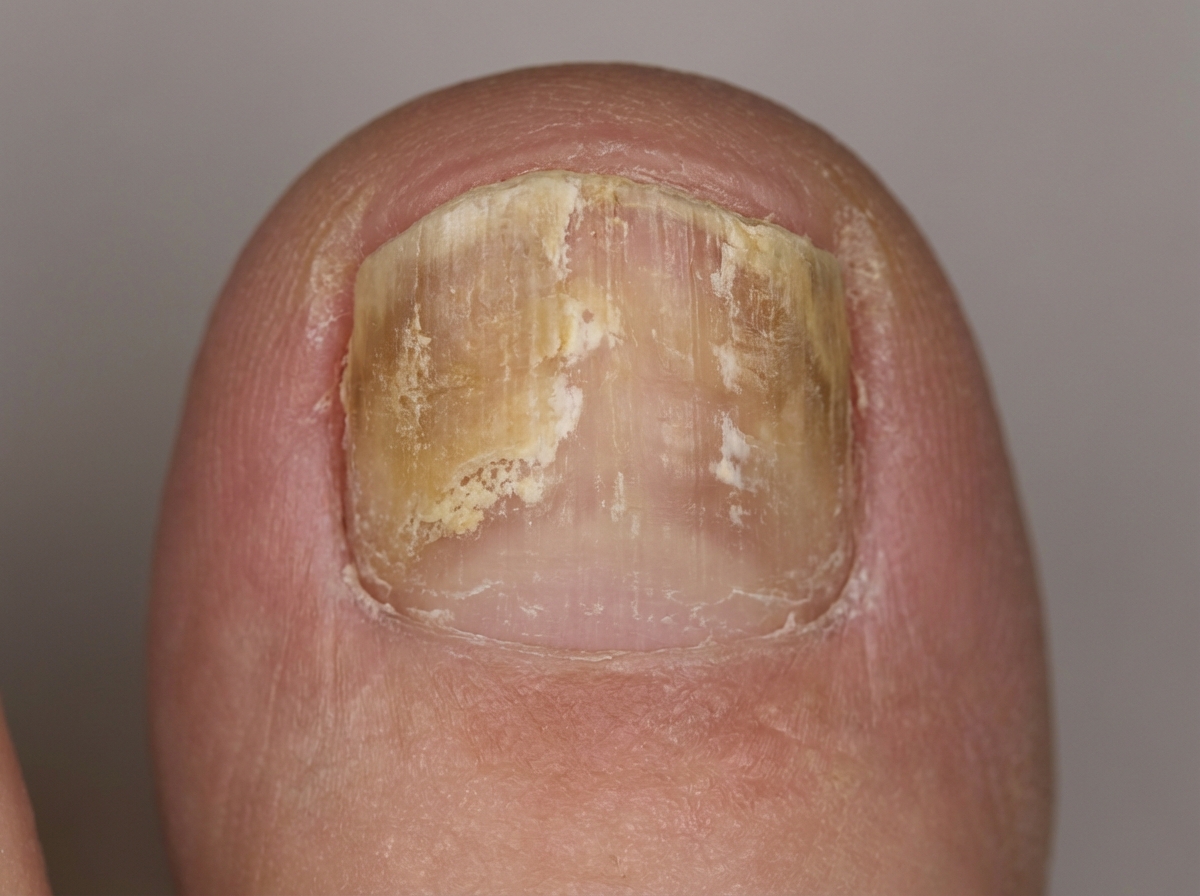
A 72-year-old woman with type 2 diabetes mellitus comes to the physician because she is concerned about the appearance of her toenails. Examination shows yellowish discoloration of all toenails on both feet. The edges of the toenails are lifted, and there is subungual debris. Potassium hydroxide preparation of scrapings from the nails shows multiple branching septate hyphae. Treatment with oral terbinafine is begun. Which of the following is the primary mechanism of action of this drug?
A potassium hydroxide preparation is conducted on a skin scraping of the hypopigmented area. Microscopy of the preparation shows long hyphae among clusters of yeast cells. Based on these findings, which of the following is the most appropriate pharmacotherapy?
A pharmaceutical company is studying a new drug that inhibits the glucose transporter used by intestinal enterocytes to absorb glucose into the body. The drug was designed such that it would act upon the glucose transporter similarly to how cyanide acts upon cytochrome proteins. During pre-clinical studies, the behavior of this drug on the activity of the glucose transporter is examined. Specifically, enterocyte cells are treated with the drug and then glucose is added to the solution at a concentration that saturates the activity of the transporter. The transport velocity and affinity of the transporters under these conditions are then measured. Compared to the untreated state, which of the following changes would most likely be seen in these transporters after treatment?
A 46-year-old man with HIV infection comes to the physician because of a 1-week history of severe retrosternal pain while swallowing. He has not been compliant with his antiretroviral drug regimen. His CD4+ T-lymphocyte count is 98/mm3 (N ≥ 500). Endoscopy shows white plaques in the esophagus. The most appropriate immediate treatment is a drug that inhibits which of the following enzymes?
A 62-year-old woman presents to her primary care physician for her annual check-up. She has no current complaints and says that she has been healthy over the last year. Her past medical history is significant for obesity and diabetes that is well controlled on metformin. She does not smoke and drinks socially. Selected lab results are shown below: High-density lipoprotein: 48 mg/dL Low-density lipoprotein: 192 mg/dL Triglycerides: 138 mg/dL Given these results, the patient is placed on the drug that will be the best therapy for these findings. Which of the following is a potential side effect of this treatment?
A 64-year-old woman with osteoarthritis presents to the emergency room with a 2-day history of nausea and vomiting. Over the past few weeks, the patient has been taking painkillers to control worsening knee pain. Physical examination reveals scleral icterus and tender hepatomegaly. The patient appears confused. Laboratory investigations reveal the following enzyme levels: Serum alanine aminotransferase (ALT) 845 U/L Aspartate aminotransferase (AST) 798 U/L Alkaline phosphatase 152 U/L Which of the following is the most appropriate antidote for the toxicity seen in this patient?
Want unlimited practice?
Get full access to all questions, explanations, and performance tracking.
Scan to download app