
Antifungal prophylaxis protocols — MCQs

A 26-year-old man comes to the physician for a follow-up examination. He was diagnosed with HIV infection 2 weeks ago. His CD4+ T-lymphocyte count is 162/mm3 (N ≥ 500). An interferon-gamma release assay is negative. Prophylactic treatment against which of the following pathogens is most appropriate at this time?
A 45-year-old HIV-positive male presents to his primary care physician complaining of decreased libido. He reports that he has been unable to maintain an erection for the past two weeks. He has never encountered this problem before. He was hospitalized four weeks ago for cryptococcal meningitis and has been on long-term antifungal therapy since then. His CD4 count is 400 cells/mm^3 and viral load is 5,000 copies/ml. He was previously non-compliant with HAART but since his recent infection, he has been more consistent with its use. His past medical history is also notable for hypertension, major depressive disorder, and alcohol abuse. He takes lisinopril and sertraline. His temperature is 98.6°F (37°C), blood pressure is 120/85 mmHg, pulse is 80/min, and respirations are 18/min. The physician advises the patient that side effects like decreased libido may manifest due to a drug with which of the following mechanisms of action?
A 69-year-old man with metastatic colon cancer is brought to the emergency department because of shortness of breath, fever, chills, and a productive cough with streaks of blood for the past 5 days. He has a history of emphysema. The patient does not have abdominal pain or headache. He receives chemotherapy with 5-fluorouracil, leucovorin, and oxaliplatin every 6 weeks; his last cycle was 3 weeks ago. His temperature is 38.3°C (101°F), pulse is 112/min, and blood pressure is 100/70 mm Hg. Pulse oximetry on room air shows an oxygen saturation of 83%. A few scattered inspiratory crackles are heard over the right lung. His mucous membranes are dry. Cardiac examination is normal. Laboratory studies show: Hemoglobin 9.3 mg/dL Leukocyte count 700/mm3 Segmented neutrophils 68% Lymphocytes 25% Eosinophils 4% Monocytes 3% Platelet count 104,000/mm3 Serum Glucose 75 mg/dL Urea nitrogen 41 mg/dL Creatinine 2.1 mg/dL Galactomannan antigen Positive Which of the following is the most appropriate initial pharmacotherapy?
A 67-year-old man is seen on the surgical floor after a transplant procedure. The previous day, the patient had a renal transplant from a matched donor. He is currently recovering and doing well. The patient has a past medical history of IV drug use, diabetes mellitus, oral cold sores, hypertension, renal failure, and dyslipidemia. The patient's current medications include lisinopril, atorvastatin, insulin, and aspirin. Prior to the procedure, he was also on dialysis. The patient is started on cyclosporine. The patient successfully recovers over the next few days. Which of the following medications should be started in this patient?
A 74-year-old man is admitted to the medical ward after he developed a fungal infection. He has aplastic anemia. The most recent absolute neutrophil count was 450/µL. An anti-fungal agent is administered that inhibits the fungal enzyme, (1→3)-β-D-glucan synthase, and thereby disrupts the integrity of the fungal cell wall. He responds well to the treatment. Although amphotericin B is more efficacious for his condition, it was not used because of the side effect profile. What was the most likely infection?
A 72-year-old woman with type 2 diabetes mellitus comes to the physician because she is concerned about the appearance of her toenails. Examination shows yellowish discoloration of all toenails on both feet. The edges of the toenails are lifted, and there is subungual debris. Potassium hydroxide preparation of scrapings from the nails shows multiple branching septate hyphae. Treatment with oral terbinafine is begun. Which of the following is the primary mechanism of action of this drug?
A 46-year-old man with HIV infection comes to the physician because of a 1-week history of severe retrosternal pain while swallowing. He has not been compliant with his antiretroviral drug regimen. His CD4+ T-lymphocyte count is 98/mm3 (N ≥ 500). Endoscopy shows white plaques in the esophagus. The most appropriate immediate treatment is a drug that inhibits which of the following enzymes?
A 55-year-old woman presents to the physician because of a fever 4 days after discharge from the hospital following induction chemotherapy for acute myeloid leukemia (AML). She has no other complaints and feels well otherwise. Other than the recent diagnosis of AML, she has no history of a serious illness. The temperature is 38.8°C (101.8°F), the blood pressure is 110/65 mm Hg, the pulse is 82/min, and the respirations are 14/min. Examination of the catheter site, skin, head and neck, heart, lungs, abdomen, and perirectal area shows no abnormalities. The results of the laboratory studies show: Hemoglobin 9 g/dL Leukocyte count 800/mm3 Percent segmented neutrophils 40% Platelet count 85,000/mm3 Which of the following is the most appropriate pharmacotherapy at this time?
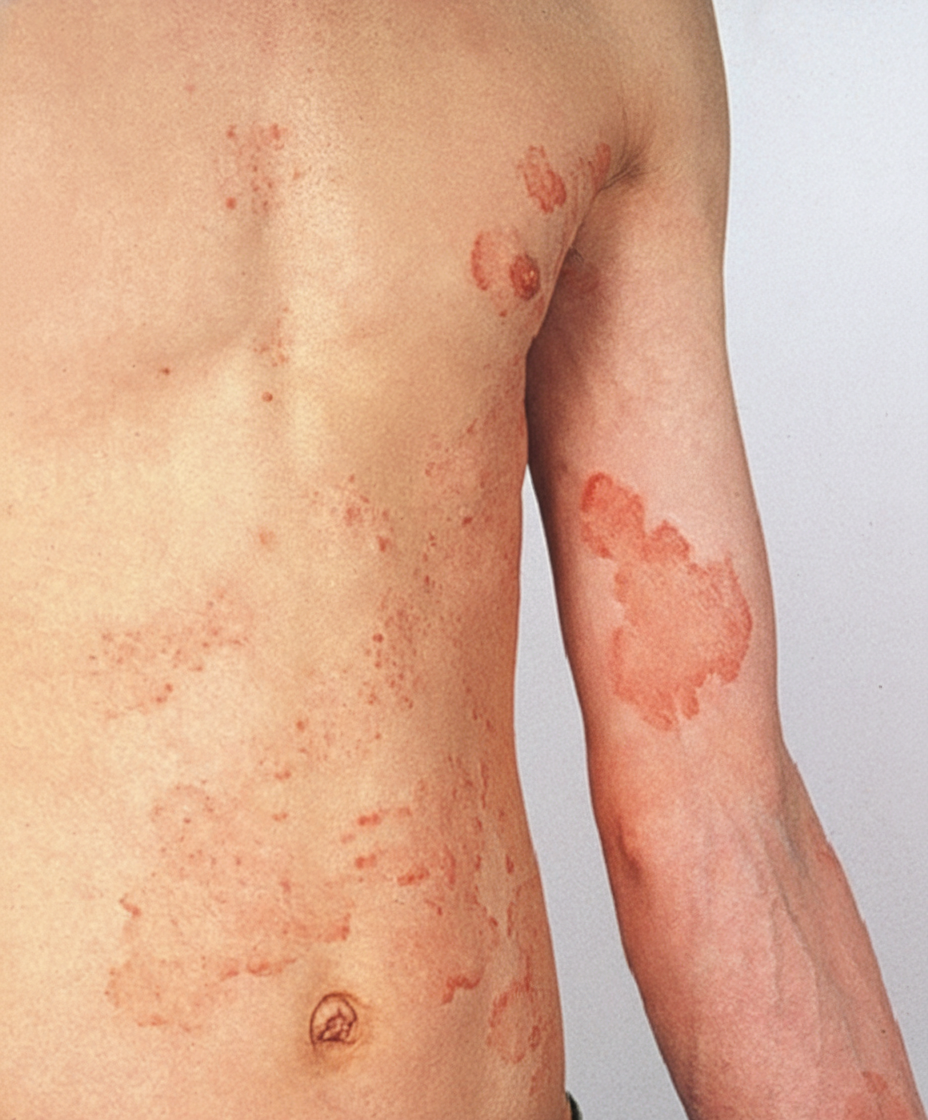
A previously healthy 16-year-old boy comes to the physician because of a pruritic rash on the chest that has become progressively larger over the past 10 days. It is not painful. He is sexually active with two female partners and uses condoms inconsistently. He works part-time as a lifeguard. He has no family history of serious illness. He does not smoke. He drinks 5–6 beers on weekends. His temperature is 36.7°C (98°F), pulse is 66/min, and blood pressure is 110/70 mm Hg. A photograph of the rash is shown below. Which of the following is the most appropriate next step in management?
A 35-year-old African American male is admitted to the hospital following a recent diagnosis of systemic histoplasmosis and subsequently treated with an intravenous anti-fungal agent. During the course of his hospital stay, he complains of headaches. Work-up reveals hypotension, anemia, and elevated BUN and creatinine. His medication is known to cause these side-effects through its binding of cell membrane ergosterol. With which anti-fungal is he most likely being treated?
Want unlimited practice?
Get full access to all questions, explanations, and performance tracking.
Scan to download app