A 33-year-old man presents to the emergency department complaining of weakness and fatigue. He states that his symptoms have worsened over the past day. He has a past medical history of IV drug abuse and alcoholism and he currently smells of alcohol. His temperature is 102°F (38.9°C), blood pressure is 111/68 mmHg, pulse is 110/min, respirations are 17/min, and oxygen saturation is 98% on room air. Physical exam is notable for focal tenderness over the lumbar spine. Initial lab values and blood cultures are drawn and are notable for leukocytosis and an elevated C-reactive protein (CRP). Which of the following is the best treatment for this patient?
Q22
A 39-year-old man presents to his primary care physician with a high fever, cough, and malaise. One week ago, he returned from a vacation to Hawaii where he went waterskiing with his family. Three days before presentation, he started experiencing intermittent abdominal pain, which was followed by flu-like symptoms, itchiness in his eyes, and photosensitivity. On presentation, his temperature is 103°F (39.4°C), blood pressure is 114/72 mmHg, pulse is 105/min, and respirations are 18/min. Physical exam reveals conjunctivitis and mild jaundice. Which of the following treatments could be used to treat this patient's condition?
Q23
A 19-year-old woman presents to the family medicine clinic after noticing swelling of her right index finger a few hours ago. She has no past medical history and takes no prescription medications. She takes ibuprofen occasionally, as needed. She says that she has smoked a few cigarettes a day for the last year. On further questioning, the patient says that she has a dog and a cat at home. Her blood pressure is 108/67 mm Hg, heart rate is 94/min, respiratory rate is 12/min, and temperature is 37.8°C (100.1°F). On physical examination, the physician notices 2 clean puncture wounds with localized erythema and induration on the dorsum of the right second digit. Capillary refill is 2 seconds. Sensory and motor function are intact bilaterally. Which of the following is the most appropriate treatment choice for this patient?
Q24
Five days after being admitted to the hospital for an open cholecystectomy, a 56-year-old woman develops difficulty breathing. She also has fevers, chills, and malaise. She has a cough productive of minimal amounts of yellowish-white sputum that started two days prior. She has type 2 diabetes mellitus, hypertension, and a history of gallstones. Her current medications include metformin, lisinopril, and atorvastatin. Her temperature is 39.5°C (103.1°F), pulse is 104/minute, blood pressure is 94/68 mm Hg, and respirations are 30/minute. Pulse oximetry on 2 L of oxygen via nasal cannula shows an oxygen saturation of 92%. Examination reveals decreased breath sounds over the right lung base. Abdominal examination shows a well-healing scar without erythema or discharge in the right upper quadrant. The skin is warm and well-perfused. Her hemoglobin concentration is 10.5 g/dL, leukocyte count is 16,000/mm3, platelet count is 345,000/mm3, and creatinine is 1.5 mg/dL. She is admitted to the ICU and started on IV fluids. Blood and urine for cultures are obtained. X-ray of the chest reveals a right sided pleural effusion. Which of the following is the next best step in management?
Q25
A 73-year-old man is brought to the emergency department because of fever, headaches, and confusion for the past 24 hours. Three years ago, he underwent heart transplantation because of congestive heart failure. His temperature is 38.1°C (100.5°F). He is oriented only to person. Physical examination shows nuchal rigidity. A cerebrospinal fluid culture on blood agar grows colonies of a gram-positive bacillus surrounded by a narrow transparent rim. Administration of which of the following antibiotics is most likely to be effective in the treatment of this patient's condition?
Q26
A 72-year-old man is admitted to the hospital with productive cough and fever. A chest radiograph is obtained and shows lobar consolidation. The patient is diagnosed with pneumonia. He has a history of penicillin allergy. The attending physician orders IV levofloxacin as empiric therapy. On morning rounds the next day, the team discovers that the patient was administered ceftriaxone instead of levofloxacin. The patient has already received a full dose of ceftriaxone and had no signs of allergic reaction, and his pneumonia appears to be improving clinically. What is the most appropriate next step?
Q27
Three days after undergoing outpatient percutaneous coronary intervention with stent placement in the right coronary artery, a 60-year-old woman has left-sided painful facial swelling. The pain is worse while chewing. The patient has hypertension and coronary artery disease. Her current medications include enalapril, metoprolol, aspirin, clopidogrel, simvastatin, and a multivitamin. She does not smoke or drink alcohol. Her temperature is 38.1°C (100.5°F), pulse is 72/min, respirations are 16/min, and blood pressure is 128/86 mm Hg. Examination shows swelling and tenderness of the left parotid gland. Intraoral examination shows erythema with scant purulent drainage. Which of the following is the most appropriate next step in management?
Q28
A 27-year-old man visits the office with complaints of pain in his lower limb muscles and joints. He cannot remember exactly when it started, but it intensified after his recent hiking trip. He is a hiking enthusiast and mentions having gone on a recent trekking expedition in Connecticut. He does not recall any particular symptoms after the hike except for a rash on his left calf with distinct borders (image provided in the exhibit). The patient does not complain of fever, chills or any changes in his vision. His vital signs show a blood pressure of 120/70 mm Hg, a pulse of 97/min, and respirations of 18/min. There is tenderness in his left calf with a decreased range of motion in the left knee joint. No joint effusions are noted. Which of the following would be the next best step in the management of this patient?
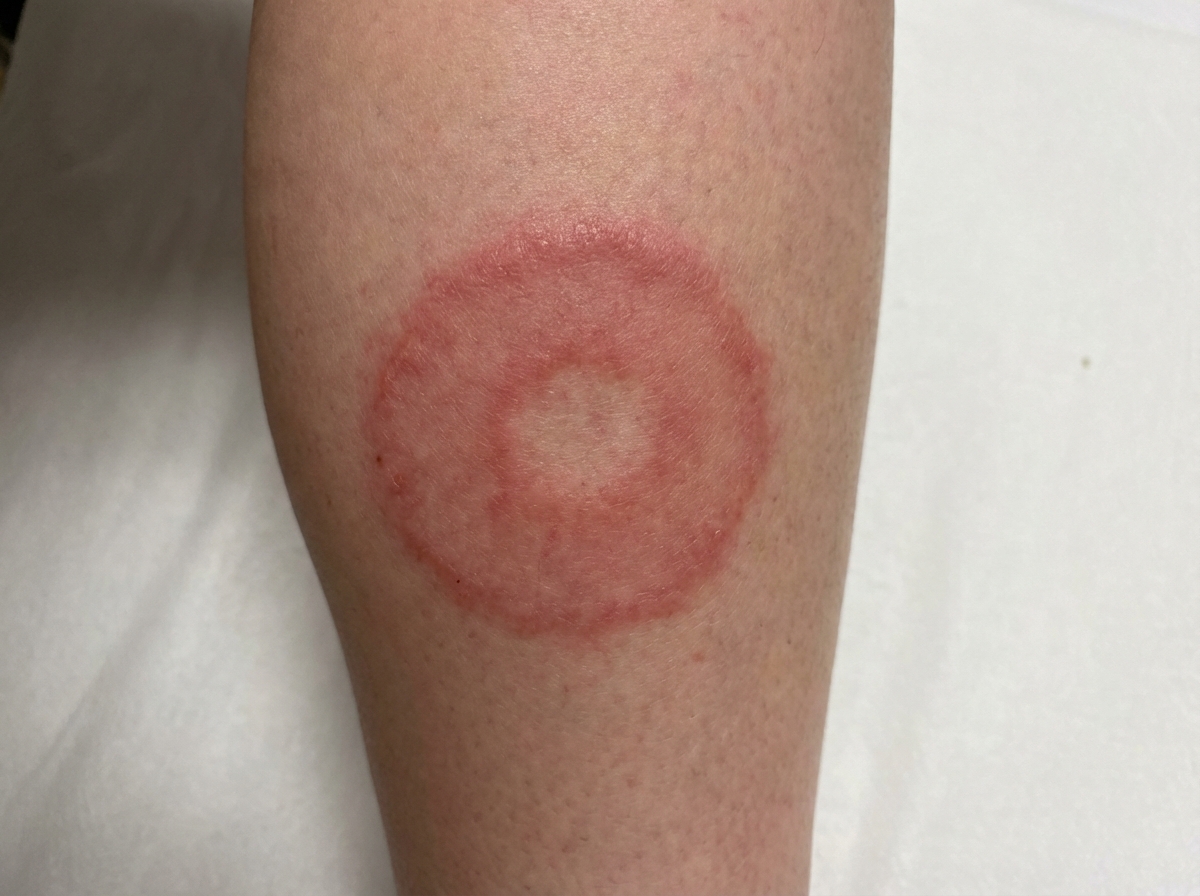
Q29
A 9-year-old boy is brought to the pediatrician by his parents with a fever, cough, and cold symptoms that began 7 days ago. He has been complaining of right ear pain for the last 2 days. He is otherwise a completely healthy child with no known medical conditions. On physical examination, the temperature is 39.0°C (102.2°F), the pulse is 114 /min, the blood pressure is 106/74 mm Hg, and the respiratory rate is 26/min. On chest auscultation, rales are heard over the right subscapular region accompanied by bronchial breathing in the same region. Examination of the right external auditory canal reveals an erythematous, bulging tympanic membrane. The results of a complete blood count are as follows:
Hemoglobin % 11 g/dL
WBC count 12,000/mm3
Neutrophils 88%
Lymphocytes 10%
Monocytes 2%
Platelet count 200,000/mm3
A chest radiograph shows a focal homogenous opacity in the right lung suggestive of consolidation. Bacteriologic cultures of the blood, nasopharynx, and sputum grew Moraxella catarrhalis. Which of the following is the antibiotic of choice?
Q30
A 64-year-old female with type 2 diabetes mellitus comes to the physician because of a 1-week history of painful red swelling on her left thigh. Examination shows a 3- x 4-cm, tender, fluctuant mass. Incision and drainage of the abscess are performed. Culture of the abscess fluid grows gram-positive, coagulase-positive cocci that are resistant to oxacillin. Which of the following best describes the mechanism of resistance of the causal organism to oxacillin?
Antibiotics US Medical PG Practice Questions and MCQs
Question 21: A 33-year-old man presents to the emergency department complaining of weakness and fatigue. He states that his symptoms have worsened over the past day. He has a past medical history of IV drug abuse and alcoholism and he currently smells of alcohol. His temperature is 102°F (38.9°C), blood pressure is 111/68 mmHg, pulse is 110/min, respirations are 17/min, and oxygen saturation is 98% on room air. Physical exam is notable for focal tenderness over the lumbar spine. Initial lab values and blood cultures are drawn and are notable for leukocytosis and an elevated C-reactive protein (CRP). Which of the following is the best treatment for this patient?
A. Nafcillin
B. Ceftriaxone
C. Piperacillin-tazobactam
D. Vancomycin (Correct Answer)
E. Ibuprofen and warm compresses
Explanation: ***Vancomycin***
- The patient's history of **IV drug abuse**, fever, leukocytosis, elevated CRP, and focal lumbar tenderness is highly suggestive of **vertebral osteomyelitis** or **discitis**, often caused by methicillin-resistant *Staphylococcus aureus* (MRSA).
- **Vancomycin** is the appropriate empiric treatment for suspected severe *S. aureus* infections in patients with risk factors for MRSA until culture and sensitivity results are available.
*Nafcillin*
- **Nafcillin** is effective against **methicillin-sensitive *Staphylococcus aureus* (MSSA)**.
- Given the patient's history of IV drug abuse, there's a high likelihood of MRSA, making nafcillin an inadequate empiric choice.
*Ceftriaxone*
- **Ceftriaxone** is a broad-spectrum cephalosporin effective against many gram-negative and some gram-positive bacteria, but it has **poor coverage against *Staphylococcus aureus***, particularly MRSA.
- It would be ineffective as a monotherapy for the suspected staphylococcal infection.
*Piperacillin-tazobactam*
- This combination provides broad-spectrum coverage, including **Pseudomonas** and many gram-negative and anaerobic bacteria, but its coverage for **MRSA is limited**.
- It would not be the first-line empiric choice for a suspected MRSA infection in this setting.
*Ibuprofen and warm compresses*
- This treatment addresses pain and inflammation but does not treat the underlying **infectious process**.
- Overlooking the infection would lead to significant morbidity and potential mortality, making this an inappropriate primary treatment.
Question 22: A 39-year-old man presents to his primary care physician with a high fever, cough, and malaise. One week ago, he returned from a vacation to Hawaii where he went waterskiing with his family. Three days before presentation, he started experiencing intermittent abdominal pain, which was followed by flu-like symptoms, itchiness in his eyes, and photosensitivity. On presentation, his temperature is 103°F (39.4°C), blood pressure is 114/72 mmHg, pulse is 105/min, and respirations are 18/min. Physical exam reveals conjunctivitis and mild jaundice. Which of the following treatments could be used to treat this patient's condition?
A. Ganciclovir
B. Metronidazole
C. Doxycycline (Correct Answer)
D. Vancomycin
E. Azithromycin
Explanation: ***Doxycycline***
- The patient's symptoms (fever, cough, malaise, abdominal pain, **conjunctival suffusion** presenting as conjunctivitis, jaundice) after waterskiing in Hawaii are highly suggestive of **leptospirosis**, an infection caused by *Leptospira* bacteria.
- **Doxycycline** is the recommended treatment for mild to moderate leptospirosis, while severe cases (Weil's disease with jaundice) may require intravenous penicillin G or ceftriaxone.
- The biphasic illness pattern and water exposure history are classic features of this spirochete infection.
*Ganciclovir*
- **Ganciclovir** is an antiviral medication primarily used to treat **cytomegalovirus (CMV)** infections, especially in immunocompromised patients.
- The clinical picture presented does not align with typical CMV infection, which is often asymptomatic or causes mono-like symptoms without the water exposure history.
*Metronidazole*
- **Metronidazole** is an antibiotic effective against **anaerobic bacteria** and certain parasites (e.g., *Giardia*, *Trichomonas*).
- It is not indicated for the treatment of leptospirosis, which is caused by a spirochete requiring tetracyclines or beta-lactams.
*Vancomycin*
- **Vancomycin** is an antibiotic used for treating serious infections caused by **Gram-positive bacteria**, particularly **methicillin-resistant *Staphylococcus aureus* (MRSA)** or *Clostridioides difficile*.
- It is not effective against *Leptospira* species, which are spirochetes.
*Azithromycin*
- **Azithromycin** is a macrolide antibiotic effective against a range of bacterial infections, including **atypical pneumonia** and some sexually transmitted infections.
- While azithromycin has some activity against leptospirosis, **doxycycline** or penicillin-based antibiotics are strongly preferred as first-line treatment with better evidence base.
Question 23: A 19-year-old woman presents to the family medicine clinic after noticing swelling of her right index finger a few hours ago. She has no past medical history and takes no prescription medications. She takes ibuprofen occasionally, as needed. She says that she has smoked a few cigarettes a day for the last year. On further questioning, the patient says that she has a dog and a cat at home. Her blood pressure is 108/67 mm Hg, heart rate is 94/min, respiratory rate is 12/min, and temperature is 37.8°C (100.1°F). On physical examination, the physician notices 2 clean puncture wounds with localized erythema and induration on the dorsum of the right second digit. Capillary refill is 2 seconds. Sensory and motor function are intact bilaterally. Which of the following is the most appropriate treatment choice for this patient?
A. Doxycycline
B. Amoxicillin
C. Azithromycin
D. Amoxicillin–clavulanate (Correct Answer)
E. Clindamycin
Explanation: ***Amoxicillin–clavulanate***
- This patient presents with a **cat or dog bite** wound, manifesting as puncture wounds, erythema, and induration on the finger, indicating a **localized infection**.
- **Amoxicillin–clavulanate** is the recommended first-line prophylactic and therapeutic antibiotic for animal bites due to its coverage of common pathogens like *Pasteurella multocida*, *Staphylococcus aureus*, and anaerobes.
*Doxycycline*
- While doxycycline has broad-spectrum activity, it is typically used as an alternative for animal bites in cases of **penicillin allergy** or for specific infections like **tularemia**.
- It does not offer the same comprehensive coverage for typical animal bite pathogens as amoxicillin-clavulanate.
*Amoxicillin*
- **Amoxicillin alone** lacks coverage against **beta-lactamase producing bacteria**, which are commonly found in animal oral flora and can cause infections in bite wounds.
- The addition of clavulanate is crucial to inhibit beta-lactamase and broaden the spectrum of coverage.
*Azithromycin*
- Azithromycin is a macrolide that is generally **not recommended** as a first-line agent for animal bite infections due to inconsistent coverage against primary bite pathogens.
- It might be considered in specific cases of **penicillin allergy** but is less effective than amoxicillin-clavulanate or even doxycycline.
*Clindamycin*
- Clindamycin offers good coverage against **anaerobes** and some gram-positive bacteria, particularly **Staphylococcus** species.
- However, it has **poor gram-negative coverage** and would need to be combined with another agent (e.g., a fluoroquinolone) to provide adequate empirical coverage for animal bite infections.
Question 24: Five days after being admitted to the hospital for an open cholecystectomy, a 56-year-old woman develops difficulty breathing. She also has fevers, chills, and malaise. She has a cough productive of minimal amounts of yellowish-white sputum that started two days prior. She has type 2 diabetes mellitus, hypertension, and a history of gallstones. Her current medications include metformin, lisinopril, and atorvastatin. Her temperature is 39.5°C (103.1°F), pulse is 104/minute, blood pressure is 94/68 mm Hg, and respirations are 30/minute. Pulse oximetry on 2 L of oxygen via nasal cannula shows an oxygen saturation of 92%. Examination reveals decreased breath sounds over the right lung base. Abdominal examination shows a well-healing scar without erythema or discharge in the right upper quadrant. The skin is warm and well-perfused. Her hemoglobin concentration is 10.5 g/dL, leukocyte count is 16,000/mm3, platelet count is 345,000/mm3, and creatinine is 1.5 mg/dL. She is admitted to the ICU and started on IV fluids. Blood and urine for cultures are obtained. X-ray of the chest reveals a right sided pleural effusion. Which of the following is the next best step in management?
A. Intravenous ceftriaxone and azithromycin
B. Intravenous dobutamine
C. CT of the chest with contrast
D. Intravenous vancomycin and cefepime (Correct Answer)
E. External cooling and intravenous acetaminophen
Explanation: ***Intravenous vancomycin and cefepime***
- The patient presents with classic signs of **sepsis** and **septic shock** (fever, tachypnea, tachycardia, hypotension, elevated WBC, acute organ dysfunction with increased creatinine) following surgery, pointing to a **healthcare-associated infection (HCAI)**, likely pneumonia given the respiratory symptoms and CXR.
- **Vancomycin** provides coverage against **methicillin-resistant Staphylococcus aureus (MRSA)**, a common pathogen in HCAI, especially in patients with recent hospitalization. **Cefepime** is a broad-spectrum anti-pseudomonal beta-lactam that covers other gram-negative and gram-positive pathogens.
*Intravenous ceftriaxone and azithromycin*
- This regimen is more appropriate for **community-acquired pneumonia (CAP)**, but not for severe healthcare-associated infections due to insufficient coverage for resistant organisms, such as MRSA and *Pseudomonas*.
- The patient's recent hospitalization and surgery increase the risk for **multidrug-resistant (MDR)** organisms, which necessitate broader coverage than ceftriaxone and azithromycin.
*Intravenous dobutamine*
- **Dobutamine** is an inotropic agent used to improve cardiac contractility in **cardiogenic shock** or when cardiac output is low despite adequate fluid resuscitation.
- While the patient is hypotensive, she is in **septic shock**, and the initial management involves fluid resuscitation and broad-spectrum antibiotics, not primarily inotropes. Inotropes might be considered if hypotension persists after fluid resuscitation.
*CT of the chest with contrast*
- A chest CT may be useful for further characterization of the pleural effusion or to rule out other pathologies like pulmonary embolism if suspicion is high.
- However, given the signs of **septic shock**, initiating **empiric broad-spectrum antibiotics** is the most urgent step to stabilize the patient and treat the suspected infection. Diagnostic imaging can be pursued once the patient is stable and initial management is underway.
*External cooling and intravenous acetaminophen*
- **External cooling** and **acetaminophen** are antipyretic measures to reduce fever, which can improve patient comfort.
- While fever control is part of supportive care, it does not address the underlying **septic shock** and **infection**, which are life-threatening and require immediate aggressive antibiotic therapy and fluid resuscitation.
Question 25: A 73-year-old man is brought to the emergency department because of fever, headaches, and confusion for the past 24 hours. Three years ago, he underwent heart transplantation because of congestive heart failure. His temperature is 38.1°C (100.5°F). He is oriented only to person. Physical examination shows nuchal rigidity. A cerebrospinal fluid culture on blood agar grows colonies of a gram-positive bacillus surrounded by a narrow transparent rim. Administration of which of the following antibiotics is most likely to be effective in the treatment of this patient's condition?
A. Ampicillin (Correct Answer)
B. Doxycycline
C. Chloramphenicol
D. Erythromycin
E. Vancomycin
Explanation: ***Ampicillin***
- This patient presents with symptoms of **meningitis** (fever, headache, confusion, nuchal rigidity) and is immunocompromised due to a **heart transplant**. The CSF culture revealing a **gram-positive bacillus** with a narrow transparent rim on blood agar strongly suggests **Listeria monocytogenes**.
- **Ampicillin** is the first-line treatment for **Listeria meningitis**, as it is bactericidal and effectively penetrates the central nervous system.
*Doxycycline*
- Doxycycline is a **tetracycline antibiotic** that is effective against a broad range of bacteria, including some gram-positive organisms, but it is not the drug of choice for **Listeria meningitis**.
- It is primarily **bacteriostatic**, and for serious infections like bacterial meningitis, a bactericidal agent is preferred, especially in immunocompromised patients.
*Chloramphenicol*
- Chloramphenicol is a broad-spectrum antibiotic that can be effective against some gram-positive bacteria, but its use is limited due to significant side effects like **bone marrow suppression** (aplastic anemia).
- It is not considered a first-line agent for **Listeria meningitis** due to the availability of safer and equally effective alternatives like ampicillin.
*Erythromycin*
- Erythromycin is a **macrolide antibiotic** primarily used for respiratory tract infections and certain skin and soft tissue infections.
- While it has activity against some gram-positive bacteria, it is generally **not effective against Listeria monocytogenes** and does not adequately penetrate the central nervous system for meningitis treatment.
*Vancomycin*
- Vancomycin is a glycopeptide antibiotic primarily used for serious infections caused by **methicillin-resistant Staphylococcus aureus (MRSA)** and other resistant gram-positive bacteria.
- Although it is effective against many gram-positive organisms, **Listeria monocytogenes is inherently resistant to vancomycin**, making it an ineffective treatment choice for this patient's condition.
Question 26: A 72-year-old man is admitted to the hospital with productive cough and fever. A chest radiograph is obtained and shows lobar consolidation. The patient is diagnosed with pneumonia. He has a history of penicillin allergy. The attending physician orders IV levofloxacin as empiric therapy. On morning rounds the next day, the team discovers that the patient was administered ceftriaxone instead of levofloxacin. The patient has already received a full dose of ceftriaxone and had no signs of allergic reaction, and his pneumonia appears to be improving clinically. What is the most appropriate next step?
A. Administer diphenhydramine as prophylaxis against allergic reaction
B. Continue with ceftriaxone as empiric therapy
C. Switch the patient to oral azithromycin in preparation for discharge and home therapy
D. Switch the patient back to levofloxacin and discuss the error with the patient
E. Continue with ceftriaxone and add azithromycin as inpatient empiric pneumonia therapy (Correct Answer)
Explanation: ***Continue with ceftriaxone and add azithromycin as inpatient empiric pneumonia therapy***
- This is the **guideline-recommended approach** for hospitalized community-acquired pneumonia (CAP) according to ATS/IDSA guidelines.
- Ceftriaxone (beta-lactam) plus azithromycin (macrolide) provides **dual coverage** for typical bacteria (Streptococcus pneumoniae) and atypical organisms (Mycoplasma, Chlamydophila, Legionella).
- Since the patient has already tolerated ceftriaxone without allergic reaction despite penicillin allergy history, continuing it is safe, and **adding azithromycin completes appropriate empiric therapy** for a 72-year-old hospitalized patient.
- The cross-reactivity between penicillins and cephalosporins is low (1-3%), and the patient's tolerance of ceftriaxone confirms safety.
*Continue with ceftriaxone as empiric therapy*
- While the patient is improving on ceftriaxone and tolerated it without allergic reaction, **monotherapy with a beta-lactam alone is suboptimal** for hospitalized CAP.
- Guidelines recommend dual therapy (beta-lactam + macrolide) or fluoroquinolone monotherapy for hospitalized non-ICU patients to ensure adequate atypical coverage.
- Continuing ceftriaxone alone misses potential atypical pathogens that may be contributing to the pneumonia.
*Switch the patient to oral azithromycin in preparation for discharge and home therapy*
- It is **premature to switch to oral therapy** or consider discharge after only one day of treatment for a 72-year-old with pneumonia requiring hospitalization.
- The patient should remain on IV therapy until clinically stable (afebrile, hemodynamically stable, improving oxygenation) for an appropriate duration.
*Administer diphenhydramine as prophylaxis against allergic reaction*
- Since the patient has already tolerated a full dose of ceftriaxone without any allergic reaction, **prophylactic antihistamines are unnecessary**.
- The low cross-reactivity between penicillins and third-generation cephalosporins, combined with the successful first dose, indicates minimal risk.
*Switch the patient back to levofloxacin and discuss the error with the patient*
- Switching back to levofloxacin is **unnecessary and potentially disruptive** given that the patient is clinically improving on ceftriaxone and has demonstrated tolerance to it.
- While the original plan was levofloxacin (appropriate fluoroquinolone monotherapy), the inadvertent use of ceftriaxone has proven safe and provides an opportunity to implement the preferred dual-therapy regimen.
- While discussing medication errors is important for transparency, the immediate medical priority is optimizing pneumonia treatment.
Question 27: Three days after undergoing outpatient percutaneous coronary intervention with stent placement in the right coronary artery, a 60-year-old woman has left-sided painful facial swelling. The pain is worse while chewing. The patient has hypertension and coronary artery disease. Her current medications include enalapril, metoprolol, aspirin, clopidogrel, simvastatin, and a multivitamin. She does not smoke or drink alcohol. Her temperature is 38.1°C (100.5°F), pulse is 72/min, respirations are 16/min, and blood pressure is 128/86 mm Hg. Examination shows swelling and tenderness of the left parotid gland. Intraoral examination shows erythema with scant purulent drainage. Which of the following is the most appropriate next step in management?
A. Perform salivary duct dilation
B. Obtain a parotid biopsy
C. Parotidectomy
D. Administer clindamycin
E. Administer amoxicillin-clavulanate (Correct Answer)
Explanation: ***Administer amoxicillin-clavulanate***
- The patient's symptoms (painful facial swelling worse with chewing, fever, erythema with purulent drainage from the parotid gland) are classic for **acute bacterial parotitis**.
- **Amoxicillin-clavulanate** is the **first-line antibiotic** for acute bacterial parotitis, providing excellent coverage of typical pathogens including *Staphylococcus aureus*, oral anaerobes, and *Streptococcus* species.
- **Critical consideration:** This patient is on **dual antiplatelet therapy** (aspirin + clopidogrel) following recent coronary stent placement. Amoxicillin-clavulanate has **no significant drug interactions** with antiplatelet agents, making it the safest choice.
- The β-lactamase inhibitor (clavulanate) extends coverage to β-lactamase-producing organisms commonly found in oral flora.
*Administer clindamycin*
- While clindamycin provides good coverage for gram-positive organisms and anaerobes typical in parotitis, it is **not the best choice in this patient**.
- **Clindamycin is a CYP3A4 inhibitor** that can interfere with the activation of clopidogrel (a prodrug requiring CYP metabolism), potentially **reducing its antiplatelet effect** and increasing the risk of stent thrombosis.
- Given the patient's recent coronary stent placement, avoiding this drug interaction is crucial.
*Perform salivary duct dilation*
- Salivary duct dilation is indicated for **sialolithiasis** (salivary stones) or ductal strictures causing obstruction.
- While obstruction can predispose to infection, the primary issue here is an **active bacterial infection** requiring antibiotics first.
- Dilation is not the initial treatment for acute bacterial parotitis.
*Obtain a parotid biopsy*
- Parotid biopsy is reserved for suspicion of **neoplasms**, autoimmune conditions (e.g., Sjögren syndrome), or chronic inflammatory processes unresponsive to treatment.
- Acute bacterial parotitis is a **clinical diagnosis** based on presentation, and biopsy is not indicated as an initial step.
*Parotidectomy*
- Parotidectomy (surgical removal of the parotid gland) is reserved for **malignant tumors**, large benign tumors, or refractory chronic infection.
- It is overly aggressive and inappropriate for acute bacterial parotitis, which typically responds well to antibiotic therapy.
Question 28: A 27-year-old man visits the office with complaints of pain in his lower limb muscles and joints. He cannot remember exactly when it started, but it intensified after his recent hiking trip. He is a hiking enthusiast and mentions having gone on a recent trekking expedition in Connecticut. He does not recall any particular symptoms after the hike except for a rash on his left calf with distinct borders (image provided in the exhibit). The patient does not complain of fever, chills or any changes in his vision. His vital signs show a blood pressure of 120/70 mm Hg, a pulse of 97/min, and respirations of 18/min. There is tenderness in his left calf with a decreased range of motion in the left knee joint. No joint effusions are noted. Which of the following would be the next best step in the management of this patient?
A. Serological testing
B. Start doxycycline therapy (Correct Answer)
C. Blood culture
D. Ask him to come back after one week
E. Start erythromycin therapy
Explanation: ***Start doxycycline therapy***
- The patient presents with **musculoskeletal pain**, a **hiking history** in an endemic area (Connecticut), and a characteristic **erythema migrans rash** (distinct borders) on his calf, all highly suggestive of **Lyme disease**.
- Given the classic clinical presentation, especially the erythema migrans, empiric treatment with **doxycycline** is recommended without waiting for serological confirmation, as early treatment prevents disease progression.
*Serological testing*
- While Lyme disease is suspected, **serological testing** often yields **false-negative results** in the early stages of the infection (within the first few weeks) due to insufficient antibody development.
- Waiting for serology could **delay appropriate treatment**, allowing the disease to progress to more severe stages.
*Blood culture*
- **Blood culture** is primarily used to detect **bacterial bloodstream infections** (bacteremia or sepsis) and is not indicated for the diagnosis of localized infections like Lyme disease.
- Lyme disease is caused by *Borrelia burgdorferi*, which is difficult to culture from blood and not detectable by routine blood cultures.
*Ask him to come back after one week*
- Delaying treatment for a week would allow the **Lyme disease to progress**, potentially leading to more advanced symptoms such as **neurological**, **cardiac**, or **arthritic complications**.
- **Early intervention** with antibiotics is crucial to prevent these long-term sequelae and improve prognosis.
*Start erythromycin therapy*
- **Erythromycin** is an alternative antibiotic for Lyme disease in **specific situations**, such as in pregnant women or patients with doxycycline contraindications like severe allergy.
- However, **doxycycline is the first-line treatment** due to its superior efficacy against *Borrelia burgdorferi* and better tissue penetration.
Question 29: A 9-year-old boy is brought to the pediatrician by his parents with a fever, cough, and cold symptoms that began 7 days ago. He has been complaining of right ear pain for the last 2 days. He is otherwise a completely healthy child with no known medical conditions. On physical examination, the temperature is 39.0°C (102.2°F), the pulse is 114 /min, the blood pressure is 106/74 mm Hg, and the respiratory rate is 26/min. On chest auscultation, rales are heard over the right subscapular region accompanied by bronchial breathing in the same region. Examination of the right external auditory canal reveals an erythematous, bulging tympanic membrane. The results of a complete blood count are as follows:
Hemoglobin % 11 g/dL
WBC count 12,000/mm3
Neutrophils 88%
Lymphocytes 10%
Monocytes 2%
Platelet count 200,000/mm3
A chest radiograph shows a focal homogenous opacity in the right lung suggestive of consolidation. Bacteriologic cultures of the blood, nasopharynx, and sputum grew Moraxella catarrhalis. Which of the following is the antibiotic of choice?
A. Azithromycin
B. Amoxicillin-clavulanate (Correct Answer)
C. Amoxicillin
D. Cefuroxime
E. Erythromycin
Explanation: ***Correct Option: Amoxicillin-clavulanate***
- The patient has **community-acquired pneumonia** and **acute otitis media** caused by *Moraxella catarrhalis*, confirmed by cultures.
- **>90% of *Moraxella catarrhalis* isolates produce beta-lactamase**, making them **resistant to amoxicillin alone**.
- **Amoxicillin-clavulanate** is the **first-line treatment** as clavulanate inhibits beta-lactamase, restoring activity against this organism.
- This combination provides **appropriate coverage** for both the pneumonia and otitis media in this pediatric patient.
*Incorrect Option: Amoxicillin*
- While amoxicillin is first-line for many respiratory infections, it is **ineffective against beta-lactamase-producing *M. catarrhalis***.
- Using amoxicillin alone would likely result in **treatment failure** given the high prevalence of beta-lactamase production in this organism.
- The presence of **documented *M. catarrhalis*** on culture makes beta-lactamase coverage essential.
*Incorrect Option: Azithromycin*
- This **macrolide antibiotic** is effective against *M. catarrhalis* and could be used as an alternative.
- However, it is **not first-line** when *M. catarrhalis* is documented, especially in a patient with concurrent pneumonia and otitis media where broader coverage is preferred.
- **Increasing macrolide resistance** in respiratory pathogens makes beta-lactam combinations more reliable for documented bacterial infections.
*Incorrect Option: Cefuroxime*
- This **second-generation cephalosporin** is **beta-lactamase stable** and effective against *M. catarrhalis*.
- While it would be an acceptable alternative, **amoxicillin-clavulanate is preferred** as first-line therapy for community-acquired respiratory infections in children per IDSA guidelines.
- Cefuroxime is typically reserved for **penicillin allergy** or **treatment failure** with first-line agents.
*Incorrect Option: Erythromycin*
- This older **macrolide antibiotic** has activity against *M. catarrhalis* but is **less preferred** than newer macrolides or beta-lactam combinations.
- It has **more gastrointestinal side effects** than azithromycin and **increasing resistance** among respiratory pathogens.
- Not considered first-line therapy for documented *M. catarrhalis* infections in current practice.
Question 30: A 64-year-old female with type 2 diabetes mellitus comes to the physician because of a 1-week history of painful red swelling on her left thigh. Examination shows a 3- x 4-cm, tender, fluctuant mass. Incision and drainage of the abscess are performed. Culture of the abscess fluid grows gram-positive, coagulase-positive cocci that are resistant to oxacillin. Which of the following best describes the mechanism of resistance of the causal organism to oxacillin?
A. Degradation of the antibiotic
B. Decreased uptake of the antibiotic
C. Decreased activation of the antibiotic
D. Altered target of the antibiotic (Correct Answer)
E. Acetylation of the antibiotic
Explanation: ***Altered target of the antibiotic***
- The organism described (gram-positive, coagulase-positive cocci, oxacillin-resistant) is **methicillin-resistant *Staphylococcus aureus* (MRSA)**.
- MRSA achieves oxacillin (and other beta-lactam) resistance by acquiring the ***mecA* gene**, which encodes for a **modified penicillin-binding protein (PBP2a)** with reduced affinity for beta-lactam antibiotics.
*Degradation of the antibiotic*
- This mechanism, primarily through the production of **beta-lactamase enzymes**, can degrade beta-lactam antibiotics.
- While *Staphylococcus aureus* can produce beta-lactamases, oxacillin (a **penicillinase-resistant penicillin**) is specifically engineered to be stable against these enzymes.
*Decreased uptake of the antibiotic*
- Reduced permeability of the bacterial cell wall can lead to decreased uptake, a mechanism more commonly associated with **gram-negative bacteria** due to their outer membrane.
- This is not the primary mechanism of resistance for MRSA to oxacillin.
*Decreased activation of the antibiotic*
- Some antibiotics are prodrugs that require activation by bacterial enzymes, and resistance can arise from mutations affecting this activation.
- Oxacillin is active in its administered form and does not require bacterial activation.
*Acetylation of the antibiotic*
- **Enzymatic modification**, such as acetylation, adenylylation, or phosphorylation, is a common mechanism of resistance, particularly against **aminoglycoside antibiotics**.
- This specific mechanism is not responsible for oxacillin resistance in MRSA.