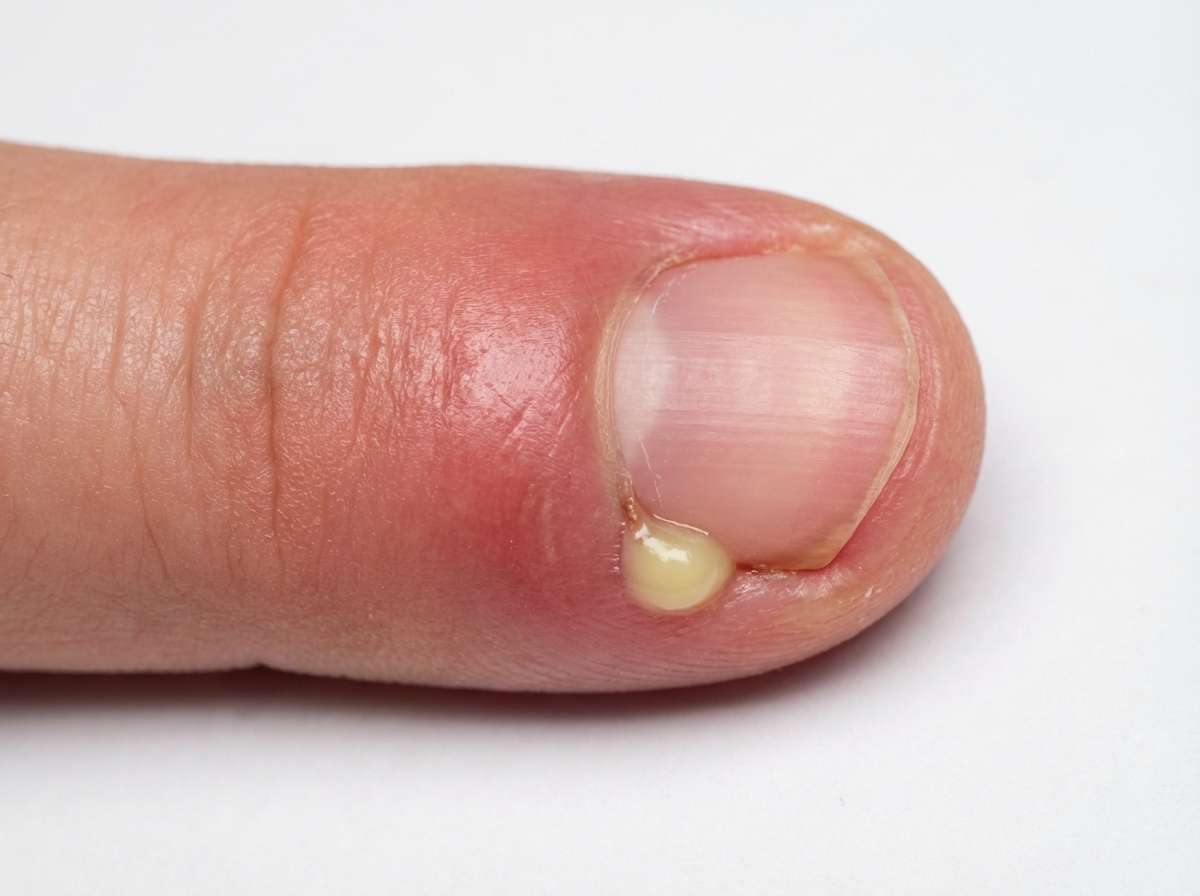
What is the most suitable antibiotic to treat the condition shown in the image ?
Q2
A 57-year-old woman returns to her primary care provider complaining of fever, skin rash, and flank pain. She had just visited her PCP 2 weeks ago complaining of a sore throat and was diagnosed with pharyngitis. She was then given a 10 day prescription for phenoxymethylpenicillin. Today she is on day 6 of her prescription. Her symptoms started yesterday. Past medical history is significant for type 2 diabetes mellitus, essential hypertension, and has gastroesophageal reflux disease. Her medications include metformin, captopril, hydrochlorothiazide, and pantoprazole and a multivitamin that she takes daily. Today her temperature is 38.0°C (100.4°F), the blood pressure is 147/95 mm Hg, and the pulse is 82/min. Physical examination shows a sparse maculopapular rash over her upper trunk. Laboratory results are shown:
CBC with Diff
Leukocyte count 9,500/mm3
Segmented neutrophils 54%
Bands 4%
Eosinophils 8%
Basophils 0.5%
Lymphocytes 30%
Monocytes 4%
Blood urea nitrogen 25 mg/dL
Serum creatinine 2 mg/dL
Urinalysis 27 white blood cells/ high powered field
5 red blood cells/high powered field
Urine culture No growth after 72 hours
A urine cytospin with stained with Wright’s stain shows 4.5% eosinophils. Which of the following is the best initial step in the management of this patient condition?
Q3
An 81-year-old man is brought to the emergency department by staff of an assisted living facility where he resides with fever and a cough that produces yellow-green sputum. His temperature is 39.1°C (102.3°F). Physical examination shows diffuse crackles over the right lung fields. An x-ray of the chest shows consolidation in the right lower lobe. Sputum cultures grow an organism that produces blue-green pigments and smells of sweet grapes. Treatment with piperacillin and a second agent is begun. Which of the following is the most likely mechanism of action of the second agent?
Q4
A 28-year-old man presents with a complaint of penile discharge. He says that he noticed a yellowish watery discharge from his penis since last week. He adds that he has painful urination only in the mornings, but he sometimes feels a lingering pain in his genital region throughout the day. He denies any fever, body aches, or joint pains. No significant past medical history or current medications. When asked about his social history, he mentions that he has regular intercourse with women he meets in bars, however, he doesn’t always remember to use a condom. Physical examination is unremarkable. The penile discharge is collected and sent for analysis. Ceftriaxone IM is administered, after which the patient is sent home with a prescription for an oral medication. Which of the following oral drugs was most likely prescribed to this patient?
Q5
A 45-year-old male presents to the emergency room following a seizure. The patient suffered from an upper respiratory infection complicated by sinusitis two weeks ago. The patient's past medical history is remarkable for hypertension for which he takes hydrochlorathiazide. Temperature is 39.5C, blood pressure is 120/60 mmHg, pulse is 85/min, and respiratory rate is 20/min. Upon interview, the patient appears confused and exhibits photophobia. CSF cultures are obtained. Which of the following is the most appropriate next step in the management of this patient?
Antibiotics US Medical PG Practice Questions and MCQs
Question 1: What is the most suitable antibiotic to treat the condition shown in the image ?
A. Norfloxacin
B. Amoxicillin & Clavulanic Acid (Correct Answer)
C. Metronidazole
D. Amikacin
E. Ciprofloxacin
Explanation: ***Amoxicillin & Clavulanic Acid***
- The image shows a **paronychia** (an infection around the fingernail), likely bacterial, which typically involves **Gram-positive cocci** like *Staphylococcus aureus* or *Streptococcus spp.*
- **Amoxicillin & Clavulanic Acid** is a broad-spectrum antibiotic effective against these common skin pathogens, including **beta-lactamase producing strains** of *Staphylococcus aureus*
- This is the **first-line empiric treatment** for uncomplicated paronychia
*Norfloxacin*
- **Norfloxacin** is a **fluoroquinolone** primarily used for **urinary tract infections** and some gastrointestinal infections
- It has limited efficacy against the common skin flora responsible for paronychia and is not a first-line choice for skin and soft tissue infections
*Metronidazole*
- **Metronidazole** is an antibiotic primarily effective against **anaerobic bacteria** and certain parasites
- Paronychia is typically caused by aerobic bacteria, making metronidazole an inappropriate choice for empiric treatment
*Amikacin*
- **Amikacin** is an **aminoglycoside** antibiotic, usually reserved for serious Gram-negative bacterial infections due to its potential **ototoxicity** and **nephrotoxicity**
- It is administered intravenously and is not suitable for a localized skin infection like paronychia unless there are severe systemic complications
*Ciprofloxacin*
- **Ciprofloxacin** is a **fluoroquinolone** with broader coverage than norfloxacin, including some Gram-positive organisms
- However, it has **suboptimal activity against Streptococcus species** and methicillin-susceptible *S. aureus* compared to beta-lactam antibiotics
- FDA guidelines recommend **avoiding fluoroquinolones for uncomplicated infections** due to serious side effects (tendon rupture, peripheral neuropathy) when safer alternatives exist
Question 2: A 57-year-old woman returns to her primary care provider complaining of fever, skin rash, and flank pain. She had just visited her PCP 2 weeks ago complaining of a sore throat and was diagnosed with pharyngitis. She was then given a 10 day prescription for phenoxymethylpenicillin. Today she is on day 6 of her prescription. Her symptoms started yesterday. Past medical history is significant for type 2 diabetes mellitus, essential hypertension, and has gastroesophageal reflux disease. Her medications include metformin, captopril, hydrochlorothiazide, and pantoprazole and a multivitamin that she takes daily. Today her temperature is 38.0°C (100.4°F), the blood pressure is 147/95 mm Hg, and the pulse is 82/min. Physical examination shows a sparse maculopapular rash over her upper trunk. Laboratory results are shown:
CBC with Diff
Leukocyte count 9,500/mm3
Segmented neutrophils 54%
Bands 4%
Eosinophils 8%
Basophils 0.5%
Lymphocytes 30%
Monocytes 4%
Blood urea nitrogen 25 mg/dL
Serum creatinine 2 mg/dL
Urinalysis 27 white blood cells/ high powered field
5 red blood cells/high powered field
Urine culture No growth after 72 hours
A urine cytospin with stained with Wright’s stain shows 4.5% eosinophils. Which of the following is the best initial step in the management of this patient condition?
A. Discontinue the triggering medication(s) (Correct Answer)
B. Renal biopsy
C. Supportive dialysis
D. Short course of prednisolone
E. Empiric oral fluoroquinolones
Explanation: ***Discontinue the triggering medication(s)***
- This patient presents with symptoms highly suggestive of **acute interstitial nephritis (AIN)**, including fever, rash, flank pain, new-onset **eosinophilia** (peripheral and urine), and acute kidney injury (elevated BUN and creatinine) following recent antibiotic use.
- The most crucial initial step in managing drug-induced AIN is the immediate cessation of the suspected **causative agent**, which in this case is **phenoxymethylpenicillin**.
*Renal biopsy*
- While a **renal biopsy** can definitively diagnose AIN, it is an **invasive procedure** and not the initial management step.
- It is typically considered if the diagnosis remains uncertain after discontinuing the suspected drug or if there is no improvement.
*Supportive dialysis*
- **Supportive dialysis** is indicated for severe **acute kidney injury (AKI)** complications like refractory hyperkalemia, severe metabolic acidosis, or fluid overload.
- Although the patient has AKI, there's no evidence presented to suggest these urgent indications for dialysis.
*Short course of prednisolone*
- A short course of **corticosteroids** like prednisolone may be considered for AIN, especially if renal function does not improve after discontinuing the offending drug.
- However, the **initial and most critical step** is to remove the inciting agent.
*Empiric oral fluoroquinolones*
- The **urine culture** showing no growth after 72 hours makes a **bacterial urinary tract infection (UTI)** unlikely, ruling out the need for empiric antibiotics like fluoroquinolones.
- The patient's symptoms are more consistent with a drug reaction leading to AIN rather than an untreated infection.
Question 3: An 81-year-old man is brought to the emergency department by staff of an assisted living facility where he resides with fever and a cough that produces yellow-green sputum. His temperature is 39.1°C (102.3°F). Physical examination shows diffuse crackles over the right lung fields. An x-ray of the chest shows consolidation in the right lower lobe. Sputum cultures grow an organism that produces blue-green pigments and smells of sweet grapes. Treatment with piperacillin and a second agent is begun. Which of the following is the most likely mechanism of action of the second agent?
A. Impairs bacterial degradation of piperacillin (Correct Answer)
B. Inhibits bacterial synthesis of folate
C. Increases the potency of piperacillin
D. Inhibits bacterial DNA gyrase
E. Inhibits the bacterial 50S ribosomal subunit
Explanation: ***Impairs bacterial degradation of piperacillin***
- The combination therapy with **piperacillin** (β-lactam antibiotic) and a second agent suggests the second agent is a **β-lactamase inhibitor** (e.g., tazobactam), which prevents bacterial enzymes from inactivating piperacillin.
- This organism's growth of blue-green pigments and sweet grape smell is characteristic of **Pseudomonas aeruginosa**, a bacterium known for producing β-lactamase enzymes.
*Inhibits bacterial synthesis of folate*
- This mechanism describes **sulfonamides** or **trimethoprim**, which would not be the primary co-treatment for a suspected *Pseudomonas* infection alongside piperacillin.
- Folate synthesis inhibitors are rarely used in combination with β-lactam antibiotics for empiric treatment of severe pneumonia caused by organisms like *Pseudomonas*.
*Increases the potency of piperacillin*
- While β-lactamase inhibitors effectively *restore* the potency of piperacillin against resistant bacteria, saying they "increase" its potency is less precise than describing their role in **preventing degradation**.
- The core action is to overcome resistance, not directly make the antibiotic intrinsically more powerful against susceptible strains.
*Inhibits bacterial DNA gyrase*
- This mechanism describes **fluoroquinolones** (e.g., ciprofloxacin, levofloxacin), which target bacterial DNA replication.
- While fluoroquinolones have anti-pseudomonal activity and could be used in combination therapy, the question specifically asks about the agent combined with piperacillin, which is typically a **β-lactamase inhibitor** like tazobactam.
*Inhibits the bacterial 50S ribosomal subunit*
- Antibiotics like **macrolides** (e.g., azithromycin) or **clindamycin** act on the 50S ribosomal subunit.
- These agents are not typically combined with piperacillin specifically to treat *Pseudomonas aeruginosa* pneumonia, as *Pseudomonas* is usually resistant to these classes.
Question 4: A 28-year-old man presents with a complaint of penile discharge. He says that he noticed a yellowish watery discharge from his penis since last week. He adds that he has painful urination only in the mornings, but he sometimes feels a lingering pain in his genital region throughout the day. He denies any fever, body aches, or joint pains. No significant past medical history or current medications. When asked about his social history, he mentions that he has regular intercourse with women he meets in bars, however, he doesn’t always remember to use a condom. Physical examination is unremarkable. The penile discharge is collected and sent for analysis. Ceftriaxone IM is administered, after which the patient is sent home with a prescription for an oral medication. Which of the following oral drugs was most likely prescribed to this patient?
A. Ampicillin
B. Gentamicin
C. Doxycycline (Correct Answer)
D. Clindamycin
E. Streptomycin
Explanation: ***Doxycycline***
- The patient's symptoms (penile discharge, painful urination) after unprotected sex suggest **gonorrhea** and/or **chlamydia** infection.
- While ceftriaxone treats gonorrhea, doxycycline is typically co-prescribed to cover potential **concurrent chlamydia infection**, which often presents similarly.
*Ampicillin*
- **Ampicillin** is a penicillin antibiotic **not effective** against typical causes of urethritis like *Neisseria gonorrhoeae* or *Chlamydia trachomatis*.
- It would not be used as a primary or adjunctive treatment for this presentation.
*Gentamicin*
- **Gentamicin** is an aminoglycoside antibiotic, usually reserved for **severe gram-negative bacterial infections**, and is administered intravenously or intramuscularly.
- It is **not the standard oral treatment** for uncomplicated urethritis or co-treatment with ceftriaxone.
*Clindamycin*
- **Clindamycin** is primarily effective against **anaerobic bacteria** and some gram-positive cocci.
- It is **not effective** against *Neisseria gonorrhoeae* or *Chlamydia trachomatis* and is not part of the recommended treatment regimen for suspected STIs in this context.
*Streptomycin*
- **Streptomycin** is an aminoglycoside antibiotic primarily used for **tuberculosis** and severe bacterial infections.
- It is **not indicated** for the treatment of uncomplicated urethritis or sexually transmitted infections like gonorrhea and chlamydia.
Question 5: A 45-year-old male presents to the emergency room following a seizure. The patient suffered from an upper respiratory infection complicated by sinusitis two weeks ago. The patient's past medical history is remarkable for hypertension for which he takes hydrochlorathiazide. Temperature is 39.5C, blood pressure is 120/60 mmHg, pulse is 85/min, and respiratory rate is 20/min. Upon interview, the patient appears confused and exhibits photophobia. CSF cultures are obtained. Which of the following is the most appropriate next step in the management of this patient?
A. Head CT
B. MRI of the head
C. Ceftriaxone
D. Ceftriaxone and vancomycin (Correct Answer)
E. Ceftriaxone, vancomycin and ampicillin
Explanation: ***Ceftriaxone and vancomycin***
- This patient presents with symptoms highly suggestive of **bacterial meningitis**, including **fever, seizure, confusion, and photophobia**, following a recent infection. **Empiric broad-spectrum antibiotic coverage** is critical and should be initiated immediately after CSF cultures are drawn, even before imaging results are available.
- **Ceftriaxone** provides excellent coverage for common bacterial meningitis pathogens like *Streptococcus pneumoniae* and *Neisseria meningitidis*, while **vancomycin** addresses potential penicillin-resistant and cephalosporin-resistant strains of *S. pneumoniae*.
- This combination is the **standard empiric therapy** for community-acquired bacterial meningitis in immunocompetent adults aged 18-50 years.
*Head CT*
- While a head CT is often indicated before a **lumbar puncture** if there are signs of increased intracranial pressure (e.g., focal neurological deficits, papilledema, altered mental status with concern for mass effect), the key principle is that **antibiotics should never be delayed** for imaging in suspected bacterial meningitis.
- In this case, CSF cultures have already been obtained, and empiric antibiotics should be started immediately. If imaging is needed, it can be performed after antibiotic administration without compromising diagnostic accuracy of cultures already drawn.
*MRI of the head*
- An MRI provides more detailed imaging of the brain than a CT but is typically **not immediately available** in an emergency setting and is usually reserved for further evaluation after stabilization or when CT findings are non-diagnostic.
- Delaying antibiotic administration for an MRI in a patient with suspected bacterial meningitis could have **severe consequences** due to the rapid progression of the infection, with potential for irreversible neurological damage or death.
*Ceftriaxone*
- Administering only ceftriaxone would provide partial coverage. While effective against many common meningitis pathogens, it leaves the patient vulnerable to **penicillin-resistant and cephalosporin-resistant *Streptococcus pneumoniae***, which is increasingly prevalent.
- **Empiric treatment** for bacterial meningitis should include agents that cover the most likely pathogens and their resistance patterns, making monotherapy with ceftriaxone insufficient in critically ill patients.
*Ceftriaxone, vancomycin and ampicillin*
- Adding **ampicillin** to this regimen is typically indicated for patients at higher risk for *Listeria monocytogenes* infection, specifically those **>50 years of age**, neonates, immunocompromised patients, or pregnant women.
- This **45-year-old immunocompetent patient** does not meet criteria for *Listeria* coverage based on current IDSA guidelines, making ampicillin unnecessary and contributing to broader antibiotic exposure without clear benefit.