Blood cultures are sent to the laboratory. Antibiotic treatment is started. Blood cultures confirm an infection with methicillin-susceptible Staphylococcus epidermidis in a patient with a prosthetic heart valve. Which of the following is the most appropriate next step in management?
Q102
A 45-year-old man presents to his primary care physician for lower extremity pain and unsteadiness. He describes the pain as severe and stabbing and affecting his lower extremities. These episodes of pain last for minutes at a time. He also reports knocking into furniture regularly. Medical history is significant for streptococcal pharyngitis, where he had a severe allergic reaction to appropriate treatment. He is currently sexually active with men and does not use condoms. On physical exam, his pupils are miotic in normal and low light. The pupils do not constrict further when exposed to the penlight and there is no direct or consensual pupillary dilation when the penlight is removed. The pupils constrict further when exposed to a near object. He has decreased vibration and proprioception sense in his lower extremities, absent lower extremity deep tendon reflexes, and a positive Romberg test. Which of the following is the best next step in management?
Q103
A 13-year-old girl presents with a right infected ingrown toenail. On examination, the skin on the lateral side of the toe is red, warm, swollen, and severely tender to touch. When gentle pressure is applied, pus oozes out. Culture and sensitivity analysis of the pus shows methicillin-resistant Staphylococcus aureus (MRSA). Which of the following antibiotics is most effective against this organism?
Q104
An 18-year-old man seeks an evaluation from a physician for painful right axillary swelling since 2 days ago. He has malaise. He has no history of serious illnesses and takes no medications. He has a pet kitten which was recently treated for fleas. The temperature is 38.5℃ (101.3℉), the pulse is 88/min, the respiration rate is 14/min, and the blood pressure is 120/80 mm Hg. There are 2 painless papules on the patient’s right forearm that appeared on the healing scratch marks left by his pet kitten a few days ago. Several lymph nodes in the right axilla are enlarged and tender. The overlying skin is erythematous. No other lymphadenopathy is detected in other areas. The rest of the examination shows no abnormalities. Which of the following is the most appropriate pharmacotherapy at this time?
Q105
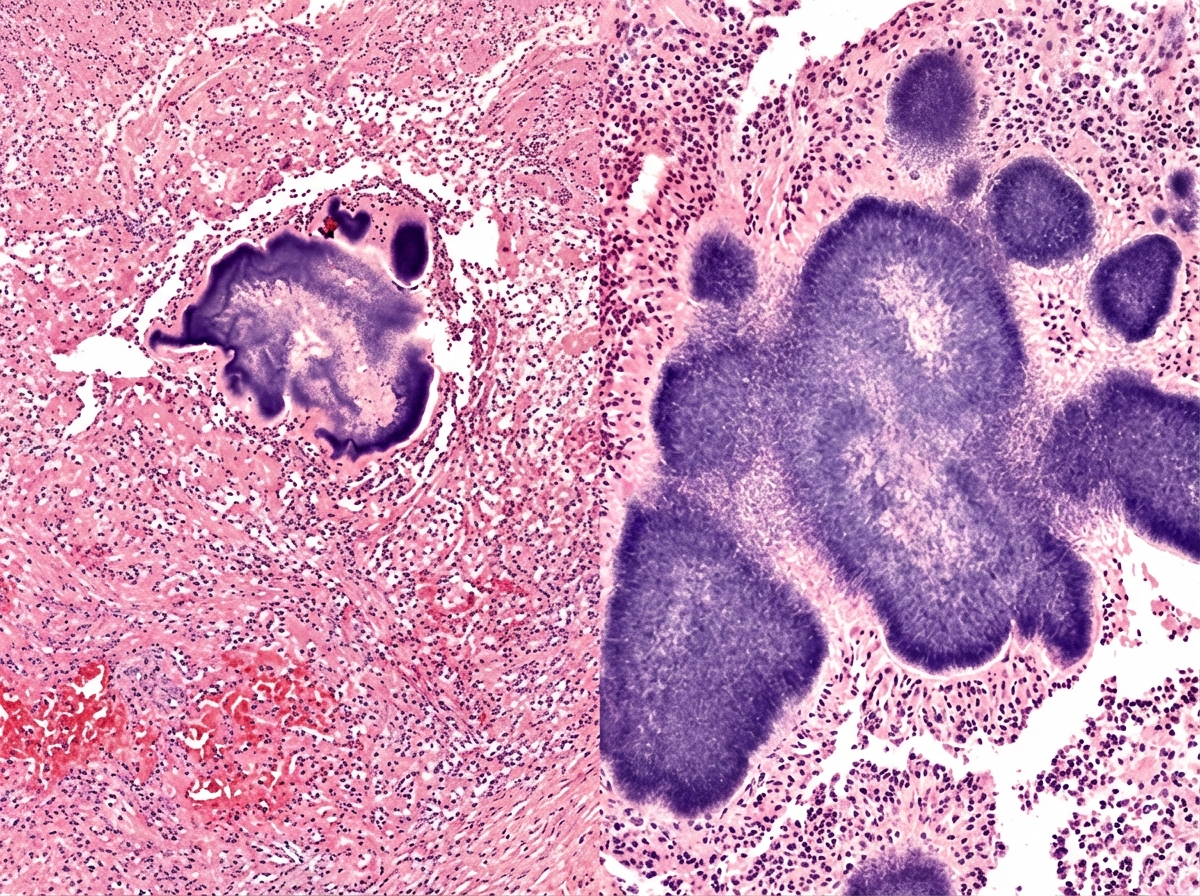
A 68-year-old man comes to the physician because of a 3-month history of anorexia, weight loss, and cough productive of blood-tinged sputum with yellow granules. Four months ago he was treated for gingivitis. He has smoked 1 pack of cigarettes daily for 40 years. Examination shows crackles over the right upper lung field. An x-ray of the chest shows a solitary nodule and one cavitary lesion in the right upper lung field. A photomicrograph of a biopsy specimen from the nodule obtained via CT-guided biopsy is shown. Which of the following is the most appropriate pharmacotherapy?
Q106
A 30-year-old man is diagnosed with multi-drug resistant tuberculosis after a recent trip to Eastern Europe. After drug susceptibility testing is completed, he is given a regimen of antibiotics as treatment. He returns two weeks later complaining of decreased visual acuity and color-blindness. What is the mechanism of action of the drug that is most likely to cause this side effect?
Q107
A 67-year-old African American male presents to the emergency room complaining of nausea and right flank pain. He reports that these symptoms have worsened over the past two days. His past medical history is notable for congestive heart failure, hypertension, hyperlipidemia, and diabetes mellitus. He currently takes aspirin, losartan, metoprolol, atorvastatin, hydrochlorothiazide, furosemide, and metformin. He is allergic to fluoroquinolones. His temperature is 102.9°F (39.4°C), blood pressure is 100/50 mmHg, pulse is 120/min, and respirations are 28/min. On exam, he demonstrates right costovertebral angle tenderness. Urinalysis reveals 30 WBCs/hpf and positive leukocyte esterase. He is admitted and started on a broad-spectrum combination intravenous antibiotic. He recovers well and is discharged with plans to follow up in 2 weeks. At his follow-up, he reports that he has developed transient visual blurring whenever he turns his head to the right or left. He also reports that he has fallen at home multiple times. What is the mechanism of action of the drug that is most likely responsible for this patient’s current symptoms?
Q108
A 62-year-old man presents with epigastric pain over the last 6 months. He says the pain gets worse with food, especially coffee. He also complains of excessive belching. He says he has tried omeprazole recently, but it has not helped. No significant past medical history or current medications. On physical examination, there is epigastric tenderness present on deep palpation. An upper endoscopy is performed which reveals gastric mucosa with signs of mild inflammation and a small hemorrhagic ulcer in the antrum. A gastric biopsy shows active inflammation, and the specimen stains positive with Warthin–Starry stain, revealing Helicobacter pylori. Which of the following is the next, best step in the management of this patient’s condition?
Q109
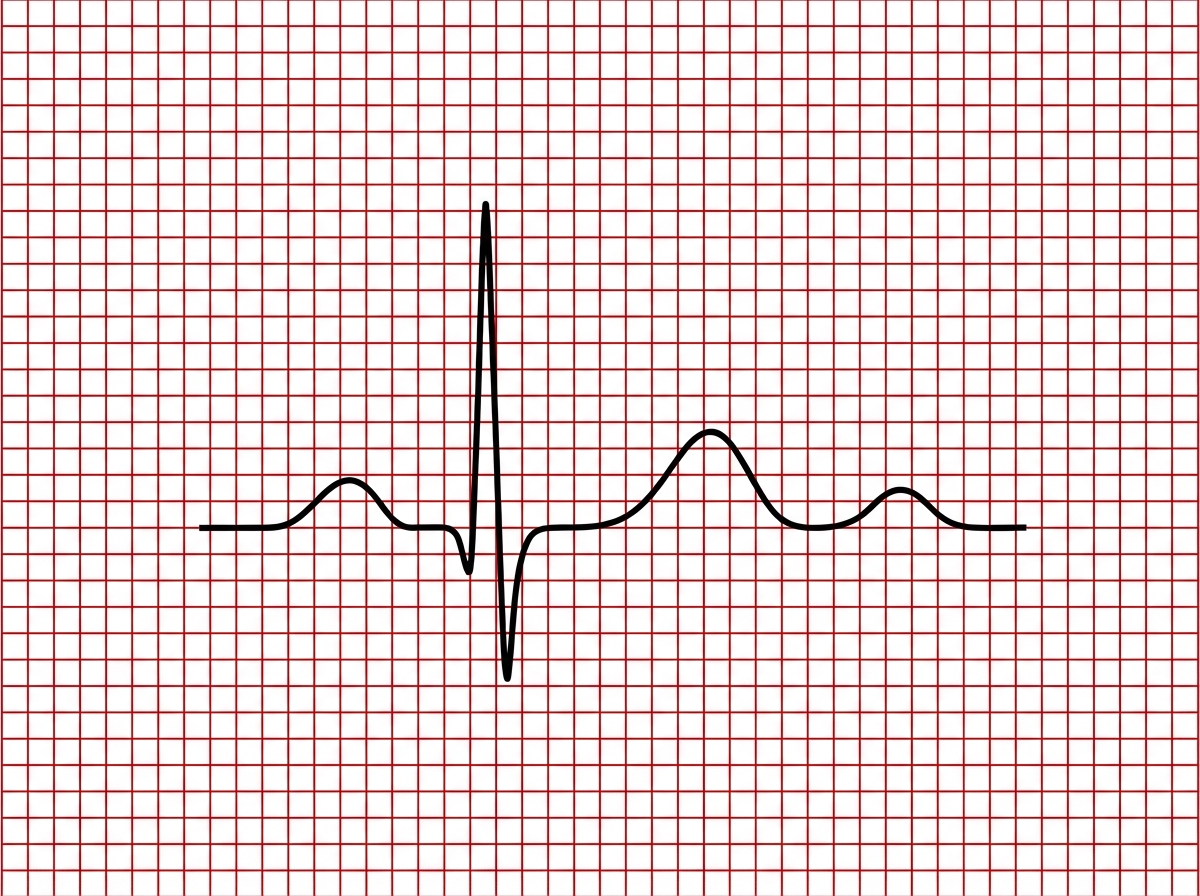
A 48-year-old woman is admitted to the hospital with sepsis and treated with gentamicin. One week after her admission, she develops oliguria and her urine shows muddy brown casts on light microscopy. Days later, her renal function begins to recover, but she complains of weakness and develops U waves on EKG as shown in Image A. Which laboratory abnormality would you most expect to see in this patient?
Q110
A 34-year-old man comes to the physician for a 1-week history of fever and generalized fatigue. Yesterday, he developed a rash all over his body. Two months ago, he had a painless lesion on his penis that resolved a few weeks later without treatment. He has asthma. Current medications include an albuterol inhaler. He is currently sexually active with 3 different partners. He uses condoms inconsistently. Vital signs are within normal limits. He has a diffuse maculopapular rash involving the trunk, extremities, palms, and soles. An HIV test is negative. Rapid plasma reagin (RPR) and fluorescent treponemal antibody absorption test (FTA-ABS) are positive. The patient receives a dose of intramuscular benzathine penicillin G. Two hours later, he complains of headache, myalgias, and chills. His temperature is 38.8°C (101.8°F) , pulse is 105/min, respirations are 24/min, and blood pressure is 98/67 mm Hg. Which of the following is the most appropriate pharmacotherapy?
Antibiotics US Medical PG Practice Questions and MCQs
Question 101: Blood cultures are sent to the laboratory. Antibiotic treatment is started. Blood cultures confirm an infection with methicillin-susceptible Staphylococcus epidermidis in a patient with a prosthetic heart valve. Which of the following is the most appropriate next step in management?
A. Intravenous ampicillin + rifampin + ceftriaxone for 2 weeks
B. Oral gentamicin + ceftriaxone for 4 weeks
C. Intravenous nafcillin + rifampin for 6 weeks + gentamicin for 2 weeks (Correct Answer)
D. Oral penicillin V + gentamicin for 4 weeks
E. Oral amoxicillin for 6 weeks
Explanation: ***Intravenous nafcillin + rifampin for 6 weeks + gentamicin for 2 weeks***
- For **methicillin-susceptible Staphylococcus epidermidis** prosthetic valve endocarditis, the recommended treatment combines an anti-staphylococcal penicillin (like **nafcillin**), an agent active against biofilms (**rifampin**), and an aminoglycoside for synergy (**gentamicin**).
- The duration of **6 weeks** for nafcillin and rifampin, with **gentamicin for 2 weeks**, is crucial due to the difficulty of eradicating infection on prosthetic material.
*Intravenous ampicillin + rifampin + ceftriaxone for 2 weeks*
- **Ampicillin** is not the preferred anti-staphylococcal agent for MSSA or MSSE, and **ceftriaxone** is not typically used in this specific *Staphylococcus epidermidis* regimen.
- A **2-week duration** is too short for prosthetic valve endocarditis, which requires prolonged treatment due to biofilm formation.
*Oral gentamicin + ceftriaxone for 4 weeks*
- **Gentamicin** has poor oral bioavailability and is typically given intravenously for serious infections like endocarditis; oral administration would be ineffective.
- While ceftriaxone is sometimes used for endocarditis, it is not the primary choice for *Staphylococcus epidermidis*, and a **4-week duration** is still insufficient for prosthetic valve infection.
*Oral penicillin V + gentamicin for 4 weeks*
- **Penicillin V** is an oral penicillin, not suitable for serious intravenous infections like prosthetic valve endocarditis, and its spectrum does not specifically target *Staphylococcus epidermidis* effectively as a first-line agent.
- **Oral gentamicin** is inappropriate, and the **4-week duration** is too short for a prosthetic valve infection.
*Oral amoxicillin for 6 weeks*
- **Amoxicillin** is an extended-spectrum penicillin but is not the first-line intravenous agent for *Staphylococcus epidermidis* prosthetic valve endocarditis.
- **Oral administration** is inadequate for severe infections like endocarditis, which demands intravenous therapy, and a single agent is generally insufficient.
Question 102: A 45-year-old man presents to his primary care physician for lower extremity pain and unsteadiness. He describes the pain as severe and stabbing and affecting his lower extremities. These episodes of pain last for minutes at a time. He also reports knocking into furniture regularly. Medical history is significant for streptococcal pharyngitis, where he had a severe allergic reaction to appropriate treatment. He is currently sexually active with men and does not use condoms. On physical exam, his pupils are miotic in normal and low light. The pupils do not constrict further when exposed to the penlight and there is no direct or consensual pupillary dilation when the penlight is removed. The pupils constrict further when exposed to a near object. He has decreased vibration and proprioception sense in his lower extremities, absent lower extremity deep tendon reflexes, and a positive Romberg test. Which of the following is the best next step in management?
A. Intravenous penicillin
B. Intramuscular penicillin
C. Oral doxycycline
D. Intravenous doxycycline
E. Intramuscular ceftriaxone (Correct Answer)
Explanation: ***Intramuscular ceftriaxone***
- The patient's presentation with **tabes dorsalis** (stabbing pains, ataxia, absent deep tendon reflexes, loss of proprioception/vibration) and **Argyll Robertson pupils** is highly suggestive of **neurosyphilis**.
- While **IV penicillin G** is the first-line treatment for neurosyphilis, the patient has a history of **severe penicillin allergy**, making penicillin use dangerous without desensitization.
- **Ceftriaxone 2g IM or IV daily for 10-14 days** is an accepted alternative for neurosyphilis in penicillin-allergic patients, with adequate **CSF penetration** to treat CNS infection.
- Although there is a small risk of **cross-reactivity** between cephalosporins and penicillin (approximately 1-2% for Type 1 hypersensitivity), this risk is acceptable given the need to treat active neurosyphilis and the lack of other proven effective alternatives.
*Intravenous penicillin*
- **Aqueous crystalline penicillin G IV** (18-24 million units/day) is the **gold standard** treatment for neurosyphilis.
- However, the patient's history of a **severe allergic reaction to penicillin** contraindicates its use without prior **desensitization**.
- While desensitization is recommended for neurosyphilis patients with penicillin allergy, among the options listed, ceftriaxone is the safer immediate alternative.
*Intramuscular penicillin*
- **Intramuscular benzathine penicillin** is used for primary, secondary, or early latent syphilis, but **does NOT achieve adequate CSF concentrations** for neurosyphilis treatment.
- The patient's **severe penicillin allergy** also contraindicates its use without desensitization.
*Oral doxycycline*
- **Oral doxycycline** (100 mg PO BID x 28 days) can be used for primary, secondary, or latent syphilis in penicillin-allergic patients.
- However, oral doxycycline **does NOT achieve adequate CSF concentrations** to effectively treat neurosyphilis and is not recommended for this indication.
*Intravenous doxycycline*
- **IV doxycycline does NOT achieve therapeutic concentrations in the CSF** adequate to treat neurosyphilis effectively.
- There is **no established regimen or evidence** supporting IV doxycycline for neurosyphilis treatment.
- For penicillin-allergic patients with neurosyphilis, **desensitization followed by IV penicillin** or **ceftriaxone** are the recommended approaches, not IV doxycycline.
Question 103: A 13-year-old girl presents with a right infected ingrown toenail. On examination, the skin on the lateral side of the toe is red, warm, swollen, and severely tender to touch. When gentle pressure is applied, pus oozes out. Culture and sensitivity analysis of the pus shows methicillin-resistant Staphylococcus aureus (MRSA). Which of the following antibiotics is most effective against this organism?
A. Clindamycin (Correct Answer)
B. Oral vancomycin
C. Aztreonam
D. Cefuroxime
E. Cefotetan
Explanation: ***Clindamycin***
- **Clindamycin** is an effective oral antibiotic for **community-acquired MRSA (CA-MRSA)** skin and soft tissue infections, especially when the organism is susceptible.
- It inhibits bacterial protein synthesis by binding to the 50S ribosomal subunit and is a common first-line choice for superficial MRSA infections that do not require hospitalization or intravenous therapy.
- Other oral options for CA-MRSA include **trimethoprim-sulfamethoxazole (TMP-SMX)** and **doxycycline**, but among the options listed, clindamycin is the only effective choice.
*Oral vancomycin*
- **Vancomycin** is an effective antibiotic for MRSA infections, but its oral form is primarily used for **Clostridioides difficile infection (CDI)** within the gastrointestinal tract.
- **Oral vancomycin** is poorly absorbed systemically and therefore not effective for systemic infections or infections outside the GI tract, such as an infected ingrown toenail.
*Aztreonam*
- **Aztreonam** is a **monobactam antibiotic** that has activity against **Gram-negative bacteria**, including *Pseudomonas aeruginosa*.
- It has no significant activity against **Gram-positive bacteria** like *Staphylococcus aureus* (MRSA).
*Cefuroxime*
- **Cefuroxime** is a **second-generation cephalosporin** that has good activity against sensitive *Staphylococcus aureus* and common Gram-negative organisms.
- However, it, like most other cephalosporins, is **not effective against MRSA** due to the altered **penicillin-binding proteins (PBPs)** in MRSA.
*Cefotetan*
- **Cefotetan** is another **second-generation cephalosporin** with activity against some Gram-negative and anaerobic bacteria.
- Similar to cefuroxime, it is generally **not effective against MRSA**, which expresses altered PBPs that confer resistance to beta-lactam antibiotics.
Question 104: An 18-year-old man seeks an evaluation from a physician for painful right axillary swelling since 2 days ago. He has malaise. He has no history of serious illnesses and takes no medications. He has a pet kitten which was recently treated for fleas. The temperature is 38.5℃ (101.3℉), the pulse is 88/min, the respiration rate is 14/min, and the blood pressure is 120/80 mm Hg. There are 2 painless papules on the patient’s right forearm that appeared on the healing scratch marks left by his pet kitten a few days ago. Several lymph nodes in the right axilla are enlarged and tender. The overlying skin is erythematous. No other lymphadenopathy is detected in other areas. The rest of the examination shows no abnormalities. Which of the following is the most appropriate pharmacotherapy at this time?
A. Streptomycin
B. Pyrimethamine
C. Azithromycin (Correct Answer)
D. No pharmacotherapy
E. Doxycycline
Explanation: ***Azithromycin***
- This patient's presentation with **painful axillary swelling**, **fever**, and **papules on a healing cat scratch** is highly characteristic of **cat scratch disease (CSD)**, caused by *Bartonella henselae*.
- **Azithromycin** is the preferred first-line antibiotic for CSD, especially in the setting of significant lymphadenopathy, as it can reduce lymph node volume and the duration of symptoms.
*Streptomycin*
- **Streptomycin** is an aminoglycoside antibiotic primarily used for severe infections like tuberculosis or tularemia, and it is **not a first-line treatment for CSD**.
- Its use is associated with significant side effects including **ototoxicity** and **nephrotoxicity**.
*Pyrimethamine*
- **Pyrimethamine** is an antiparasitic drug used mainly for **toxoplasmosis** and some forms of malaria.
- It has **no activity against *Bartonella henselae*** and would not be effective in treating CSD.
*No pharmacotherapy*
- While many cases of CSD may resolve spontaneously, this patient has **significant and painful regional lymphadenopathy** and systemic symptoms (fever, malaise).
- **Antibiotic treatment**, particularly with azithromycin, is recommended to alleviate symptoms, reduce lymph node size, and prevent complications in such cases.
*Doxycycline*
- **Doxycycline** is an alternative antibiotic that can be used for CSD, particularly in older patients or those with disseminated disease, but it is **not generally preferred over azithromycin in children or adolescents** due to concerns about tooth discoloration.
- It is also less effective than azithromycin for isolated lymphadenopathy.
Question 105: A 68-year-old man comes to the physician because of a 3-month history of anorexia, weight loss, and cough productive of blood-tinged sputum with yellow granules. Four months ago he was treated for gingivitis. He has smoked 1 pack of cigarettes daily for 40 years. Examination shows crackles over the right upper lung field. An x-ray of the chest shows a solitary nodule and one cavitary lesion in the right upper lung field. A photomicrograph of a biopsy specimen from the nodule obtained via CT-guided biopsy is shown. Which of the following is the most appropriate pharmacotherapy?
A. Trimethoprim-sulfamethoxazole
B. Cisplatin and paclitaxel
C. Itraconazole
D. Penicillin G (Correct Answer)
E. Rifampin, isoniazid, pyrazinamide, and ethambutol
Explanation: ***Penicillin G***
- The patient's symptoms (anorexia, weight loss, cough with blood-tinged sputum and yellow granules), along with a history of gingivitis and a cavitary lesion in the lung, are highly suggestive of **actinomycosis**.
- **Penicillin G** is the drug of choice for treating actinomycosis, often requiring high doses and prolonged treatment due to the slow growth of the bacteria and the often fibrotic nature of the lesions.
*Trimethoprim-sulfamethoxazole*
- This antibiotic combination is primarily used for various bacterial infections, including some **Nocardia** infections, but it is not the first-line treatment for **Actinomyces**.
- While it can be an alternative in some cases of actinomycosis, **penicillin** remains the gold standard due to its superior efficacy against the organism.
*Cisplatin and paclitaxel*
- This is a combination often used in **chemotherapy** for certain cancers, particularly **non-small cell lung cancer**.
- While the patient's age and smoking history raise suspicion for lung cancer, the presence of **yellow granules** (sulfur granules) and the history of recent dental infection strongly point away from malignancy and towards an infectious cause like actinomycosis.
*Itraconazole*
- **Itraconazole** is an **antifungal agent** used to treat systemic fungal infections such as aspergillosis, histoplasmosis, and blastomycosis.
- The clinical presentation, especially the "yellow granules" and history of gingivitis, points to a **bacterial infection (Actinomyces)**, not a fungal infection.
*Rifampin, isoniazid, pyrazinamide, and ethambutol*
- This is the standard four-drug regimen for treating **active tuberculosis**.
- Although the patient presents with cough, weight loss, and a lung nodule, the presence of characteristic **sulfur granules** in the sputum and a history of recent gingivitis make tuberculosis less likely and direct the diagnosis toward actinomycosis.
Question 106: A 30-year-old man is diagnosed with multi-drug resistant tuberculosis after a recent trip to Eastern Europe. After drug susceptibility testing is completed, he is given a regimen of antibiotics as treatment. He returns two weeks later complaining of decreased visual acuity and color-blindness. What is the mechanism of action of the drug that is most likely to cause this side effect?
A. Inhibition of RNA translation
B. Inhibition of RNA synthesis
C. Binding to ergosterol and formation of a transmembrane channel
D. Inhibition of mycolic acid synthesis
E. Inhibition of arabinogalactan synthesis (Correct Answer)
Explanation: ***Inhibition of arabinogalactan synthesis***
- This mechanism of action describes **ethambutol**, a drug commonly used in **MDR-TB regimens**.
- **Optic neuritis**, manifesting as decreased visual acuity and red-green color-blindness, is a classic and dose-dependent side effect of **ethambutol**.
*Inhibition of RNA translation*
- This mechanism is characteristic of **aminoglycosides** (e.g., streptomycin, amikacin) and **tetracyclines**, which are sometimes used in MDR-TB, but they mainly cause **ototoxicity** and **nephrotoxicity**, not ocular side effects.
- While some aminoglycosides are active against mycobacteria, they are not primarily associated with the specific visual disturbances described.
*Inhibition of RNA synthesis*
- This is the mechanism of action for **rifampin**, a first-line TB drug, and **rifabutin/rifapentine**.
- Rifampin's main side effects include **hepatotoxicity** and **red-orange discoloration** of bodily fluids, not visual impairment or color blindness.
*Binding to ergosterol and formation of a transmembrane channel*
- This is the mechanism of action for **amphotericin B**, an antifungal drug.
- Amphotericin B is not used for tuberculosis treatment; its side effects include **nephrotoxicity** and **infusion-related reactions**.
*Inhibition of mycolic acid synthesis*
- This mechanism describes **isoniazid (INH)**, a cornerstone of TB treatment.
- While isoniazid can cause **peripheral neuropathy** (prevented with pyridoxine) and **hepatotoxicity**, it does not typically cause optic neuritis with color blindness.
Question 107: A 67-year-old African American male presents to the emergency room complaining of nausea and right flank pain. He reports that these symptoms have worsened over the past two days. His past medical history is notable for congestive heart failure, hypertension, hyperlipidemia, and diabetes mellitus. He currently takes aspirin, losartan, metoprolol, atorvastatin, hydrochlorothiazide, furosemide, and metformin. He is allergic to fluoroquinolones. His temperature is 102.9°F (39.4°C), blood pressure is 100/50 mmHg, pulse is 120/min, and respirations are 28/min. On exam, he demonstrates right costovertebral angle tenderness. Urinalysis reveals 30 WBCs/hpf and positive leukocyte esterase. He is admitted and started on a broad-spectrum combination intravenous antibiotic. He recovers well and is discharged with plans to follow up in 2 weeks. At his follow-up, he reports that he has developed transient visual blurring whenever he turns his head to the right or left. He also reports that he has fallen at home multiple times. What is the mechanism of action of the drug that is most likely responsible for this patient’s current symptoms?
A. Inhibition of transpeptidase
B. Inhibition of ribosomal 30S subunit (Correct Answer)
C. Inhibition of dihydropteroate synthase
D. Inhibition of ribosomal 50S subunit
E. Inhibition of DNA gyrase
Explanation: ***Inhibition of ribosomal 30S subunit***
- The patient developed **transient visual blurring with head movement** and **falls** after treatment for a severe infection, which is pathognomonic for **aminoglycoside ototoxicity**. The transient visual blurring with head movement is characteristic of **vestibular dysfunction** affecting the **vestibulo-ocular reflex**, which normally stabilizes vision during head movements.
- Given the patient's severe **pyelonephritis** requiring broad-spectrum IV antibiotics and his **fluoroquinolone allergy**, an **aminoglycoside** (gentamicin, tobramycin, or amikacin) was likely used as part of the treatment regimen. The combination of balance problems and head-movement-related visual disturbances is pathognomonic for vestibular toxicity from aminoglycosides.
*Inhibition of transpeptidase*
- This is the mechanism of action for **beta-lactam antibiotics** (penicillins, cephalosporins) which disrupt bacterial **cell wall synthesis** by inhibiting transpeptidases.
- While beta-lactams are commonly used broad-spectrum antibiotics, their primary side effects include **hypersensitivity reactions** and gastrointestinal upset, not the **vestibular toxicity** described.
*Inhibition of dihydropteroate synthase*
- This is the mechanism of action for **sulfonamides** (sulfamethoxazole), which interfere with bacterial **folate synthesis**.
- Side effects include **hypersensitivity reactions**, bone marrow suppression, and nephrotoxicity, but not the specific **ototoxicity** causing balance and visual symptoms.
*Inhibition of ribosomal 50S subunit*
- This mechanism applies to **macrolides** (azithromycin, erythromycin) and **chloramphenicol**, which inhibit bacterial protein synthesis at the 50S ribosomal subunit.
- Macrolides typically cause **QT prolongation** and GI effects, while chloramphenicol causes **aplastic anemia**, but neither causes the **vestibular dysfunction** seen in this patient.
*Inhibition of DNA gyrase*
- This is the mechanism of action for **fluoroquinolones** (ciprofloxacin, levofloxacin), which prevent bacterial DNA replication.
- The patient has a documented **fluoroquinolone allergy**, making their use unlikely. Even if used, fluoroquinolones cause **tendon rupture** and peripheral neuropathy, not the specific vestibulo-ocular symptoms described.
Question 108: A 62-year-old man presents with epigastric pain over the last 6 months. He says the pain gets worse with food, especially coffee. He also complains of excessive belching. He says he has tried omeprazole recently, but it has not helped. No significant past medical history or current medications. On physical examination, there is epigastric tenderness present on deep palpation. An upper endoscopy is performed which reveals gastric mucosa with signs of mild inflammation and a small hemorrhagic ulcer in the antrum. A gastric biopsy shows active inflammation, and the specimen stains positive with Warthin–Starry stain, revealing Helicobacter pylori. Which of the following is the next, best step in the management of this patient’s condition?
A. Perform colonoscopy
B. Start famotidine and erythromycin
C. Give amoxicillin, clarithromycin, and omeprazole (Correct Answer)
D. Give amoxicillin, erythromycin and omeprazole
E. Observation
Explanation: ***Give amoxicillin, clarithromycin, and omeprazole***
- The biopsy results confirm **Helicobacter pylori** infection, which is the primary cause of his symptoms and the gastric ulcer.
- The standard first-line treatment for H. pylori eradication is **triple therapy**, consisting of a proton pump inhibitor (PPI) like **omeprazole**, and two antibiotics, typically **amoxicillin** and **clarithromycin**.
*Perform colonoscopy*
- A **colonoscopy** is used to examine the large intestine and is not indicated for **epigastric pain** and a confirmed **gastric ulcer** caused by H. pylori.
- There are no symptoms or findings suggestive of **colonic pathology**.
*Start famotidine and erythromycin*
- **Famotidine** is an H2 receptor blocker, which might help with acid reduction but is insufficient alone to eradicate **H. pylori**.
- **Erythromycin** is not a standard antibiotic for H. pylori eradication and is not typically used in this context.
*Give amoxicillin, erythromycin and omeprazole*
- While **amoxicillin** and **omeprazole** are part of the standard triple therapy, **erythromycin** is not an appropriate antibiotic for H. pylori eradication.
- The typical second antibiotic in triple therapy is **clarithromycin** or metronidazole, not erythromycin.
*Observation*
- **Observation** is not appropriate given the confirmed **H. pylori infection** and gastric ulcer.
- Untreated H. pylori can lead to complications such as **peptic ulcer disease**, **gastric adenocarcinoma**, or **MALT lymphoma**.
Question 109: A 48-year-old woman is admitted to the hospital with sepsis and treated with gentamicin. One week after her admission, she develops oliguria and her urine shows muddy brown casts on light microscopy. Days later, her renal function begins to recover, but she complains of weakness and develops U waves on EKG as shown in Image A. Which laboratory abnormality would you most expect to see in this patient?
A. Hypermagnesemia
B. Hypocalcemia
C. Hypokalemia (Correct Answer)
D. Hypoglycemia
E. Hyponatremia
Explanation: ***Hypokalemia***
- The presence of **U waves on EKG** is a classic sign of **hypokalemia**, often accompanied by muscle weakness.
- The patient initially experienced **acute tubular necrosis (ATN)** from gentamicin (evidenced by oliguria and muddy brown casts).
- During the **recovery/polyuric phase of ATN**, significant potassium is lost in the urine, making **hypokalemia** a well-recognized complication.
- The combination of weakness and U waves on EKG confirms hypokalemia in this clinical context.
*Hypermagnesemia*
- **Hypermagnesemia** typically causes severe muscle weakness, drowsiness, and respiratory depression, but it does not cause U waves on EKG.
- EKG changes associated with hypermagnesemia include **prolonged PR, QRS, and QT intervals**, and ultimately **asystole**.
*Hypocalcemia*
- **Hypocalcemia** can cause muscle cramps, spasms, and tetany, but the classical EKG finding is **QT prolongation**, not U waves.
- While renal failure can lead to hypocalcemia, the presenting EKG changes and symptoms are not consistent with primary hypocalcemia.
*Hypoglycemia*
- **Hypoglycemia** causes symptoms such as sweating, tremors, palpitations, and confusion, but it is not directly associated with specific EKG changes like U waves.
- It relates to glucose levels, not to electrolyte imbalances causing U waves.
*Hyponatremia*
- **Hyponatremia** can cause neurological symptoms like confusion, seizures, and cerebral edema, but it typically does not directly manifest as U waves on EKG.
- While renal dysfunction can contribute to hyponatremia, the patient's symptoms and EKG are more indicative of a different electrolyte disorder.
Question 110: A 34-year-old man comes to the physician for a 1-week history of fever and generalized fatigue. Yesterday, he developed a rash all over his body. Two months ago, he had a painless lesion on his penis that resolved a few weeks later without treatment. He has asthma. Current medications include an albuterol inhaler. He is currently sexually active with 3 different partners. He uses condoms inconsistently. Vital signs are within normal limits. He has a diffuse maculopapular rash involving the trunk, extremities, palms, and soles. An HIV test is negative. Rapid plasma reagin (RPR) and fluorescent treponemal antibody absorption test (FTA-ABS) are positive. The patient receives a dose of intramuscular benzathine penicillin G. Two hours later, he complains of headache, myalgias, and chills. His temperature is 38.8°C (101.8°F) , pulse is 105/min, respirations are 24/min, and blood pressure is 98/67 mm Hg. Which of the following is the most appropriate pharmacotherapy?
A. Epinephrine
B. Methylprednisolone
C. Ceftriaxone
D. Phenylephrine
E. Ibuprofen (Correct Answer)
Explanation: ***Ibuprofen***
- This patient is experiencing a **Jarisch-Herxheimer reaction**, which is an immune-mediated response to endotoxins released by dying spirochetes after initiation of syphilis treatment.
- Management involves supportive care with antipyretics and anti-inflammatory agents like ibuprofen, as the reaction is typically self-limiting.
*Epinephrine*
- **Epinephrine** is used to treat **anaphylaxis**, a severe allergic reaction characterized by widespread systemic symptoms such as bronchospasm, angioedema, and circulatory collapse.
- The patient's symptoms are consistent with a Jarisch-Herxheimer reaction, not anaphylaxis, and his blood pressure is not severely low enough to warrant epinephrine.
*Methylprednisolone*
- **Corticosteroids** like methylprednisolone are used for severe inflammatory conditions or allergic reactions; however, they are generally not needed for the self-limiting Jarisch-Herxheimer reaction.
- While steroids can theoretically reduce the inflammatory response, they are not the first-line treatment for an uncomplicated Jarisch-Herxheimer reaction.
*Ceftriaxone*
- **Ceftriaxone** is an antibiotic used to treat various bacterial infections, including gonorrhea and some forms of syphilis in penicillin-allergic patients.
- The patient has already received appropriate penicillin treatment for syphilis, and additional antibiotics are not indicated for the Jarisch-Herxheimer reaction.
*Phenylephrine*
- **Phenylephrine** is a vasopressor used to treat hypotension by increasing vascular tone.
- Although the patient's blood pressure is slightly low, it is not critically low, and the primary issue is the inflammatory response of the Jarisch-Herxheimer reaction, which does not typically require vasopressor support.