A 22-year-old woman presents to the doctor's office seeking evaluation for her recurrent urinary tract infections. She admits to urinary frequency and a burning sensation when urinating. This is her 3rd UTI in the past year. She has a history of generalized anxiety disorder for which she takes paroxetine. She is sexually active and has had multiple partners during the past year. The patient’s blood pressure is 116/72 mm Hg, the heart rate is 76/min, the respiratory rate is 12/min and the temperature is 36.8°C (98.2°F). On physical examination, she is alert and oriented to time, place, and person. There is no murmur. Her lungs are clear to auscultation bilaterally. Her abdomen is soft and non-tender to palpation. The distance from the urethra to anus is shorter than the average female her age. Urinalysis and urine culture results are provided:
Urine culture results 200 CFUs of Escherichia coli (normal < 100 if symptomatic)
Leukocyte esterase positive
WBC 50-100 cells/hpf
Nitrite positive
RBC 3 cells/hpf
Epithelial cells 2 cells/hpf
pH 5.2 (normal 4.5–8)
Which of the following recommendations would be most appropriate for this patient?
Q92
A 41-year-old homeless man is brought to the emergency department complaining of severe fever, dizziness, and a persistent cough. The patient has a history of long-standing alcohol abuse and has frequently presented to the emergency department with acute alcohol intoxication. The patient states that his cough produces ‘dark brown stuff’ and he provided a sample for evaluation upon request. The patient denies having any other underlying medical conditions and states that he has no other symptoms. He denies taking any medications, although he states that he knows he has a sulfa allergy. On observation, the patient looks frail and severely fatigued. The vital signs include: blood pressure 102/72 mm Hg, pulse 98/min, respiratory rate 15/min, and temperature 37.1°C (98.8°F). Auscultation reveals crackles in the left upper lobe and chest X-ray reveals an infiltrate in the same area. Which of the following is the most appropriate treatment for this patient?
Q93
A 51-year-old man is admitted to the hospital because of a 2-day history of fever, nausea, and abdominal pain. His temperature is 39.4°C (102.9°F) and pulse is 106/min. Physical examination shows tenderness in the right upper quadrant. Blood cultures grow nonhemolytic, gram-positive cocci that grow in hypertonic saline. Antibiotic sensitivity testing of the isolated organism shows that gentamicin has a minimum inhibitory concentration (MIC) of 16 μg/mL. The addition of ampicillin, which has an MIC of 2 μg/mL alone, decreases the MIC of gentamicin to 0.85 μg/mL. The decrease in the MIC of gentamicin with the addition of ampicillin is most likely due to which of the following mechanisms?
Q94
A 42-year-old woman with a history of multiple sclerosis and recurrent urinary tract infections comes to the emergency department because of flank pain and fever. Her temperature is 38.8°C (101.8°F). Examination shows left-sided costovertebral angle tenderness. She is admitted to the hospital and started on intravenous vancomycin. Three days later, her symptoms have not improved. Urine culture shows growth of Enterococcus faecalis. Which of the following best describes the most likely mechanism of antibiotic resistance in this patient?
Q95
A 56-year-old man presents with breathlessness and altered mental status. The patient’s daughter says that he has been having high fever and cough for the last 3 days. Past medical history is significant for a recent hospitalization 5 days ago, following a successful coronary artery bypass grafting (CABG). In the post-operative period, he was in an intensive care unit (ICU) for 6 days, including 12 hours on mechanical ventilation. Current medications are aspirin and rosuvastatin. The patient’s daughter mentions that he has had anaphylactic reactions to penicillin in the past. His temperature is 39.4°C (103°F), pulse rate is 110/min, blood pressure is 104/78 mm Hg, and respiratory rate is 30/min. On physical examination, the patient is confused and disoriented and shows signs of respiratory distress and cyanosis. On chest auscultation, there is crepitus in the right lung. The patient is immediately started on oxygen therapy, intravenous fluids, and supportive care. After the collection of appropriate samples for bacteriological culture, treatment with empirical intravenous antibiotics are started. After 24 hours of treatment, the microbiology results indicate Pseudomonas aeruginosa infection. Antibiotic therapy is changed to a combination of aztreonam and tobramycin. Which of the following best describes the rationale for choosing this antibiotic combination?
Q96
A 46-year-old man who recently immigrated from Mexico comes to the physician for a pre-employment wellness examination. A tuberculin skin test is administered and he develops a raised, erythematous 12 mm lesion on his forearm within 48 hours. An x-ray of the chest shows no abnormalities. He is started on the recommended antibiotic treatment for latent tuberculosis. Four weeks later, he returns for a follow-up examination. Laboratory studies show a hemoglobin concentration of 9.3 g/dL, serum alanine aminotransferase activity of 86 U/L, and serum aspartate aminotransferase activity of 66 U/L. A photomicrograph of a Prussian blue-stained bone marrow smear is shown. Which of the following is the mechanism of action of the drug responsible for this patient's findings?
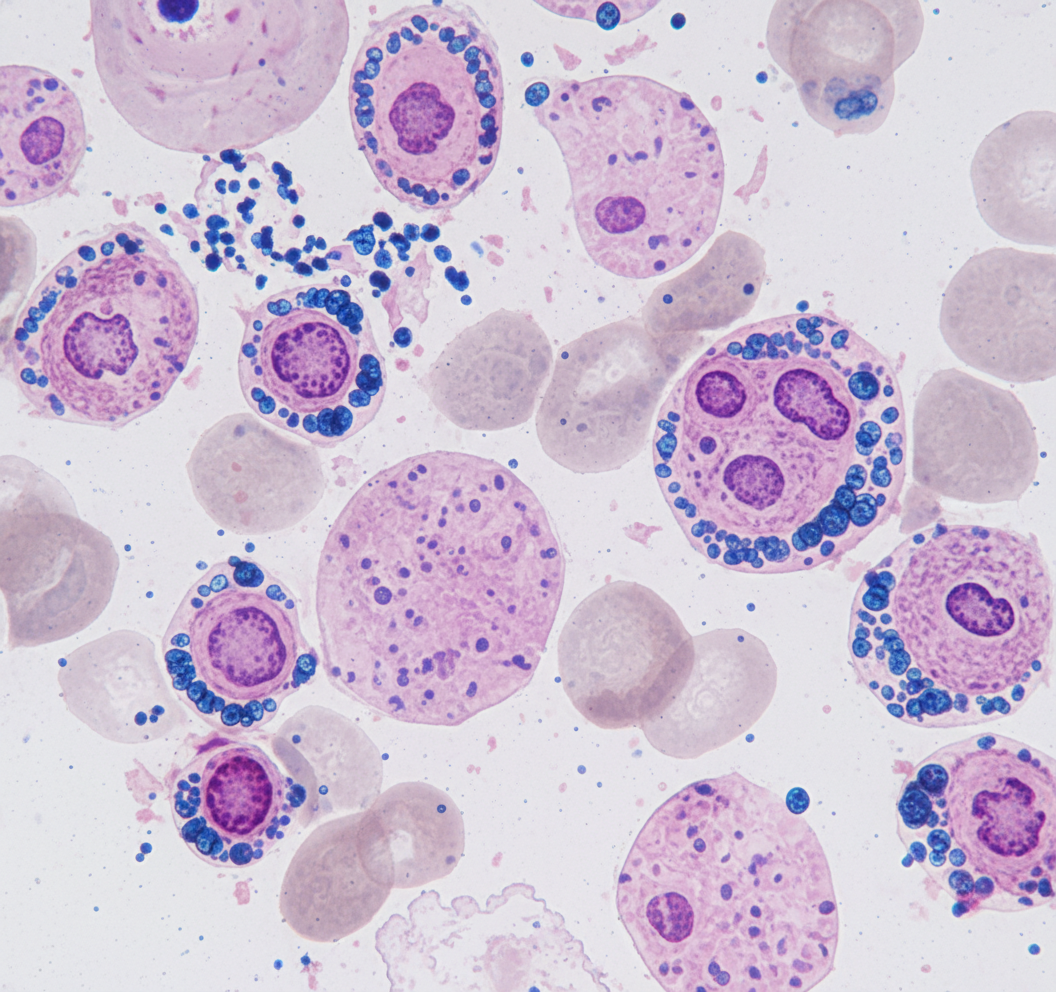
Q97
A 49-year-old man presents to the emergency department with acute onset of pain and redness of the skin of his lower leg for the past 3 days. He has had type 2 diabetes mellitus for the past 12 years, but he is not compliant with his medications. He has smoked 10–15 cigarettes per day for the past 20 years. His temperature is 38°C (100.4°F), pulse is 95/min, and blood pressure is 110/70 mm Hg. On physical examination, the pretibial area is erythematous, edematous, and tender. He is diagnosed with acute cellulitis, and intravenous ceftazidime sodium is started. On the 5th day of antibiotic therapy, the patient complains of severe watery diarrhea, fever, and abdominal tenderness without rigidity. Complete blood count is ordered for the patient and shows 14,000 white blood cells/mm3. Which of the following is the best initial therapy for this patient?
Q98
A 28-year-old gravida 2 para 1 is receiving care from her obstetrician at 28 weeks. She states that she has been having suprapubic pain and urinary frequency for the past week. Her past medical history is significant for dermatomyositis for which she takes prednisone every day. She does not smoke cigarettes or drinks alcohol. Her vital signs are within normal limits. Physical examination of the patient is within normal limits. A urine sample from the patient shows > 100,000 CFU of Escherichia coli. Urinalysis results are provided as follows:
Leukocyte esterase positive
WBC 50-100 cells/HPF
Nitrite positive
RBC 2 cells/HPF
Epithelial cells 2 cells/HPF
Urine pH 5.2
Which of the following is the best pharmacotherapy for this patient’s condition?
Q99
A 26-year-old woman presents to her primary care physician because she has been experiencing occasional fevers and chills for the last 3 weeks. She says that the fevers have been accompanied by abdominal pain and increased vaginal discharge. On presentation her temperature is 101.0°F (38.3°C), blood pressure is 113/75 mmHg, pulse is 105/min, and respirations are 12/min. On physical exam she is found to have tenderness over the lower abdominal quadrants, and speculum exam shows uterine inflammation as well as a retained intrauterine device. The most likely cause of this patient's symptoms should be treated with an antibiotic with which mechanism of action?
Q100
A 24-year-old woman comes to the physician because of a 3-day history of lower abdominal pain and dysuria. She has a history of recurring urinary tract infections that have resolved with antibiotic treatment. She is sexually active with one male partner and they do not use condoms. She had mild pain during her last sexual intercourse one week ago. Her temperature is 38.2°C (100.8°F), pulse is 86/min, and blood pressure is 110/70 mm Hg. Physical examination shows lower abdominal tenderness and bilateral inguinal lymphadenopathy. There is a small amount of purulent vaginal discharge. Bimanual examination shows uterine and cervical motion tenderness. Laboratory studies show:
Hemoglobin 12 g/dL
Leukocyte count 13,500/mm3
Segmented neutrophils 75%
Eosinophils 1%
Lymphocytes 22%
Monocytes 2%
Platelet count 328,000/mm3
Erythrocyte sedimentation rate 82 mm/h
Urine
RBC 1–2/hpf
WBC 0–1/hpf
Nitrite negative
Bacteria occasional
Urine pregnancy test negative
Which of the following is the most appropriate pharmacotherapy?
Antibiotics US Medical PG Practice Questions and MCQs
Question 91: A 22-year-old woman presents to the doctor's office seeking evaluation for her recurrent urinary tract infections. She admits to urinary frequency and a burning sensation when urinating. This is her 3rd UTI in the past year. She has a history of generalized anxiety disorder for which she takes paroxetine. She is sexually active and has had multiple partners during the past year. The patient’s blood pressure is 116/72 mm Hg, the heart rate is 76/min, the respiratory rate is 12/min and the temperature is 36.8°C (98.2°F). On physical examination, she is alert and oriented to time, place, and person. There is no murmur. Her lungs are clear to auscultation bilaterally. Her abdomen is soft and non-tender to palpation. The distance from the urethra to anus is shorter than the average female her age. Urinalysis and urine culture results are provided:
Urine culture results 200 CFUs of Escherichia coli (normal < 100 if symptomatic)
Leukocyte esterase positive
WBC 50-100 cells/hpf
Nitrite positive
RBC 3 cells/hpf
Epithelial cells 2 cells/hpf
pH 5.2 (normal 4.5–8)
Which of the following recommendations would be most appropriate for this patient?
A. Cranberry juice
B. Trimethoprim-sulfamethoxazole
C. Trimethoprim-sulfamethoxazole, and urinating before and after intercourse (Correct Answer)
D. Urinating before and after intercourse
E. Cephalexin
Explanation: **Trimethoprim-sulfamethoxazole, and urinating before and after intercourse**
- The patient has recurrent UTIs with symptomatic bacteriuria, indicating a need for **prophylactic antibiotics** and **behavioral modifications**. Trimethoprim-sulfamethoxazole is a common and effective antibiotic for UTI.
- Urinating before and after intercourse helps to flush out bacteria introduced into the urethra, reducing the risk of ascending infection, which is crucial given her sexually active status and recurrent infections.
*Cranberry juice*
- While sometimes suggested for UTI prevention, the evidence supporting the efficacy of cranberry products in preventing recurrent UTIs is **limited and inconsistent**.
- It is not considered a primary recommendation for patients with recurrent, symptomatic infections requiring medical intervention.
*Trimethoprim-sulfamethoxazole*
- This option correctly identifies the need for antibiotic treatment and prevention based on the urinalysis and culture results, but it **omits important behavioral modifications**.
- Without addressing risk factors like sexual activity, the likelihood of recurrence remains high, making the treatment less comprehensive.
*Urinating before and after intercourse*
- This is an important **behavioral modification** that can help reduce UTI risk, especially in sexually active women.
- However, for a patient with established recurrent UTIs and current infection, it is **insufficient as a sole intervention** and does not address the need for antibiotic therapy or prophylaxis.
*Cephalexin*
- Cephalexin is an antibiotic that can be used to treat UTIs, but **trimethoprim-sulfamethoxazole is often preferred** as a first-line agent given its efficacy against E. coli and its use in prophylactic regimens.
- Furthermore, like the trimethoprim-sulfamethoxazole-only option, it **does not include crucial behavioral recommendations** for preventing recurrence.
Question 92: A 41-year-old homeless man is brought to the emergency department complaining of severe fever, dizziness, and a persistent cough. The patient has a history of long-standing alcohol abuse and has frequently presented to the emergency department with acute alcohol intoxication. The patient states that his cough produces ‘dark brown stuff’ and he provided a sample for evaluation upon request. The patient denies having any other underlying medical conditions and states that he has no other symptoms. He denies taking any medications, although he states that he knows he has a sulfa allergy. On observation, the patient looks frail and severely fatigued. The vital signs include: blood pressure 102/72 mm Hg, pulse 98/min, respiratory rate 15/min, and temperature 37.1°C (98.8°F). Auscultation reveals crackles in the left upper lobe and chest X-ray reveals an infiltrate in the same area. Which of the following is the most appropriate treatment for this patient?
A. Trimethoprim-sulfamethoxazole
B. Vancomycin
C. Clindamycin (Correct Answer)
D. Piperacillin-tazobactam
E. Ciprofloxacin
Explanation: ***Clindamycin***
- The patient, a severely fatigued, homeless man with a history of alcohol abuse, presents with **fever, dizziness, cough producing 'dark brown stuff'**, and crackles/infiltrate in the left upper lobe. This clinical picture is highly suggestive of aspiration pneumonia and/or lung abscess, often caused by **anaerobic bacteria** found in the oral flora.
- **Clindamycin** is the **first-line treatment** for aspiration pneumonia in stable patients, with excellent activity against oral anaerobes, good lung tissue penetration, and proven efficacy in outpatient management.
*Trimethoprim-sulfamethoxazole*
- This antibiotic is **contraindicated** due to the patient's stated **sulfa allergy**.
- While effective against some respiratory pathogens, it does not provide adequate coverage for the likely anaerobic organisms involved in aspiration pneumonia.
*Vancomycin*
- Vancomycin is primarily used for serious **Gram-positive infections**, particularly **MRSA**, and does not provide adequate coverage for **anaerobic bacteria** typically involved in aspiration pneumonia.
- There is no clinical indication for MRSA coverage in this patient's presentation.
*Piperacillin-tazobactam*
- While piperacillin-tazobactam has excellent broad-spectrum activity, including against anaerobes, and would be effective for aspiration pneumonia, it is typically reserved for **hospitalized patients with severe pneumonia** or healthcare-associated infections.
- For a **stable outpatient** with aspiration pneumonia, clindamycin is preferred as it is more targeted, cost-effective, and the standard first-line therapy.
*Ciprofloxacin*
- Ciprofloxacin is a **fluoroquinolone** with good activity against many **Gram-negative bacteria** and some atypical respiratory pathogens.
- However, it has **poor activity against anaerobic bacteria**, which are the primary concern in aspiration pneumonia.
Question 93: A 51-year-old man is admitted to the hospital because of a 2-day history of fever, nausea, and abdominal pain. His temperature is 39.4°C (102.9°F) and pulse is 106/min. Physical examination shows tenderness in the right upper quadrant. Blood cultures grow nonhemolytic, gram-positive cocci that grow in hypertonic saline. Antibiotic sensitivity testing of the isolated organism shows that gentamicin has a minimum inhibitory concentration (MIC) of 16 μg/mL. The addition of ampicillin, which has an MIC of 2 μg/mL alone, decreases the MIC of gentamicin to 0.85 μg/mL. The decrease in the MIC of gentamicin with the addition of ampicillin is most likely due to which of the following mechanisms?
A. Increase in the intracellular uptake of gentamicin (Correct Answer)
B. Sequential block of essential micronutrient synthesis
C. Inhibition of the acetylation of gentamicin
D. Additive bacteriostatic effect of ampicillin
E. Stabilization of gentamicin binding at the target site
Explanation: ***Increase in the intracellular uptake of gentamicin***
- This scenario describes **synergism**, where ampicillin (a cell wall synthesis inhibitor) damages the bacterial cell wall, allowing better penetration of gentamicin (an aminoglycoside) into the cell. Aminoglycosides require **active transport** across the bacterial cell membrane, which is enhanced by cell wall disruption.
- The significant reduction in gentamicin's MIC when combined with ampicillin demonstrates that ampicillin facilitates gentamicin's access to its **ribosomal target**, leading to a more potent bactericidal effect.
*Sequential block of essential micronutrient synthesis*
- **Sequential block** typically refers to the synergistic action of drugs like trimethoprim and sulfamethoxazole, which inhibit different steps in the **folic acid synthesis pathway**.
- This mechanism is not directly applicable to the combination of a cell wall inhibitor and an aminoglycoside, which target different cellular processes.
*Inhibition of the acetylation of gentamicin*
- **Acetylation** is a common mechanism of aminoglycoside inactivation by bacterial enzymes (aminoglycoside-modifying enzymes).
- Ampicillin does not primarily work by inhibiting these enzymes; its main action is on **peptidoglycan synthesis** in the bacterial cell wall.
*Additive bacteriostatic effect of ampicillin*
- Ampicillin is a **bactericidal antibiotic** that works by inhibiting cell wall synthesis, not typically bacteriostatic in its primary action, especially against susceptible organisms.
- The dramatic drop in gentamicin's MIC suggests more than just an additive bacteriostatic effect; it indicates a **synergistic interaction** leading to enhanced bactericidal activity.
*Stabilization of gentamicin binding at the target site*
- Gentamicin binds to the bacterial **30S ribosomal subunit**, inhibiting protein synthesis.
- Ampicillin's mechanism of action is on the **bacterial cell wall**, and it does not directly stabilize the binding of gentamicin to the ribosome. Its role is to facilitate gentamicin's entry into the cell.
Question 94: A 42-year-old woman with a history of multiple sclerosis and recurrent urinary tract infections comes to the emergency department because of flank pain and fever. Her temperature is 38.8°C (101.8°F). Examination shows left-sided costovertebral angle tenderness. She is admitted to the hospital and started on intravenous vancomycin. Three days later, her symptoms have not improved. Urine culture shows growth of Enterococcus faecalis. Which of the following best describes the most likely mechanism of antibiotic resistance in this patient?
A. Increased efflux across bacterial cell membranes
B. Production of beta-lactamase
C. Alteration of penicillin-binding proteins
D. Alteration of peptidoglycan synthesis (Correct Answer)
E. Alteration of ribosomal targets
Explanation: ***Alteration of peptidoglycan synthesis***
- **Vancomycin** targets the **D-Ala-D-Ala terminus** on the peptidoglycan precursor, preventing cross-linking during bacterial cell wall synthesis.
- **Vancomycin resistance in Enterococcus faecalis** occurs through acquisition of resistance genes (vanA, vanB) that encode enzymes modifying the peptidoglycan precursor from **D-Ala-D-Ala to D-Ala-D-Lac**.
- This structural change reduces vancomycin's binding affinity by approximately 1000-fold, rendering the antibiotic ineffective.
- The mechanism directly involves **alteration of the peptidoglycan synthesis pathway**, specifically the terminal amino acid residues of the pentapeptide precursor.
*Increased efflux across bacterial cell membranes*
- This mechanism involves **efflux pumps that actively transport antibiotics out of the bacterial cell**, reducing intracellular concentration.
- While efflux pumps contribute to resistance for antibiotics like **tetracyclines, fluoroquinolones, and macrolides**, this is not the primary mechanism of vancomycin resistance in Enterococcus.
*Production of beta-lactamase*
- **Beta-lactamase enzymes** hydrolyze the **beta-lactam ring** of antibiotics like **penicillins and cephalosporins**, rendering them inactive.
- **Vancomycin is a glycopeptide antibiotic, not a beta-lactam**, so its efficacy is not affected by beta-lactamase production.
*Alteration of ribosomal targets*
- This mechanism confers resistance to antibiotics that target **bacterial ribosomes** to inhibit protein synthesis, such as **macrolides, aminoglycosides, and tetracyclines**.
- **Vancomycin acts on cell wall synthesis**, not protein synthesis, so alteration of ribosomal targets is not relevant to vancomycin resistance.
*Alteration of penicillin-binding proteins*
- **Penicillin-binding proteins (PBPs)** are the targets of **beta-lactam antibiotics** (penicillins, cephalosporins, carbapenems).
- Alterations in PBPs cause resistance to beta-lactams, not to vancomycin.
- **Vancomycin does not interact with PBPs**; it binds directly to the D-Ala-D-Ala terminus of peptidoglycan precursors in the cell wall.
Question 95: A 56-year-old man presents with breathlessness and altered mental status. The patient’s daughter says that he has been having high fever and cough for the last 3 days. Past medical history is significant for a recent hospitalization 5 days ago, following a successful coronary artery bypass grafting (CABG). In the post-operative period, he was in an intensive care unit (ICU) for 6 days, including 12 hours on mechanical ventilation. Current medications are aspirin and rosuvastatin. The patient’s daughter mentions that he has had anaphylactic reactions to penicillin in the past. His temperature is 39.4°C (103°F), pulse rate is 110/min, blood pressure is 104/78 mm Hg, and respiratory rate is 30/min. On physical examination, the patient is confused and disoriented and shows signs of respiratory distress and cyanosis. On chest auscultation, there is crepitus in the right lung. The patient is immediately started on oxygen therapy, intravenous fluids, and supportive care. After the collection of appropriate samples for bacteriological culture, treatment with empirical intravenous antibiotics are started. After 24 hours of treatment, the microbiology results indicate Pseudomonas aeruginosa infection. Antibiotic therapy is changed to a combination of aztreonam and tobramycin. Which of the following best describes the rationale for choosing this antibiotic combination?
A. Broad-spectrum coverage against anaerobes by adding tobramycin to aztreonam
B. Synergism of aztreonam with tobramycin (Correct Answer)
C. Reduction of the side-effects of both aztreonam and tobramycin
D. Broad-spectrum coverage against gram-positive cocci by adding tobramycin to aztreonam
E. Effective combination of a bactericidal and a bacteriostatic antimicrobial against Pseudomonas aeruginosa
Explanation: ***Synergism of aztreonam with tobramycin***
- This combination provides a **synergistic effect** against *Pseudomonas aeruginosa*, meaning their combined action is greater than the sum of their individual effects.
- Aztreonam is a **monobactam** that targets gram-negative bacteria, and tobramycin is an **aminoglycoside**; their co-administration often enhances bactericidal activity and helps overcome resistance.
*Broad-spectrum coverage against anaerobes by adding tobramycin to aztreonam*
- Tobramycin is an **aminoglycoside** primarily effective against aerobic gram-negative bacteria and has **no significant activity against anaerobes**.
- Aztreonam also **lacks activity against anaerobic bacteria**, making this option incorrect.
*Reduction of the side-effects of both aztreanam and tobramycin*
- Both aztreonam and tobramycin have distinct side effects, including **nephrotoxicity and ototoxicity** for tobramycin.
- Combining them, especially tobramycin, generally **increases the risk of side effects** rather than reducing them, necessitating careful monitoring.
*Broad-spectrum coverage against gram-positive cocci by adding tobramycin to aztreonam*
- Aztreonam has a **narrow spectrum** focusing on gram-negative bacteria, and **lacks activity against gram-positive cocci**.
- Tobramycin (an aminoglycoside) also has **limited activity against gram-positive cocci** when used alone, and adding it to aztreonam does not significantly broaden coverage in this regard.
*Effective combination of a bactericidal and a bacteriostatic antimicrobial against Pseudomonas aeruginosa*
- Both aztreonam (a beta-lactam) and tobramycin (an aminoglycoside) are **bactericidal antibiotics**, meaning they kill bacteria.
- This option is incorrect because it inaccurately categorizes one of the drugs as bacteriostatic; the combination consists of two bactericidal agents.
Question 96: A 46-year-old man who recently immigrated from Mexico comes to the physician for a pre-employment wellness examination. A tuberculin skin test is administered and he develops a raised, erythematous 12 mm lesion on his forearm within 48 hours. An x-ray of the chest shows no abnormalities. He is started on the recommended antibiotic treatment for latent tuberculosis. Four weeks later, he returns for a follow-up examination. Laboratory studies show a hemoglobin concentration of 9.3 g/dL, serum alanine aminotransferase activity of 86 U/L, and serum aspartate aminotransferase activity of 66 U/L. A photomicrograph of a Prussian blue-stained bone marrow smear is shown. Which of the following is the mechanism of action of the drug responsible for this patient's findings?
A. Inhibition of bacterial RNA polymerase
B. Inhibition of mycolic acid synthesis (Correct Answer)
C. Binding to 50S ribosomal subunit
D. Inhibition of dihydropteroate synthase
E. Inhibition of arabinosyltransferase
Explanation: ***Inhibition of mycolic acid synthesis***
- The patient's presentation of latent tuberculosis (positive PPD, normal CXR) and development of **sideroblastic anemia** (hemoglobin 9.3 g/dL, Prussian blue-stained ring sideroblasts in bone marrow) and **hepatotoxicity** (elevated ALT/AST) after starting treatment points to **isoniazid (INH)**.
- Isoniazid's primary mechanism of action is to inhibit the synthesis of **mycolic acid**, an essential component of the mycobacterial cell wall, by targeting the enzyme **InhA**.
*Inhibition of bacterial RNA polymerase*
- This is the primary mechanism of action for **rifampin**, another first-line anti-TB drug.
- While rifampin is used in TB treatment, it is not typically associated with the specific constellation of sideroblastic anemia and hepatotoxicity to the same extent as isoniazid.
*Binding to 50S ribosomal subunit*
- This mechanism is characteristic of several classes of antibiotics, including macrolides (e.g., azithromycin, erythromycin) and chloramphenicol, but not commonly used first-line anti-TB drugs.
- These antibiotics are not typically associated with isoniazid's side effects.
*Inhibition of dihydropteroate synthase*
- This is the mechanism of action for **sulfonamides** (e.g., sulfamethoxazole), which inhibit folate synthesis in bacteria.
- Sulfonamides are not standard first-line drugs for tuberculosis and are not associated with sideroblastic anemia or this pattern of hepatotoxicity.
*Inhibition of arabinosyltransferase*
- This is the mechanism of action for **ethambutol**, another first-line anti-TB drug.
- Ethambutol's main side effect is **optic neuritis**, not sideroblastic anemia or severe hepatotoxicity.
Question 97: A 49-year-old man presents to the emergency department with acute onset of pain and redness of the skin of his lower leg for the past 3 days. He has had type 2 diabetes mellitus for the past 12 years, but he is not compliant with his medications. He has smoked 10–15 cigarettes per day for the past 20 years. His temperature is 38°C (100.4°F), pulse is 95/min, and blood pressure is 110/70 mm Hg. On physical examination, the pretibial area is erythematous, edematous, and tender. He is diagnosed with acute cellulitis, and intravenous ceftazidime sodium is started. On the 5th day of antibiotic therapy, the patient complains of severe watery diarrhea, fever, and abdominal tenderness without rigidity. Complete blood count is ordered for the patient and shows 14,000 white blood cells/mm3. Which of the following is the best initial therapy for this patient?
A. Intravenous vancomycin
B. Oral ciprofloxacin
C. Fecal microbiota transplantation
D. Oral vancomycin (Correct Answer)
E. Oral metronidazole
Explanation: ***Oral vancomycin***
- The patient exhibits classic symptoms of **Clostridioides difficile infection (CDI)**: watery diarrhea, fever, abdominal tenderness, and leukocytosis following antibiotic use (ceftazidime). Oral vancomycin is the **first-line therapy** for severe CDI.
- Oral vancomycin achieves high intraluminal concentrations, effectively targeting C. difficile in the colon with minimal systemic absorption.
*Intravenous vancomycin*
- Intravenous vancomycin has **poor penetration** into the gastrointestinal tract and is therefore ineffective for treating C. difficile infection.
- It is primarily used for systemic infections caused by **methicillin-resistant Staphylococcus aureus (MRSA)**.
*Oral ciprofloxacin*
- **Fluoroquinolones** like ciprofloxacin are associated with an increased risk of developing C. difficile infection due to their broad-spectrum activity.
- They are not effective treatments for C. difficile and can potentially worsen the condition or select for resistant strains.
*Fecal microbiota transplantation*
- **Fecal microbiota transplantation (FMT)** is a highly effective treatment for recurrent C. difficile infection, but it is typically reserved for patients who have failed multiple courses of standard antibiotic therapy.
- It is not considered the initial therapy for acute, uncomplicated C. difficile infection.
*Oral metronidazole*
- **Oral metronidazole** was historically used for C. difficile infection but is **no longer recommended** as first-line therapy per current **2021 IDSA/SHEA guidelines** due to inferior clinical outcomes compared to vancomycin or fidaxomicin.
- Given the patient's fever and leukocytosis indicating severe infection, vancomycin is the preferred initial treatment.
Question 98: A 28-year-old gravida 2 para 1 is receiving care from her obstetrician at 28 weeks. She states that she has been having suprapubic pain and urinary frequency for the past week. Her past medical history is significant for dermatomyositis for which she takes prednisone every day. She does not smoke cigarettes or drinks alcohol. Her vital signs are within normal limits. Physical examination of the patient is within normal limits. A urine sample from the patient shows > 100,000 CFU of Escherichia coli. Urinalysis results are provided as follows:
Leukocyte esterase positive
WBC 50-100 cells/HPF
Nitrite positive
RBC 2 cells/HPF
Epithelial cells 2 cells/HPF
Urine pH 5.2
Which of the following is the best pharmacotherapy for this patient’s condition?
A. Tetracycline
B. Nitrofurantoin
C. Amoxicillin
D. Cephalexin (Correct Answer)
E. Trimethoprim-sulfamethoxazole
Explanation: ***Cephalexin***
- **Cephalexin** is the **first-line antibiotic** for uncomplicated UTI in pregnancy according to ACOG guidelines and is safe throughout all trimesters.
- It provides **excellent coverage for E. coli**, good tissue penetration, and is particularly appropriate for this patient who is **immunosuppressed** (taking prednisone for dermatomyositis).
- Unlike nitrofurantoin, cephalexin achieves therapeutic concentrations in both urine and tissue, reducing the risk of progression to pyelonephritis in immunocompromised patients.
- The patient's clinical presentation with **suprapubic pain**, **urinary frequency**, **>100,000 CFU E. coli**, **positive leukocyte esterase**, **positive nitrites**, and **elevated WBCs** confirms acute cystitis requiring treatment.
*Nitrofurantoin*
- While nitrofurantoin can be used for uncomplicated UTI in pregnancy, it is **less ideal** in this case for several reasons.
- It achieves **poor tissue penetration** and only therapeutic levels in urine, making it suboptimal for immunosuppressed patients at higher risk for ascending infection.
- At **28 weeks gestation** (approaching third trimester), there is increasing caution about its use, and it is **contraindicated after 38 weeks** due to risk of neonatal hemolytic anemia.
- Beta-lactam antibiotics like cephalexin are preferred as first-line agents per current guidelines.
*Amoxicillin*
- **Amoxicillin** is safe in pregnancy and provides good coverage, but increasing **community resistance rates** among E. coli strains (often 20-30%) make it less reliable as empiric therapy.
- While it could be considered if susceptibility is confirmed, cephalexin has better empiric coverage and lower resistance rates.
*Tetracycline*
- **Tetracyclines** are **absolutely contraindicated** in pregnancy due to risks of **fetal tooth discoloration**, **enamel hypoplasia**, and **inhibition of bone growth**.
- This medication can cause permanent damage to fetal development and should never be used in pregnant women.
*Trimethoprim-sulfamethoxazole*
- **TMP-SMX** is **contraindicated in the third trimester** due to risk of **neonatal hyperbilirubinemia** and **kernicterus**.
- While it can theoretically be used in the second trimester, at **28 weeks** the patient is approaching the third trimester, and safer alternatives (beta-lactams) are available.
- Additionally, TMP-SMX should be avoided in the **first trimester** due to risk of neural tube defects (folate antagonism).
Question 99: A 26-year-old woman presents to her primary care physician because she has been experiencing occasional fevers and chills for the last 3 weeks. She says that the fevers have been accompanied by abdominal pain and increased vaginal discharge. On presentation her temperature is 101.0°F (38.3°C), blood pressure is 113/75 mmHg, pulse is 105/min, and respirations are 12/min. On physical exam she is found to have tenderness over the lower abdominal quadrants, and speculum exam shows uterine inflammation as well as a retained intrauterine device. The most likely cause of this patient's symptoms should be treated with an antibiotic with which mechanism of action?
A. Folic acid synthesis inhibitor
B. Protein synthesis inhibitor (Correct Answer)
C. RNA synthesis inhibitor
D. Cell wall synthesis inhibitor
E. DNA synthesis inhibitor
Explanation: ***Protein synthesis inhibitor***
- This patient's presentation (fever, chills, abdominal pain, increased vaginal discharge, uterine inflammation, and retained IUD) is highly suggestive of **Pelvic Inflammatory Disease (PID)**.
- The question specifically asks about treating **"the most likely cause"** of PID, which is ***Chlamydia trachomatis*** - the most common causative organism, particularly in young women with IUDs.
- **Doxycycline**, a **protein synthesis inhibitor** (tetracycline class - binds 30S ribosomal subunit), is the antibiotic of choice for *Chlamydia trachomatis* and is a **mandatory component** of all CDC-recommended PID treatment regimens.
- Standard outpatient PID treatment includes ceftriaxone (for gonorrhea) **plus** doxycycline (for chlamydia), with optional metronidazole for anaerobic coverage.
*Folic acid synthesis inhibitor*
- This class includes **sulfonamides** and **trimethoprim**, which inhibit bacterial folate synthesis.
- These agents are primarily used for urinary tract infections, *Pneumocystis jirovecii* pneumonia, and toxoplasmosis.
- They are **not first-line agents** for PID and do not adequately cover *Chlamydia trachomatis*, the most common cause.
*RNA synthesis inhibitor*
- **Rifamycins** (such as rifampin and rifabutin) inhibit bacterial DNA-dependent RNA polymerase.
- These antibiotics are primarily used for **tuberculosis**, atypical mycobacterial infections, and prophylaxis for meningococcal or *H. influenzae* exposure.
- They have **no role** in the treatment of PID or chlamydial infections.
*Cell wall synthesis inhibitor*
- **Ceftriaxone**, a third-generation cephalosporin and beta-lactam antibiotic, is indeed a key component of PID treatment regimens.
- However, ceftriaxone primarily targets ***Neisseria gonorrhoeae***, not *Chlamydia trachomatis* (the most common cause).
- *Chlamydia* is an **intracellular organism without peptidoglycan** in its cell wall, making beta-lactams ineffective against it.
- While ceftriaxone is used in PID treatment, it does **not treat the most likely causative organism** specified in the question.
*DNA synthesis inhibitor*
- **Metronidazole** and **quinolones** are DNA synthesis inhibitors that disrupt bacterial DNA replication.
- Metronidazole is often added to PID regimens to provide **anaerobic coverage**, particularly for *Bacteroides* species and other anaerobes associated with bacterial vaginosis.
- However, metronidazole has **no activity against *Chlamydia trachomatis***, the most common cause of PID.
- Quinolones are no longer recommended for PID due to increasing resistance in *N. gonorrhoeae*.
Question 100: A 24-year-old woman comes to the physician because of a 3-day history of lower abdominal pain and dysuria. She has a history of recurring urinary tract infections that have resolved with antibiotic treatment. She is sexually active with one male partner and they do not use condoms. She had mild pain during her last sexual intercourse one week ago. Her temperature is 38.2°C (100.8°F), pulse is 86/min, and blood pressure is 110/70 mm Hg. Physical examination shows lower abdominal tenderness and bilateral inguinal lymphadenopathy. There is a small amount of purulent vaginal discharge. Bimanual examination shows uterine and cervical motion tenderness. Laboratory studies show:
Hemoglobin 12 g/dL
Leukocyte count 13,500/mm3
Segmented neutrophils 75%
Eosinophils 1%
Lymphocytes 22%
Monocytes 2%
Platelet count 328,000/mm3
Erythrocyte sedimentation rate 82 mm/h
Urine
RBC 1–2/hpf
WBC 0–1/hpf
Nitrite negative
Bacteria occasional
Urine pregnancy test negative
Which of the following is the most appropriate pharmacotherapy?
A. Oral levofloxacin and azithromycin
B. Oral metronidazole
C. Oral trimethoprim-sulfamethoxazole
D. Intramuscular ceftriaxone and oral doxycycline (Correct Answer)
E. Intramuscular leuprolide
Explanation: ***Intramuscular ceftriaxone and oral doxycycline***
- This combination provides broad-spectrum coverage for **Neisseria gonorrhoeae** (with ceftriaxone) and **Chlamydia trachomatis** (with doxycycline), the two most common causes of **pelvic inflammatory disease (PID)**, which is strongly suggested by the patient's symptoms (lower abdominal pain, cervical motion tenderness, purulent discharge, fever, and elevated ESR).
- The patient's history of unprotected sex, dysuria, and a negative urine analysis for typical UTI pathogens further support a **sexually transmitted infection (STI)** leading to PID.
*Oral levofloxacin and azithromycin*
- While azithromycin is effective against **Chlamydia trachomatis**, levofloxacin has shown increasing resistance in **Neisseria gonorrhoeae** and is not the preferred first-line treatment for suspected gonococcal infection.
- This regimen is less optimal initially for broad empiric coverage of both common PID pathogens compared to ceftriaxone and doxycycline.
*Oral metronidazole*
- Metronidazole is effective against **anaerobic bacteria** and **Trichomonas vaginalis** but does not cover **Neisseria gonorrhoeae** or **Chlamydia trachomatis**, the primary pathogens causing PID in this clinical context.
- It would be used as an adjunct, often with other antibiotics, if anaerobic superinfection is suspected, but it's not sufficient as monotherapy for PID.
*Oral trimethoprim-sulfamethoxazole*
- This antibiotic is primarily used for uncomplicated **urinary tract infections (UTIs)** and certain bacterial infections, but it does not provide adequate coverage for **Neisseria gonorrhoeae** or **Chlamydia trachomatis**.
- The patient's urine analysis showing negative nitrites and few WBCs suggests the abdominal pain and dysuria are not due to a typical UTI.
*Intramuscular leuprolide*
- Leuprolide is a **GnRH agonist** used to treat conditions like **endometriosis** or **uterine fibroids** by inducing a hypoestrogenic state.
- It has no role in treating acute infections such as **pelvic inflammatory disease (PID)**.