
Management of chemotherapy toxicities — MCQs

A 67-year-old man comes to the physician because of numbness and burning sensation of his legs for the past week. He also complains that his stools have been larger and rougher than usual. He has non-Hodgkin lymphoma and is currently receiving chemotherapy with prednisone, vincristine, rituximab, cyclophosphamide, and doxorubicin. He has received 4 cycles of chemotherapy, and his last chemotherapy cycle was 2 weeks ago. His temperature is 37.1°C (98.8°F), pulse is 89/min, and blood pressure is 122/80 mm Hg. Examination shows decreased muscle strength in the distal muscles of the lower extremities. Ankle jerk is 1+ bilaterally and knee reflex is 2+ bilaterally. Sensation to pain, vibration, and position is decreased over the lower extremities. Serum concentrations of glucose, creatinine, electrolytes, and calcium are within the reference range. Which of the following is the most likely cause of this patient's symptoms?
A 60-year-old man comes to the physician for the evaluation of nausea over the past week. During this period, he has also had several episodes of non-bloody vomiting. Last month, he was diagnosed with stage II Hodgkin lymphoma and was started on adriamycin, bleomycin, vinblastine, and dacarbazine. His temperature is 37°C (98.6°F), pulse is 95/min, and blood pressure is 105/70 mm Hg. Physical examination shows cervical lymphadenopathy. The liver is palpated 1 to 2 cm below the right costal margin, and the spleen is palpated 2 to 3 cm below the left costal margin. The remainder of the examination shows no abnormalities. The patient is started on an appropriate medication. Two weeks later, he develops headaches and states that his last bowel movement was 4 days ago. The patient was most likely treated with which of the following medications?
A 67-year-old woman with advanced bladder cancer comes to the physician for a follow-up examination. She is currently undergoing chemotherapy with an agent that forms cross-links between DNA strands. Serum studies show a creatinine concentration of 2.1 mg/dL and a blood urea nitrogen concentration of 30 mg/dL. Urine dipstick of a clean-catch midstream specimen shows 2+ protein and 1+ glucose. Prior to initiation of chemotherapy, her laboratory values were within the reference range. In addition to hydration, administration of which of the following would most likely have prevented this patient's current condition?
A 70-year-old man presents to a medical clinic reporting blood in his urine and lower abdominal pain for the past few days. He is also concerned about urinary frequency and urgency. He states that he recently completed a cycle of chemotherapy for non-Hodgkin lymphoma. Which medication in the chemotherapy regimen most likely caused his symptoms?
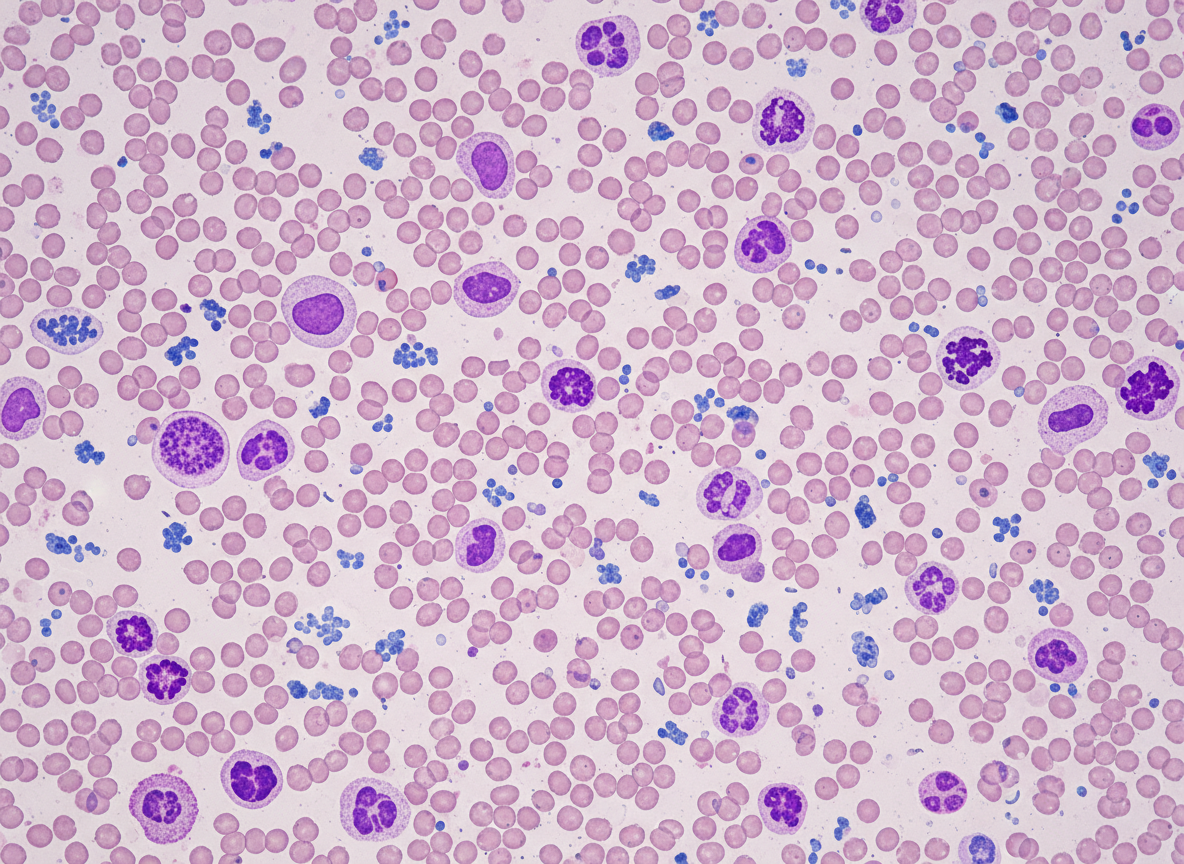
A 64-year-old woman comes to the physician for her routine health maintenance examination. She feels well. She had cervical cancer and received radiotherapy 8 years ago. Her vital signs are within normal limits. On percussion, the spleen size is 15 cm. Otherwise, the physical examination shows no abnormalities. The laboratory test results are as follows: Hemoglobin 10 g/dL Mean corpuscular volume 88 μm3 Leukocyte count 65,000/mm3 Platelet count 500,000/mm3 Two images of the peripheral blood smear are shown on the image. Which of the following is the most appropriate next step in management?
A 71-year-old woman presents to her hematologist-oncologist for follow up after having begun doxorubicin and cyclophosphamide in addition to radiation therapy for the treatment of her stage 3 breast cancer. Her past medical history is significant for preeclampsia, hypertension, polycystic ovarian syndrome, and hypercholesterolemia. She currently smokes 1 pack of cigarettes per day, drinks a glass of wine per day, and denies any illicit drug use. The vital signs include: temperature 36.7°C (98.0°F), blood pressure 126/74 mm Hg, heart rate 111/min, and respiratory rate 23/min. On physical examination, the pulses are strong and irregular, she has a grade 3/6 holosystolic murmur heard best at the left upper sternal border, clear bilateral breath sounds, and erythema over her site of radiation. Which of the following statements regarding doxorubicin is true?
A 60-year-old man comes to the physician because of a 2-day history of blood in his urine, lower abdominal pain, and a burning sensation while micturating. Five months ago, he was diagnosed with high-grade non-Hodgkin lymphoma and a deep vein thrombosis of his right popliteal vein. His medications include polychemotherapy every 3 weeks and a daily subcutaneous dose of low molecular weight heparin. The last cycle of chemotherapy was 2 weeks ago. His temperature is 37°C (98.6°F), pulse is 94/min, and blood pressure is 110/76 mm Hg. Examination shows bilateral axillary and inguinal lymphadenopathy, hepatosplenomegaly, and mild suprapubic tenderness. Laboratory studies show: Hemoglobin 10.2 g/dL Leukocytes 4,300/mm3 Platelet count 145,000/mm3 Partial thromboplastin time 55 seconds Prothrombin time 11 seconds (INR=1) Urine RBCs 50–55/hpf RBC casts negative WBCs 7/hpf Epithelial cells 5/hpf Bacteria occasional Administration of which of the following is most likely to have prevented this patient's current condition?
A 67-year-old woman who was diagnosed with cancer 2 months ago presents to her oncologist with a 6-day history of numbness and tingling in her hands and feet. She is concerned that these symptoms may be related to progression of her cancer even though she has been faithfully following her chemotherapy regimen. She is not currently taking any other medications and has never previously experienced these symptoms. On physical exam, she is found to have decreased sensation to pinprick and fine touch over hands, wrists, ankles, and feet. Furthermore, she is found to have decreased reflexes throughout. Her oncologist assures her that these symptoms are a side effect from her chemotherapy regimen rather than progression of the cancer. The drug most likely responsible for her symptoms has which of the following mechanisms?
A 73-year-old woman recently diagnosed with colonic adenocarcinoma comes to the physician because of a 1-week history of nausea and multiple episodes of vomiting. These symptoms started shortly after her first infusion of oxaliplatin and fluorouracil. The patient is started on an appropriate medication. Three weeks later, at a follow-up appointment, she states that she has developed headaches and constipation. The patient was most likely treated with a drug with which of the following mechanisms of action?
A 65-year-old male with diffuse large B cell lymphoma is treated with a chemotherapy regimen including 6-mercaptopurine. Administration of which of the following agents would increase this patient’s risk for mercaptopurine toxicity?
Want unlimited practice?
Get full access to all questions, explanations, and performance tracking.
Scan to download app