
Antitumor antibiotics — MCQs

A 42-year-old man with non-small cell lung cancer is enrolled in a clinical trial for a new chemotherapeutic drug. The drug prevents microtubule depolymerization by binding to the beta subunit of tubulin. The mechanism of action of this new drug is most similar to which of the following?
A 71-year-old woman presents to her hematologist-oncologist for follow up after having begun doxorubicin and cyclophosphamide in addition to radiation therapy for the treatment of her stage 3 breast cancer. Her past medical history is significant for preeclampsia, hypertension, polycystic ovarian syndrome, and hypercholesterolemia. She currently smokes 1 pack of cigarettes per day, drinks a glass of wine per day, and denies any illicit drug use. The vital signs include: temperature 36.7°C (98.0°F), blood pressure 126/74 mm Hg, heart rate 111/min, and respiratory rate 23/min. On physical examination, the pulses are strong and irregular, she has a grade 3/6 holosystolic murmur heard best at the left upper sternal border, clear bilateral breath sounds, and erythema over her site of radiation. Which of the following statements regarding doxorubicin is true?
A 38-year-old woman is diagnosed with a stage IIIa infiltrating ductal carcinoma involving the left breast. The tumor is ER/PR positive, HER-2 negative, poorly differentiated Bloom-Richardson grade 3. 4/20 regional nodes are positive. The patient undergoes a lumpectomy with axillary lymph node dissection, followed by chemotherapy and radiation therapy to the left breast and axilla. Her chemotherapy regimen involves doxorubicin, cyclophosphamide, and paclitaxel. Following completion of the intensive phase, she is started on tamoxifen as an adjuvant therapy. 6 months later, she presents with increasing fatigue, orthopnea, and paroxysmal nocturnal dyspnea. Physical examination reveals the presence of an S3 gallop, jugular venous distension (JVD), pedal edema, and ascites. She is diagnosed with congestive cardiac failure and admitted for further management. An echocardiogram confirms the diagnosis of dilated cardiomyopathy with severe systolic dysfunction and an ejection fraction of 10%. Her medical history prior to the diagnosis of breast cancer is negative for any cardiac conditions. The baseline echocardiogram prior to starting chemotherapy and a 12-lead electrocardiogram were normal. Which of the following is most likely responsible for her current cardiac condition?
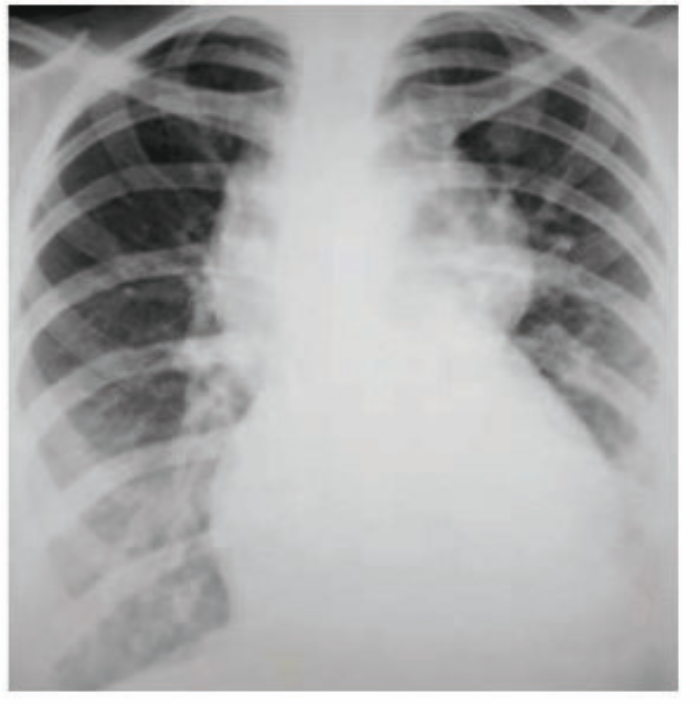
A 27-year-old healthy college student presents to the clinic with her boyfriend complaining of a productive cough with rust-colored sputum associated with breathlessness for the past week. She also reports symptoms of the common cold which began about 1 week ago. She reports that her weekly routine has not changed despite feelings of being sick and generally weak. The vitals signs include a blood pressure 120/80 mm Hg, pulse rate 68/min, respiratory rate 12/min, and temperature 36.6°C (97.9°F). On pulmonary examination, inspiratory crackles were heard. The cardiac examination revealed an S3 sound but was otherwise normal. A chest X-ray was performed and is shown in the picture below. What medication is known to be associated with the same condition that she is suffering from?
A 31-year-old female with a bacterial infection is prescribed a drug that binds the dipeptide D-Ala-D-Ala. Which of the following drugs was this patient prescribed?
A 55-year-old male with a 60 pack-year smoking history presents to his oncologist for ongoing management of his recently diagnosed small cell lung cancer. His oncologist discusses several options and decides to start the chemotherapeutic medication, etoposide. The patient is warned that one side effect of this drug is myelosuppression so he should be vigilant for development of any infectious symptoms. The beneficial effect of this drug in treating cancer is most likely due to which of the following effects?
A 29-year-old female presents to her gynecologist complaining of a painful rash around her genitals. She has multiple sexual partners and uses condoms intermittently. Her last STD screen one year ago was negative. On examination, she has bilateral erosive vesicles on her labia majora and painful inguinal lymphadenopathy. She is started on an oral medication that requires a specific thymidine kinase for activation. Which of the following adverse effects is associated with this drug?
A 54-year-old woman is diagnosed with locally-advanced invasive ductal carcinoma of the breast. She undergoes surgical resection, radiation therapy, and is now being started on adjunctive chemotherapy with cyclophosphamide and doxorubicin. The patient is scheduled for follow up by her primary care provider. Which of the following tests should be performed regularly to monitor her current treatment regimen?
A 72-year-old man has been recently diagnosed with stage 3 squamous cell carcinoma of the oral cavity. After the necessary laboratory workup, concurrent chemoradiation therapy has been planned. Radiation therapy is planned to take place over 7 weeks and he will receive radiation doses daily, Monday–Friday, in 2.0 Gy fractions. For concurrent chemotherapy, he will receive intravenous cisplatin at a dosage of 50 mg/m2 weekly for 7 weeks. Which of the following best explains the mechanism of action of the antineoplastic drug that the patient will receive?
A 67-year-old woman with advanced bladder cancer comes to the physician for a follow-up examination. She is currently undergoing chemotherapy with an agent that forms cross-links between DNA strands. Serum studies show a creatinine concentration of 2.1 mg/dL and a blood urea nitrogen concentration of 30 mg/dL. Urine dipstick of a clean-catch midstream specimen shows 2+ protein and 1+ glucose. Prior to initiation of chemotherapy, her laboratory values were within the reference range. In addition to hydration, administration of which of the following would most likely have prevented this patient's current condition?
Want unlimited practice?
Get full access to all questions, explanations, and performance tracking.
Scan to download app