
Antineoplastic combination regimens — MCQs

A 65-year-old male with diffuse large B cell lymphoma is treated with a chemotherapy regimen including 6-mercaptopurine. Administration of which of the following agents would increase this patient’s risk for mercaptopurine toxicity?
A 56-year-old African American presents to the emergency department due to abdominal pain, fatigue, and weight loss over the past 3 months. He has a long-standing history of chronic hepatitis B virus infection complicated by cirrhosis. On examination, he has jaundice, leg edema, and a palpable mass in the right upper abdominal quadrant. Abdominal ultrasound shows a 3-cm liver mass with poorly defined margins and coarse, irregular internal echoes. Blood investigations are shown: Aspartate aminotransferase (AST) 90 U/L Alanine aminotransferase (ALT) 50 U/L Total bilirubin 2 mg/dL Albumin 3 g/dL Alkaline phosphatase 100 U/L Alpha fetoprotein 600 micrograms/L Which of the following targeted agents is approved for advanced-stage hepatoma?
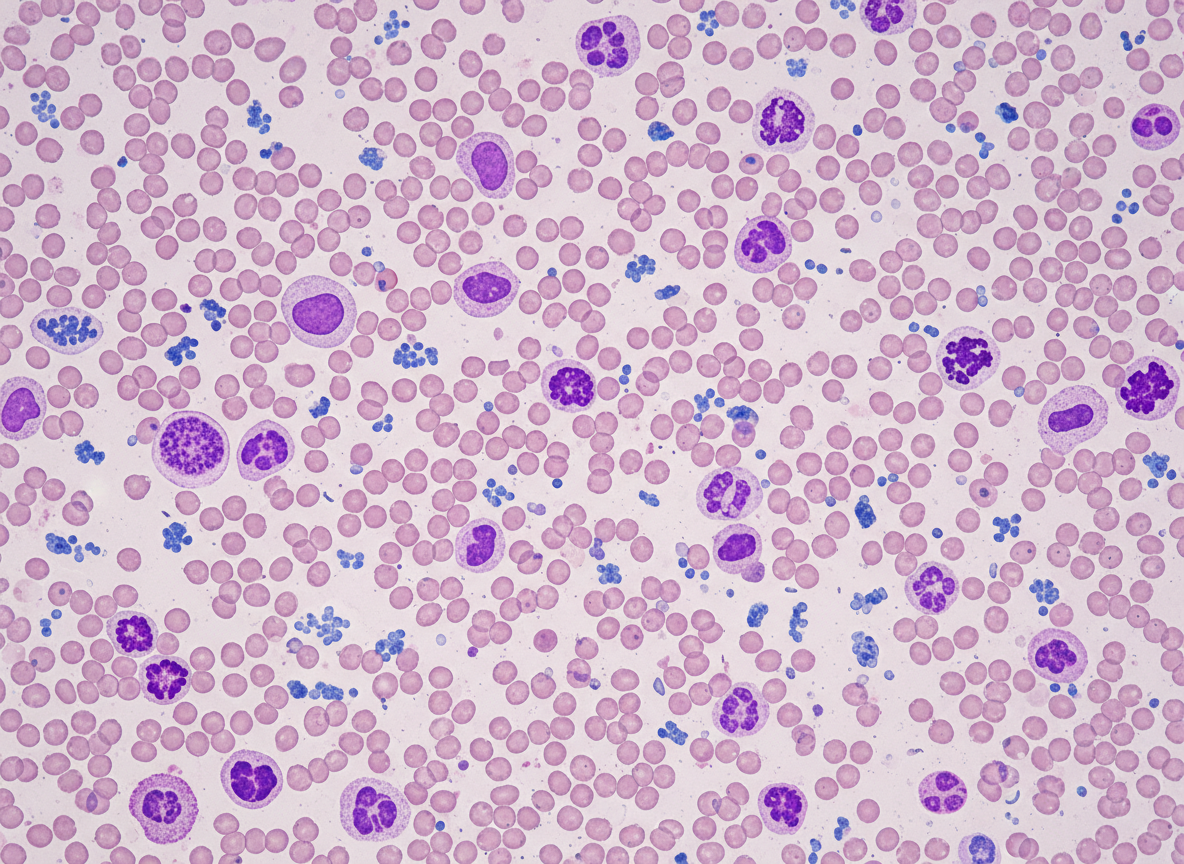
A 64-year-old woman comes to the physician for her routine health maintenance examination. She feels well. She had cervical cancer and received radiotherapy 8 years ago. Her vital signs are within normal limits. On percussion, the spleen size is 15 cm. Otherwise, the physical examination shows no abnormalities. The laboratory test results are as follows: Hemoglobin 10 g/dL Mean corpuscular volume 88 μm3 Leukocyte count 65,000/mm3 Platelet count 500,000/mm3 Two images of the peripheral blood smear are shown on the image. Which of the following is the most appropriate next step in management?
A 54-year-old woman is diagnosed with locally-advanced invasive ductal carcinoma of the breast. She undergoes surgical resection, radiation therapy, and is now being started on adjunctive chemotherapy with cyclophosphamide and doxorubicin. The patient is scheduled for follow up by her primary care provider. Which of the following tests should be performed regularly to monitor her current treatment regimen?
A 57-year-old man presents to his oncologist to discuss management of small cell lung cancer. The patient is a lifelong smoker and was diagnosed with cancer 1 week ago. The patient states that the cancer was his fault for smoking and that there is "no hope now." He seems disinterested in discussing the treatment options and making a plan for treatment and followup. The patient says "he does not want any treatment" for his condition. Which of the following is the most appropriate response from the physician?
A 64-year-old woman comes to the physician because of a 7-month history of abdominal discomfort, fatigue, and a 6.8-kg (15-lb) weight loss. Physical examination shows generalized pallor and splenomegaly. Laboratory studies show anemia with pronounced leukocytosis and thrombocytosis. Cytogenetic analysis shows a BCR-ABL fusion gene. A drug with which of the following mechanisms of action is most appropriate for this patient?
A 72-year-old man has been recently diagnosed with stage 3 squamous cell carcinoma of the oral cavity. After the necessary laboratory workup, concurrent chemoradiation therapy has been planned. Radiation therapy is planned to take place over 7 weeks and he will receive radiation doses daily, Monday–Friday, in 2.0 Gy fractions. For concurrent chemotherapy, he will receive intravenous cisplatin at a dosage of 50 mg/m2 weekly for 7 weeks. Which of the following best explains the mechanism of action of the antineoplastic drug that the patient will receive?
A 13-year-old Caucasian male presents with his father to the pediatrician’s office complaining of left lower thigh pain. He reports slowly progressive pain over the distal aspect of his left thigh over the past three months. He denies any recent trauma to the area. His temperature is 100.9°F (38.3°C). On exam, there is swelling and tenderness overlying the inferior aspect of the left femoral diaphysis. Laboratory evaluation is notable for an elevated white blood cell (WBC) count and erythrocyte sedimentation rate (ESR). Biopsy of the lesion demonstrates sheets of monotonous small round blue cells with minimal cytoplasm. He is diagnosed and started on a medication that inhibits transcription by intercalating into DNA at the transcription initiation complex. Which of the following adverse events will this patient be at highest risk for following initiation of this medication?
A 71-year-old woman presents to her hematologist-oncologist for follow up after having begun doxorubicin and cyclophosphamide in addition to radiation therapy for the treatment of her stage 3 breast cancer. Her past medical history is significant for preeclampsia, hypertension, polycystic ovarian syndrome, and hypercholesterolemia. She currently smokes 1 pack of cigarettes per day, drinks a glass of wine per day, and denies any illicit drug use. The vital signs include: temperature 36.7°C (98.0°F), blood pressure 126/74 mm Hg, heart rate 111/min, and respiratory rate 23/min. On physical examination, the pulses are strong and irregular, she has a grade 3/6 holosystolic murmur heard best at the left upper sternal border, clear bilateral breath sounds, and erythema over her site of radiation. Which of the following statements regarding doxorubicin is true?
A 67-year-old man presents to his primary care physician for a decline in his hearing that he noticed over the past week. The patient has a past medical history of hypertension and diabetes mellitus and was recently diagnosed with bladder cancer which is currently appropriately being treated. The patient is a hunter and often goes shooting in his spare time. His recent sick contacts include his grandson who is being treated with amoxicillin for ear pain. Physical exam is notable for decreased hearing bilaterally. The Weber test does not localize to either ear, and the Rinne test demonstrates air conduction is louder than bone conduction. Which of the following is the most likely etiology for this patient's hearing loss?
Want unlimited practice?
Get full access to all questions, explanations, and performance tracking.
Scan to download app