
Recurrence risk — MCQs

A 4-year-old boy is brought to the emergency department by his parents after 10 days of fever, varying from 38.0–40.0°C (100.4–104.0°F). On physical examination, the child is ill-looking with an extensive rash over his trunk with patchy desquamation. His hands are swollen, and he also shows signs of a bilateral conjunctivitis. The laboratory test results are as follows: Hemoglobin 12.9 g/dL Hematocrit 37.7% Mean corpuscular volume 82.2 μm3 Leukocyte count 10,500/mm3 Neutrophils 65% Lymphocytes 30% Monocytes 5% Platelet count 290,000/mm3 Erythrocyte sedimentation rate (ESR) 35 mm/h What is the next best step in the management of this patient’s condition?
A 4-year-old boy is brought to the emergency department by his mother with a rash on his trunk, malaise, and fever with spikes up to 38.5°C (101.3°F) for the past 2 weeks. The patient's mother says she tried giving him Tylenol with little improvement. Past medical history includes a spontaneous vaginal delivery at full term. The patient's vaccines are up-to-date and he has met all developmental milestones. On physical examination, his lips are cracking, and he has painful cervical lymphadenopathy. The rash is morbilliform and involves his trunk, palms, and the soles of his feet. There is fine desquamation of the skin of the perianal region. Which of the following anatomical structures is most important to screen for possible complications in this patient?
A 28-year-old male presents to his primary care physician with complaints of intermittent abdominal pain and alternating bouts of constipation and diarrhea. His medical chart is not significant for any past medical problems or prior surgeries. He is not prescribed any current medications. Which of the following questions would be the most useful next question in eliciting further history from this patient?
A 3-year-old boy is brought to the physician for evaluation of developmental delay. He could sit alone at 12 months and started walking with support at the age of 2 years. He can name only very few familiar objects and uses simple two-word sentences. He cannot stack more than 2 blocks. His parents report that he does not like playing with other children. He is at the 80th percentile for head circumference, 85th percentile for height, and 50th percentile for weight. He has a long and narrow face as well as large protruding ears. His thumbs can be passively flexed to the ipsilateral forearm. This patient is at increased risk of developing which of the following conditions?
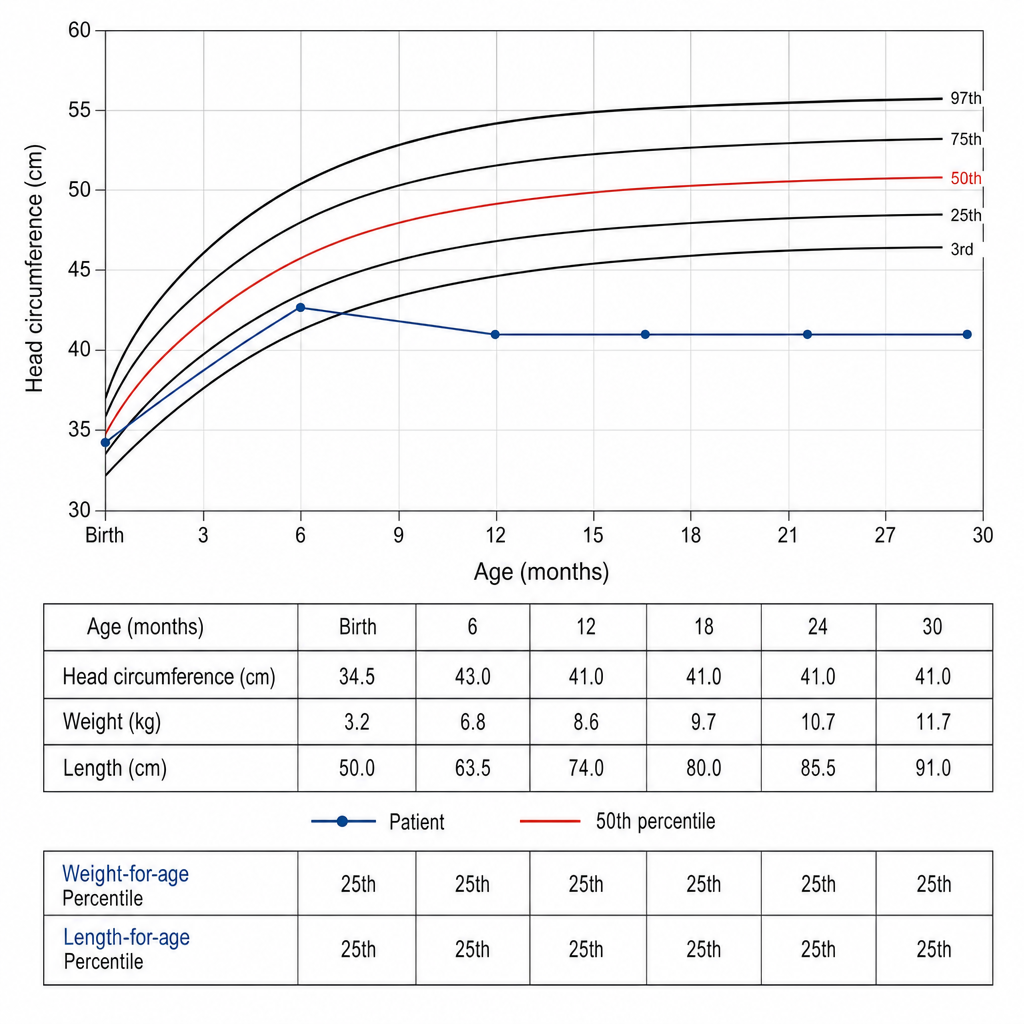
A girl is evaluated at 30 months of age. Her head circumference has crossed from the 50th percentile at birth to below the 3rd percentile at 12 months and has remained there. Her weight and length are tracking along the 25th percentile. She was born at term without perinatal complications. She was noted to have normal social smiling and babbling at 6 months, but her mother reports a period of apparent developmental regression between 12 and 18 months during which she lost purposeful hand use and began repetitive hand-wringing movements. Which genetic mechanism most likely accounts for this clinical picture?
A 4-year-old boy is brought to the physician by his parents because of fever and mild abdominal pain for 7 days. His parents report that he developed a rash 2 days ago. He has had no diarrhea or vomiting. Four weeks ago, he returned from a camping trip to Colorado with his family. His immunization records are unavailable. His temperature is 39.4°C (102.9°F), pulse is 111/min, respirations are 27/min, and blood pressure is 96/65 mm Hg. Examination shows bilateral conjunctival injections and fissures on his lower lips. The pharynx is erythematous. There is tender cervical lymphadenopathy. The hands and feet appear edematous. A macular morbilliform rash is present over the trunk. Bilateral knee joints are swollen and tender; range of motion is limited by pain. Which of the following is the most appropriate treatment for this patient's condition?
A 4-year-old boy is brought to a pediatrician by his parents with a history of fever for the last 5 days and irritability, decreased appetite, vomiting, and swelling of the hands and feet for the last 3 days. The patient’s mother mentions that he has been taking antibiotics and antipyretics prescribed by another physician for the last 3 days, but there has been no improvement His temperature is 39.4°C (103.0°F), pulse is 128/min, respiratory rate is 24/min, and blood pressure is 96/64 mm Hg. On physical examination, there is significant edema of the hands and feet bilaterally. There is a 2.5 cm diameter freely moveable, nontender cervical lymph node is palpable on the right side. A strawberry tongue and perianal erythema are noted. Conjunctival injection is present bilaterally. Laboratory findings reveal mild anemia and a leukocytosis with a left-shift. Erythrocyte sedimentation rate (ESR) and serum C-reactive protein (CRP) are increased. If not treated appropriately, this patient is at increased risk of developing which of the following complications?
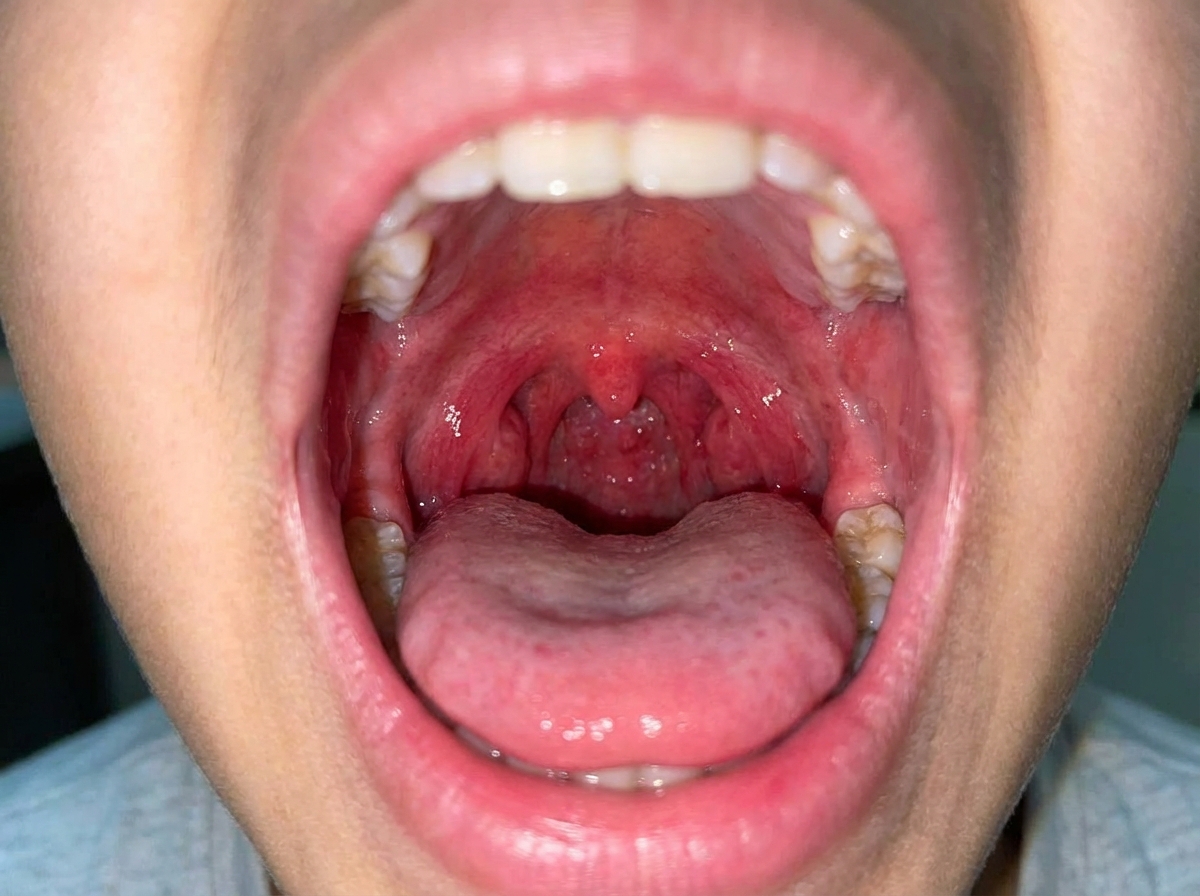
A 5-year-old girl presents with a rash and a persistent fever of 41.0°C (105.8°F), not relieved by Tylenol. The patient's mother says that her symptoms started 5 days ago and have not improved. The rash started on her trunk and now is present everywhere including the palms and soles. Her birth history is normal. Her pulse is 120/min and respiratory rate is 22/min. On physical examination, the patient is agitated and ill-appearing. There is significant swelling of the distal upper and lower extremities bilaterally. The pharynx is hyperemic (see image). Generalized edema with palpable cervical lymphadenopathy is noted. Muscle tone is normal. Remainder of exam is unremarkable. Laboratory findings are significant for the following: Laboratory test Hb 9 g/dL RBC 3.3/mm3 Neutrophilic leukocytosis 28,000/mm3 Normal platelet count 200,000/mm3 Serum ɣ-GT increased Hyperbilirubinemia 2.98 mg/dL AST and ALT are normal, but there is markedly increased serum CRP. Which of the following is the most likely diagnosis in this patient?
A previously healthy 4-year-old boy is brought to the physician by his parents because he has had a fever, diffuse joint pain, and a rash on his abdomen for the past week. Acetaminophen did not improve his symptoms. He emigrated from China with his family 2 years ago. He attends daycare. His immunization records are not available. His temperature is 38.5°C (101.3°F), pulse is 125/min, and blood pressure is 100/60 mm Hg. Examination shows polymorphous truncal rash. The eyes are pink with no exudate. The tongue is shiny and red, and the lips are cracked. The hands and feet are red and swollen. There is right-sided anterior cervical lymphadenopathy. Which of the following is the most appropriate next step in management?
Want unlimited practice?
Get full access to all questions, explanations, and performance tracking.
Scan to download app