A 7-year-old boy is brought to the physician by his parents because of a 4.5-kg (10-lb) weight loss during the last 3 months. During this period, he has complained of abdominal pain and fullness, and his parents feel that he has been eating less. His parents also report that his urine has appeared pink for several weeks. He has been performing poorly in school lately, with reports from teachers that he has not been paying attention in class and has been distracting to other students. He was born at term and has been healthy except for a history of several infantile seizures. His vital signs are within normal limits. He is at the 60th percentile for height and 20th percentile for weight. Physical examination shows a palpable abdominal mass, abdominal tenderness in the left upper quadrant, and left costovertebral angle tenderness. There are several ellipsoid, hypopigmented macules on the back and legs and a 4-cm raised plaque of rough, dimpled skin on the right lower back that is the same color as the surrounding skin. Which of the following is the most likely diagnosis?
Q142
A 6-year-old refugee with delayed growth and weakness is brought to the physician. Her family has been displaced several times over the last few years, and nutrition and housing were frequently inadequate. Examination of the lower limbs shows bowing of the legs with reduced proximal muscle strength. The abdomen is protruded. Inspection of the chest shows subcostal grooving during inspiration. An image of the patient’s wrist is shown. Which of the following is the most likely cause of this patient’s condition?
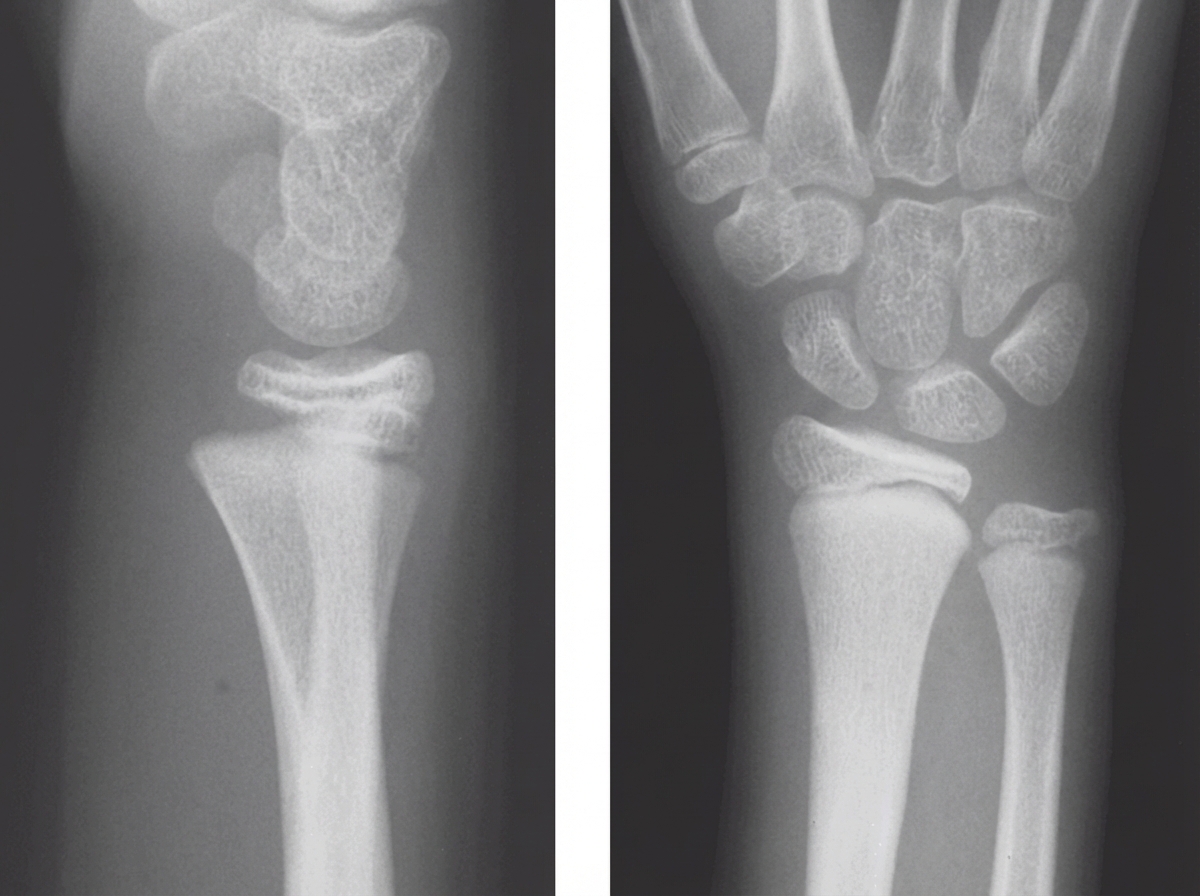
Q143
A 5-year-old is brought into your office by his mother. His mother states that he is having 10-20 episodes per day where he stops responding to his mother and is found staring out of the window. During these periods, he blinks more frequently than normal, but returns to his normal self afterwards. These episodes last 30 to 60 seconds. His mother states that all of his milestones have been normal and he had an uncomplicated birth. His mother also denies any other recent illness. On exam, his vitals are normal. During one of these episodes in the office, his EEG shows three-per-second spike and wave discharge. What is the most likely diagnosis?
Q144
A 6-year-old girl is brought to the physician for a well-child examination. There is no personal or family history of serious illness. She is at the 90th percentile for height and weight. Vital signs are within normal limits. Examination shows enlarged breast buds that extend beyond the areola. There is coarse pubic hair that does not extend onto the inner thigh. The remainder of the examination show no abnormalities. An x-ray of the left hand shows a bone age of 10 years. Following GnRH agonist stimulation, serum luteinizing hormone levels increase to twice the median. Which of the following is the most appropriate next best step in management?
Q145
A 7-year-old girl is brought to the physician because of vaginal bleeding for 2 days. There is no personal or family history of serious illness. She is at the 95th percentile for height and at the 90th percentile for weight. Examination shows enlarged breasts, and the areola and papilla have formed a secondary mound. There is coarse pubic hair that does not extend to the inner thigh. The remainder of the examination show no abnormalities. An x-ray of the left hand and wrist shows a bone age of 11 years. Her serum luteinizing hormone concentration is 0.1 mIU/mL (N < 0.2 mIU/mL). Which of the following is the most appropriate next step in management?
Q146
An 18-month-old toddler is brought to a pediatric hematologist by his father. The boy was referred to this office for prolonged neutropenia. He has had several blood tests with an isolated low neutrophil count while hemoglobin, hematocrit, and platelet count is normal. The boy was born at 39 weeks gestation via spontaneous vaginal delivery. He is up to date on all vaccines and is meeting all developmental milestones. Today his complete blood count (CBC) with differential shows:
Hemoglobin: 15.5 g/dL
Platelets: 300,000 mm3
Neutrophils: 20%
Bands: 2%
Lymphocytes: 40%
Monocytes: 15%
Today, he has a heart rate of 90/min, respiratory rate of 22/min, blood pressure of 110/65 mm Hg, and temperature of 37.0°C (98.6°F). On physical exam, the child appears healthy and is within expected growth parameters for his age and sex. A bone marrow biopsy shows normal bone marrow with 95% cellularity and trilineage maturation. Flow cytometry is normal with no abnormal markers noted. Which of the following is the most probable diagnosis in the present case?
Q147
A 1-month-old boy is brought to the physician because of a 5-day history of generalized fatigue and multiple episodes of vomiting which is most pronounced after formula feeding. His vomiting progressed from 2–3 episodes on the first day to 6–8 episodes at present. The vomitus is whitish in color. The mother reports that he has been very hungry after each episode of vomiting. The patient was born at 38 weeks' gestation and weighed 3100 g (6 lb 13 oz); he currently weighs 3500 g (7 lb 11 oz). He appears irritable. His temperature is 37.1°C (98.8°F), pulse is 130/min, respirations are 43/min, and blood pressure is 74/36 mm Hg. Examination shows dry mucous membranes. The abdomen is soft and not distended. There is a round mass palpable in the epigastric region. The liver is palpated 1 cm below the right costal margin. Laboratory studies show:
Hemoglobin 15.3 g/dL
Leukocyte count 6300/mm3
Platelet count 230,000/mm3
Serum
Na+ 133 mEq/L
K+ 3.4 mEq/L
Cl- 92 mEq/L
Glucose 77 mg/dL
Creatinine 1.0 mg/dL
A urinalysis shows a decreased pH. Which of the following is the most appropriate next step in the management of this patient?
Q148
A 10-month-old infant is brought to the emergency by his parents after a seizure. The parents report no history of trauma, fever, or a family history of seizures. However, they both say that the patient fell while he was running. Neurologic examination was normal. A head CT scan was ordered and is shown in figure A. Which of the following is most likely found in this patient?
Q149
A 10-year-old girl is brought to the emergency department because of lower abdominal pain for the past 12 hours. The pain has progressively worsened and was accompanied by occasional episodes of diarrhea. She has vomited twice. Her mother has Crohn disease. Her temperature is 38.1°C (100.6°F), pulse is 95/min, respirations are 20/min, and blood pressure is 110/70 mm Hg. The abdomen is soft, and there is mild tenderness to palpation in the right lower quadrant without rebound or guarding. Bowel sounds are normal. Her hemoglobin concentration is 13.0 g/dL, leukocyte count is 12,800/mm3, and platelet count is 345,000/mm3. Urine dipstick is negative for nitrites and leukocyte esterase. Urinalysis shows 3 WBC/hpf and no RBCs. Which of the following is the most appropriate next step in management?
Q150
A 16-year-old boy is brought to the physician for a follow-up examination. He has a 6-year history of type 1 diabetes mellitus and his only medication is insulin. Seven months ago, he was treated for an episode of diabetic ketoacidosis. He has previously been compliant with his diet and insulin regimen. He wants to join the high school soccer team. Vital signs are within normal limits. His hemoglobin A1C is 6.3%. Which of the following is the most appropriate recommendation at this time?
Growth/Development US Medical PG Practice Questions and MCQs
Question 141: A 7-year-old boy is brought to the physician by his parents because of a 4.5-kg (10-lb) weight loss during the last 3 months. During this period, he has complained of abdominal pain and fullness, and his parents feel that he has been eating less. His parents also report that his urine has appeared pink for several weeks. He has been performing poorly in school lately, with reports from teachers that he has not been paying attention in class and has been distracting to other students. He was born at term and has been healthy except for a history of several infantile seizures. His vital signs are within normal limits. He is at the 60th percentile for height and 20th percentile for weight. Physical examination shows a palpable abdominal mass, abdominal tenderness in the left upper quadrant, and left costovertebral angle tenderness. There are several ellipsoid, hypopigmented macules on the back and legs and a 4-cm raised plaque of rough, dimpled skin on the right lower back that is the same color as the surrounding skin. Which of the following is the most likely diagnosis?
A. Von Hippel‑Lindau disease
B. Sturge-Weber syndrome
C. Neurofibromatosis type 1
D. Tuberous sclerosis (Correct Answer)
E. Neurofibromatosis type 2
Explanation: ***Tuberous sclerosis***
- The combination of **abdominal mass/tenderness** (suggesting **renal angiomyolipoma**), **pink urine** (indicating **hematuria**), **seizures**, developmental/behavioral issues (poor school performance), **hypopigmented macules** (ash-leaf spots), and a **raised plaque of rough, dimpled skin** (shagreen patch) is highly characteristic of tuberous sclerosis.
- Tuberous sclerosis is a **neurocutaneous disorder** with highly variable manifestations, including **benign tumors** in many organs (e.g., brain, kidneys, heart, skin, lungs).
*Von Hippel–Lindau disease*
- This is an **autosomal dominant disorder** characterized by **hemangioblastomas** of the retina, cerebellum, and spinal cord; **renal cell carcinoma**; and **pheochromocytomas**.
- While it can cause renal masses and hematuria, the absence of cutaneous findings like ash-leaf spots and shagreen patches, and the specific history of seizures and developmental issues, make it less likely.
*Sturge-Weber syndrome*
- Characterized by a **port-wine stain** (facial cutaneous angioma), **leptomeningeal angioma** (leading to seizures, intellectual disability), and **ocular involvement** (glaucoma).
- The patient does not present with a port-wine stain or the specific neurologic findings associated with leptomeningeal angiomas.
*Neurofibromatosis type 1*
- Characterized by **café-au-lait spots**, **axillary/groin freckling**, **neurofibromas**, **Lisch nodules** (iris hamartomas), and optic pathway gliomas.
- While seizures can occur, the presence of ash-leaf spots and a shagreen patch, along with significant renal involvement (angiomyolipoma/hematuria), are not typical features of NF1.
*Neurofibromatosis type 2*
- Primarily involves **bilateral vestibular schwannomas**, leading to hearing loss, tinnitus, and balance problems.
- Cutaneous manifestations are typically limited to a few café-au-lait spots and subcutaneous neurofibromas, which do not match this patient's diverse skin lesions.
Question 142: A 6-year-old refugee with delayed growth and weakness is brought to the physician. Her family has been displaced several times over the last few years, and nutrition and housing were frequently inadequate. Examination of the lower limbs shows bowing of the legs with reduced proximal muscle strength. The abdomen is protruded. Inspection of the chest shows subcostal grooving during inspiration. An image of the patient’s wrist is shown. Which of the following is the most likely cause of this patient’s condition?
A. Low-calorie intake
B. Insufficient protein consumption
C. Defective collagen synthesis
D. Vitamin D deficiency (Correct Answer)
E. Osteoclast hyperactivity
Explanation: ***Vitamin D deficiency***
- The clinical presentation (delayed growth, weakness, **bowing of legs**, **reduced proximal muscle strength**, **subcostal grooving**, and protruded abdomen) coupled with the X-ray image showing widened growth plates and cupping/fraying of metaphyses are classic signs of **rickets** due to **vitamin D deficiency**.
- Longstanding inadequate nutrition in a displaced child strongly suggests nutritional deficiencies, including vitamin D, which is crucial for **calcium and phosphate absorption** and bone mineralization.
*Low-calorie intake*
- While low-calorie intake can contribute to delayed growth and weakness, it does not specifically explain the characteristic skeletal deformities like bowed legs or the X-ray findings seen in this patient.
- **Overall malnutrition** contributes to the patient's poor health but does not directly cause rickets.
*Insufficient protein consumption*
- Insufficient protein consumption leads to conditions like **kwashiorkor** (edema, apathy, skin lesions) or **marasmus** (severe wasting), which differ from the bone deformities observed.
- While protein is essential for growth, its deficiency does not directly cause the *specific* bone mineralization defects seen in rickets.
*Defective collagen synthesis*
- Defective collagen synthesis is seen in conditions like **osteogenesis imperfecta**, characterized by **brittle bones** and recurrent fractures, often with blue sclerae and hearing loss.
- This patient's symptoms and radiographic findings are not consistent with a primary collagen synthesis defect.
*Osteoclast hyperactivity*
- Osteoclast hyperactivity leads to excessive bone resorption and conditions like **osteoporosis**, characterized by reduced bone density and increased fracture risk.
- This mechanism would not explain the failure of bone *mineralization* and disorganized growth plates typical of rickets.
Question 143: A 5-year-old is brought into your office by his mother. His mother states that he is having 10-20 episodes per day where he stops responding to his mother and is found staring out of the window. During these periods, he blinks more frequently than normal, but returns to his normal self afterwards. These episodes last 30 to 60 seconds. His mother states that all of his milestones have been normal and he had an uncomplicated birth. His mother also denies any other recent illness. On exam, his vitals are normal. During one of these episodes in the office, his EEG shows three-per-second spike and wave discharge. What is the most likely diagnosis?
A. Absence seizure (Correct Answer)
B. Benign focal epilepsy
C. Febrile seizure
D. Hearing deficits
E. Juvenile myoclonic epilepsy
Explanation: ***Absence seizure***
- This presentation, characterized by brief (30-60 seconds) episodes of **staring spells**, unresponsiveness, and lip-smacking or **eyelid fluttering** (blinking), is classic for absence seizures.
- The **electroencephalogram (EEG)** finding of generalized **3-Hz spike-and-wave discharges** is pathognomonic for absence seizures.
*Benign focal epilepsy*
- This typically presents with **focal motor or sensory symptoms**, often involving the face or limbs, and may occur during sleep.
- The EEG in benign focal epilepsy would show **focal spikes**, not generalized 3-Hz spike-and-wave discharges.
*Febrile seizure*
- Febrile seizures are generalized convulsions that occur in children usually between 6 months and 5 years of age, associated with a **fever**, which is absent in this case.
- The semiology of a febrile seizure is typically a tonic-clonic event, not brief staring spells.
*Hearing deficits*
- While a child with hearing deficits might appear unresponsive, they would not exhibit the characteristic **episodes of staring and blinking** described, nor would an EEG show epileptiform activity.
- Hearing impairment would typically lead to difficulty with language development or specific responses to auditory cues, not sudden, transient unresponsiveness.
*Juvenile myoclonic epilepsy*
- This condition is characterized by **myoclonic jerks**, especially in the morning, and often develops in adolescence.
- While it can include generalized tonic-clonic seizures and absence seizures, the primary feature in juvenile myoclonic epilepsy is the **myoclonic jerks**, which are not described here.
Question 144: A 6-year-old girl is brought to the physician for a well-child examination. There is no personal or family history of serious illness. She is at the 90th percentile for height and weight. Vital signs are within normal limits. Examination shows enlarged breast buds that extend beyond the areola. There is coarse pubic hair that does not extend onto the inner thigh. The remainder of the examination show no abnormalities. An x-ray of the left hand shows a bone age of 10 years. Following GnRH agonist stimulation, serum luteinizing hormone levels increase to twice the median. Which of the following is the most appropriate next best step in management?
A. Anastrozole therapy
B. MRI of the brain (Correct Answer)
C. Leuprolide therapy
D. Ultrasound of the pelvis
E. Reassurance and follow-up
Explanation: ***MRI of the brain***
- The elevated **GnRH-stimulated LH levels** confirm **central precocious puberty**, indicating premature activation of the hypothalamic-pituitary-gonadal axis.
- In children under 8 years, any signs of **central precocious puberty** warrant an **MRI of the brain** to rule out an underlying central nervous system lesion, such as a **hypothalamic hamartoma** or tumor.
*Anastrozole therapy*
- **Anastrozole** is an **aromatase inhibitor** used to treat **peripheral precocious puberty** (e.g., in cases of McCune-Albright syndrome) or to slow bone age advancement in some cases of central precocious puberty, but it does not address the underlying central cause.
- Given the elevated LH response to GnRH, this is a case of true central precocious puberty, making anastrozole an inappropriate first-line treatment.
*Leuprolide therapy*
- **Leuprolide therapy** (a **GnRH analog**) is the mainstay of treatment for **central precocious puberty** to halt puberty progression and preserve adult height potential.
- However, before initiating therapy, an underlying cause (e.g., CNS tumor) must be ruled out with an **MRI of the brain**, especially in a young child.
*Ultrasound of the pelvis*
- A **pelvic ultrasound** is useful for assessing ovarian and uterine size and for ruling out **ovarian tumors** or **cysts** which could cause **peripheral precocious puberty**.
- However, the **GnRH stimulation test** confirming elevated LH makes **central precocious puberty** the likely diagnosis, so a brain MRI to evaluate the central trigger is more critical at this stage.
*Reassurance and follow-up*
- The combination of **enlarged breast buds**, **coarse pubic hair**, and significantly **advanced bone age** (10 years in a 6-year-old) indicates true precocious puberty, not benign premature thelarche or adrenarche.
- Her elevated **GnRH-stimulated LH levels** confirms true precocious puberty, requiring further investigation and intervention, not just reassurance.
Question 145: A 7-year-old girl is brought to the physician because of vaginal bleeding for 2 days. There is no personal or family history of serious illness. She is at the 95th percentile for height and at the 90th percentile for weight. Examination shows enlarged breasts, and the areola and papilla have formed a secondary mound. There is coarse pubic hair that does not extend to the inner thigh. The remainder of the examination show no abnormalities. An x-ray of the left hand and wrist shows a bone age of 11 years. Her serum luteinizing hormone concentration is 0.1 mIU/mL (N < 0.2 mIU/mL). Which of the following is the most appropriate next step in management?
A. Serum dehydroepiandrosterone level
B. Reassurance and follow-up
C. Ultrasound of the pelvis
D. GnRH stimulation test (Correct Answer)
E. MRI of the brain
Explanation: ***GnRH stimulation test***
- This patient presents with signs of **precocious puberty** (vaginal bleeding, enlarged breasts, pubic hair, advanced bone age) but a **low basal LH level**. A **GnRH stimulation test** is crucial to differentiate between **central (gonadotropin-dependent)** and **peripheral (gonadotropin-independent)** precocious puberty.
- A significant rise in LH after GnRH administration indicates **central precocious puberty**, while a lack of significant response suggests **peripheral precocious puberty**.
*Serum dehydroepiandrosterone level*
- **DHEA** is a precursor to androgens and its elevation might indicate **adrenal causes** of precocious puberty (e.g., congenital adrenal hyperplasia, adrenal tumor).
- However, the prominent signs of **breast development** and **vaginal bleeding** point more towards estrogen production, making a GnRH stimulation test a more direct and comprehensive initial step to evaluate the source of puberty.
*Reassurance and follow-up*
- Reassurance is inappropriate given the presence of **vaginal bleeding** and signs of **accelerated skeletal maturation** (bone age of 11 years at chronological age 7).
- These findings warrant further investigation to determine the underlying cause and initiate appropriate management to prevent complications like **compromised adult height**.
*Ultrasound of the pelvis*
- A **pelvic ultrasound** would be useful to evaluate for ovarian cysts or tumors, which can cause **peripheral precocious puberty**.
- However, the GnRH stimulation test is a **more critical first step** to determine whether the puberty is central or peripheral before focusing on specific peripheral etiologies.
*MRI of the brain*
- An **MRI of the brain** is indicated if **central precocious puberty** is confirmed by the GnRH stimulation test, especially in a young child, to rule out **hypothalamic or pituitary tumors** or other CNS lesions.
- Doing an MRI of the brain before establishing the type of precocious puberty (central vs. peripheral) is **premature** as it is only indicated for central causes.
Question 146: An 18-month-old toddler is brought to a pediatric hematologist by his father. The boy was referred to this office for prolonged neutropenia. He has had several blood tests with an isolated low neutrophil count while hemoglobin, hematocrit, and platelet count is normal. The boy was born at 39 weeks gestation via spontaneous vaginal delivery. He is up to date on all vaccines and is meeting all developmental milestones. Today his complete blood count (CBC) with differential shows:
Hemoglobin: 15.5 g/dL
Platelets: 300,000 mm3
Neutrophils: 20%
Bands: 2%
Lymphocytes: 40%
Monocytes: 15%
Today, he has a heart rate of 90/min, respiratory rate of 22/min, blood pressure of 110/65 mm Hg, and temperature of 37.0°C (98.6°F). On physical exam, the child appears healthy and is within expected growth parameters for his age and sex. A bone marrow biopsy shows normal bone marrow with 95% cellularity and trilineage maturation. Flow cytometry is normal with no abnormal markers noted. Which of the following is the most probable diagnosis in the present case?
A. Chronic lymphoblastic leukemia
B. Aplastic anemia
C. Sepsis
D. Acute lymphoblastic leukemia
E. Chronic benign neutropenia (Correct Answer)
Explanation: ***Chronic benign neutropenia***
- The child presents with isolated neutropenia, normal growth and development, and a healthy appearance, all consistent with **chronic benign neutropenia**.
- **Normal bone marrow** with trilineage maturation and 95% cellularity further supports this diagnosis, ruling out malignant or severe bone marrow disorders.
*Chronic lymphoblastic leukemia*
- This condition involves an increase in **abnormal lymphocytes**, which is not seen here; the child has isolated neutropenia and normal lymphocyte percentages.
- Would typically present with symptoms related to bone marrow failure, such as anemia, thrombocytopenia, and lymphadenopathy, none of which are present.
*Aplastic anemia*
- Characterized by **pancytopenia** (low counts of red blood cells, white blood cells, and platelets) due to bone marrow failure.
- The child's hemoglobin and platelet counts are normal, making aplastic anemia unlikely.
*Sepsis*
- Sepsis would present with overt signs of infection, such as **fever, poor feeding, lethargy, and hemodynamic instability**, which are absent in this healthy-appearing child.
- While sepsis can cause neutropenia, the child's overall healthy status and normal vital signs rule against an active septic process.
*Acute lymphoblastic leukemia*
- Typically involves an overproduction of **immature lymphocytes (blasts)** in the bone marrow and peripheral blood, leading to pancytopenia or specific cytopenias.
- The bone marrow biopsy showed normal cellularity and maturation with no abnormal markers, making acute lymphoblastic leukemia highly improbable.
Question 147: A 1-month-old boy is brought to the physician because of a 5-day history of generalized fatigue and multiple episodes of vomiting which is most pronounced after formula feeding. His vomiting progressed from 2–3 episodes on the first day to 6–8 episodes at present. The vomitus is whitish in color. The mother reports that he has been very hungry after each episode of vomiting. The patient was born at 38 weeks' gestation and weighed 3100 g (6 lb 13 oz); he currently weighs 3500 g (7 lb 11 oz). He appears irritable. His temperature is 37.1°C (98.8°F), pulse is 130/min, respirations are 43/min, and blood pressure is 74/36 mm Hg. Examination shows dry mucous membranes. The abdomen is soft and not distended. There is a round mass palpable in the epigastric region. The liver is palpated 1 cm below the right costal margin. Laboratory studies show:
Hemoglobin 15.3 g/dL
Leukocyte count 6300/mm3
Platelet count 230,000/mm3
Serum
Na+ 133 mEq/L
K+ 3.4 mEq/L
Cl- 92 mEq/L
Glucose 77 mg/dL
Creatinine 1.0 mg/dL
A urinalysis shows a decreased pH. Which of the following is the most appropriate next step in the management of this patient?
A. Measure serum cortisol levels
B. Perform upper GI endoscopy
C. Administer IV 0.9% NaCl and replace electrolytes (Correct Answer)
D. Perform emergency pyloromyotomy
E. Obtain CT scan of the abdomen with contrast
Explanation: ***Administer IV 0.9% NaCl and replace electrolytes***
- The patient exhibits signs of **dehydration** (dry mucous membranes, irritability) and **hypochloremic metabolic alkalosis** (low Na+ 133, K+ 3.4, Cl- 92) secondary to persistent vomiting.
- The clinical presentation strongly suggests **pyloric stenosis** (progressive non-bilious vomiting, palpable epigastric mass, hungry after vomiting), but the patient's **electrolyte imbalances and dehydration must be corrected before any surgical intervention** to minimize operative risks.
- The paradoxical aciduria (decreased urine pH) occurs because severe volume depletion triggers aldosterone secretion, leading to preferential H+ excretion over HCO3- despite metabolic alkalosis.
*Measure serum cortisol levels*
- While adrenal insufficiency can cause vomiting and electrolyte abnormalities, the specific presentation of **non-bilious vomiting** with an **epigastric mass** and **hunger after vomiting** strongly points to **pyloric stenosis**.
- There are no other clear signs of adrenal insufficiency such as **hyperpigmentation**, **significant hypoglycemia**, or **hyperkalemia** that would make this the immediate priority over correcting dehydration and electrolytes.
*Perform upper GI endoscopy*
- Upper GI endoscopy is primarily used to visualize the upper digestive tract for conditions like **esophagitis**, **gastritis**, or **ulcers**.
- It is not the initial diagnostic test for **pyloric stenosis**; an **abdominal ultrasound** is preferred for confirming the diagnosis (showing pyloric wall thickness >3mm and channel length >15mm).
- Correcting the patient's severe dehydration and electrolyte imbalances takes precedence over diagnostic procedures.
*Perform emergency pyloromyotomy*
- Although pyloric stenosis is strongly suspected and **pyloromyotomy** is the definitive treatment, it is an elective surgical procedure.
- The patient is currently **dehydrated** with **electrolyte abnormalities** (hypochloremic, hypokalemic metabolic alkalosis), which must be corrected *before* surgery to minimize anesthetic and surgical risks and improve outcomes.
- Pyloric stenosis is **not a surgical emergency**; stabilization always precedes surgery.
*Obtain CT scan of the abdomen with contrast*
- A CT scan uses **ionizing radiation** and **contrast agents**, which are generally avoided in infants unless absolutely necessary.
- An **abdominal ultrasound** is the diagnostic study of choice for **pyloric stenosis** due to its non-invasiveness, lack of radiation exposure, and effectiveness in identifying the characteristic hypertrophied pylorus ("olive" or "target sign").
Question 148: A 10-month-old infant is brought to the emergency by his parents after a seizure. The parents report no history of trauma, fever, or a family history of seizures. However, they both say that the patient fell while he was running. Neurologic examination was normal. A head CT scan was ordered and is shown in figure A. Which of the following is most likely found in this patient?
A. Slipped capital femoral epiphysis
B. Intact bridging veins
C. Rupture of middle meningeal artery
D. Retinal hemorrhages (Correct Answer)
E. Microcephaly
Explanation: ***Retinal hemorrhages***
- The CT scan shows **subdural hematomas** (arrows) in an infant, which, along with a seizure and a history inconsistent with the injury severity ("fell while he was running"), are highly indicative of **abusive head trauma (shaken baby syndrome)**.
- **Retinal hemorrhages** are present in 60-80% of abusive head trauma cases and are a strong indicator of non-accidental injury in infants.
*Slipped capital femoral epiphysis*
- This condition is typically seen in **adolescents** and involves the displacement of the femoral head from the femoral neck.
- It is **not associated with head trauma** or seizures and is unrelated to the CT findings of subdural hematomas.
*Intact bridging veins*
- The presence of **subdural hematomas** on the CT scan indicates that the **bridging veins have been torn**, leading to bleeding in the subdural space.
- Therefore, the bridging veins are **not intact** in this scenario.
*Rupture of middle meningeal artery*
- Rupture of the middle meningeal artery typically causes an **epidural hematoma**, which is characterized by a **lenticular (lens-shaped)** collection of blood that does not cross suture lines.
- The CT scan image shows a **crescent-shaped collection** of blood (subdural hematoma) that crosses suture lines.
*Microcephaly*
- **Microcephaly** is defined as a head circumference significantly smaller than average for the infant's age and sex, indicating poor brain development.
- While head trauma can sometimes lead to developmental issues, microcephaly is **not an acute finding** directly associated with the immediate presentation of subdural hematomas from abusive head trauma.
Question 149: A 10-year-old girl is brought to the emergency department because of lower abdominal pain for the past 12 hours. The pain has progressively worsened and was accompanied by occasional episodes of diarrhea. She has vomited twice. Her mother has Crohn disease. Her temperature is 38.1°C (100.6°F), pulse is 95/min, respirations are 20/min, and blood pressure is 110/70 mm Hg. The abdomen is soft, and there is mild tenderness to palpation in the right lower quadrant without rebound or guarding. Bowel sounds are normal. Her hemoglobin concentration is 13.0 g/dL, leukocyte count is 12,800/mm3, and platelet count is 345,000/mm3. Urine dipstick is negative for nitrites and leukocyte esterase. Urinalysis shows 3 WBC/hpf and no RBCs. Which of the following is the most appropriate next step in management?
A. X-ray of the abdomen
B. Ultrasound of the abdomen (Correct Answer)
C. MRI of the abdomen
D. CT scan of the abdomen
E. Colonoscopy
Explanation: ***Ultrasound of the abdomen***
- **Ultrasound** is the appropriate initial imaging step in a pediatric patient with suspected appendicitis or other causes of right lower quadrant pain, given its **non-invasive nature** and **lack of radiation exposure**.
- It can effectively visualize the **appendix**, evaluate for inflammation, and rule out other etiologies such as ovarian pathology or mesenteric adenitis.
*X-ray of the abdomen*
- An **abdominal X-ray** has limited utility in diagnosing appendicitis as it **cannot visualize the appendix** or directly assess inflammation.
- While it can identify findings like **fecaliths** (calcified appendicoliths) in some cases, these are not specific for appendicitis and do not provide definitive diagnostic information.
*MRI of the abdomen*
- **MRI** is an excellent diagnostic tool for appendicitis, especially in pregnant women, due to its **high sensitivity and specificity** and avoidance of ionizing radiation.
- However, it is **more expensive** and less readily available in emergency settings compared to ultrasound, making it a secondary option for initial evaluation in children.
*CT scan of the abdomen*
- A **CT scan** is highly accurate for diagnosing appendicitis due to its detailed anatomical resolution.
- It involves **ionizing radiation**, which is a significant concern in pediatric patients, making it a less preferred initial imaging choice compared to ultrasound.
*Colonoscopy*
- **Colonoscopy** is an **invasive endoscopic procedure** primarily used for direct visualization of the colon and terminal ileum, typically for diagnosing inflammatory bowel disease, polyps, or GI bleeding.
- It is **not indicated** as an initial diagnostic step for acute abdominal pain in this clinical context, especially when appendicitis is suspected.
Question 150: A 16-year-old boy is brought to the physician for a follow-up examination. He has a 6-year history of type 1 diabetes mellitus and his only medication is insulin. Seven months ago, he was treated for an episode of diabetic ketoacidosis. He has previously been compliant with his diet and insulin regimen. He wants to join the high school soccer team. Vital signs are within normal limits. His hemoglobin A1C is 6.3%. Which of the following is the most appropriate recommendation at this time?
A. Limit activity to 20 minutes per day
B. Lower insulin dosage on days of exercise (Correct Answer)
C. Advise against physical activity
D. Switch from insulin to metformin
E. Increase insulin dosage on days of exercise
Explanation: ***Lower insulin dosage on days of exercise***
- Exercise increases **insulin sensitivity** and glucose uptake by muscle cells, which can lead to **hypoglycemia** if insulin dosing is not adjusted.
- Reducing insulin dosage on exercise days, along with appropriate monitoring, is a common strategy to prevent exercise-induced hypoglycemia in individuals with **type 1 diabetes**.
*Limit activity to 20 minutes per day*
- There is no medical justification to arbitrarily limit activity to 20 minutes for a well-controlled diabetic patient, especially one who wants to join a soccer team.
- **Regular physical activity** is beneficial for overall health and diabetes management, and arbitrary restrictions can be detrimental to a teenager's well-being.
*Advise against physical activity*
- **Physical activity** is generally encouraged for individuals with type 1 diabetes as it improves **cardiovascular health**, **insulin sensitivity**, and overall well-being.
- Advising against it would be counterproductive, especially with an **HbA1c of 6.3%**, indicating good glycemic control and proper management.
*Switch from insulin to metformin*
- **Metformin** is an oral hypoglycemic agent used primarily for type 2 diabetes by reducing hepatic glucose production and improving insulin sensitivity.
- It is **not effective** in type 1 diabetes, where the pancreas fails to produce insulin, making **exogenous insulin** essential for survival.
*Increase insulin dosage on days of exercise*
- Increasing insulin dosage on exercise days would significantly raise the risk of **hypoglycemia** due to enhanced glucose utilization by muscles.
- The standard approach is to **decrease** insulin or increase carbohydrate intake to prevent low blood sugar during and after exercise.